Spiritual and religiousEuropeChristian
Saint George's Day
A saint's feast on 23 April, kept by churches and patron nations from England to Georgia

Saint George's Day is the feast of Saint George, kept by Catholic, Lutheran, Anglican, Orthodox and Oriental Orthodox churches and by the many nations and towns that claim him as patron. It falls on 23 April in most calendars, moved when the date collides with the Easter season, and in Georgia it is also kept in May and November.
When is Saint George's Day kept?
Saint George's Day is kept every year on 23 April, moved when it clashes with Easter week, and on other dates in some churches.
Saint George's Day honours Saint George, a soldier whose death during the Diocletianic Persecution is traditionally dated to 23 April. Christian churches of many kinds keep the feast, and so do countries and cities that count him as a patron, including England, Georgia, Aragon, Catalonia and Palestine. Some communities have built their own customs around it.
Origins and history
George is remembered as a soldier put to death in the Diocletianic Persecution, and his feast is traditionally fixed on the day of his death. In England his name appears in writings from the 8th century, and a ninth-century liturgical book also notes the day. A stone at Fordington in Dorset is said to record a vision of him leading crusaders. Historians once thought a 1222 synod at Oxford gave the feast its standing, but the oldest copies of that ruling make no mention of it. Canterbury in 1415 and York in 1421 raised the feast to a double major, when work stopped and attendance at church was required. Under Pope Pius XII and Pope John XXIII the rank was lowered.
How it is kept
Observance begins in church, with a service or a mass in Catholic, Lutheran, Anglican and Orthodox congregations. In England people raise the St George's Cross and pubs hang small crossed flags; Scout troops parade; choirs often sing the hymn Jerusalem. Swedish churches hold a mass on the Sunday nearest the date, and a ballad about the saint is broadcast across the country at noon. In Hungary, as it was kept in the past, the day opened with protective charms for people, animals and homes, and ended with a feast; shepherds were hired and given food and drink.
Hungarian spring customs
In Hungary the day was one of the largest celebrations of the year, with a feast that could outdo a wedding. People walked in the woods and bathed as part of rituals, and treated the date as the start of true spring. They believed witches gathered on hills such as Gellért Hill for a sabbath. Twigs of willow or birch were placed at windows and in stables, incense was burned, and onion strings were hung up to keep curses away. Animals were fed herbs and special pogácsa. Cattle were driven past chains or axes, or through fire in Szeklerland, to guard them and encourage fertility. Shepherds were hired that day and given eggs, bacon, wine and pálinka.
Around the world
Georgia keeps the feast twice. Besides 23 April, it marks a November date with more ceremony, which by the western calendar falls in May until the year 2100. In Newfoundland and Labrador the day is a provincial holiday, taken on the Monday nearest 23 April. Rio de Janeiro, Alcoi and Genoa all count George as their chief patron, and Palestine keeps his feast as well. Russia's Orthodox church remembers a church consecrated to him in Kiev in 1051, on a date in late November. Elsewhere, from the Balkans to the eastern Mediterranean, he is honoured as an important patron rather than the principal one.
Today and change
In England the day was a public holiday on the scale of Christmas from about the early 1400s, then faded after England and Scotland were joined at the end of the 18th century. Interest has grown again since. Heritage groups and a society named for the saint have urged more celebration. Salisbury holds a yearly pageant that is thought to reach back to the 13th century. Political figures have argued for a public holiday, and a London mayor ran a campaign to encourage celebration in 2009. Some people question whether George should remain England's patron, since he had no direct link with the country, and Edmund the Martyr, Cuthbert of Lindisfarne and Alban have been suggested instead.
How Saint George's Day is kept
Observance begins in church, with a service or a mass in Catholic, Lutheran, Anglican and Orthodox congregations. In England people raise the St George's Cross and pubs hang small crossed flags; Scout troops parade; choirs often sing the hymn Jerusalem. Swedish churches hold a mass on the Sunday nearest the date, and a ballad about the saint is broadcast across the country at noon. In Hungary, as it was kept in the past, the day opened with protective charms for people, animals and homes, and ended with a feast; shepherds were hired and given food and drink.
When and where
The usual date is 23 April, the day tradition gives for George's death. When that date lands in Holy Week or the week after Easter, churches move it, usually to the Monday after Easter week. Some Orthodox churches keep other dates as well, and Georgia holds a second, larger feast in November.
The feast belongs to Christian churches worldwide and is strongest where George is a patron: England, Georgia, Catalonia and Aragon, Palestine, and the Italian and Brazilian cities of Genoa and Rio de Janeiro. He is also an important patron in several Balkan and eastern Mediterranean countries, and in Sweden and Hungary the day has its own customs.
What Saint George's Day means
For the churches, George stands for courage and faith held to the point of death, and his feast is a day of prayer rather than of obligation or feasting alone. In England his cross became a national sign, flown on flagpoles and printed on pub garlands. For Hungarians the date carried power: the turning of the year towards warmth, the start of herding, and a night when spells were thought to work and had to be guarded against.


Questions people ask about Saint George's Day
When is Saint George's Day kept?
Saint George's Day is kept every year on 23 April, moved when it clashes with Easter week, and on other dates in some churches.
What is Saint George's Day?
It is the feast of Saint George, kept in Christian churches and observed as a national or local day in places that count him as a patron, from England and Georgia to Catalonia, Aragon and Palestine.
Where is it strongest?
England, Georgia, Catalonia, Aragon and Palestine treat him as their main patron, and so do Genoa, Rio de Janeiro and Alcoi. Sweden, Hungary and countries in the Balkans and the eastern Mediterranean also honour him.
How do people mark it?
Church services and masses come first. In England flags, garlands and the hymn Jerusalem belong to the day, and Scout groups parade. Swedish churches hold a mass near the date. Older Hungarian customs mixed charms for animals with a large meal.
Is it a public holiday anywhere?
In Newfoundland and Labrador it is a provincial holiday, taken on the Monday nearest 23 April. In England it is not a public holiday, though politicians and campaigners have asked for it to become one.
See also
 CandlemasA Christian feast of candle blessings marking the end of the Christmas season
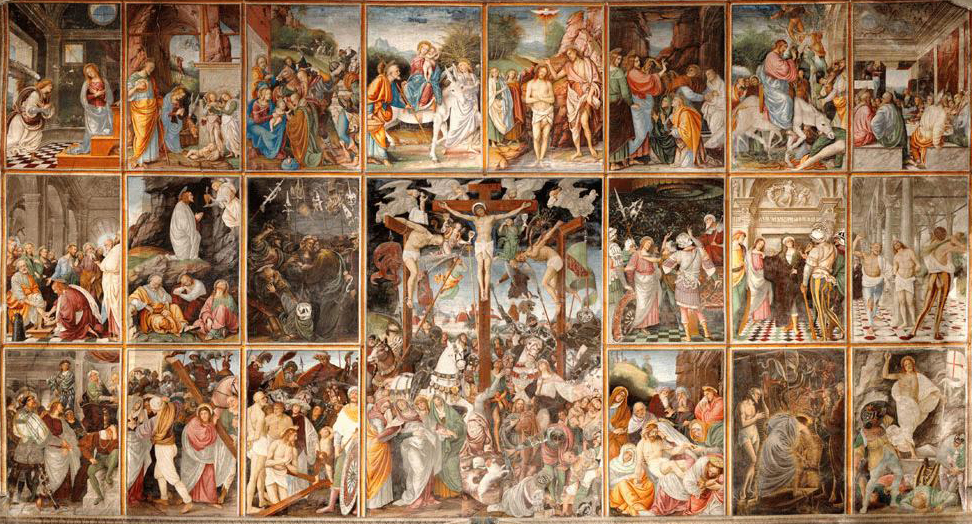 Presentation of Jesus at the TempleA February feast of candles and welcome, kept forty days after Christmas
 St John's EveBonfires, feasting and worship on the short night before John the Baptist's feast
 Twelfth NightThe closing evening of the Christmas season, kept with cake, carols and wassail
Good reading and sources
- Boys, girls, books and roses: a literary love affair in CataloniaThe Guardian, Article
- BBC - ReligionsBBC, Article
- Boys, girls, books and roses: a literary love affair in CataloniaThe Guardian, Article
- BBC - ReligionsBBC, Article
- Saint George's Day on WikipediaEncyclopedia
- More photos on Wikimedia CommonsPhotos and video
- Wikidata recordOpen data
The facts on this page come from the Wikipedia article "Saint George's Day", written by its contributors and used under the CC BY-SA 4.0 licence, and from its Wikidata record (CC0). EveryParampara rewrote the text in its own words, with AI assistance, and compares every page with the article to make sure no passage is copied. It may be reused under the same CC BY-SA 4.0 licence with a link back.
It may contain mistakes. Traditions differ from one family, village and community to the next, and the people who keep them know them best. If something is wrong, tell us. Last refreshed 2026-10-05.
More from the United Kingdom
All the traditions of the United Kingdom
🇮🇱 Jerusalem, Israel and 5 morePresentation of Jesus at the TempleIn praesentatione Domini
A February feast of candles and welcome, kept forty days after ChristmasSpiritual
🇪🇸 Spain and 5 moreSt John's Eve
Bonfires, feasting and worship on the short night before John the Baptist's feastSpiritual
🇬🇧 United Kingdom and 5 moreTwelfth Night
The closing evening of the Christmas season, kept with cake, carols and wassailSpiritual · Feasts and festival meals
 🇮🇹 Italy and 5 moreEasterΠάσχα
The day Christians mark the resurrection, kept with vigils, feasts and eggsSpiritual · Feasts and festival meals
🇮🇹 Italy and 5 moreEasterΠάσχα
The day Christians mark the resurrection, kept with vigils, feasts and eggsSpiritual · Feasts and festival meals
The same idea elsewhere
Spring and renewal compared 🇰🇷 Jeju, South KoreaGut굿
Sacred rites of song, dance, and spirit communion performed by Korean shamansSpiritual
🇰🇷 Jeju, South KoreaGut굿
Sacred rites of song, dance, and spirit communion performed by Korean shamansSpiritual
 🇯🇵 JapanChildren's Dayこどもの日
A Japanese holiday on May fifth celebrating the happiness and growth of childrenFestival
🇯🇵 JapanChildren's Dayこどもの日
A Japanese holiday on May fifth celebrating the happiness and growth of childrenFestival
 🇮🇷 Iran and 4 moreSizdah Bedarسیزدهبدر
An open-air picnic holiday concluding the Iranian New Year celebrationsFestival
🇮🇷 Iran and 4 moreSizdah Bedarسیزدهبدر
An open-air picnic holiday concluding the Iranian New Year celebrationsFestival
 🇯🇵 Kyoto, JapanAoi Matsuri葵祭
A classical Kyoto festival with an imperial procession and ancient shrine ritualsFestival
🇯🇵 Kyoto, JapanAoi Matsuri葵祭
A classical Kyoto festival with an imperial procession and ancient shrine ritualsFestival