Seasons, harvest and the calendarEuropeChristianPagan and ancient
Saint Jonas's Festival
In its own language: Joninės
A Lithuanian midsummer night of bonfires, wreaths, song and morning dew

Saint Jonas's Festival is a midsummer folk observance in Lithuania held on 24 June. Families and communities gather around midnight bonfires to sing, weave herbal garlands, wash in early dew, and search for the mythical fern blossom.
When is Saint Jonas's Festival kept?
Saint Jonas's Festival is kept every year on 24 June and the eve before.
Saint Jonas's Festival, known in Lithuania as Joninės or Rasos, is an annual midsummer gathering celebrated on 24 June. Rooted in ancient seasonal customs and Christian observances honoring Saint John the Baptist, the night brings communities together outdoors. People light massive fires, weave wreaths from meadow herbs, dance to traditional tunes, and seek the elusive midnight fern flower for good fortune.
Fires and floral rituals
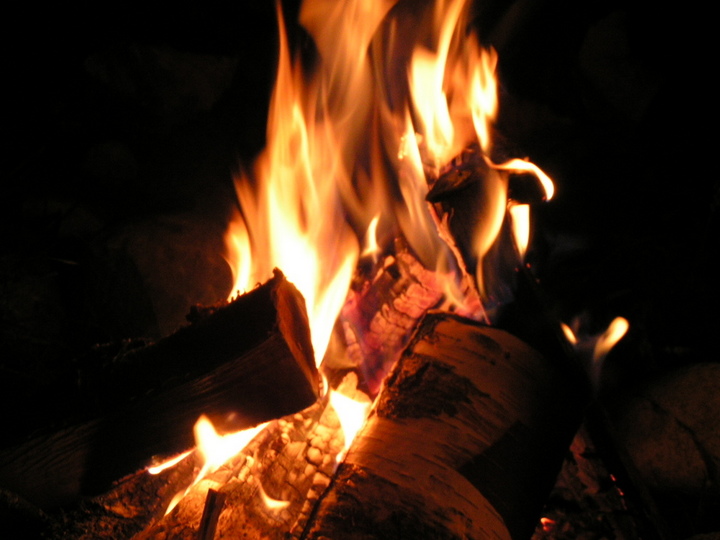
Open-air flames take centre stage as dusk falls across the countryside. Participants light tall bonfires, set fire to wooden wheels mounted atop poles, and carry burning torches through the evening. Many leap across the embers or watch firework displays. People also gather field flowers and wild herbs to braid into head wreaths. In one historic custom, young women decorated a tall Kupolė pole with greenery and defended it from local men before dividing the plants, which were kept to ward off sickness.
The midnight fern flower
A central legend of the festival tells of a miraculous fern that opens its petals for just a single fleeting moment at midnight. Finding this blossom is believed to bring immense luck, but the search must take place in total silence deep in the dark. Groups walk through woods and clearings in hopes of catching a glimpse of the rare wonder, turning the quiet hunt into a shared midsummer pastime.
Blessings of the morning dew
Water and morning moisture hold a special place during Rasos, which translates directly to the Feast of Dews. Traditionally, morning droplets gathered at daybreak were seen as vital for healthy crops and personal vitality. People collected this moisture during the night to sprinkle over home gardens, wash over their own faces, or bathe those suffering from illness, believing the solstice moisture possessed restorative and protective qualities.
Origins and history
The earliest written record of these Lithuanian solstice rites dates to 1372, preserved in chronicles written by Hermann von Wartberge of the Livonian Order. His writings describe Baltic fire ceremonies that Teutonic Knights viewed as pagan and sought to eliminate. Over time, these ancient midsummer practices merged with Christian feasts dedicated to Saint John the Baptist, surviving across generations in Lithuania and among its global diaspora.
How Saint Jonas's Festival is kept
Celebrants assemble outdoors on midsummer eve. People weave crowns from freshly picked grasses and herbs, while torchbearers lead processions to ignite high bonfires or blazing wheels set on poles. Revelers sing, dance, and leap across the fire. At midnight, people venture out in complete silence to search the woods for the mystical fern blossom. Before dawn, dew is gathered from fields to wash faces, treat the sick, or bless garden soil.
When and where
The festival takes place annually on 24 June, beginning during the night before. This timing matches the Feast Day of Saint John the Baptist and coincides with the summer solstice.
Celebrations take place all across Lithuania, from rural fields and riverbanks to town squares. Lithuanian communities living abroad also mark the occasion worldwide with outdoor gatherings, music, and traditional bonfires.
What Saint Jonas's Festival means
The midsummer rites celebrate light, protection, and natural growth. Fire and burning wheels honour the brightest time of the year, while early dew represents agricultural health and vitality for the coming harvest. Braided herbs and defended poles symbolise protection against sickness, and the hunt for the hidden fern blossom reflects the eternal hope for good fortune.
Questions people ask about Saint Jonas's Festival
When is Saint Jonas's Festival kept?
Saint Jonas's Festival is kept every year on 24 June and the eve before.
What is Saint Jonas's Festival?
It is a traditional Lithuanian midsummer folk holiday combining ancient seasonal rites with Christian observances, marked by outdoor fires, herbal wreaths, music, and traditional dancing.
What is the legend of the fern flower?
Folk belief holds that a fern blooms only at midnight for a single second. Anyone who searches quietly in the woods and discovers it receives good fortune.
Why is morning dew important during the festival?
Dew gathered on midsummer night is believed to have special healing powers, protect gardens, help future harvests, and restore health to people who wash with it.
See also
 LosarThe Tibetan Buddhist New Year festival of renewal, offerings, and family feasts
 UgadiA South Indian New Year feast celebrating life with sweet, sour, and bitter tastes
 MehreganAn Iranian autumn festival honoring Mithra, friendship, and the harvest
 LohriA northern Indian midwinter festival of evening bonfires, folk songs and harvest foods
Good reading and sources
The facts on this page come from the Wikipedia article "Saint Jonas's Festival", written by its contributors and used under the CC BY-SA 4.0 licence, and from its Wikidata record (CC0). EveryParampara rewrote the text in its own words, with AI assistance, and compares every page with the article to make sure no passage is copied. It may be reused under the same CC BY-SA 4.0 licence with a link back.
It may contain mistakes. Traditions differ from one family, village and community to the next, and the people who keep them know them best. If something is wrong, tell us. Last refreshed 2026-10-04.
More from Lithuania
All the traditions of Lithuania 🇷🇺 Russia and 5 moreBread and saltхлеб-соль
Bread and salt offered to a guest: a welcome kept from Russia to AlbaniaEtiquette
🇷🇺 Russia and 5 moreBread and saltхлеб-соль
Bread and salt offered to a guest: a welcome kept from Russia to AlbaniaEtiquette
 🇮🇹 Venice, Italy and 2 moreFeast of Saint MarkFesta di san Marco
Saint Mark's day on 25 April, kept with rosebuds in Venice and harvest care in LithuaniaSpiritual
🇮🇹 Venice, Italy and 2 moreFeast of Saint MarkFesta di san Marco
Saint Mark's day on 25 April, kept with rosebuds in Venice and harvest care in LithuaniaSpiritual
 🇵🇱 Poland and 5 moreChristmas Eve
The evening before Christmas, marked by church services, family meals, and gift preparations across Christian cultures.Festival · Dinner
🇱🇹 LithuaniaVėlinės
A Lithuanian remembrance day honouring deceased souls with cemetery prayers and candlesSpiritual
🇵🇱 Poland and 5 moreChristmas Eve
The evening before Christmas, marked by church services, family meals, and gift preparations across Christian cultures.Festival · Dinner
🇱🇹 LithuaniaVėlinės
A Lithuanian remembrance day honouring deceased souls with cemetery prayers and candlesSpiritual
The same idea elsewhere
Healing, luck and protection compared 🇨🇱 ChileNgillatun
A communal Mapuche rite of prayer, sacrifice and dance to maintain cosmic balanceSpiritual
🇨🇱 ChileNgillatun
A communal Mapuche rite of prayer, sacrifice and dance to maintain cosmic balanceSpiritual
 🇯🇵 JapanHadaka Matsuri裸祭り
Japanese festivals where participants clad in loincloths seek luck and purificationSpiritual
🇯🇵 JapanHadaka Matsuri裸祭り
Japanese festivals where participants clad in loincloths seek luck and purificationSpiritual
 🇰🇷 South Korea and 1 moreDaeboreum대보름
A Korean festival of the first lunar full moon, marked by fires, wishes and feastsSeasonal · Feasts and festival meals
🇨🇳 Beijing, ChinaLaba Festival臘八節
A winter porridge festival marking the start of the Chinese New Year seasonFestival · Feasts and festival meals
🇰🇷 South Korea and 1 moreDaeboreum대보름
A Korean festival of the first lunar full moon, marked by fires, wishes and feastsSeasonal · Feasts and festival meals
🇨🇳 Beijing, ChinaLaba Festival臘八節
A winter porridge festival marking the start of the Chinese New Year seasonFestival · Feasts and festival meals