Seasons, harvest and the calendarEuropeChristian
Saint Sylvester's Day
A Christian feast day and year-end celebration marked across Europe and beyond
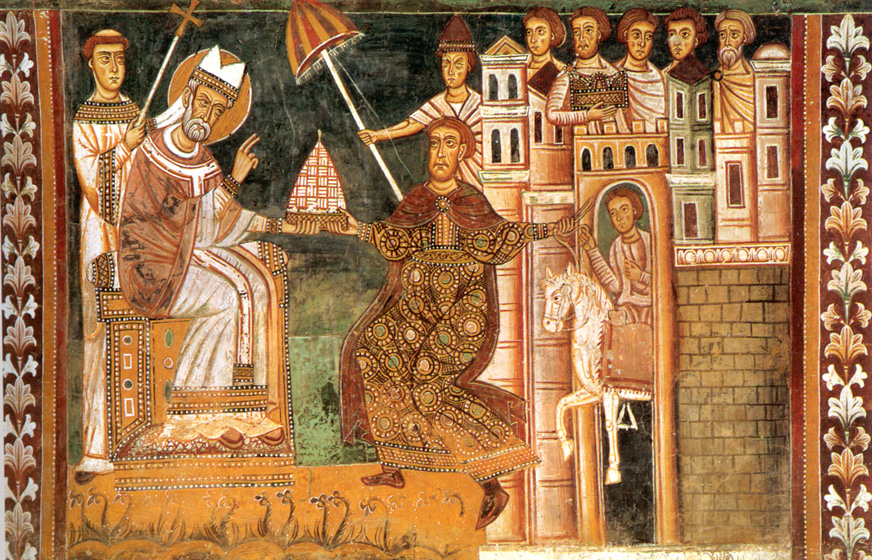
Saint Sylvester's Day honors the fourth-century pope on the anniversary of his burial. Celebrated primarily on 31 December, Christians mark the occasion with midnight church services, festive meals, and local customs to welcome the new year.
When is Saint Sylvester's Day marked?
Saint Sylvester's Day is kept as part of New Year's Eve, which runs from 31 December 2026 to 1 January 2027.
Saint Sylvester's Day is a Christian holiday commemorating Pope Sylvester I, who led the Roman church in the fourth century. Observed on 31 December by Western churches, it falls on the seventh day of Christmastide and coincides with New Year's Eve. Eastern churches honor him on 2 January. Communities mark the feast with late-night church services, feasting, toasts, and distinctive local customs aimed at securing good fortune for the coming year.
Origins and history
Pope Sylvester I headed the church in Rome from 314 until 335. During his papacy, church leaders formulated the Nicene Creed, and workers constructed prominent landmarks including Santa Croce Church, the Basilica of Saint John Lateran, and Old St. Peter's Basilica. Lore from the medieval era attributed the conversion of Constantine the Great to Sylvester, alongside the miraculous curing of the emperor's leprosy. Following his death, Sylvester was interred in the Catacomb of Priscilla on 31 December.
Church rites and evening festivities
Liturgically, the Western observance serves as the seventh day of Christmastide. Believers frequently attend a Watchnight Mass near midnight to mark both the saint's memorial and the close of the calendar year. Eastern denominations instead celebrate the saint on 2 January. Beyond church services, the evening often features social gatherings, visits to the theatre, feasting, fireworks, and raising glasses in celebratory toasts as midnight approaches.
European household customs and omens
Varied folk practices accompany the holiday across Europe. In German homes, people practice Bleigiessen, heating small portions of lead over a flame in an old spoon before plunging the molten metal into cold water. Participants read their fortunes from the resulting forms, expecting happiness from a star or rolling good fortune from a rounded ball. In Vienna, locals take pigs for walks on leashes to invite good luck. Swiss children compete to rise first in the morning, teasing the latest sleeper, while men dress in masks as Silvesterklaus. In Belgium, tradition holds that an unmarried woman must complete her daily tasks before sunset to wed in the new year.
Feasts, sports and international observances
Dining and athletic events also shape the occasion. In Italy, celebratory plates include lentils and sliced sausages, chosen because their circular shape resembles coins and signifies wealth. In Brazil, runners compete in the prestigious Saint Silvester Road Race amidst fireworks displays. In Israel, where the word Silvester differentiates 31 December from Rosh Hashanah, festivities are generally quiet, and 1 January remains a standard working day. Immigrants from the former Soviet Union often celebrate Novy God, blending secular New Year traditions with historical holiday elements.
How Saint Sylvester's Day is kept
Western Christians observe the holiday on 31 December by attending a late-night Watchnight Mass and gathering with friends and family. Celebrations include theatre visits, feasting, midnight toasts, and fireworks. In several European countries, people engage in special folk rituals to divine the future or attract good fortune, such as pouring melted lead into water in Germany, parading leashed pigs in Vienna, and wearing Silvesterklaus masks in Switzerland. Athletes in Brazil compete in a celebrated road race, while Italian families share dishes of lentils and sausage.
When and where
Western denominations observe the feast annually on 31 December, which corresponds to the seventh day of Christmastide and the conclusion of the Gregorian calendar. Eastern churches celebrate Saint Sylvester on 2 January.
The feast is observed across Europe, including Germany, Austria, Italy, Switzerland, and Belgium, as well as in Israel and Brazil. In many Central European languages, Silvester serves as the standard name for New Year's Eve.
What Saint Sylvester's Day means
The holiday honors Pope Sylvester I and his fourth-century leadership of the early church. Because the Western date coincides with the turning of the calendar, its rituals and traditional foods symbolize prosperity, happiness, and protection from misfortune in the year ahead.


Days Saint Sylvester's Day is marked
Questions people ask about Saint Sylvester's Day
When is Saint Sylvester's Day marked?
Saint Sylvester's Day is kept as part of New Year's Eve, which runs from 31 December 2026 to 1 January 2027.
What is Saint Sylvester's Day?
It is a Christian feast day commemorating Pope Sylvester I, who led the church from 314 to 335. In Western churches, it coincides with New Year's Eve and marks the seventh day of Christmastide.
What is Bleigiessen in Germany?
It is a German fortune-telling tradition on Saint Sylvester's Day where participants melt lead in a spoon over a flame and drop it into cold water, interpreting the resulting shapes as signs for the year ahead.
Why is New Year's Eve called Silvester in Europe?
Many European countries use variants of Silvester as the common name for New Year's Eve because the feast day of Saint Sylvester falls on 31 December on the Gregorian calendar.
See also
 Advent wreathAn evergreen ring of candles lit week by week in the lead-up to Christmas
 Yule logA log kept burning on the hearth through the twelve days of Christmas, for luck
 Twelve Days of ChristmasA festive Christian liturgical season linking Christmas Day to the eve of Epiphany
 ChalandamarzA bell-ringing march on the first of March that sends winter out of the Grisons valleys
Good reading and sources
- Saint Sylvester's Day on WikipediaEncyclopedia
- More photos on Wikimedia CommonsPhotos and video
- Wikidata recordOpen data
The facts on this page come from the Wikipedia article "Saint Sylvester's Day", written by its contributors and used under the CC BY-SA 4.0 licence, and from its Wikidata record (CC0). EveryParampara rewrote the text in its own words, with AI assistance, and compares every page with the article to make sure no passage is copied. It may be reused under the same CC BY-SA 4.0 licence with a link back.
It may contain mistakes. Traditions differ from one family, village and community to the next, and the people who keep them know them best. If something is wrong, tell us. Last refreshed 2026-10-06.
More from Germany
All the traditions of Germany
🇩🇪 Hamburg, Germany and 2 moreAdvent wreathAdventskranz
An evergreen ring of candles lit week by week in the lead-up to ChristmasSeasonal
🇬🇧 United Kingdom and 5 moreYule log
A log kept burning on the hearth through the twelve days of Christmas, for luckSeasonal
🇬🇧 United Kingdom and 4 moreTwelve Days of Christmas
A festive Christian liturgical season linking Christmas Day to the eve of EpiphanySeasonal · Feasts and festival meals
 🇮🇪 Ireland and 2 moreEmber daysQuatuor Tempora
A quarterly Western Christian rhythm of fasting, prayer and seasonal thanksgivingSeasonal · Fasting and breaking the fast
🇮🇪 Ireland and 2 moreEmber daysQuatuor Tempora
A quarterly Western Christian rhythm of fasting, prayer and seasonal thanksgivingSeasonal · Fasting and breaking the fast
The same idea elsewhere
New Year compared 🇨🇳 Shanghai, China and 1 moreJiaozi餃子
Crescent Chinese dumplings filled with meat or vegetables, eaten for fortune and feastsTable custom · Breakfast
🇨🇳 Shanghai, China and 1 moreJiaozi餃子
Crescent Chinese dumplings filled with meat or vegetables, eaten for fortune and feastsTable custom · Breakfast
 🇵🇪 Cusco, PeruQoyllur Rit'iQuyllurit'i
An Andean mountain pilgrimage uniting indigenous star lore and Catholic devotionSpiritual
🇵🇪 Cusco, PeruQoyllur Rit'iQuyllurit'i
An Andean mountain pilgrimage uniting indigenous star lore and Catholic devotionSpiritual
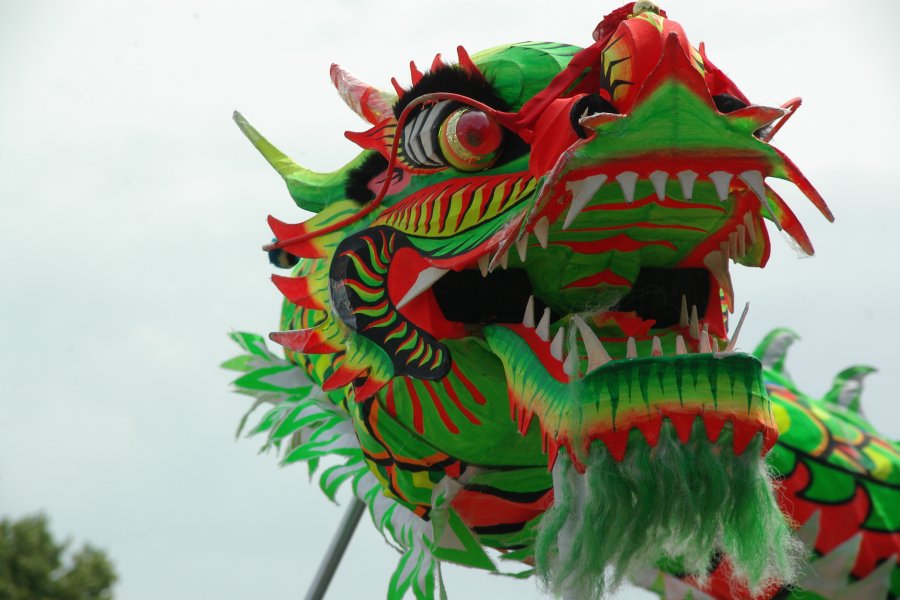 🇨🇳 China and 3 moreDragon dance舞龍 / 舞龙
A long dragon puppet on poles, danced by a team at Chinese New Year and other festivalsPerformance
🇨🇳 China and 3 moreDragon dance舞龍 / 舞龙
A long dragon puppet on poles, danced by a team at Chinese New Year and other festivalsPerformance
 🇰🇷 Jeju, South KoreaGut굿
Sacred rites of song, dance, and spirit communion performed by Korean shamansSpiritual
🇰🇷 Jeju, South KoreaGut굿
Sacred rites of song, dance, and spirit communion performed by Korean shamansSpiritual