Seasons, harvest and the calendarEuropeChristianPagan and ancient
Yule log
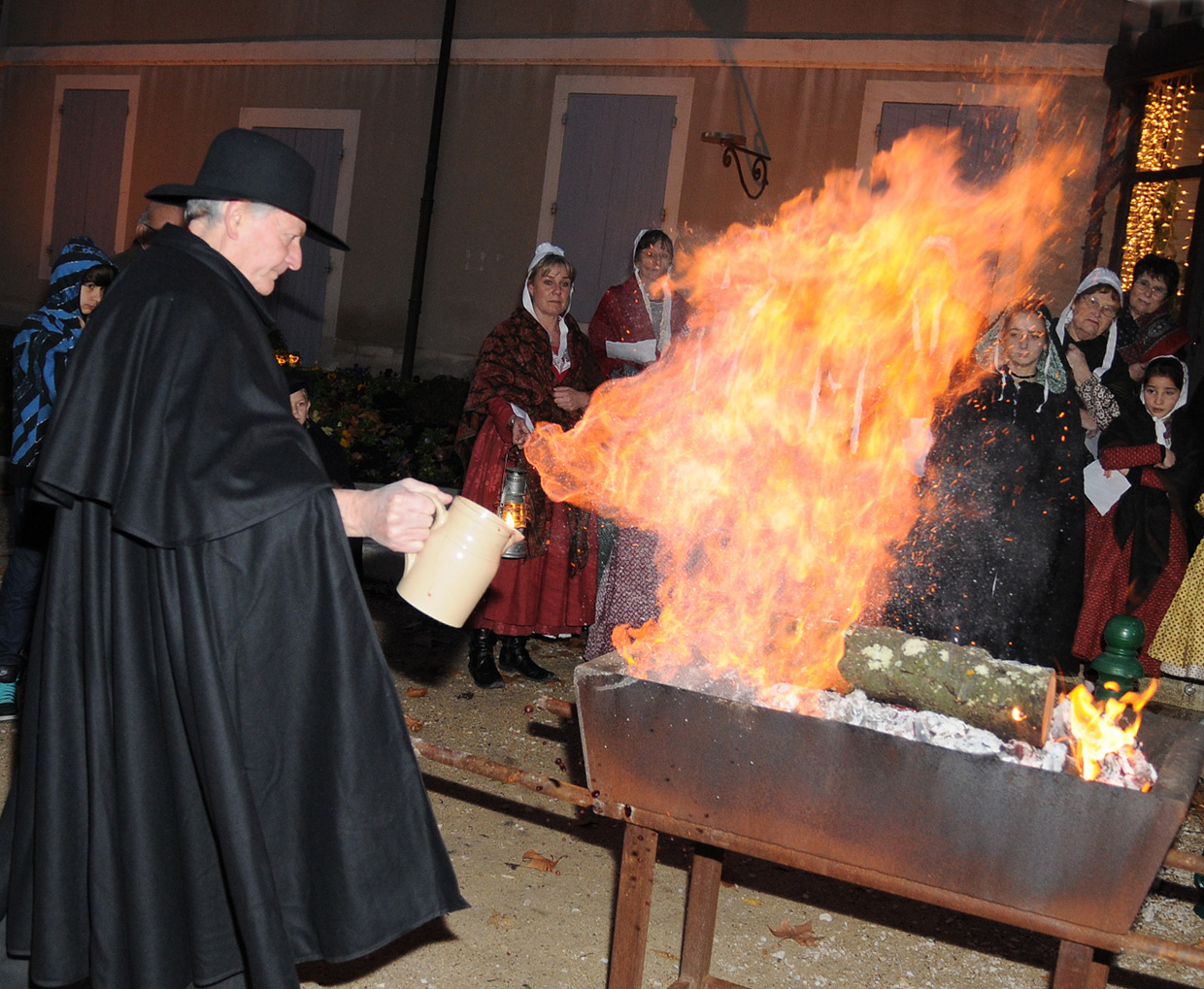
A log kept burning on the hearth through the twelve days of Christmas, for luck

A log picked for the household fire at the darkest point of the year, kept burning through the twelve days of Christmas and then stored for luck. The earliest firm record dates to 1184, and the custom travelled through Europe, reaching North America later, where Christians and modern pagans still keep it.
When is Yule log marked?
Yule log is kept as part of Christmas Eve, which is on Thursday, 24 December 2026.
People choose a log, lay it on the household hearth and burn it through the winter feast. That is the Yule log, a custom of Europe and later North America which Christians and modern pagans keep today, on or near Christmas or Yule. Its name, its date and the way it is burned have shifted from one place and century to the next.
What it is
A Yule log begins as a piece of wood picked out for burning on a hearth in winter. The Yule in the name is the old northern winter feast, which English speakers later used as another word for Christmas. In many accounts the log is large enough to burn for a long stretch. People in different places call it different things and burn it on different nights, so no single way of keeping it exists. What the versions share is a fire at home, treated seriously, in the middle of winter. In one English account the log is given to the household rather than bought.
Disputed origins
Some writers trace the log back to pagan Yule. Others see a medieval Christmas habit that later picked up an older name. In 1725 Henry Bourne argued for Saxon roots and read the burning wood as a sign of the returning sun; scholars have argued with him since. What Yule itself involved is not known. Our fullest account comes from Snorri Sturluson, a Christian writing in the 1200s, long after Iceland's conversion. The sagas speak of fires only as the ordinary hearths of feasting halls. Martin of Braga, a bishop in the sixth century, listed a rite in which wine and grain were tipped over a burning log among the practices he condemned, and Pirmin repeated him and left the hearth out.
Earliest records
The earliest firm piece of writing dates from 1184, a German document about a legal duty: the holding at Ahlen was owed a whole tree so that it could have a private fire on Christmas Eve. A charter drawn up in Dubrovnik in 1272 records shipmasters and sailors bringing a large log to the count of the city on Christmas Eve, laying it on the fire and receiving two gold coins and drink for their trouble. Two German charters show public fires later on, in 1577 and 1591: one required a monastery to supply wood and a special log, on condition that neighbours could warm themselves, and the other obliged a mayor to keep a fire burning near the church on Christmas morning.
Household customs
Older English collections hold the best detail. An account written down in 1914 from Yorkshire describes a log set straight on the hearth, not to be relit once alight and not to be let go out. People sat up around it, telling ghost stories and playing cards. Before supper on Christmas Eve, while the log burned and frumenty waited on the table, every other flame in the house was put out. Two coloured candles, gifts from a grocer, were lit from the log by the youngest person in the room. Everyone stayed silent and made a secret wish. Speech returned once the candles stood on the table.
Luck and protection
Much of what people expect from the log concerns fortune. One overview says a portion should burn each evening until Twelfth Night on 6 January, and the rest of the wood was then kept under a bed, where it was thought to protect the household from lightning and, with some contradiction, from fire. Counting the sparks as the wood burned was a way of reading the year ahead. In Yorkshire a piece was saved to light the following year's log, and a green leaf or branch was carried into the house on Christmas morning before anything was taken out.
How Yule log is kept
Someone chooses a log, or the household is given one. It is laid on the hearth and lit, usually on Christmas Eve. Once lit it should keep burning, and relighting it is thought unlucky. Portions burn night after night until Twelfth Night. In the English account, the youngest person lights candles from it while everyone else is silent and wishing. The remains are kept: under a bed for protection, or by the fire to start the next year. On Christmas morning a green leaf may come in before anything goes out. In some places the wood is dressed with fruit and leaves before it is burned.
When and where
The date moves with the place. Most accounts tie the burning to Christmas Eve, and the English name links it to Yule, the northern winter feast. In England the log was kept going into the twelve days, with a portion burned each evening until Twelfth Night on the sixth of January. Legal records from Germany tie public fires to Christmas itself.
Folklore archives across much of England hold the custom, especially in the West Country and the North Country. Germany and Dubrovnik in Croatia supply the earliest written notices. Versions are also found in France, Italy, Spain and Montenegro, where wine is poured over the wood. Among Croatian and Italian families some are kept with nothing kindled at all. It reached North America and is kept there too.
What Yule log means
Fire at the turn of the year carries meaning for the people who keep this custom. To them the burning wood stands for light coming back while the nights are longest, and for warmth shared in a cold season. Keeping the log alight is a promise that the household will hold together through the winter. The saved piece, the counted sparks and the silent wish all turn the fire into a way of asking for good fortune, safety and enough to eat in the year ahead.


Days Yule log is marked
Questions people ask about Yule log
When is Yule log marked?
Yule log is kept as part of Christmas Eve, which is on Thursday, 24 December 2026.
What is a Yule log?
It is a length of wood chosen to be burned on a household hearth as part of the winter feast. Christians and modern pagans keep the custom today, on or near Christmas or Yule. Its name, its timing and the way it is burned have varied from place to place.
Are its origins pagan?
Nobody knows. Some scholars link it to Germanic, Roman, Celtic, Baltic, Slavic or Albanian paganism, or to a much older shared ritual. Others doubt this, since no source before the 17th century says the log brought any supernatural benefit, and little is known about ancient Yule.
Where is it kept?
English folklore collections record it across much of the country, above all in the West Country and the North. The earliest written notices come from Germany and from Dubrovnik. France, Italy, Spain and Montenegro have versions where wine is poured over the wood, and it is kept in North America too.
What happens to the wood afterwards?
Often a piece is kept. One account puts the leftover under a bed to guard the house from lightning and from fire, and in Yorkshire a saved piece was used to light the next year's log. Sparks from the burning wood were counted to read the coming year.
See also
 Advent wreathAn evergreen ring of candles lit week by week in the lead-up to Christmas
 LosarThe Tibetan Buddhist New Year festival of renewal, offerings, and family feasts
 MakahikiA four-month Hawaiian new year season of peace, harvest gifts, feasts and games
 SamhainA Gaelic festival marking the start of winter with bonfires and ancestor feasts
Good reading and sources
- Yule log on WikipediaEncyclopedia
- More photos on Wikimedia CommonsPhotos and video
- Wikidata recordOpen data
The facts on this page come from the Wikipedia article "Yule log", written by its contributors and used under the CC BY-SA 4.0 licence, and from its Wikidata record (CC0). EveryParampara rewrote the text in its own words, with AI assistance, and compares every page with the article to make sure no passage is copied. It may be reused under the same CC BY-SA 4.0 licence with a link back.
It may contain mistakes. Traditions differ from one family, village and community to the next, and the people who keep them know them best. If something is wrong, tell us. Last refreshed 2026-10-05.
More from the United Kingdom
All the traditions of the United Kingdom 🇮🇪 Ireland and 1 moreImbolcLá Fhéile Bríde
A Gaelic festival heralding spring and honoring Saint Brigid with woven rush crossesSeasonal · Feasts and festival meals
🇩🇪 Hamburg, Germany and 2 moreAdvent wreathAdventskranz
An evergreen ring of candles lit week by week in the lead-up to ChristmasSeasonal
🇮🇪 Ireland and 1 moreImbolcLá Fhéile Bríde
A Gaelic festival heralding spring and honoring Saint Brigid with woven rush crossesSeasonal · Feasts and festival meals
🇩🇪 Hamburg, Germany and 2 moreAdvent wreathAdventskranz
An evergreen ring of candles lit week by week in the lead-up to ChristmasSeasonal
 🇮🇪 Uisneach, Ireland and 1 moreBeltaneBealtaine
A Gaelic first-of-summer festival of bonfires, May flowers and feasting on 1 MaySeasonal
🇮🇪 Ireland and 1 moreSamhain
A Gaelic festival marking the start of winter with bonfires and ancestor feastsSeasonal · Feasts and festival meals
🇮🇪 Uisneach, Ireland and 1 moreBeltaneBealtaine
A Gaelic first-of-summer festival of bonfires, May flowers and feasting on 1 MaySeasonal
🇮🇪 Ireland and 1 moreSamhain
A Gaelic festival marking the start of winter with bonfires and ancestor feastsSeasonal · Feasts and festival meals
The same idea elsewhere
Midwinter and the longest night compared 🇨🇳 Shanghai, China and 1 moreJiaozi餃子
Crescent Chinese dumplings filled with meat or vegetables, eaten for fortune and feastsTable custom · Breakfast
🇨🇳 Shanghai, China and 1 moreJiaozi餃子
Crescent Chinese dumplings filled with meat or vegetables, eaten for fortune and feastsTable custom · Breakfast
 🇵🇪 Cusco, PeruQoyllur Rit'iQuyllurit'i
An Andean mountain pilgrimage uniting indigenous star lore and Catholic devotionSpiritual
🇵🇪 Cusco, PeruQoyllur Rit'iQuyllurit'i
An Andean mountain pilgrimage uniting indigenous star lore and Catholic devotionSpiritual
 🇨🇳 China and 3 moreDragon dance舞龍 / 舞龙
A long dragon puppet on poles, danced by a team at Chinese New Year and other festivalsPerformance
🇨🇳 China and 3 moreDragon dance舞龍 / 舞龙
A long dragon puppet on poles, danced by a team at Chinese New Year and other festivalsPerformance
 🇰🇷 Jeju, South KoreaGut굿
Sacred rites of song, dance, and spirit communion performed by Korean shamansSpiritual
🇰🇷 Jeju, South KoreaGut굿
Sacred rites of song, dance, and spirit communion performed by Korean shamansSpiritual