Schwingen
A traditional Swiss folk wrestling style fought in sawdust rings

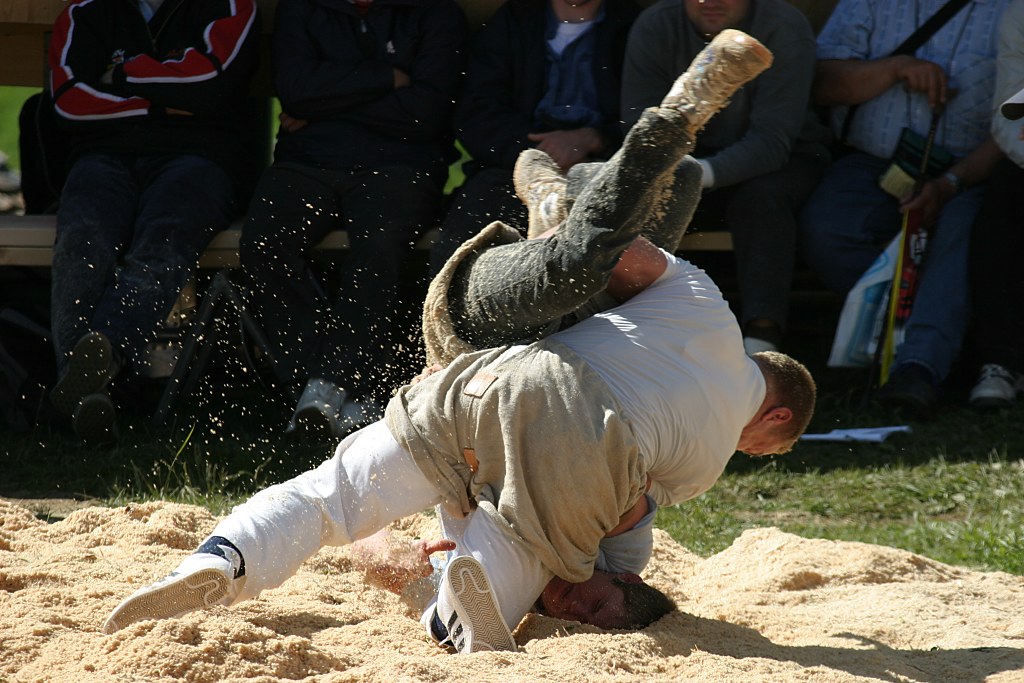
Schwingen is a traditional Swiss folk wrestling style where competitors wear sturdy wrestling breeches and compete in sawdust rings. Practised in Switzerland from early summer to autumn, bouts end when one wrestler pins the other onto their back.
When is Schwingen kept?
Schwingen is kept on between early summer and autumn.
Schwingen is a traditional Swiss grappling sport with deep roots in alpine culture. Competitors wear special over-trousers made of jute and face each other inside circular sawdust rings. The aim is to throw the rival and press both their shoulder blades flat against the ground. Held during outdoor festivals, this physical test brings rural communities together in friendly rivalry, honouring strength, skill and mutual respect.
Origins and history
Grappling in Switzerland dates back to the medieval era, with a thirteenth-century image in Lausanne Cathedral showing wrestlers in a familiar grip. By the seventeenth and eighteenth centuries, Schwingen was an established practice in alpine valleys such as the Emmental, Haslital and Entlebuch. Early descriptions portrayed it as typical of alpine life, and a local pastor wrote down rules in 1797. The modern contest began with the Unspunnenfest in 1805. Later in the nineteenth century, gymnastics teachers and festivals introduced it to larger cities, turning a rural pastime of farmers and herdsmen into a regulated national sport.
Rules and techniques
Wrestlers compete inside a twelve-metre circular ring covered in sawdust. Each competitor puts on short jute breeches equipped with a sturdy belt over their clothes. Both wrestlers grip each other by this waistband before attempting a throw. Common manoeuvres include the kurz, übersprung and wyberhaagge, alongside techniques similar to judo throws. A contestant wins when their opponent's back touches the sawdust while the winner maintains a hold on the breeches with at least one hand. Three referees judge the action. By custom, the winner gently brushes sawdust from the defeated opponent's back.
Festivals and honours
Contests take place at outdoor summer festivals without weight divisions. Most competitors are large craftsmen, including carpenters, butchers and cheesemakers. While traditionally a male sport, a women's association formed in 1992. Wrestlers affiliated solely with Schwingen clubs wear dark pants with blue shirts, whereas members of general sports clubs wear white. Organisers reject commercial sponsorship and cash awards, offering prizes like livestock, furniture or cowbells instead. The greatest fighters receive wreaths, top national athletes are nicknamed the Böse, and the champion of the triennial national festival is crowned Schwingerkönig.
How Schwingen is kept
Wrestlers step into a circular sawdust ring wearing jute breeches over their clothes. Grasping each other by the belt, they attempt to unbalance and throw their opponent. A match ends when one competitor pins both of the other's shoulders to the ground while keeping a grip on their breeches. Three referees score the bout, awarding up to ten points for a successful throw or rewarding the more active wrestler in a draw. After the match, the victor brushes the sawdust from the opponent's back.
When and where
Regional and cantonal tournaments take place outdoors between early summer and autumn. The premier tournament, the Eidgenössisches Schwing- und Älplerfest, is celebrated every three years.
Schwingen is practiced across Switzerland, particularly in the German-speaking pre-alpine regions and valleys like the Emmental, Haslital and Entlebuch, with tournaments taking place in outdoor sawdust rings.
What Schwingen means
Schwingen embodies community values of physical strength, modesty and fair play. Respect between rivals is central: competitors shake hands, and the winner sweeps sawdust off the defeated wrestler's back. The practice eschews money and commercial advertisements, choosing instead to reward winners with traditional prizes such as bulls, cowbells and wreaths, which celebrate rural heritage and fellowship.
Questions people ask about Schwingen
When is Schwingen kept?
Schwingen is kept on between early summer and autumn.
What is Schwingen?
Schwingen is a traditional Swiss folk wrestling style. Competitors wear sturdy jute breeches over their clothes and grip each other by the belt, aiming to throw the opponent and pin both their shoulders to a sawdust ring.
Where and when are matches held?
Tournaments take place outdoors across Switzerland, especially in German-speaking pre-alpine regions, from early summer through autumn. The premier national festival occurs once every three years.
What prizes do winners receive?
Commercial sponsors and cash awards are avoided. Successful wrestlers instead receive practical goods and traditional prizes, such as cowbells, wooden furniture, or livestock like a bull for the national champion.
What does a wrestler wear?
Wrestlers wear short jute over-trousers called Schwingerhosen over ordinary clothes. Members of dedicated Schwingen clubs wear dark trousers and blue shirts, while those from general sports clubs wear white shirts and white trousers.
See also
 Pontifical Swiss GuardThe Swiss military corps charged with guarding the Pope and the Apostolic Palace
 Christmas marketA seasonal street market held during Advent in German-speaking regions and beyond, featuring stalls, food, and crafts.
 ChristkindThe traditional Christmas Eve gift-bringer across Central Europe and Latin America
 RosenmontagThe peak of German carnival, celebrated with satirical street parades and sweets
Good reading and sources
- Schwingen on WikipediaEncyclopedia
- More photos on Wikimedia CommonsPhotos and video
- Wikidata recordOpen data
The facts on this page come from the Wikipedia article "Schwingen", written by its contributors and used under the CC BY-SA 4.0 licence, and from its Wikidata record (CC0). EveryParampara rewrote the text in its own words, with AI assistance, and compares every page with the article to make sure no passage is copied. It may be reused under the same CC BY-SA 4.0 licence with a link back.
It may contain mistakes. Traditions differ from one family, village and community to the next, and the people who keep them know them best. If something is wrong, tell us. Last refreshed 2026-10-04.
More from Switzerland
All the traditions of Switzerland 🇨🇭 Aproz, Switzerland and 2 moreCombat de Reines
An annual Swiss pushing contest where Hérens cows compete for herd dominanceGame
🇨🇭 Aproz, Switzerland and 2 moreCombat de Reines
An annual Swiss pushing contest where Hérens cows compete for herd dominanceGame
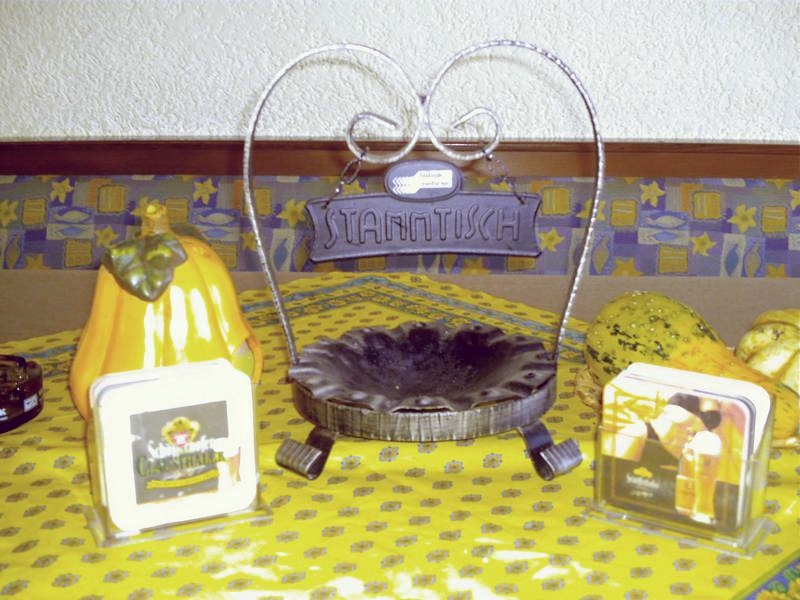 🇩🇪 Germany and 2 moreStammtisch
A weekly gathering of regulars at a reserved table in a pub or restaurant for conversation and community.Etiquette
🇻🇦 Vatican City and 1 morePontifical Swiss GuardPontificia Cohors Helvetica
The Swiss military corps charged with guarding the Pope and the Apostolic PalaceCeremony
🇩🇪 Nuremberg, Germany and 5 moreChristmas marketWeihnachtsmarkt
A seasonal street market held during Advent in German-speaking regions and beyond, featuring stalls, food, and crafts.Festival · Tea, coffee and drinking ceremonies
🇩🇪 Germany and 2 moreStammtisch
A weekly gathering of regulars at a reserved table in a pub or restaurant for conversation and community.Etiquette
🇻🇦 Vatican City and 1 morePontifical Swiss GuardPontificia Cohors Helvetica
The Swiss military corps charged with guarding the Pope and the Apostolic PalaceCeremony
🇩🇪 Nuremberg, Germany and 5 moreChristmas marketWeihnachtsmarkt
A seasonal street market held during Advent in German-speaking regions and beyond, featuring stalls, food, and crafts.Festival · Tea, coffee and drinking ceremonies
The same idea elsewhere
All of this kind 🇺🇸 Fairbanks, United States and 2 moreWorld Eskimo-Indian Olympics
An annual Arctic gathering of traditional survival games, athletics, and cultural artsGame
🇺🇸 Fairbanks, United States and 2 moreWorld Eskimo-Indian Olympics
An annual Arctic gathering of traditional survival games, athletics, and cultural artsGame
 🇲🇽 MexicoRarájipari
A traditional endurance running ball game of the Rarámuri people in northern MexicoGame
🇲🇽 MexicoRarájipari
A traditional endurance running ball game of the Rarámuri people in northern MexicoGame
 🇰🇬 Cholpon-Ata, Kyrgyzstan and 2 moreWorld Nomad GamesДүйнөлүк көчмөндөр оюндары
A two-yearly contest of Central Asian nomadic sports, first staged in Kyrgyzstan in 2014Game
🇰🇬 Cholpon-Ata, Kyrgyzstan and 2 moreWorld Nomad GamesДүйнөлүк көчмөндөр оюндары
A two-yearly contest of Central Asian nomadic sports, first staged in Kyrgyzstan in 2014Game
 🇲🇽 Veracruz, Mexico and 3 moreMesoamerican ballgameōllamalīztli
An ancient Mesoamerican ball game, struck with the hips on stone courtsGame
🇲🇽 Veracruz, Mexico and 3 moreMesoamerican ballgameōllamalīztli
An ancient Mesoamerican ball game, struck with the hips on stone courtsGame