Seasons, harvest and the calendarEast Asia
Twenty-four solar terms
In its own language: 節氣 / 节气 (jiéqì)
Twenty-four points on the sun's yearly path, marking the seasons for China and East Asia
A set of twenty-four moments in the Chinese lunisolar calendar, each matching a point on the sun's yearly journey and a change in nature. Farmers, families and calendar-makers across China, Korea, Japan and Vietnam still use the terms to time field work and order the year.
When is Twenty-four solar terms kept?
Twenty-four solar terms is kept on all year round, a term about every fifteen to sixteen days, set by the sun's position on its path.
Twenty-four times a year, the sun crosses a marked point in its path and a new solar term begins. Each one catches a shift in weather, plants or animals, and for centuries it has told farmers in China when to sow and when to reap. Japan, Korea and Vietnam took up the same terms, and families still use them to order the year.
What the terms are
A solar term is one of twenty-four moments in the traditional Chinese lunisolar calendar. Each begins when the sun reaches a set point on its yearly path, the points sitting an even fifteen degrees apart, and each stands for something happening in the natural world: a turn of season, a warmth, a change seen in plants and animals. Because the sun does not travel at a steady speed, the span between neighbouring terms wavers between fifteen and sixteen days. Every term holds three pentads inside it, short stretches of about five days, and most of them take their names from living signs of the season, the doings of plants and creatures.
How they began
The Book of Documents credits Dan, Duke of Zhou, with fixing the first term. Searching for the middle of the Western Zhou lands, he measured the sun's shadow with a tǔguī, an early kind of sundial, and so settled the date of Dongzhi, the winter solstice. Four seasonal terms followed, and these soon grew to eight. Only in 104 BC, when the Taichu Calendar was drawn up, did all twenty-four enter the official reckoning. Methods changed with time: an older scheme simply cut the year into twenty-four equal slices, while the later Shixian calendar tied every term to the sun's true position, calculated much like the equinoxes and solstices.
Major and minor terms
The twenty-four fall into two families. A term that lands at the midpoint of a month, a zhōngqì, counts as major; one that opens a month belongs to the lesser set. The whole sequence opens with Lichun and closes with Dahan. To help people remember, there is the Song of Solar Terms, a short verse listing the names. It also passes on rules of thumb for Gregorian dates: about two terms come each month, the dates drift by no more than a day or two, and in the first half of the year they gather near the sixth and the twenty-first, in the second half near the eighth and the twenty-third.
Across East Asia
The terms took shape in China and travelled with the Chinese calendar to Korea, Vietnam and Japan, lands that share the East Asian cultural sphere. Their names answer to the seasons of the North China Plain, yet communities under very different skies keep them just as they are, and the characters in which most are written still read the same across the region. In 2016, UNESCO placed the twenty-four terms on its list of intangible cultural heritage, honouring them as knowledge of time won by watching the sun's yearly course. Observatories such as Hong Kong's still announce each date, and the terms sit alongside the modern calendar in daily life.
How Twenty-four solar terms is kept
The year runs from Lichun to Dahan, twenty-four terms in all, with the equinoxes and solstices among them. Each term is worked out from where the sun stands on its path, and each is read three levels deep: the term itself, then the three pentads of about five days within it. Farmers have long set sowing and reaping by the terms, and the calendar leans on them to decide which month repeats as a leap month, a choice that depends on where the sun stands. Almanacs, observatories and newspapers give the dates, and households note when a term arrives.
When and where
The dates follow the sun, not the moon: a term falls when the sun reaches the next fifteen-degree mark on its path, so the gaps run fifteen to sixteen days. On the Gregorian calendar they land near the sixth and twenty-first of a month in the first half of the year, near the eighth and twenty-third in the second, give or take a day or two.
Born in China, the terms spread to Korea, Vietnam and Japan and remain part of the calendars there. They were named for the seasons of the North China Plain, yet they are kept in very different climates, and the written characters for most terms are the same across the region.
What Twenty-four solar terms means
For those who keep them, the terms bind human time to the sky. Each one names a moment when the natural world turns a page, a shift of season or a sign shown by plants and creatures. Farming depends on that fit, since work in the fields must follow the sun, and the calendar itself relies on the terms to place its leap months. Their endurance, from a duke's shadow measurements to a UNESCO listing, shows how strongly people still want the year to answer to nature.
Questions people ask about Twenty-four solar terms
When is Twenty-four solar terms kept?
Twenty-four solar terms is kept on all year round, a term about every fifteen to sixteen days, set by the sun's position on its path.
What is a solar term?
One of twenty-four moments in the traditional Chinese lunisolar calendar, each matching a point on the sun's yearly path and marking something in nature. The terms keep the calendar in step with the seasons, and each is divided into three pentads of about five days.
Where are the terms used?
They arose in China and spread to Korea, Vietnam and Japan. The names describe the seasons of the North China Plain, but people in quite different climates keep them, and most of the terms are written with the same characters across the region.
Who is said to have found the first term?
The Book of Documents credits Dan, Duke of Zhou, with fixing Dongzhi, the winter solstice, while he sought the middle of the Western Zhou lands by measuring the sun's shadow on a tǔguī, an early sundial. All twenty-four became official with the Taichu Calendar of 104 BC.
Are the solar terms recognised as heritage?
Yes. UNESCO added the twenty-four solar terms to its list of intangible cultural heritage in 2016, describing them as knowledge of time built up in China through watching the sun's yearly movement.
See also
 NowruzThe Iranian new year at the March equinox, kept with fire, greenery and picnics
 KadomatsuA Japanese New Year gateway decoration of pine and bamboo where a visiting deity can rest
 Double Ninth FestivalAn autumn festival of mountain walks, chrysanthemum wine and ancestor remembrance
 Tsagaan SarThe Mongolian Lunar New Year festival of peace, elders, white foods and renewal
Good reading and sources
- The Twenty-Four Solar Terms, knowledge in China of time and practices developed through observation of the sun’s annual motionUNESCO, Heritage listing
- The Twenty-Four Solar Terms, knowledge in China of time and practices developed through observation of the sun’s annual motionUNESCO, Article
- Solar term on WikipediaEncyclopedia
- More photos on Wikimedia CommonsPhotos and video
- Wikidata recordOpen data
The facts on this page come from the Wikipedia article "Solar term", written by its contributors and used under the CC BY-SA 4.0 licence, and from its Wikidata record (CC0). EveryParampara rewrote the text in its own words, with AI assistance, and compares every page with the article to make sure no passage is copied. It may be reused under the same CC BY-SA 4.0 licence with a link back.
It may contain mistakes. Traditions differ from one family, village and community to the next, and the people who keep them know them best. If something is wrong, tell us. Last refreshed 2026-10-13.
More from China
All the traditions of China
🇮🇷 Iran and 21 moreNowruzنوروز
The Iranian new year at the March equinox, kept with fire, greenery and picnicsSeasonal
🇨🇳 China and 5 moreDouble Ninth Festival重陽節
An autumn festival of mountain walks, chrysanthemum wine and ancestor remembranceSeasonal · Tea-time and snacking customs
🇲🇳 Mongolia and 2 moreTsagaan SarЦагаан сар
The Mongolian Lunar New Year festival of peace, elders, white foods and renewalSeasonal · Feasts and festival meals
 🇨🇳 ChinaGolden Week黄金周
Seven- or eight-day national holiday periods in China for travel and family visitsSeasonal
🇨🇳 ChinaGolden Week黄金周
Seven- or eight-day national holiday periods in China for travel and family visitsSeasonal
The same idea elsewhere
All of this kind 🇮🇳 IndiaIndian national calendar
India's official civil solar calendar, designed to bring unity to timekeepingSeasonal
🇮🇳 IndiaIndian national calendar
India's official civil solar calendar, designed to bring unity to timekeepingSeasonal
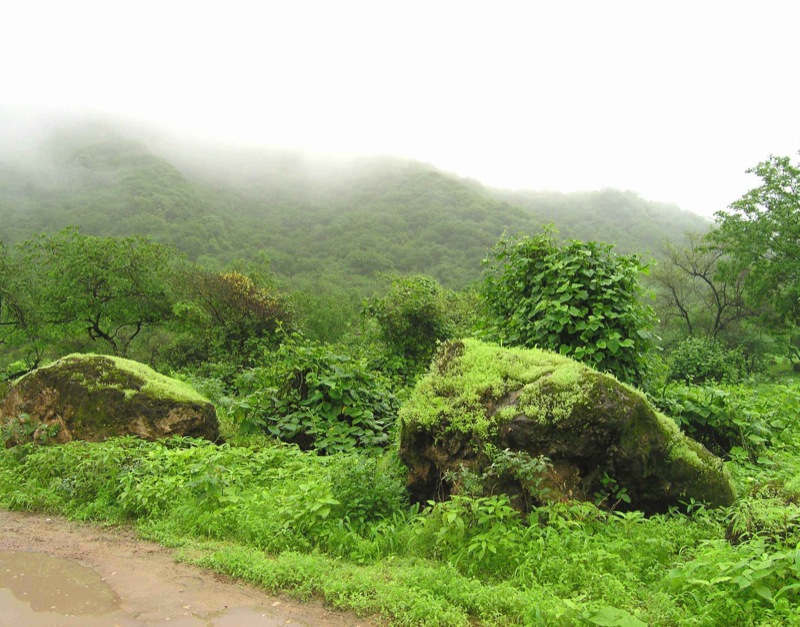 🇴🇲 Salalah, Oman and 3 moreKhareefخَرِيْف
The monsoon season of Dhofar and Al Mahrah, welcomed with a festival in SalalahSeasonal
🇹🇭 ThailandThai solar calendarปฏิทินสุริยคติไทย
The official solar calendar of Thailand, numbered in the Buddhist EraSeasonal
🇴🇲 Salalah, Oman and 3 moreKhareefخَرِيْف
The monsoon season of Dhofar and Al Mahrah, welcomed with a festival in SalalahSeasonal
🇹🇭 ThailandThai solar calendarปฏิทินสุริยคติไทย
The official solar calendar of Thailand, numbered in the Buddhist EraSeasonal
 🇲🇲 Yangon, MyanmarThadingyutသီတင်းကျွတ်
A Burmese celebration and calendar month marking the completion of Buddhist Lent.Seasonal
🇲🇲 Yangon, MyanmarThadingyutသီတင်းကျွတ်
A Burmese celebration and calendar month marking the completion of Buddhist Lent.Seasonal