Festivals and celebrationsNorth AmericaSecular and civic
Tartan Day
In its own language: Là an Tartain
An annual celebration of Scottish culture, clan tartans, and diaspora heritage

Tartan Day is an annual observance honouring Scottish roots and the historical contributions of Scots across the globe. Begun in Canada during the late 1980s, it brings diaspora communities together through pipe bands, Highland dance, and displays of woven clan cloth.
When is Tartan Day kept?
Tartan Day is kept on annually on 6 April in North America, Argentina, and Scotland, and on 1 July in Australia and New Zealand.
Tartan Day is a festive commemoration of Scottish culture and the global diaspora. Communities trace their Scottish lineage by donning traditional patterned woollen kilts, ties, or hats, and gathering for street parades led by pipe bands. Established in Nova Scotia in the late 1980s, the custom offers an opportunity for people of Scottish ancestry to celebrate their roots, share folk music, and mark pivotal dates in Scottish history.
Beginnings in North America
The event was created in eastern Canada in 1986, after Bill Crowell and Jean MacKeracher-Watson proposed a dedicated holiday at a clan society gathering in Nova Scotia. The province officially marked the first celebration on 6 April 1987. From there, provincial assemblies throughout Canada endorsed the date, culminating in federal recognition of National Tartan Day in 2010. The custom also spread south across the border, where American regional groups began holding festivities in the 1990s. The United States Senate gave its approval in 1998, followed by presidential recognition a decade later, transforming local clan reunions into major civic celebrations across North America.
Parades and pageantry
Celebrations commonly feature outdoor marches with bagpipes and drums, Highland step dancing, and displays of Scottish athletics. Major metropolitan centres such as New York City and Ottawa host gatherings where massed pipe bands parade down main thoroughfares. In Angus, Scotland, festivities have grown into a week-long festival featuring historical reenactments, archery, farmers' markets, craft displays, and clan meetings. In Argentina, members of the Scottish community in Buenos Aires walk in annual parades while carrying a symbolic key to Arbroath Abbey, linking South American diaspora families directly to the historic charter that inspired the April calendar date.
Australasian commemorations
In Australia and New Zealand, the holiday is observed on 1 July rather than in April. This midwinter date recalls the repeal in 1782 of British laws that had criminalised male Highland clothing for decades following the Jacobite risings. Encouraged by regional heritage councils since 1989, hundreds of thousands of Australians take part by wearing clan weaves, royal Stewart patterns, or military Black Watch designs. Festivities frequently combine community concerts, Robert Burns poetry recitals, and pipe bands with citizenship welcoming rituals and charitable fundraisers, while food vendors offer classic haggis or contemporary adaptations like haggis patties in local towns.
Dress and symbols
Patterned woollen fabric sits at the centre of the observance. Participants without a specific family pattern often choose broad regional, provincial, or military designs, including Canada's Maple Leaf cloth or national Australian weaves. Beyond kilts, people wear woollen ties, socks, scarves, and caps to show solidarity with their ancestry. In parts of France, including Brittany and Normandy, local Celtic groups have linked the holiday with Breton cultural revivals, hosting kilt fashion shows, piping contests, and folk concerts. Across every continent, the woven fabric serves as a visible emblem of shared kinship and historical survival.
How Tartan Day is kept
Participants wear tartan kilts, ties, shawls, or socks and gather for public and private events. Pipe bands march through city centres and perform drum routines, while Highland dancers give demonstrations on outdoor stages. Clan associations set up informational booths, recite verse by Scottish poets, and hold banquets serving haggis. In several cities, events expand into Tartan Week, offering concerts, sports matches, craft exhibitions, and historical lectures. Some communities combine the celebration with charitable walks, civic citizenship ceremonies, and clan chieftain honours.
When and where
The date depends on the country. Canada, the United States, Argentina, and Scotland observe the holiday on 6 April, matching the 1320 signing of the Declaration of Arbroath. In Australia and New Zealand, it falls on 1 July to mark the 1782 repeal of the Highland dress ban.
Tartan Day is observed across the global Scottish diaspora, with strong participation in Canada, the United States, Australia, New Zealand, Argentina, and parts of France. It is also celebrated within Scotland, particularly in Angus and Aberdeen, where it has inspired multi-day cultural weeks and charity walks.
What Tartan Day means
The observance celebrates Scottish identity, communal survival, and the impact of Scottish emigrants across the world. Woven cloth serves as a badge of ancestral pride and kinship. The July date specifically marks the restoration of cultural freedom after decades of legal suppression under British dress acts, while the April date honours Scottish constitutional history and sovereignty.
On the table
- haggis
- haggisburgers


Questions people ask about Tartan Day
When is Tartan Day kept?
Tartan Day is kept on annually on 6 April in North America, Argentina, and Scotland, and on 1 July in Australia and New Zealand.
What is Tartan Day?
It is an annual celebration honouring Scottish culture, diaspora history, and traditional Highland dress. Participants gather for pipe band parades, folk music, Highland dancing, and clan displays.
What do people wear on Tartan Day?
People wear woollen items made from Scottish tartan, such as kilts, caps, ties, and socks. Those without a specific clan pattern often choose general designs like the Royal Stewart, the Black Watch, Canada's Maple Leaf tartan, or regional Australian patterns.
Where did Tartan Day originate?
The holiday began in Nova Scotia, Canada, following a 1986 proposal by Bill Crowell and Jean MacKeracher-Watson. The province held the first official event in April 1987, after which the observance spread internationally.
See also
 ChristmasA festival of Jesus's birth, kept on 25 December with gifts, lights and shared meals
 HalloweenAn annual observance on 31 October marking the eve of All Saints' Day, rooted in Christian tradition and Celtic heritage
 Christmas treeA decorated evergreen or artificial tree placed indoors to mark the Christmas season.
 HanukkahAn eight-day Jewish festival marking the rededication of the Second Temple in Jerusalem and the miracle of a single day'
Good reading and sources
- BBC News | SCOTLANDBBC, Article
- Là an Tartain am Buenos AiresBBC, Article
- BBC News | SCOTLANDBBC, Article
- Là an Tartain am Buenos AiresBBC, Article
The facts on this page come from the Wikipedia article "Tartan Day", written by its contributors and used under the CC BY-SA 4.0 licence, and from its Wikidata record (CC0). EveryParampara rewrote the text in its own words, with AI assistance, and compares every page with the article to make sure no passage is copied. It may be reused under the same CC BY-SA 4.0 licence with a link back.
It may contain mistakes. Traditions differ from one family, village and community to the next, and the people who keep them know them best. If something is wrong, tell us. Last refreshed 2026-10-04.
More from Canada
All the traditions of Canada
🇮🇪 Ireland and 5 moreHalloween
An annual observance on 31 October marking the eve of All Saints' Day, rooted in Christian tradition and Celtic heritageFestival · Sweets given and shared
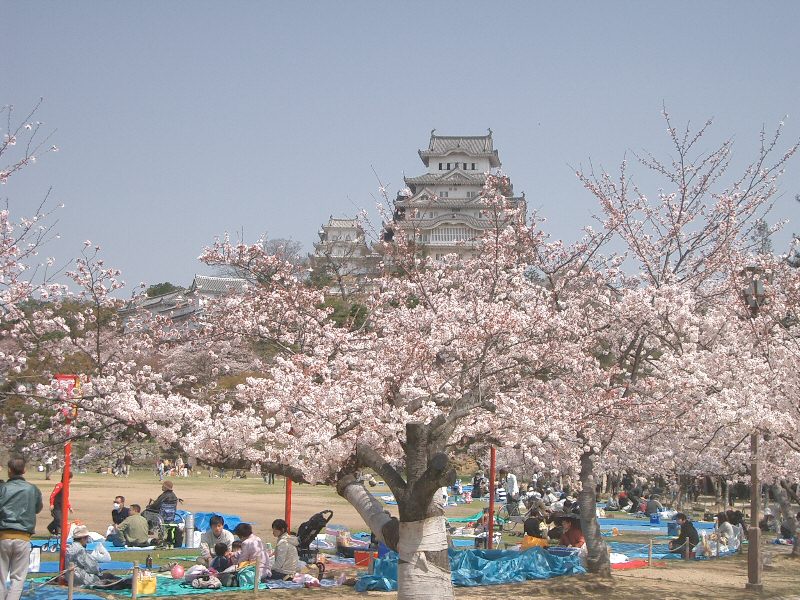 🇯🇵 Kyoto, Japan and 4 moreHanami花見
A Japanese spring custom of gathering under blooming cherry trees to eat, drink, and celebrate the fleeting beauty of thFestival · Lunch
🇯🇵 Kyoto, Japan and 4 moreHanami花見
A Japanese spring custom of gathering under blooming cherry trees to eat, drink, and celebrate the fleeting beauty of thFestival · Lunch
 🇮🇳 Kolkata, India and 5 moreNavaratriनवरात्रि (Navarātri)
A nine-night Hindu festival honoring the goddess Durga and her nine forms through prayer, fasting, and dance.Festival · Fasting and breaking the fast
🇮🇳 Kolkata, India and 5 moreNavaratriनवरात्रि (Navarātri)
A nine-night Hindu festival honoring the goddess Durga and her nine forms through prayer, fasting, and dance.Festival · Fasting and breaking the fast
 🇺🇸 Chicago, United States and 4 moreKwanzaa
A seven-day African American celebration of heritage, family and community valuesFestival · Feasts and festival meals
🇺🇸 Chicago, United States and 4 moreKwanzaa
A seven-day African American celebration of heritage, family and community valuesFestival · Feasts and festival meals
The same idea elsewhere
Remembering the ancestors compared 🇮🇳 Ayodhya, India and 7 moreDiwaliदीपावली (Dīpāvalī)
A five-day festival of lights celebrated across India and its diaspora to mark the victory of light over darkness.Festival · Feasts and festival meals
🇮🇳 Ayodhya, India and 7 moreDiwaliदीपावली (Dīpāvalī)
A five-day festival of lights celebrated across India and its diaspora to mark the victory of light over darkness.Festival · Feasts and festival meals
 🇮🇷 Iran and 7 moreNowruzنوروز
The Iranian new year at the March equinox, kept with fire, greenery and picnicsSeasonal
🇮🇱 Jerusalem, Israel and 1 moreHanukkahחֲנֻכָּה
An eight-day Jewish festival marking the rededication of the Second Temple in Jerusalem and the miracle of a single day'Festival
🇮🇷 Iran and 7 moreNowruzنوروز
The Iranian new year at the March equinox, kept with fire, greenery and picnicsSeasonal
🇮🇱 Jerusalem, Israel and 1 moreHanukkahחֲנֻכָּה
An eight-day Jewish festival marking the rededication of the Second Temple in Jerusalem and the miracle of a single day'Festival
 🇮🇳 Mathura, India and 5 moreHoliहोली (Hindi)
A spring festival of colours and bonfires that marks the end of winter and the triumph of good over evil.Festival
🇮🇳 Mathura, India and 5 moreHoliहोली (Hindi)
A spring festival of colours and bonfires that marks the end of winter and the triumph of good over evil.Festival