Customs of food and drinkSouth AsiaMuslim
Suhur
In its own language: سحور
The pre-dawn meal Muslims eat before a day of fasting in Ramadan
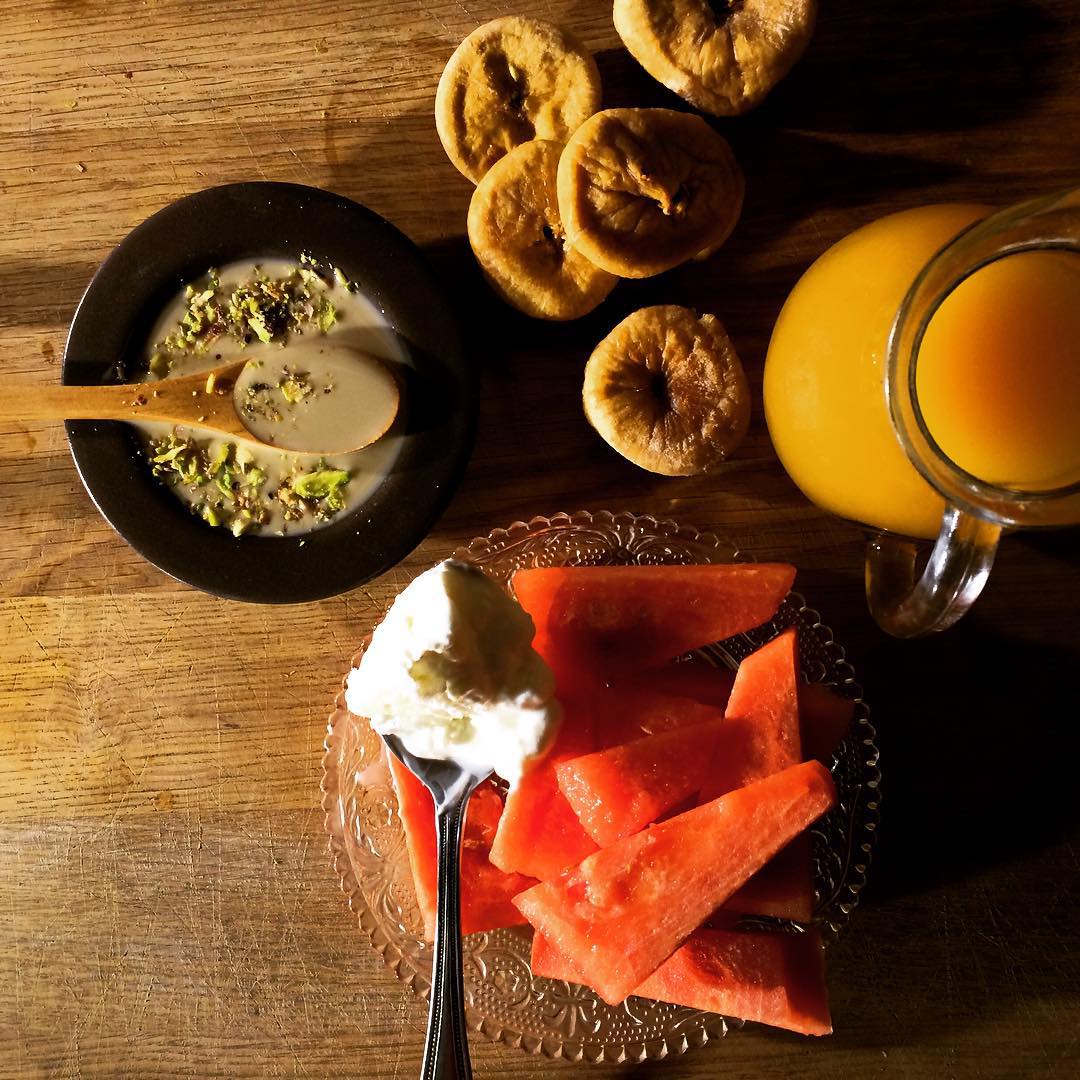
Suhur, also called sehri or sahur, is the pre-dawn meal eaten by Muslims before the daily fast. It belongs to Ramadan above all, though it is also taken before dawn at other times of year, and families in South Asia, the Arab world and beyond wake early to share it.
When is Suhur marked?
Suhur is kept as part of Ramadan, which runs from 8 February to 9 March 2027.
Suhur is the meal Muslims eat in the last hours of the night before a day of fasting. It is taken before the fajr prayer, most often during Ramadan, and it is the counterpart of iftar, the meal that ends the fast at sunset. Communities keep it as a shared, early-morning act of worship as much as a meal.
What suhur is
Suhur is eaten while it is still dark, in the hours leading up to the first light and the fajr prayer. During Ramadan it replaces the usual order of the day's meals: instead of breakfast, lunch and dinner, a Muslim household eats before dawn and then again after sunset at iftar. In some places people also eat a further meal later in the night after iftar. The meal is not required for the fast to be valid, but Islamic tradition treats it as a blessing, something that makes the long day without food and water easier to bear.
The Ramadan drummer
In many cities a waker goes through the streets at night to rouse people for suhur and for prayer. Arabic calls this figure the musaharati, and English often calls him the Ramadan drummer. The history books name Bilal ibn Rabah as the first, walking the roads at night to call sleepers. A drummer in Damascus has described his job as waking the old city for prayer and for the meal. A drummer in Tripoli said the work needs health and stamina for long walks, a strong voice, good lungs, and enough learning to recite poetry. He also prays through the night. In Indonesia a kentongan, a wooden slit drum, or a bedug, a large drum, wakes households for the meal.
Foods at the table
What goes on the table changes with the place. In Pakistan and Bangladesh families often eat paratha, lentils, yoghurt and fruit, which they find keeps hunger away through the hours of daylight. In Arab countries dates, labneh, eggs and herbal teas are common, chosen with thirst in mind as much as hunger. Some nutritionists advise picking foods that release energy slowly and drinking enough to stay hydrated. Making the meal is often a shared job: family members get up together, eat together and pray together before the fast begins, which many describe as part of the point.
Meaning and change
For those who keep it, suhur is more than fuel. It is a time of quiet worship, of shared food before light, and of readiness for the day ahead. Islamic teaching holds that the meal carries blessing and helps a person avoid the irritability and weakness that hunger can bring. In a hadith recorded by al-Bukhari, the Prophet Muhammad tells his companions to eat suhur because a blessing comes with it. The custom of the street waker, however, is thinning out. People stay up later, alarms wake them instead, and in bigger homes and noisier cities a voice outdoors carries less far. In Old Dhaka, the Dhakaiya practice of qasida singing survives.
How Suhur is kept
Muslims wake in the small hours, before first light and before the fajr prayer. They eat and drink together, often as a family, and many then pray. In some neighbourhoods a musaharati walks the streets to wake sleepers, or a drum sounds from a mosque or a lane. The meal ends at the start of the fast, which lasts until sunset. Iftar then breaks the fast in the evening, and in many places a later meal follows it. The pattern repeats every day of Ramadan.
When and where
Suhur is taken before dawn on each day of Ramadan, in the hours before the fajr prayer and the start of the fast. Because Ramadan follows the lunar calendar, the month shifts earlier each year, so the clock time of the meal changes with the season and the place. It is also eaten before dawn at other times of year.
The meal belongs to Muslim households everywhere, and the sources describe it in South Asia, the Arab world and Indonesia. The street waker is heard in Bangladesh, India and Pakistan, in Iraq, Jordan and Palestine, and in Egypt, Sudan, Syria and Saudi Arabia. Old Dhaka keeps its own form of it.
What Suhur means
Suhur carries a sense of blessing for those who keep it. Islamic tradition holds that eating before the fast is a gift, and that it steadies a person through the hungry hours instead of leaving them short-tempered and weak. There is worship in it too: the meal sits next to prayer, and waking the household or the neighbourhood to share it is treated as a kindness. Waking others is itself a service, and the earliest waker in the stories of Islamic history is remembered for it.

Days Suhur is marked
Questions people ask about Suhur
When is Suhur marked?
Suhur is kept as part of Ramadan, which runs from 8 February to 9 March 2027.
What is suhur?
It is the meal Muslims eat in the early morning before a day of fasting, taken before the fajr prayer. During Ramadan it stands in for the day's usual meals, and iftar in the evening marks the end of the fast.
Is it required for the fast?
The fast is valid without it, but Islamic tradition treats suhur as a blessing and a help. A hadith in Sahih al-Bukhari has the Prophet Muhammad telling his companions to take it because a blessing comes with it.
Who wakes people for it?
In many places a musaharati, or Ramadan drummer, walks the streets at night calling sleepers to the meal and to prayer. In Indonesia a kentongan or bedug drum does the same job, and many people now simply use an alarm clock.
What is eaten at suhur?
It varies by place. Families in Pakistan and Bangladesh often have paratha, lentils, yoghurt and fruit, while dates, labneh, eggs and herbal tea are common in Arab countries.
See also
 IftarThe sunset meal that breaks the Ramadan fast, eaten with family and community
 Eid al-FitrThe feast that ends Ramadan, opened with morning prayers, sweets and visits home
 AlpanaA Bengali floor painting tradition using rice flour paste to mark festivals and rituals.
 Tisha B'AvA solemn fast day in July or August to mourn the destruction of the Jerusalem Temples and other Jewish tragedies.
Good reading and sources
- Encyclopaedia BritannicaArticle
- National GeographicNational Geographic, Article
- BBC BitesizeBBC, Article
- National GeographicNational Geographic, Article
- BBC BitesizeBBC, Article
- Suhur on WikipediaEncyclopedia
- More photos on Wikimedia CommonsPhotos and video
- Wikidata recordOpen data
The facts on this page come from the Wikipedia article "Suhur", written by its contributors and used under the CC BY-SA 4.0 licence, and from its Wikidata record (CC0). EveryParampara rewrote the text in its own words, with AI assistance, and compares every page with the article to make sure no passage is copied. It may be reused under the same CC BY-SA 4.0 licence with a link back.
It may contain mistakes. Traditions differ from one family, village and community to the next, and the people who keep them know them best. If something is wrong, tell us. Last refreshed 2026-10-05.
More from Bangladesh
All the traditions of Bangladesh
🇮🇷 Mashhad, Iran and 7 moreIftarإفطار
The sunset meal that breaks the Ramadan fast, eaten with family and communityTable custom · Fasting and breaking the fast
 🇧🇩 Bangladesh and 1 moreShagoranaসাগরানা
A ceremonial wedding feast platter presented to the groom in BangladeshTable custom · Feasts and festival meals
🇹🇷 Turkey and 5 moreEid al-Fitrعيد الفطر
The feast that ends Ramadan, opened with morning prayers, sweets and visits homeFestival · Feasts and festival meals
🇧🇩 Bangladesh and 1 moreAlpanaআলপনা (Alpona)
A Bengali floor painting tradition using rice flour paste to mark festivals and rituals.Performance
🇧🇩 Bangladesh and 1 moreShagoranaসাগরানা
A ceremonial wedding feast platter presented to the groom in BangladeshTable custom · Feasts and festival meals
🇹🇷 Turkey and 5 moreEid al-Fitrعيد الفطر
The feast that ends Ramadan, opened with morning prayers, sweets and visits homeFestival · Feasts and festival meals
🇧🇩 Bangladesh and 1 moreAlpanaআলপনা (Alpona)
A Bengali floor painting tradition using rice flour paste to mark festivals and rituals.Performance
The same idea elsewhere
Fasting and feasting compared 🇮🇪 Ireland and 5 moreHalloween
An annual observance on 31 October marking the eve of All Saints' Day, rooted in Christian tradition and Celtic heritageFestival · Sweets given and shared
🇮🇪 Ireland and 5 moreHalloween
An annual observance on 31 October marking the eve of All Saints' Day, rooted in Christian tradition and Celtic heritageFestival · Sweets given and shared
 🇦🇺 Australia and 5 moreGood Friday
A solemn Christian holy day commemorating the crucifixion and death of Jesus Christ.Spiritual · Fasting and breaking the fast
🇦🇺 Australia and 5 moreGood Friday
A solemn Christian holy day commemorating the crucifixion and death of Jesus Christ.Spiritual · Fasting and breaking the fast
 🇵🇭 Philippines and 5 moreHoly WeekἉγία καὶ Μεγάλη Ἑβδομάς
The solemn seven days leading to Easter, recalling the final week and Passion of JesusSpiritual · Fasting and breaking the fast
🇵🇭 Philippines and 5 moreHoly WeekἉγία καὶ Μεγάλη Ἑβδομάς
The solemn seven days leading to Easter, recalling the final week and Passion of JesusSpiritual · Fasting and breaking the fast
 🇵🇱 Poland and 5 moreChristmas Eve
The evening before Christmas, marked by church services, family meals, and gift preparations across Christian cultures.Festival · Dinner
🇵🇱 Poland and 5 moreChristmas Eve
The evening before Christmas, marked by church services, family meals, and gift preparations across Christian cultures.Festival · Dinner