Music, dance and storytellingEurope
Táncház
A Hungarian folk dance gathering where anyone can learn the steps and dance to live music
Táncház is a casual Hungarian folk dance event, named for a Transylvanian custom of dancing in people's homes. Since the early 1970s it has been part of Hungary's roots revival, and groups at home and abroad still dance and learn the music of Hungarian villages.
When is Táncház kept?
Táncház is kept on regularly through the year, with some places holding one every month.
Táncház is a Hungarian folk dance gathering where people dance together rather than watch a stage show. The name means dance house, after an old Transylvanian habit of holding dances in private homes. Starting in the early 1970s, it grew into a movement that keeps village music and dance alive in Hungarian cities and in Hungarian communities abroad.
What it is
A táncház is a dance event rather than a concert. Musicians play village tunes, and anyone who turns up can learn the steps and join the dancing. Dancers take their cue from what older people in the countryside do, so the point is to keep the old forms instead of inventing new ones. Groups are informal, often just friends who meet to dance and practise together. The word comes from a Transylvanian habit of holding dances in someone's home, which is why it means dance house.
Origins and history
The movement started in the early 1970s, when interest in Hungarian traditional culture revived. Researchers looked closely at village music and dance, and that work helped dancers bring the old forms back as faithfully as they could. For songs and steps they turned above all to Transylvania, and also to other areas that once belonged to the Kingdom of Hungary. From small beginnings the scene spread through Hungary, especially into cities such as Budapest. In November 2011 the táncház method of teaching traditional dance was put on UNESCO's list of intangible heritage needing urgent safeguarding, in recognition of the effort to keep it alive.
Music and dance
Tunes at a táncház come from Hungarian-speaking villages, and each area has its own steps and style. A small band is usual: one or two fiddles, a viola, a bass, sometimes a cimbalom, which is a hammered string instrument. Dancers pick things up by watching and copying, and the same tune may be danced differently depending on where it comes from. Alongside the dance houses, some groups give stage performances for people who prefer to watch. A few bands mix folk material with other music, and one podcast in English is given over mainly to this repertoire.
How it is kept
A gathering usually opens with the band, and then the dancers take the floor in pairs or in lines, depending on the dance. Someone with more experience shows a step to newcomers, and the teaching happens on the spot rather than in a formal class. Bands that know the village repertoire keep the music going for hours. Participants may be Hungarian or not. In some places a dance house is held every month, while elsewhere it turns up at festivals, camps and workshops, where visiting teachers and musicians from Hungary and Transylvania pass on songs and dances.
Around the world
The movement travels with Hungarian communities. In Britain the Csergő band keeps a regular dance house going in London. In Sic/Szék in Romania three streets once had their own dance houses; two have been rebuilt or restored, one of them now a museum, and a foundation there holds a Hungarian dance house every month. Across the United States and Canada, Hungarian dance groups give stage performances, and summer camps bring teachers and musicians over from Hungary and Transylvania to teach. The movement also honours Hungarians living beyond the country's borders, in Transylvania and Slovakia among other places, and in the Siret valley of Moldavia.
How Táncház is kept
Musicians start playing and dancers join in, usually in pairs or in lines. Experienced dancers show the steps to those who are new, and the teaching happens during the dancing itself. Bands that know the village repertoire keep the music going. Participants may be Hungarian or not. In some places a táncház is held every month; elsewhere it appears at festivals, camps or workshops, where visiting teachers and musicians from Hungary and Transylvania pass on songs and dances. Some groups also give performances for people who come to watch rather than to dance.
When and where
Táncház events run all through the year, and there is no single date in the calendar for them. In some places, such as Sic/Szék in Romania, one is held every month. Others appear at festivals and camps. The movement itself began in the early 1970s.
It belongs above all to Hungary, and is strongest in cities such as Budapest. It is also kept in Romanian Transylvania, including Sic/Szék, and among Hungarian communities in Britain, the United States and Canada, where a band in London holds a regular dance house.
What Táncház means
For the people who keep it, the táncház is a way of holding on to a culture that might otherwise have faded. Learning dances and songs from older villagers links dancers to their grandparents' world and to Hungarian speakers beyond the border. The revival also treats the folk traditions of non-Hungarian neighbours in Hungary as equally worth keeping. UNESCO's listing of the teaching method in 2011 honoured the value of passing these skills face to face.
Questions people ask about Táncház
When is Táncház kept?
Táncház is kept on regularly through the year, with some places holding one every month.
What exactly is a táncház?
It is a Hungarian folk dance event where people dance together to live music instead of watching a show on a stage. The name means dance house, taken from an old Transylvanian practice of dancing in private homes. It belongs to the roots revival that began in the early 1970s.
Where is it kept today?
Above all in Hungary, especially in cities such as Budapest. Romanian Transylvania has a monthly dance house at Sic/Szék, a band holds a regular one in London, and Hungarian groups and camps keep the practice alive in the United States and Canada.
Do dancers need to know the steps beforehand?
No. Teaching happens during the event, and more experienced dancers show newcomers what to do. Passing the dance on in person, from one dancer to another, is the heart of the method, and it is the reason UNESCO recognised it.
What music is played?
Village tunes from Hungarian-speaking areas, mostly played by small bands with fiddles, a viola and a bass, and sometimes a cimbalom. Transylvania is the main source. Some groups also play for audiences who come to listen rather than to dance.
See also
 TiniklingA Philippine folk dance where dancers step between clapping bamboo poles
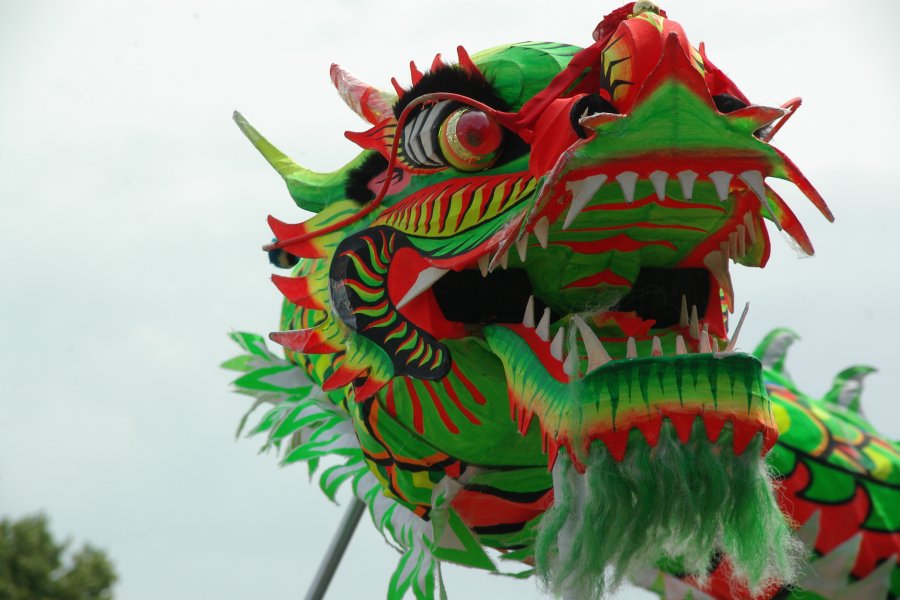 Dragon danceA long dragon puppet on poles, danced by a team at Chinese New Year and other festivals
 RaraA Haitian street music of bamboo trumpets and drums, played in the Easter season
Good reading and sources
The facts on this page come from the Wikipedia article "Táncház", written by its contributors and used under the CC BY-SA 4.0 licence, and from its Wikidata record (CC0). EveryParampara rewrote the text in its own words, with AI assistance, and compares every page with the article to make sure no passage is copied. It may be reused under the same CC BY-SA 4.0 licence with a link back.
It may contain mistakes. Traditions differ from one family, village and community to the next, and the people who keep them know them best. If something is wrong, tell us. Last refreshed 2026-10-05.
More from Hungary
All the traditions of Hungary 🇭🇺 Budapest, Hungary and 2 moreHungarian folk dance
A collection of traditional dances kept by Hungarians in Hungary and across the diaspora.Performance
🇭🇺 Budapest, Hungary and 2 moreHungarian folk dance
A collection of traditional dances kept by Hungarians in Hungary and across the diaspora.Performance
 🇭🇺 Hungary and 5 moreCsárdás
A Hungarian folk dance that moves from a slow start to a fast finish, kept in Hungary and neighboring regions.Performance
🇭🇺 Hungary and 5 moreCsárdás
A Hungarian folk dance that moves from a slow start to a fast finish, kept in Hungary and neighboring regions.Performance
 🇦🇹 Vienna, Austria and 4 moreLipizzanerLipicanec
A gray riding horse breed and centuries-old tradition of classical dressage kept by the Spanish Riding School.Performance
🇦🇹 Vienna, Austria and 4 moreLipizzanerLipicanec
A gray riding horse breed and centuries-old tradition of classical dressage kept by the Spanish Riding School.Performance
 🇷🇸 Serbia and 3 moreKoloКоло
A South Slavic circle dance of linked hands, kept at weddings and gatheringsPerformance
🇷🇸 Serbia and 3 moreKoloКоло
A South Slavic circle dance of linked hands, kept at weddings and gatheringsPerformance
The same idea elsewhere
All of this kind 🇹🇷 Kayseri, Turkey and 4 moreHalay
A traditional line and circle folk dance kept across Turkey, Azerbaijan, Armenia, Iran, and Syria.Performance
🇹🇷 Kayseri, Turkey and 4 moreHalay
A traditional line and circle folk dance kept across Turkey, Azerbaijan, Armenia, Iran, and Syria.Performance
 🇳🇿 Auckland, New ZealandPoi
A Māori performing art of swinging tethered weights in rhythmical patterns.Performance
🇳🇿 Auckland, New ZealandPoi
A Māori performing art of swinging tethered weights in rhythmical patterns.Performance
 🇵🇭 Philippines and 1 morePangalay
A traditional fingernail dance of the Tausūg and Bajau peoples in the Sulu Archipelago and Sabah.Performance
🇵🇭 Philippines and 1 morePangalay
A traditional fingernail dance of the Tausūg and Bajau peoples in the Sulu Archipelago and Sabah.Performance