Customs of food and drinkEast Asia
Tea culture
How tea is prepared, shared and served, from Chinese tea houses to Tibetan butter tea

Tea culture covers the ways tea is prepared and drunk, alone, at home, at work and in public. It takes in formal ceremonies in China, Japan and Korea, British afternoon tea, and local drinks such as Hong Kong milk tea, Tibetan butter tea and Mongolian milk tea, and it travelled with the British Empire to India, Pakistan and beyond.
When is Tea culture marked?
Tea culture is kept as part of Tsagaan Sar, which runs from 7 to 9 February 2027.
Tea culture is the set of habits, rooms and ceremonies that grow up around making and drinking tea. In some countries a cup is everyday refreshment; in others it is a formal welcome, a gift to a guest or the centre of a long ceremony. This page follows tea houses in China, the Japanese and Korean tea ceremonies, British afternoon tea, Tibetan butter tea and Mongolian milk tea, and the routes tea travelled with trade and empire.
What it is
Tea culture is everything that surrounds the making and drinking of tea: who is served first, what cup is used, where people sit and what they talk about. In some places it stays informal, a mug at a desk or a flask on a school trip. In others it becomes a ceremony with set steps. The East Asian ceremonies share roots in Chinese tea practice but differ from each other, and the Japanese and Korean forms are distinct. Brewing changes too. In Tibet the drink is churned with salt and butter. Tea appears in private parties, in public tea houses built for company, and in ordinary homes and workplaces.
Origins and history
Tea was an object of connoisseurship in China by the Tang dynasty at the latest, and Song dynasty drinkers held tasting parties that worked much like modern wine tastings, matching a tea to a vessel that pleased the eye. The Song also brought tea competitions, where a judge weighed the foam, style and taste of whipped powdered tea. Before the Ming dynasty most tea was pressed into bricks, sometimes used as money, and had to be roasted, ground and whisked. In 1391 the Hongwu Emperor ordered court tributes sent as loose leaf instead, and steeped tea replaced whisked tea. New teapots, caddies and smaller cups followed.
Etiquette for a guest
Tibetan tea drinking comes with rules. Invited to a house, a guest is first handed highland barley wine, and dips a finger in and flicks a little away three times, a sign of respect for the Buddha, the Dharma and the Sangha. The cup is filled twice more, and on the last round it has to be emptied or the host takes offence. The host then offers butter tea, which the guest accepts without touching the rim of the bowl, pours a glass and finishes. In Japan green tea is kept for guests and special occasions, and a thermos goes along on family and school outings.
In the tea house
Chinese neighbourhoods and business districts usually have tea houses. Many serve dozens of hot and cold tea blends with snacks to go with them, filling with students and office workers from late afternoon and with night owls later on. Formal houses stock Chinese and Japanese leaves, brewing gear and better snacks, while some vendors simply sell leaves, pots and equipment. Hong Kong has its own version, the cha chaan teng, where milk tea and lemon tea are poured. Tea rooms and tea houses also appear in the United States, Ireland and many Commonwealth cities, a pattern that followed British tea drinking outward.
Today and change
Bottled tea is now everywhere in Japan, and vending machines carry a wide choice of hot and cold kinds. Most Japanese drink green tea processed by modern methods; hand pressing survives as a taught technique and a demonstration for visitors. Oolong is popular, and black tea with milk or lemon is sold in cafes and restaurants. Bubble tea, a Taiwanese drink of tea, milk and tapioca balls, has spread through East and Southeast Asia and on to Europe and North America. In Hong Kong a packaged lemon tea appeared in 1979 and stayed popular, and other brands followed.
How Tea culture is kept
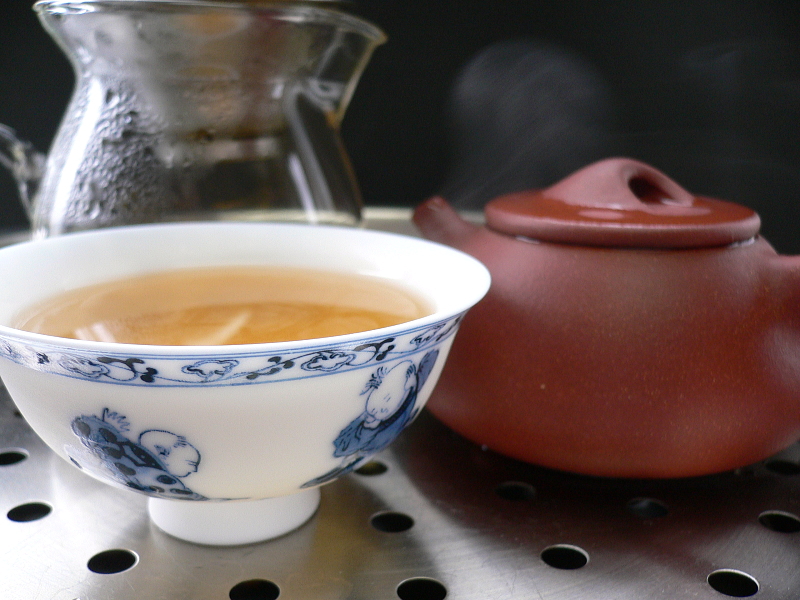
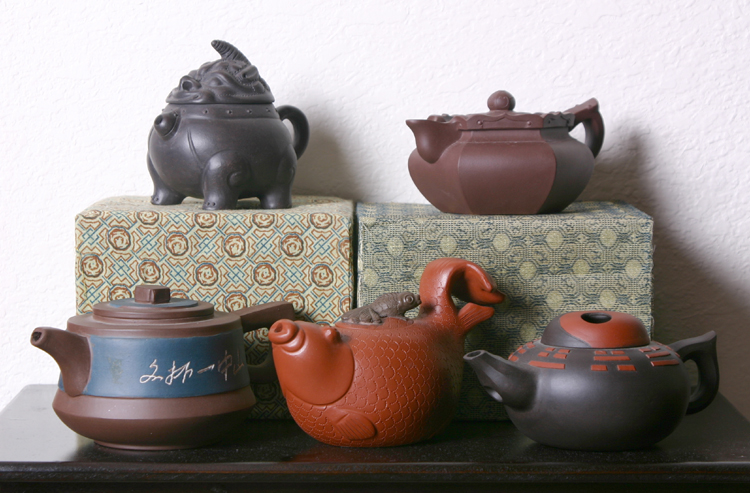
In China water and leaf were once boiled together in a cauldron over a brazier, with salt added for flavour; after 1391 leaves were steeped instead, and loose leaf with purple clay teaware is still the everyday choice. Guests are given what the household keeps. Japanese families pack a thermos of green tea and their own cups for outings, and coffee shops and restaurants pour tea at no charge with refills. A Chinese tea house fills in the late afternoon. In Tibet a guest drinks barley wine first, then butter tea, in that order.
When and where
Tea is drunk through the day rather than on one fixed date. Places open in the morning and fill later: Chinese tea houses grow busy from late afternoon and stay so at night, and teh poci is served morning, afternoon or evening. Some teas mark occasions, among them Tsagaan Sar and Naadam in Mongolia, and the Indonesian nyaneut, kept to welcome the Islamic New Year.
Tea customs are strongest across East and Southeast Asia, in China, Japan, Korea, Taiwan, Hong Kong, Tibet, Mongolia and Indonesia, and in Britain, where tea rooms and afternoon tea took hold. British tea drinking spread to India, Pakistan, East Africa, Australia, New Zealand, Canada and Chile, where British immigration was heavy. Tea rooms and tea houses appear in the United States.
What Tea culture means
Tea carries welcome. In China it is one of the seven necessities of daily life, and a cup is what a household offers a visitor. Japan keeps green tea for guests and for occasions, and the Korean darye, or tea rite, prizes ease and naturalness over strict rules. In Tibet the three flicks of wine before butter tea honour the Buddha, the Dharma and the Sangha, and finishing the glass shows respect for the host. Serving tea well is treated as a way of honouring a person.


Days Tea culture is marked
Questions people ask about Tea culture
When is Tea culture marked?
Tea culture is kept as part of Tsagaan Sar, which runs from 7 to 9 February 2027.
What is tea culture?
It is the set of habits and settings around preparing and drinking tea: who is served, what vessel is used, where people gather, and what the drink means. It covers everyday cups at home and at work as well as formal ceremonies.
Where is tea culture strongest?
China, Japan, Korea, Taiwan, Hong Kong, Tibet, Mongolia and Indonesia have deep tea customs. Britain, Ireland, India, Pakistan, East Africa, Australia, New Zealand, Canada and Chile took up tea through British trade and settlement.
Is there a formal tea ceremony?
Yes, in several places. China held tasting parties and competitions in the Song dynasty. Japan and Korea keep their own ceremonies, with the Korean darye valuing ease and naturalness. Tibet has set rules for receiving tea as a guest.
See also
 Gongfu teaA skilled Chinese method of brewing tea in small teaware with precise heat and timing
 SamovarA heated urn that brews tea for a slow, sociable pour, from Russia to Iran and KashmirHong Kong tea cultureMorning tea with dim sum and milk tea through the day, in Hong Kong's teahouses
 Chinese tea cultureA centuries-old practice of cultivating, brewing, and sharing tea as a social and spiritual ritual in China.
Good reading and sources
- Tea production hits recordThe Daily Star, Article
- BBC NEWS | Programmes | From Our Own CorrespondentBBC, Article
- Tea production hits recordThe Daily Star, Article
- BBC NEWS | Programmes | From Our Own CorrespondentBBC, Article
- Tea culture on WikipediaEncyclopedia
- More photos on Wikimedia CommonsPhotos and video
- Wikidata recordOpen data
The facts on this page come from the Wikipedia article "Tea culture", written by its contributors and used under the CC BY-SA 4.0 licence, and from its Wikidata record (CC0). EveryParampara rewrote the text in its own words, with AI assistance, and compares every page with the article to make sure no passage is copied. It may be reused under the same CC BY-SA 4.0 licence with a link back.
It may contain mistakes. Traditions differ from one family, village and community to the next, and the people who keep them know them best. If something is wrong, tell us. Last refreshed 2026-10-05.
More from China
All the traditions of China
🇨🇳 Chaozhou, China and 1 moreGongfu tea工夫茶
A skilled Chinese method of brewing tea in small teaware with precise heat and timingTable custom · Tea, coffee and drinking ceremonies
🇨🇳 ChinaHong Kong tea culture
Morning tea with dim sum and milk tea through the day, in Hong Kong's teahousesTable custom · Breakfast
🇨🇳 Xi'an, ChinaChinese tea culture中国茶文化 (Zhōngguó chá wénhuà)
A centuries-old practice of cultivating, brewing, and sharing tea as a social and spiritual ritual in China.Table custom · Tea, coffee and drinking ceremonies
 🇨🇳 China and 5 moreYum cha飲茶
A Cantonese breakfast of dim sum and tea, eaten slowly in large groupsTable custom · Breakfast
🇨🇳 China and 5 moreYum cha飲茶
A Cantonese breakfast of dim sum and tea, eaten slowly in large groupsTable custom · Breakfast
The same idea elsewhere
Tea, coffee and the drinking ceremony compared 🇮🇹 Naples, Italy and 5 moreCaffè sospeso
An anonymous gift of a paid cup of coffee for a stranger in needTable custom · Tea, coffee and drinking ceremonies
🇮🇹 Naples, Italy and 5 moreCaffè sospeso
An anonymous gift of a paid cup of coffee for a stranger in needTable custom · Tea, coffee and drinking ceremonies
 🇮🇹 Naples, ItalyCaffè
Italy's daily coffee habit: espresso taken standing at the bar, and moka coffee at homeTable custom · Tea, coffee and drinking ceremonies
🇮🇹 Naples, ItalyCaffè
Italy's daily coffee habit: espresso taken standing at the bar, and moka coffee at homeTable custom · Tea, coffee and drinking ceremonies
 🇲🇾 Malaysia and 4 moreKopitiam
A neighbourhood coffee shop where Southeast Asians share meals, drinks and newsTable custom · Breakfast
🇲🇾 Malaysia and 4 moreKopitiam
A neighbourhood coffee shop where Southeast Asians share meals, drinks and newsTable custom · Breakfast