Festivals and celebrationsSoutheast AsiaBuddhist
Tết
In its own language: Tết Nguyên Đán
The Vietnamese festival of the lunar new year, welcoming spring with family gatherings
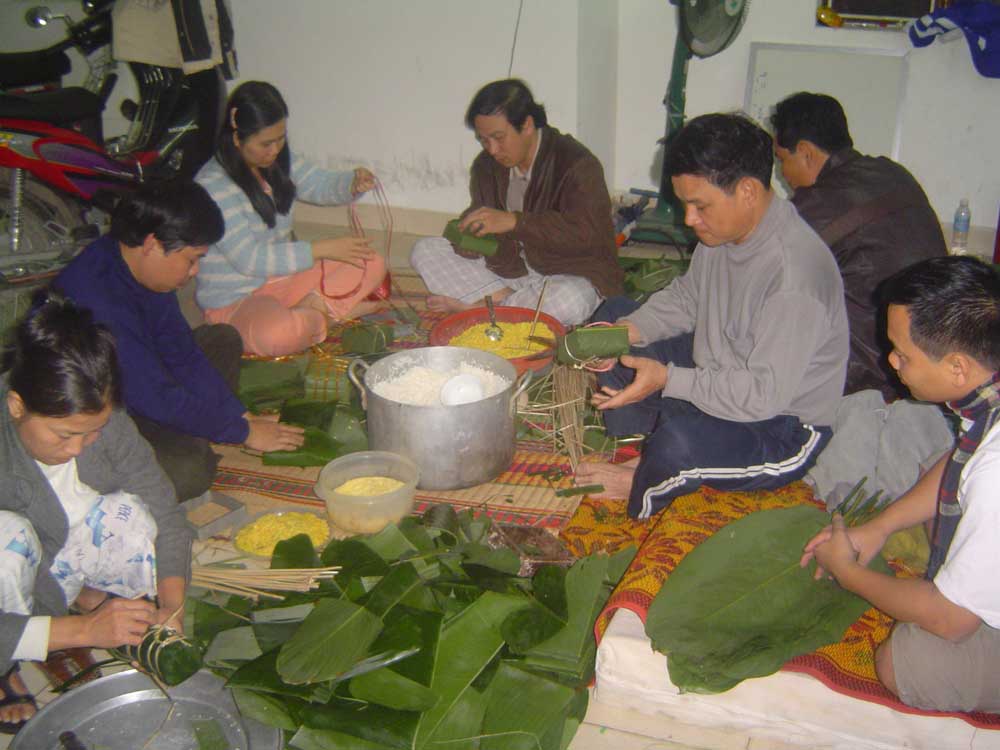
Tết is the Vietnamese lunar new year celebration that welcomes spring with family gatherings, ancestral remembrance, and shared feasts. Observed across Vietnam and its diaspora in late January or early February, people clean their homes, exchange greetings, and offer lucky money in red envelopes.
When is Tết in 2027?
Tết 2027 runs from 7 to 11 February 2027. Other years: 2026, 17 to 21 February 2026; 2028, 26 to 30 January 2028.
Tết, short for Tết Nguyên Đán, is the principal festival of the year in Vietnamese culture. Marking the start of the lunisolar calendar and the return of spring, the holiday centers on renewal, family reunion, and paying respect to ancestors. People put aside the hardships of the past year and welcome fresh fortune through communal meals, gift exchanges, and home visits.
Origins and lore
Scholars have long discussed how the festival began. Chinese rulers introduced the lunar calendar to Vietnam during centuries of imperial administration starting in 111 BC, bringing traditions such as red gift envelopes. Yet Vietnamese lore traces New Year customs further back, pointing to legendary kings and customary foods like square sticky rice cakes. A folk story also explains the three Kitchen Gods, who entered a sacred fire out of mutual loyalty and devotion. Today, the festival incorporates these cultural layers alongside Vietnam's own zodiac, which uniquely includes the cat and buffalo.
Preparing the house
Celebrations begin weeks in advance with deep domestic cleaning and visits to ancestral graves. Families sweep every room before the new year arrives, as doing so during the festival is believed to sweep away good fortune. To invite prosperity, households set up a tall bamboo pole known as a cây nêu or display flowering branches: yellow apricot blossoms in the south, peach blossoms in the north, and fruiting kumquat trees whose produce represents fertility. Unresolved debts are paid off beforehand so the household can enter the new year with a clear mind and peaceful relations.
First visitors and greetings
The first morning belongs entirely to the household. Children wear new clothes and give traditional greetings to elders, who hand them bright red envelopes of lucky money. Great care is taken regarding who crosses the threshold first, a practice known as xông đất. The character of the earliest guest is believed to shape the family fortune for the entire year, leading hosts to invite someone of good standing or step outside right before midnight to enter first themselves. Subsequent days are set aside for visiting friends, relatives, and respected teachers.
Street life and feasts
Outside the home, streets fill with noise and movement. Dancers perform the lion dance behind large masks, while drums, gongs, and firecrackers drive off bad spirits. People visit Buddhist temples to pray and seek fortune readings. At table, families gather around customary holiday dishes, including boiled rice cakes like bánh chưng and bánh tét, braised pork with eggs, dried bamboo shoot soup, and steamed sticky rice. Throughout these gatherings, relatives focus on maintaining harmony, avoiding anger or disagreements to ensure the upcoming year stays bright and fortunate.
How Tết is kept
Preparations begin with tending ancestral graves, settling debts, and cleaning the home before New Year's Eve. On the first day, households focus on family: children offer greetings in exchange for red envelopes of lucky money, and families carefully choose the first person to enter the house. Over the following days, people visit relatives, friends, teachers, and Buddhist temples. Celebrants attend lion dances in the streets, enjoy feasts featuring bánh chưng and braised meats, and keep peace at home to ensure good fortune throughout the coming months.
When and where
Tết falls on the first day of the first month in the Vietnamese lunisolar calendar, usually occurring between late January and 20 February on the solar calendar. The official celebrations span at least three days, while festivities and preparations often last up to a week.
The celebration is observed across Vietnam and within Vietnamese diaspora communities worldwide. While celebrated nationally in every province, local plant decorations differ, with peach blossoms preferred in the northern regions and yellow ochna blossoms favored across central and southern areas.
What Tết means
Tết represents a fresh start, agricultural renewal, and the arrival of spring. Leaving behind the difficulties of the preceding twelve months, families focus on familial respect, gratitude to ancestors, and harmony. Elements like kumquat fruits and red decorations represent fertility, prosperity, and good luck, while noise and lion dances are meant to banish negative spirits.
On the table
- Bánh chưng
- Bánh tét
- Bánh dày
- Canh khổ qua
- Thịt kho hột vịt
- Canh măng
- Giò
- Xôi


Tết dates: 2026, 2027, 2028
| Year | Tết date |
|---|---|
| 2026 | 17 to 21 February 2026 |
| 2027 | 7 to 11 February 2027 |
| 2028 | 26 to 30 January 2028 |
Questions people ask about Tết
When is Tết in 2027?
Tết 2027 runs from 7 to 11 February 2027. Other years: 2026, 17 to 21 February 2026; 2028, 26 to 30 January 2028.
What is Tết?
Tết, short for Tết Nguyên Đán, is the Vietnamese Lunar New Year festival. It is the most important annual holiday in Vietnamese culture, marking the start of spring and the agricultural cycle.
Why is the first visitor of the year important?
Known as xông đất, the first person to enter a home after midnight is believed to determine the family's fortune for the entire year. Hosts often invite a respected person with a cheerful temperament to enter first.
Why do people avoid sweeping during the first days of Tết?
Sweeping during the holiday is considered unlucky because it symbolizes sweeping away good fortune. For this reason, families thoroughly clean their houses before New Year's Eve so cleaning can be avoided during the festival.
See also
 VesakA day to honor the birth, awakening, and passing of the Buddha, kept by Buddhists across Asia.
 Buddha's BirthdayA festival marking the birth of Siddhartha Gautama, observed across Asia with temple rituals and community gatherings.
 Hùng Kings' Temple FestivalA Vietnamese national festival honoring the legendary founding kings with temple worship and processions.
 Tết Trung ThuA mid-autumn festival of lanterns, mooncakes and folklore celebrated across Vietnam
Good reading and sources
- Tết on WikipediaEncyclopedia
- More photos on Wikimedia CommonsPhotos and video
- Wikidata recordOpen data
The facts on this page come from the Wikipedia article "Tết", written by its contributors and used under the CC BY-SA 4.0 licence, and from its Wikidata record (CC0). EveryParampara rewrote the text in its own words, with AI assistance, and compares every page with the article to make sure no passage is copied. It may be reused under the same CC BY-SA 4.0 licence with a link back.
It may contain mistakes. Traditions differ from one family, village and community to the next, and the people who keep them know them best. If something is wrong, tell us. Last refreshed 2026-10-04.
More from Vietnam
All the traditions of Vietnam 🇮🇳 India and 4 moreWater lantern
Small lamps floated on water to honour the dead and ask for good fortuneFestival
🇱🇰 Colombo, Sri Lanka and 5 moreVesakVisakha Bucha (Thailand), Visakha Bouxa (Laos), Full Moon Day of Kason (Myanmar)
A day to honor the birth, awakening, and passing of the Buddha, kept by Buddhists across Asia.Festival
🇮🇳 India and 4 moreWater lantern
Small lamps floated on water to honour the dead and ask for good fortuneFestival
🇱🇰 Colombo, Sri Lanka and 5 moreVesakVisakha Bucha (Thailand), Visakha Bouxa (Laos), Full Moon Day of Kason (Myanmar)
A day to honor the birth, awakening, and passing of the Buddha, kept by Buddhists across Asia.Festival
 🇨🇳 China and 5 moreMid-Autumn Festival中秋節
An annual harvest festival celebrating family reunions, full moons and mooncakesFestival · Sweets given and shared
🇮🇳 India and 6 moreBuddha's Birthday佛诞 (Fódàn)
A festival marking the birth of Siddhartha Gautama, observed across Asia with temple rituals and community gatherings.Festival
🇨🇳 China and 5 moreMid-Autumn Festival中秋節
An annual harvest festival celebrating family reunions, full moons and mooncakesFestival · Sweets given and shared
🇮🇳 India and 6 moreBuddha's Birthday佛诞 (Fódàn)
A festival marking the birth of Siddhartha Gautama, observed across Asia with temple rituals and community gatherings.Festival
The same idea elsewhere
New Year compared 🇲🇳 Mongolia and 2 moreTsagaan SarЦагаан сар
The Mongolian Lunar New Year festival of peace, elders, white foods and renewalSeasonal · Feasts and festival meals
🇲🇳 Mongolia and 2 moreTsagaan SarЦагаан сар
The Mongolian Lunar New Year festival of peace, elders, white foods and renewalSeasonal · Feasts and festival meals
 🇦🇿 AzerbaijanNovruzNovruz Bayramı
The Azerbaijani spring equinox festival of bonfires, sweets and sprouted wheatSeasonal · Feasts and festival meals
🇦🇿 AzerbaijanNovruzNovruz Bayramı
The Azerbaijani spring equinox festival of bonfires, sweets and sprouted wheatSeasonal · Feasts and festival meals
 🇮🇳 Guwahati, IndiaBohag Bihu
A multi-day Assamese New Year festival of cattle rites, music, gifts and feastsSeasonal · Feasts and festival meals
🇮🇳 Guwahati, IndiaBohag Bihu
A multi-day Assamese New Year festival of cattle rites, music, gifts and feastsSeasonal · Feasts and festival meals
 🇮🇷 Iran and 7 moreNowruzنوروز
The Iranian new year at the March equinox, kept with fire, greenery and picnicsSeasonal
🇮🇷 Iran and 7 moreNowruzنوروز
The Iranian new year at the March equinox, kept with fire, greenery and picnicsSeasonal