Music, dance and storytellingEast Asia
Tomimoto-bushi
In its own language: 富本節
A subtle school of Japanese sung storytelling with shamisen, popular in the 1700s
Tomimoto-bushi is a style of Japanese narrative music, sung to the shamisen, which began among students of the singer Miyakoji Bungo-no-jō in the 18th century. Founded by Tomimoto Buzen I, it was most popular in Edo (now Tokyo) in the late 1700s, and is now largely superseded by Kiyomoto-bushi, the style that grew from it.
Tomimoto-bushi is a school of Japanese jōruri, a kind of sung storytelling in which a narrator delivers a tale to shamisen accompaniment. It grew out of the students of an 18th-century singer and became a mark of cultivation in Edo, the city now called Tokyo. Admirers prized its delicacy. Today it is seldom heard in public, kept alive privately by musicians of other schools.
What it is
Jōruri is a form of narrative singing, in which a tale is delivered in song with shamisen accompaniment, and Tomimoto-bushi is one of its schools. It has its own melodic character and its own writing for the instrument. Those who heard it called it subtle and refined, more so than other styles of the day, and admired the intricacy of its shamisen accompaniment. The name comes from the Tomimoto family: Tomimoto Buzen I founded the style.
Origins and history
Tomimoto-bushi belongs to a group of styles that came out of the pupils of Miyakoji Bungo-no-jō, a singer born around 1660 who trained in Kyoto and then caused a stir in Edo, today's Tokyo, when he appeared on the kabuki stage. Tomimoto Buzen I, who lived from 1716 to 1764, founded the school. His son Tomimoto Buzen II, 1754 to 1822, carried it through a long career that marked its highest point. Kiyomoto-bushi grew out of Tomimoto in the early 1800s and in time took its place.
Who took part
At its height, Tomimoto-bushi was heard in the circles of upper-class samurai and of the wealthy merchants who went to the Yoshiwara quarter. Skill in the style became a sign of cultivation. It was said that a young woman hoping to serve in the inner precincts of Edo Castle, where the shōgun lived, was expected to know it. The geisha Tomimoto Toyohina was another admired performer of the late 1700s, and she appears in prints by artists including Utamaro.
Today and change
Kiyomoto-bushi, which arose from Tomimoto-bushi in the early 19th century, now overshadows it. Public performance of Tomimoto pieces has become rare. The style survives in private instead: performers of other schools pass it down among themselves, and a number of Tomimoto compositions have entered the Kiyomoto repertoire. What was once a fashionable accomplishment in Edo, learned by samurai, merchants and young women bound for the shōgun's household, is now a small inheritance carried by a few musicians.
How Tomimoto-bushi is kept
The core is a singer and a shamisen player. The singer carries the story, while the shamisen part in this school is intricate and closely tied to the voice. In the style's heyday the music belonged to the kabuki stage, to the Yoshiwara quarter and to the households of samurai and rich merchants, and young women learned it before entering service at Edo Castle. Today there is little public performance. What remains is transmission in private, from one musician to another, often within schools known for other repertoires, with a few Tomimoto pieces living on in the Kiyomoto repertoire.
When and where
Tomimoto-bushi is not tied to a season or a feast day. Its period of greatest popularity was the late 18th century, during the career of Tomimoto Buzen II. Performances today are occasional and mostly private rather than fixed in the calendar.
The style belongs to Japan. It took shape in a milieu that moved between Kyoto, where Miyakoji Bungo-no-jō trained, and Edo, the city now called Tokyo, where he became a sensation and where the style later found its largest audience. Edo is where it was strongest, in the kabuki theatres and in the Yoshiwara quarter.
What Tomimoto-bushi means
To its admirers, Tomimoto-bushi stood for refinement. It was judged more subtle than other styles and admired for the intricacy of its shamisen accompaniment, and knowing it marked a person as cultivated. Among upper-class samurai and the wealthy merchants of the Yoshiwara it counted as a fashionable accomplishment; for young women seeking service inside Edo Castle it was, by report, close to a requirement. Today that prestige belongs to the memory of the style rather than to its public life.
Questions people ask about Tomimoto-bushi
What is Tomimoto-bushi?
It is a school of Japanese jōruri, a narrative singing tradition in which a story is sung with shamisen accompaniment. It is known for a subtle, refined manner and for intricate writing for the instrument.
When was it most popular?
In the late 18th century, above all during the long career of Tomimoto Buzen II, who lived from 1754 to 1822. The style had been founded by his father, Tomimoto Buzen I, in the mid-1700s.
Where does it come from?
Japan. It emerged among the students of the singer Miyakoji Bungo-no-jō, who trained in Kyoto and became famous in Edo, the city we now call Tokyo, and Edo was where the style was strongest.
Who kept it?
Upper-class samurai and the wealthy merchants who went to the Yoshiwara quarter, with the geisha Tomimoto Toyohina among its noted performers. Skill in it was said to be expected of young women entering service in the inner precincts of Edo Castle.
Is it still performed?
Rarely in public. Kiyomoto-bushi, which grew out of it in the early 19th century, eclipsed it. It lives on in private transmission between performers of other schools, and some Tomimoto pieces are now part of the Kiyomoto repertoire.
See also
 RakugoJapanese solo comic storytelling told from a cushion using a fan and a cloth
 IkebanaThe Japanese art of arranging cut branches and flowers in a vessel
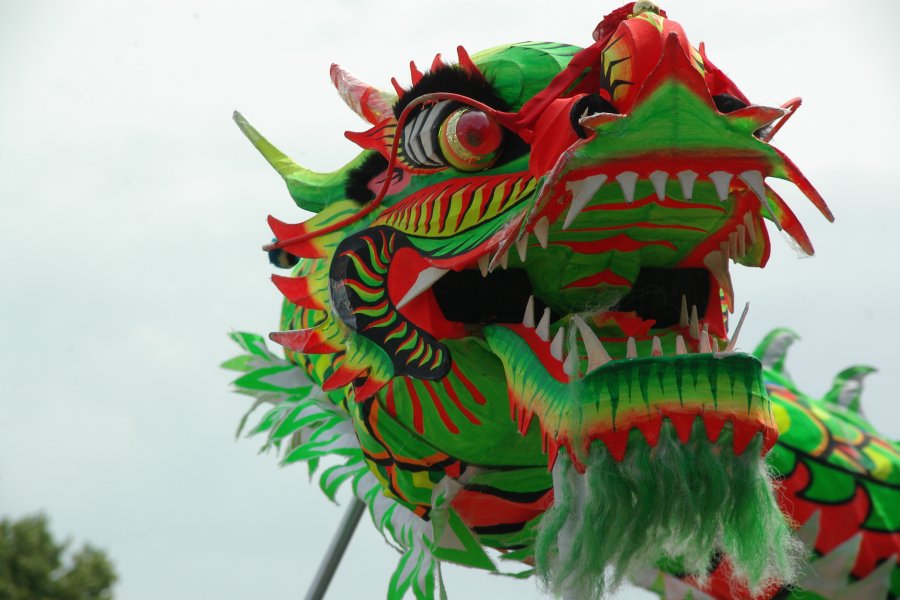 Dragon danceA long dragon puppet on poles, danced by a team at Chinese New Year and other festivals
 KyōgenA traditional Japanese comic theatre of short farces, spoken dialogue and satire
Good reading and sources
The facts on this page come from the Wikipedia article "Tomimoto-bushi", written by its contributors and used under the CC BY-SA 4.0 licence, and from its Wikidata record (CC0). EveryParampara rewrote the text in its own words, with AI assistance, and compares every page with the article to make sure no passage is copied. It may be reused under the same CC BY-SA 4.0 licence with a link back.
It may contain mistakes. Traditions differ from one family, village and community to the next, and the people who keep them know them best. If something is wrong, tell us. Last refreshed 2026-10-09.
More from Japan
All the traditions of Japan 🇨🇳 China and 5 moreLion dance舞獅
A dynamic ritual dance featuring costumed lions, drums and martial acrobaticsPerformance
🇯🇵 Tokyo, JapanRakugo落語
Japanese solo comic storytelling told from a cushion using a fan and a clothPerformance
🇯🇵 Kyoto, JapanKyōgen狂言
A traditional Japanese comic theatre of short farces, spoken dialogue and satirePerformance
🇨🇳 China and 3 moreDragon dance舞龍 / 舞龙
A long dragon puppet on poles, danced by a team at Chinese New Year and other festivalsPerformance
🇨🇳 China and 5 moreLion dance舞獅
A dynamic ritual dance featuring costumed lions, drums and martial acrobaticsPerformance
🇯🇵 Tokyo, JapanRakugo落語
Japanese solo comic storytelling told from a cushion using a fan and a clothPerformance
🇯🇵 Kyoto, JapanKyōgen狂言
A traditional Japanese comic theatre of short farces, spoken dialogue and satirePerformance
🇨🇳 China and 3 moreDragon dance舞龍 / 舞龙
A long dragon puppet on poles, danced by a team at Chinese New Year and other festivalsPerformance
The same idea elsewhere
All of this kind 🇹🇷 Kayseri, Turkey and 4 moreHalay
A traditional line and circle folk dance kept across Turkey, Azerbaijan, Armenia, Iran, and Syria.Performance
🇧🇷 BrazilBaião
A syncopated folk rhythm and partnered dance from northeastern BrazilPerformance
🇹🇷 Kayseri, Turkey and 4 moreHalay
A traditional line and circle folk dance kept across Turkey, Azerbaijan, Armenia, Iran, and Syria.Performance
🇧🇷 BrazilBaião
A syncopated folk rhythm and partnered dance from northeastern BrazilPerformance
 🇺🇦 Kyiv, UkraineBanduraБандура
A Ukrainian plucked string instrument played to accompany epic songs and folk balladsPerformance
🇺🇦 Kyiv, UkraineBanduraБандура
A Ukrainian plucked string instrument played to accompany epic songs and folk balladsPerformance
 🇳🇿 Auckland, New ZealandPoi
A Māori performing art of swinging tethered weights in rhythmical patterns.Performance
🇳🇿 Auckland, New ZealandPoi
A Māori performing art of swinging tethered weights in rhythmical patterns.Performance