Traditional Chinese marriage
In its own language: 婚姻 (hūnyīn)
A wedding rite that joins two families, arranged by a go-between and sealed with gifts

Traditional Chinese marriage is a set of rites in which a couple marries and their two families are bound together, often after a match arranged between the households. The ceremony took a settled shape as the six rituals of the Zhou dynasty, and Chinese families kept it over many centuries, with gifts and go-betweens marking each step.
When is Traditional Chinese marriage kept?
Traditional Chinese marriage is kept on when a couple marries, after a match has been agreed and the betrothal gifts and dowry exchanged.
A wedding in Chinese tradition is a public act between households, not only a private promise between two people. The old forms set out who speaks for each side, what is exchanged, and what the couple and their families owe one another. Many of these customs took shape long ago and were passed down within families for centuries.
What it is
A Chinese wedding joins two households as much as two people, and the two families often settle the match between themselves before the pair marries. This culture expected a man to keep one formal wife, called the qi or zhengqi, while allowing other partners, the qie or concubines, in practice. Both families held a stake in the outcome: their standing, their interests and their hope of grandchildren rested on it. The word for marriage, hūnyīn, offers a clue to the ceremony itself, since 婚 shares its sound with 昏, dusk, pointing to weddings held after nightfall.
Origins and history
A story tells of Nüwa and Fu Xi, a sister and brother who wanted to marry in an empty world and felt ashamed of it. They climbed the Kunlun Mountains and asked the heavens for a sign, promising to wed if mist covered the peak. The mist came. Nüwa hid her blushing face behind a fan, and in some Chinese villages brides still raise a fan to shield their own. Rites then formed in stages: deer skin served as a betrothal mark in the Fuxi era, a meeting hall appeared under the Xia and Shang, and by the Zhou dynasty the six rituals of wedding etiquette were complete. People also spoke of the three letters.
Choosing a match
Word between the two households was carried by a matchmaker. In the Ming era the rules, as written in Duke Wen's Family Rules, said an agent had to come and deliver messages. A go-between could tie two powerful houses into one. Writers of the period preferred mei po, roughly granny, to the more neutral mei ren, which hints that older women held this work. The four matchmakers in the novel The Golden Lotus, Wang, Xue, Wen and Feng, are all elderly women. Since marriage was thought to belong to the yin side, men stayed out of arranging it, and unmarried girls were not trusted with it. Persuasion was the chief skill.
What it means
For Confucian thinkers a marriage secured the family line and brought together households of different surnames, which is one reason a son was preferred to a daughter. The married pair counted as society's basic unit. Old law treated a union between people of the same surname as incest: an imperial decree of 484 CE records that the ban reached back to the Zhou dynasty, and anyone who broke it took sixty blows and saw the marriage declared void. Cosmology read the sexes as yin and yang, complementary yet ranked, with yin standing for what was female, dark and passive, and moralists built norms of obedience on that reading.
Marriage and politics
Matches reached beyond the household. Marriage alliances, called ho-ch'in or harmonious kinship, became a tool of Han-era statecraft, written into peace treaties meant to placate the Xiongnu empire, whose rulers asked the imperial family for women. In several periods the relatives of an emperor's wife or mother held great power. Under the Qing, the article notes, no ban on marrying across ethnic lines appears within the Eight Banners, yet in the families that held power a chief wife was nearly always Manchu, while a qie could be Han. Leading officials were largely Manchu, so a prospective wife's origin, and whether she came from the Eight Banners, mattered. In Jiaxing, in Zhejiang, Ming and Qing noble families used marriage to enlarge their clans.
How Traditional Chinese marriage is kept
A go-between usually opened the matter, carrying word between the two households. Once both sides agreed, the groom's family sent betrothal gifts and the bride's family answered with a dowry. Weddings were commonly held after dark, an hour linked to yin and yang crossing. Afterwards the wife moved into her husband's family house and came under his mother's authority. A man might later add secondary wives or concubines, especially if no son had been born. A wife could also be repudiated, and a widow faced difficulty if she wished to marry again.
When and where
No single date governs it. A wedding day was settled by the families with the matchmaker's help, after the match was agreed and the betrothal gifts and dowry exchanged. Ceremonies were usually held in the evening, because dusk was understood as the moment when yin and yang meet.
The custom belongs to Chinese societies, and the record's examples come mainly from China. Forms are described from the Zhou and Han courts to Ming and Qing households. Jiaxing, in Zhejiang, is named as a place where leading families in the Ming and Qing turned marriage into a way of building clan strength.
What Traditional Chinese marriage means
A wedding carried the weight of two families rather than two individuals. Confucian teaching held that it continued the paternal line and joined households of different surnames, and that the married pair formed society's basic unit. Yin and yang framed husband and wife as complementary but ranked. Dusk ceremonies, the fan a bride raised to hide her face, and the dread of same-surname unions all held meaning for the people who kept these customs.


Questions people ask about Traditional Chinese marriage
When is Traditional Chinese marriage kept?
Traditional Chinese marriage is kept on when a couple marries, after a match has been agreed and the betrothal gifts and dowry exchanged.
What is traditional Chinese marriage?
It is a set of wedding rites in which two people marry and their families are joined as well. The households often arranged the match beforehand, and the ceremony moved through accepted steps such as messages, gifts and formal agreements.
Who carried messages between the two families?
A go-between, most often called mei po, which means granny, carried messages between the households. Older women dominated the work. Ming law required ordinary families to use an agent to carry word between the two sides. A matchmaker also had to be persuasive.
Could a man have more than one wife?
A man had one formal wife, the qi. Beyond her, he could take concubines, called qie, and this became more likely if his wife had no son. A wife could be repudiated for various reasons, and remarriage was hard for a widow.
Where is it kept?
It belongs to Chinese societies, and the examples in the record come mainly from China, across the Zhou and Han dynasties and on through Ming and Qing times.
See also
 Lion danceA dynamic ritual dance featuring costumed lions, drums and martial acrobatics
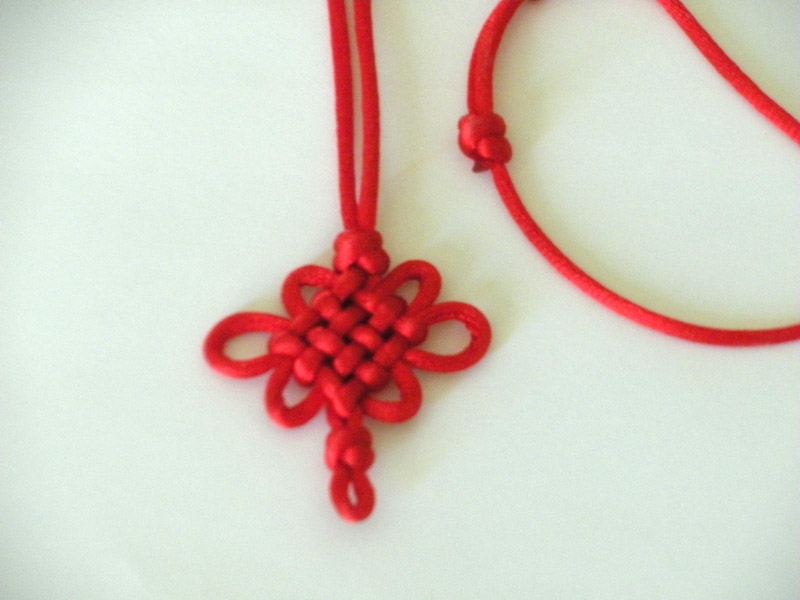 Chinese knottingA folk craft of cord tied into lucky shapes, made in China and given as charms
 KizombaA close, slow couple dance from Angola, named after a Kimbundu word for party
 BarkclothCloth beaten from tree bark across Africa, Asia and the Pacific
Good reading and sources
- Traditional Chinese marriage on WikipediaEncyclopedia
- More photos on Wikimedia CommonsPhotos and video
- Wikidata recordOpen data
The facts on this page come from the Wikipedia article "Traditional Chinese marriage", written by its contributors and used under the CC BY-SA 4.0 licence, and from its Wikidata record (CC0). EveryParampara rewrote the text in its own words, with AI assistance, and compares every page with the article to make sure no passage is copied. It may be reused under the same CC BY-SA 4.0 licence with a link back.
It may contain mistakes. Traditions differ from one family, village and community to the next, and the people who keep them know them best. If something is wrong, tell us. Last refreshed 2026-10-05.
More from China
All the traditions of China 🇬🇧 United Kingdom and 5 moreBridesmaid
The companions and attendants who support a bride during a weddingRite of passage
🇬🇧 United Kingdom and 5 moreBridesmaid
The companions and attendants who support a bride during a weddingRite of passage
 🇨🇳 China and 5 morePostpartum confinement
A period of rest, nourishment, and seclusion for mothers after giving birth.Rite of passage
🇨🇳 China and 5 morePostpartum confinement
A period of rest, nourishment, and seclusion for mothers after giving birth.Rite of passage
 🇨🇳 ChinaChinese funeral rituals
Traditional rites of mourning, vigils, offerings, and ancestor veneration across ChinaRite of passage
🇨🇳 ChinaChinese funeral rituals
Traditional rites of mourning, vigils, offerings, and ancestor veneration across ChinaRite of passage
 🇨🇳 China and 4 moreSky burialབྱ་གཏོར་ (bya gtor)
A Tibetan funeral in which the dead are laid out on a rock for vulturesRite of passage
🇨🇳 China and 4 moreSky burialབྱ་གཏོར་ (bya gtor)
A Tibetan funeral in which the dead are laid out on a rock for vulturesRite of passage
The same idea elsewhere
Weddings compared 🇼🇸 Samoa and 1 moreʻIe tōga
Precious woven mats exchanged in Samoan ceremonies to honor family ties and chiefly status.Dress
🇼🇸 Samoa and 1 moreʻIe tōga
Precious woven mats exchanged in Samoan ceremonies to honor family ties and chiefly status.Dress
 🇹🇱 Timor-LesteUma Lulik
Sacred ancestral clan houses and ritual shrines in East TimorSpiritual
🇹🇱 Timor-LesteUma Lulik
Sacred ancestral clan houses and ritual shrines in East TimorSpiritual
 🇮🇩 Indonesia and 2 moreKenduri
A communal prayer meal and gathering shared across Indonesia, Malaysia and BruneiSpiritual · Feasts and festival meals
🇺🇬 UgandaKwanjula
A formal marriage introduction ritual of the Baganda people in Uganda, where families meet to exchange gifts and seek blRite of passage
🇮🇩 Indonesia and 2 moreKenduri
A communal prayer meal and gathering shared across Indonesia, Malaysia and BruneiSpiritual · Feasts and festival meals
🇺🇬 UgandaKwanjula
A formal marriage introduction ritual of the Baganda people in Uganda, where families meet to exchange gifts and seek blRite of passage