Life-cycle ritesEast AsiaShinto, Taoist and folk ChineseBuddhist
Chinese funeral rituals
Traditional rites of mourning, vigils, offerings, and ancestor veneration across China

Chinese funeral rituals are rites of mourning and passage shaped by folk belief, Buddhism, Taoism, and Confucian filial devotion. Across China, families gather for vigils, offer food and spirit money, dress according to kinship ties, and escort the deceased to ensure a peaceful transition into the afterlife.
When is Chinese funeral rituals marked?
Chinese funeral rituals is kept as part of Qingming Festival, which is on Monday, 5 April 2027.
Chinese funeral rituals guide the deceased from the living world into the afterlife while affirming family loyalty and filial duty. Grounded in ancestral respect, these customs bring relatives together for deathbed vigils, ceremonial preparation of the body, and symbolic offerings. Though practices differ between rural communities and modern cities, traditional rites focus on honouring ancestors, soothing spirits, and observing strictly defined mourning codes based on kinship status.
Vigils and preparation
When a relative approaches death, family members take turns keeping watch beside the bed in a vigil known as shou ling. A white banner hung above the home's doorway alerts neighbours to the loss. After death, the body receives a ritual bath and is dressed in clean funeral garments before being moved into a wooden coffin. Decorated with traditional four-character phrases, the coffin rests in a mourning hall, where it is believed to keep body and soul united during the departure from the earthly realm. Before the final procession, relatives gather for family ceremonies to pay structured respects according to their generational rank.
Dress and offerings
Funerary attire reflects a mourner's closeness to the departed. Sons and daughters wear plain white clothing, while more distant relations wear black, blue, or green. Bright colours like red, yellow, and brown are excluded from mourning periods, which historically extended up to three years. Mourners burn joss paper and incense alongside food gifts. Burning spirit money is believed to transform paper currency into wealth for the underworld, ensuring that the deceased receives support from living descendants. Taoist or Buddhist monks may be invited to chant prayers, helping the departed soul find peace and preventing it from wandering as a restless spirit.
Kinship and social rank
Traditional customs follow strict age hierarchies based on Confucian ideals of filial piety. Elders never perform ceremonial mourning or bow to younger generations. If an unmarried young person or a child passes away, parents do not offer prayers, and the body cannot enter the family home. In such cases, burial happens quietly without standard rites because no descendants exist to conduct them. Funerals also vary by region, with elaborate village ceremonies drawing thousands of participants, and specialised water ceremonies arranged for those who lost their lives at sea so their unrecovered spirits do not wander endlessly.
History and modern change
Chinese burial customs have evolved over millennia, from massive imperial tombs like the Terracotta Army of the third century BCE to twentieth-century civic reforms. Cremation was common in the Song era, banned during the Ming and Qing dynasties, and reintroduced in the mid-twentieth century to preserve farming land. Modern urban funerals often feature concise memorial meetings and cremation, while traditional multi-day village ceremonies remain influential in the countryside. The connection between generations continues through the annual Qingming Festival, when families visit ancestral graves, tidy tombstones, and perform commemorative rites.
How Chinese funeral rituals is kept
Mourning begins with family members watching over the dying relative in shifts. After death, the household hangs a white banner over the entrance, and an obituary announces an auspicious funeral date chosen from the fortune calendar. Following ritual washing and dressing, the body is placed in a coffin within the funeral hall. Relatives present offerings of food, incense, and spirit money, while monks may recite prayers. Mourners dress in designated colours according to their relationship with the deceased, with close children in white. The coffin is then carried in procession to a cemetery or crematorium for final rites.
When and where
Funerals take place over roughly seven days following a death, with procession dates chosen for auspicious timing using a traditional fortune calendar. The broader mourning period can extend over several years, and families renew their duties annually at the Qingming Festival by cleaning ancestral graves.
These rites take place throughout China, in family homes, funeral parlours, village halls, cemeteries, and crematoriums. While urban centres predominantly practice cremation, rural villages often maintain extended multi-day burials involving wide community gatherings.
What Chinese funeral rituals means
Funeral rites express filial piety and maintain the reciprocal bond between the living and the dead. White clothing represents mourning, while red is avoided because of its association with celebration. Burning joss paper and presenting food provide resources for the soul in the underworld, preventing the deceased from becoming a restless ghost. In Confucian thought, proper burial establishes final serenity and installs the deceased within the enduring lineage of ancestors.


Days Chinese funeral rituals is marked
Questions people ask about Chinese funeral rituals
When is Chinese funeral rituals marked?
Chinese funeral rituals is kept as part of Qingming Festival, which is on Monday, 5 April 2027.
What are Chinese funeral rituals?
They are traditional mourning ceremonies and passage rites practiced across China. Rooted in folk beliefs, Buddhism, Taoism, and Confucian filial piety, they involve deathbed vigils, ritual dressing, offerings, and processions to honour ancestors and guide souls into the afterlife.
Where and when do these funerals take place?
Funerals occur in homes, funeral parlours, and cemeteries across China. The main ceremonies typically span seven days following a death, with dates selected using a fortune calendar. Families also visit and clean graves annually during the Qingming Festival.
Why do mourners wear white instead of red?
White is the traditional colour of mourning and death in Chinese culture, worn especially by children and close kin. Red is excluded from funerals because it is the celebratory colour traditionally reserved for weddings and happy occasions.
What is the purpose of burning spirit money?
Relatives burn paper spirit money, or joss paper, as an offering to the deceased. The practice is believed to transmit real funds to the afterlife, providing the departed soul with economic support and reflecting ongoing care from living descendants.
See also
 Qingming FestivalA spring custom of sweeping family graves and honouring ancestors across East Asia.
 Buddha's BirthdayA festival marking the birth of Siddhartha Gautama, observed across Asia with temple rituals and community gatherings.
 SabantuyA summer festival of folk sports and feasting celebrated by Tatar, Bashkir, Chuvash, and Kazakh communities.
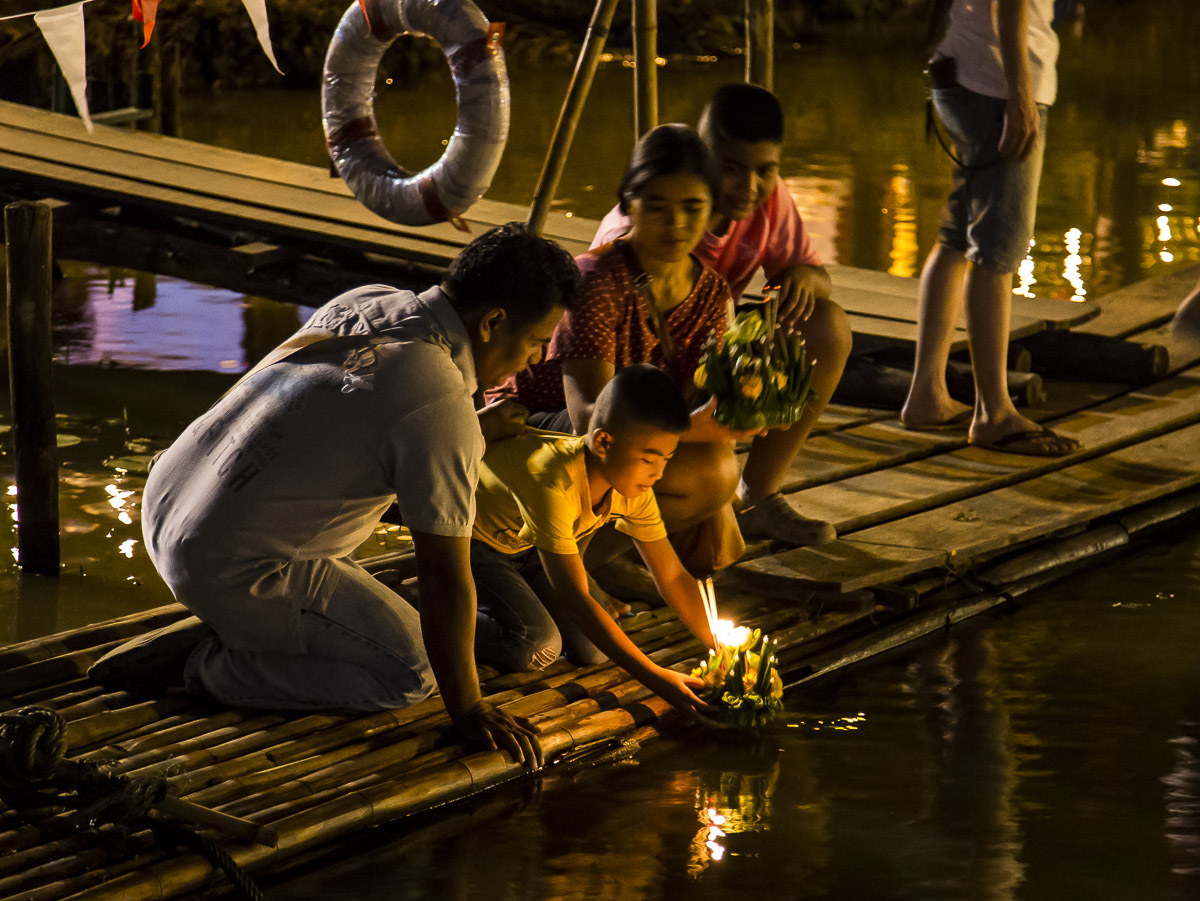 Loy KrathongA Thai festival of floating leaf baskets on rivers to honor water and release negativity.
Good reading and sources
- Chinese funeral rituals on WikipediaEncyclopedia
- More photos on Wikimedia CommonsPhotos and video
- Wikidata recordOpen data
The facts on this page come from the Wikipedia article "Chinese funeral rituals", written by its contributors and used under the CC BY-SA 4.0 licence, and from its Wikidata record (CC0). EveryParampara rewrote the text in its own words, with AI assistance, and compares every page with the article to make sure no passage is copied. It may be reused under the same CC BY-SA 4.0 licence with a link back.
It may contain mistakes. Traditions differ from one family, village and community to the next, and the people who keep them know them best. If something is wrong, tell us. Last refreshed 2026-10-04.
More from China
All the traditions of China 🇮🇳 India and 2 moreFuneral
The ceremony a community holds when someone dies, from burial to cremationRite of passage
🇮🇳 India and 2 moreFuneral
The ceremony a community holds when someone dies, from burial to cremationRite of passage
 🇨🇳 China and 4 moreSky burialབྱ་གཏོར་ (bya gtor)
A Tibetan funeral in which the dead are laid out on a rock for vulturesRite of passage
🇨🇳 Taiyuan, ChinaGuan Li冠禮
The traditional Chinese coming-of-age capping ceremony for young menRite of passage
🇨🇳 China and 4 moreSky burialབྱ་གཏོར་ (bya gtor)
A Tibetan funeral in which the dead are laid out on a rock for vulturesRite of passage
🇨🇳 Taiyuan, ChinaGuan Li冠禮
The traditional Chinese coming-of-age capping ceremony for young menRite of passage
 🇨🇳 China and 5 morePostpartum confinement
A period of rest, nourishment, and seclusion for mothers after giving birth.Rite of passage
🇨🇳 China and 5 morePostpartum confinement
A period of rest, nourishment, and seclusion for mothers after giving birth.Rite of passage
The same idea elsewhere
Death and mourning compared 🇲🇽 Mexico City, Mexico and 1 moreDay of the DeadDía de Muertos
A Mexican remembrance of deceased family and friends with altars, marigolds and feastsFestival · Sweets given and shared
🇲🇽 Mexico City, Mexico and 1 moreDay of the DeadDía de Muertos
A Mexican remembrance of deceased family and friends with altars, marigolds and feastsFestival · Sweets given and shared
 🇳🇿 New Zealand and 2 moreMarae
A cleared, sacred gathering place at the heart of Māori and Polynesian community lifeSpiritual
🇳🇿 New Zealand and 2 moreMarae
A cleared, sacred gathering place at the heart of Māori and Polynesian community lifeSpiritual
 🇼🇸 Samoa and 1 moreʻIe tōga
Precious woven mats exchanged in Samoan ceremonies to honor family ties and chiefly status.Dress
🇼🇸 Samoa and 1 moreʻIe tōga
Precious woven mats exchanged in Samoan ceremonies to honor family ties and chiefly status.Dress
 🇹🇱 Timor-LesteUma Lulik
Sacred ancestral clan houses and ritual shrines in East TimorSpiritual
🇹🇱 Timor-LesteUma Lulik
Sacred ancestral clan houses and ritual shrines in East TimorSpiritual