Customs of food and drinkEuropeChristian
Vasilopita
In its own language: Βασιλόπιτα
A New Year bread or cake with a coin baked inside, shared out slice by slice

Vasilopita is a bread, cake or pie baked for New Year's Day in Greece and across southeastern Europe, with a coin or small charm hidden in the dough. It is shared at midnight or on 1 January, Saint Basil's day, and whoever finds the coin is said to have luck for the year.
When is Vasilopita marked?
Vasilopita is kept as part of Epiphany and Three Kings, which is on Wednesday, 6 January 2027.
A coin or a small charm goes into the dough of vasilopita before it is baked, and whoever finds it in their slice is thought to have luck for the year ahead. The bread or cake belongs to Greek New Year's Day and to Saint Basil's feast on 1 January, and families across Greece and the wider Balkans keep the custom.
Bread, cake or pie
What goes into a vasilopita changes from one region to another and from one kitchen to the next. It may be a bread, a cake or something closer to a pie. Some households make it with tsoureki. Others build it on a custard base called galatopita, which means milk pie. In Thessaly a phyllo pie filled with pork is used instead, again with a coin tucked inside. Greeks also call it Chronopita, from the words for time or year and for pie, which means New Year's pie.
The hidden coin
Before baking, someone slips a coin into the dough. Small charms or trinkets sometimes take its place. The cutting usually happens at midnight as the old year ends, and often a cross is traced on the surface with a knife first. Then a slice is served to each person present, starting with the oldest and moving down by age. Extra pieces are set aside for figures or groups that the household chooses to honour. Who or what those pieces stand for depends on local custom and on the family.
Saint Basil's day
In most of Greece the custom belongs to 1 January, the feast of Saint Basil, which is also New Year's Day. Households that keep it this way serve their vasilopita then. Elsewhere the same kind of cake or pita, with the same coin hidden inside, is tied to Epiphany or to Christmas instead. The feast marks the opening of the new year and of the Epiphany season. In older times the coin was often something valuable, such as a gold sovereign. Today a gift or a sum of money is usually arranged in advance for whoever finds it.
In the wider Balkans
A winter bread or cake with a coin inside turns up elsewhere in the Balkans as well, though not always with Saint Basil attached. Ukrainians cut a pirog. Romanians keep their own version. Serbs make the česnica, which belongs to Christmas. Albanians share pite or kulaç, and both Christians and Muslims take part. Bulgarians have pogacha, Novogodishna banitsa for the new year, and Svety Vasileva pogacha. There the coin carries the same promise of luck, but the day is set by the local calendar rather than by Saint Basil.
Stories of origin
Popular tradition tells of Basil of Caesarea, who asked the people of his city for gold and jewellery to buy off a siege. The attacker withdrew without taking payment, and Basil, unable to tell whose items were whose, baked them into loaves. Each family is said to have recovered its own by a miracle. Scholars have questioned this link. Margaret Hasluck argued in 1927 that it rests on a false etymology, since no early document mentions a basilopita, and read the name instead through basileus, king, comparing the hidden coin with the Twelfth Night bean and with Saturnalia.
How Vasilopita is kept
A coin goes into the dough before it is baked. On New Year's Eve, at midnight, or on 1 January, the household gathers round the bread or cake. A cross is drawn on the top with a knife, and the first slice is taken. Pieces follow for everyone there, eldest first, and further slices are set aside for the people or groups the family names. Whoever's piece holds the coin receives a gift or money arranged beforehand. Clubs, workplaces and societies also hold their own cuttings between New Year and the start of the Great Fast.
When and where
It falls on 1 January, New Year's Day and the feast of Saint Basil, and the cutting is often made at midnight as 31 December ends. In some regions the same cake belongs to Epiphany or to Christmas. Groups and workplaces usually arrange their own cutting between New Year and the beginning of the Great Fast.
It is kept in Greece, where the New Year form is strongest, and in Cyprus. Related winter customs with a hidden coin are also found in Romania, Bulgaria and Albania. Ukrainians and Serbs keep their own versions, the Serbian one at Christmas. Among Albanians both Christians and Muslims take part.
What Vasilopita means
The coin is meant to bring luck to the person who finds it, and the cutting is a way of asking a blessing on the household and on the year that is starting. Pieces set aside for Saint Basil, for the poor, for the home, or for figures such as the Kallikantzaroi, give each household a way of naming what it hopes to protect. Because the slices are shared out strictly by age, the custom also marks each person's place in the family.
Days Vasilopita is marked
Questions people ask about Vasilopita
When is Vasilopita marked?
Vasilopita is kept as part of Epiphany and Three Kings, which is on Wednesday, 6 January 2027.
What is vasilopita?
It is a bread, cake or pie baked in Greece for New Year's Day and for the feast of Saint Basil on 1 January. A coin or small charm is hidden in the dough, and the person who finds it in their slice is thought to have luck for the coming year.
Where does the custom come from?
Popular tradition ties it to a story of Basil of Caesarea and a ransom he gave back in loaves of bread. Margaret Hasluck argued in 1927 that the link rests on a false etymology, and suggested the name may come from basileus, king. The question is not settled.
Who gets a slice?
Everyone present receives one, beginning with the eldest and moving down by age. Other slices are set aside for figures or groups the household names, which may include Saint Basil, the poor, the home or the saints. Whoever finds the coin is given a gift or money arranged beforehand.
Is it only a Greek custom?
No. Winter breads and cakes with a hidden coin are also made in Romania, Bulgaria and Albania, and among Ukrainians and Serbs, though Saint Basil is not always part of it. The Serbian česnica, for example, belongs to Christmas rather than to the new year.
See also
 SimitA sesame-encrusted ring bread sold by street vendors across Turkey and the former Ottoman lands.
 BanitsaA layered Bulgarian cheese pastry baked for morning meals and holiday fortunes
 KoulourakiaSweet butter pastries baked for Greek Easter and shaped into rings and braids
Good reading and sources
- Vasilopita on WikipediaEncyclopedia
- More photos on Wikimedia CommonsPhotos and video
- Wikidata recordOpen data
The facts on this page come from the Wikipedia article "Vasilopita", written by its contributors and used under the CC BY-SA 4.0 licence, and from its Wikidata record (CC0). EveryParampara rewrote the text in its own words, with AI assistance, and compares every page with the article to make sure no passage is copied. It may be reused under the same CC BY-SA 4.0 licence with a link back.
It may contain mistakes. Traditions differ from one family, village and community to the next, and the people who keep them know them best. If something is wrong, tell us. Last refreshed 2026-10-05.
More from Greece
All the traditions of Greece
🇬🇷 Greece and 1 moreKoulourakiaΚουλουράκια
Sweet butter pastries baked for Greek Easter and shaped into rings and braidsTable custom · Sweets given and shared
🇹🇷 Istanbul, Turkey and 5 moreSimit
A sesame-encrusted ring bread sold by street vendors across Turkey and the former Ottoman lands.Table custom · Breakfast
 🇬🇷 GreeceMagiritsaΜαγειρίτσα
A Greek lamb offal soup eaten after the midnight Easter service to break the fastTable custom · Fasting and breaking the fast
🇬🇷 GreeceMagiritsaΜαγειρίτσα
A Greek lamb offal soup eaten after the midnight Easter service to break the fastTable custom · Fasting and breaking the fast
 🇬🇷 GreeceSymposiumσυμπόσιον
An ancient Greek post-meal gathering for diluted wine, debate, music and lively gamesTable custom · Tea, coffee and drinking ceremonies
🇬🇷 GreeceSymposiumσυμπόσιον
An ancient Greek post-meal gathering for diluted wine, debate, music and lively gamesTable custom · Tea, coffee and drinking ceremonies
The same idea elsewhere
New Year compared 🇮🇩 IndonesiaOgoh-ogohᬳᭀᬕᭀᬄᬳᭀᬕᭀᬄ
Giant handcrafted statues paraded and burned on the eve of the Balinese Saka New YearFestival
🇮🇩 IndonesiaOgoh-ogohᬳᭀᬕᭀᬄᬳᭀᬕᭀᬄ
Giant handcrafted statues paraded and burned on the eve of the Balinese Saka New YearFestival
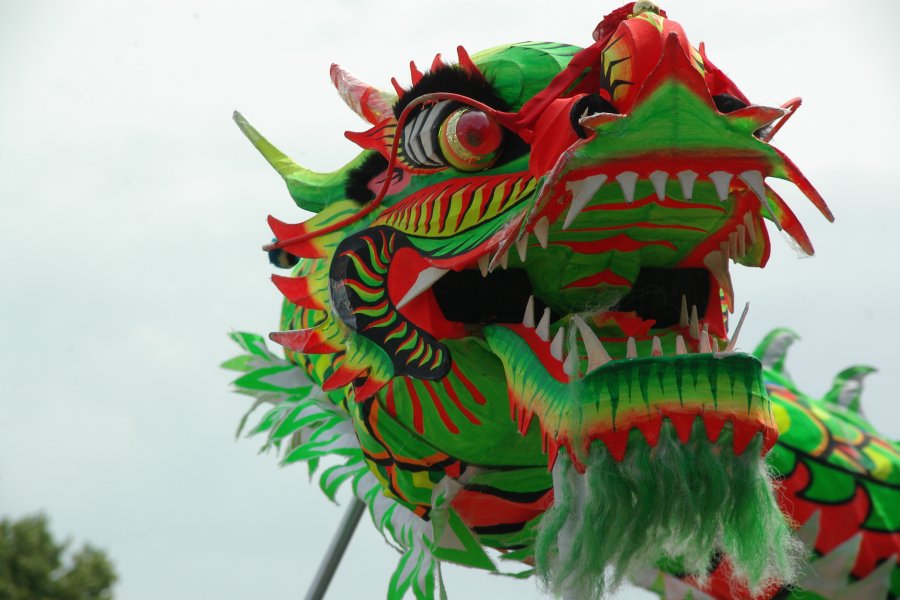 🇨🇳 China and 3 moreDragon dance舞龍 / 舞龙
A long dragon puppet on poles, danced by a team at Chinese New Year and other festivalsPerformance
🇨🇳 China and 3 moreDragon dance舞龍 / 舞龙
A long dragon puppet on poles, danced by a team at Chinese New Year and other festivalsPerformance
 🇰🇷 Jeju, South KoreaGut굿
Sacred rites of song, dance, and spirit communion performed by Korean shamansSpiritual
🇰🇷 Jeju, South KoreaGut굿
Sacred rites of song, dance, and spirit communion performed by Korean shamansSpiritual
 🇨🇳 China and 5 moreLion dance舞獅
A dynamic ritual dance featuring costumed lions, drums and martial acrobaticsPerformance
🇨🇳 China and 5 moreLion dance舞獅
A dynamic ritual dance featuring costumed lions, drums and martial acrobaticsPerformance