Music, dance and storytellingEurope
Venice New Year's Concert
In its own language: Concerto di Capodanno del Teatro La Fenice di Venezia
A New Year's Day concert of orchestra and opera at Venice's Teatro La Fenice

The Venice New Year's Concert is an annual orchestral and opera concert held on 1 January at the Teatro La Fenice, the opera house of Venice, Italy. It began in 2004 as the last of the events marking the theatre's rebuilding after the fire of 1996, and its opera half is shown live on Italian television and abroad.
When is Venice New Year's Concert kept?
Venice New Year's Concert is kept every year on 1 January, starting at about a quarter past eleven in the morning.
On 1 January each year, the Teatro La Fenice in Venice gives a New Year's concert, a musical greeting to the year that has just begun. The series started in 2004, modelled on the New Year's concert in Vienna. The programme mixes orchestral works with opera, and closes with two Verdi pieces that regular listeners know by heart.
What it is
The New Year's Concert is the Teatro La Fenice's own event, given by its orchestra, its chorus and guest soloists. In Italian it is the Concerto di Capodanno del Teatro La Fenice di Venezia, shortened in English to the Venice New Year's Concert. Its model is the New Year's concert held for much longer in Vienna. The Venice version began in 2004. The programme is played more than once: a run of December performances leads up to the New Year's Day concert itself, which Italian television covers and which several foreign broadcasters take.
Origins and history
The concert grew out of the rebuilding of La Fenice. A fire destroyed the theatre on the evening of 29 January 1996, and years of work followed before it opened again. When those works were complete, a concert on 1 January 2004 was planned as the last of the events marking the reconstruction. Anna Elena Averardi, who advised the theatre on its public image, put the idea forward, and Fabrizio Del Noce, then head of Rai 1, took it up. The music critic Pietro Acquafredda helped shape the programmes from the first year until 2014, working to a commission from Rai 1. Individual editions have carried dedications: 2011 marked 150 years of Italian independence, with the national anthem played, and 2013 honoured Verdi.
Music and dance
The concert is divided in two. The first part is orchestral: symphonies and other works played by the orchestra alone. The second part turns to opera, with arias and scenes that bring in solo singers and the theatre's chorus. Two pieces are kept back and played at the end whatever else appears in the programme. One is the chorus Va, pensiero from Verdi's Nabucco, the other the drinking toast Libiamo ne' lieti calici from his La Traviata. Neither is listed in advance, and both come round every year.
Around the world
Television has carried the concert well beyond Venice. Rai 1 shows the opera section as it happens, and from 2014 Rai 5 has shown a version in the evening. Listeners and viewers in France, Germany, Japan and Latin America receive the concert as well. Since 2016 it has been offered by ARTE, ZDR, WSR and Radio France, and by a number of radio and television broadcasters in Eastern European countries. Anyone who misses it in January can watch the whole performance on Rai 5 roughly a month afterwards.
How Venice New Year's Concert is kept
The orchestra and chorus of the Teatro La Fenice perform, with solo singers joining for the operatic second half. The programme is repeated in a short run before the year turns: 28 and 29 December at eight in the evening, 30 December at five, and 31 December at four. Then comes the New Year's Day performance, which begins at 11.15 in the morning, with live coverage starting at 12.20. It ends with Va, pensiero and then the toast Libiamo ne' lieti calici.
When and where
It falls on 1 January every year, beginning at about a quarter past eleven in the morning, with live broadcasting from 12.20. The same programme is also given earlier in the same week, in a run of December performances that finishes on the 31st.
It is held at the Teatro La Fenice, the opera house of Venice, Italy, the city it belongs to. The music travels much further than the theatre: the concert is heard and seen in France, Germany, Japan and Latin America, and on radio and television in several Eastern European countries.
What Venice New Year's Concert means
For Venice, the concert is a way of starting the year in the theatre the city rebuilt after the fire of 1996. That history is part of what the morning means to the people who go. The two Verdi pieces at the close are the best known part of the programme, and they give the event a shape that audiences recognise and expect.
Questions people ask about Venice New Year's Concert
When is Venice New Year's Concert kept?
Venice New Year's Concert is kept every year on 1 January, starting at about a quarter past eleven in the morning.
What is the Venice New Year's Concert?
It is an annual concert on 1 January at the Teatro La Fenice in Venice, given by the opera house's orchestra and chorus. It began in 2004 and mixes orchestral music with opera, ending with two fixed Verdi pieces.
Why did it start?
It came out of the events marking the reconstruction of La Fenice, which a fire destroyed on the evening of 29 January 1996. The idea was Anna Elena Averardi's, and Fabrizio Del Noce, then director of Rai 1, supported it.
Can I watch it from outside Italy?
Yes. The opera half goes out live on Rai 1 and is carried in France, Germany, Japan and Latin America. Since 2016 ARTE, ZDR, WSR and Radio France have taken it, along with broadcasters in Eastern Europe.
How does the concert end?
It ends with two pieces that are not part of the printed programme: the chorus Va, pensiero from Verdi's Nabucco and the toast Libiamo ne' lieti calici from his La Traviata. Both return every year.
See also
 Lion danceA dynamic ritual dance featuring costumed lions, drums and martial acrobatics
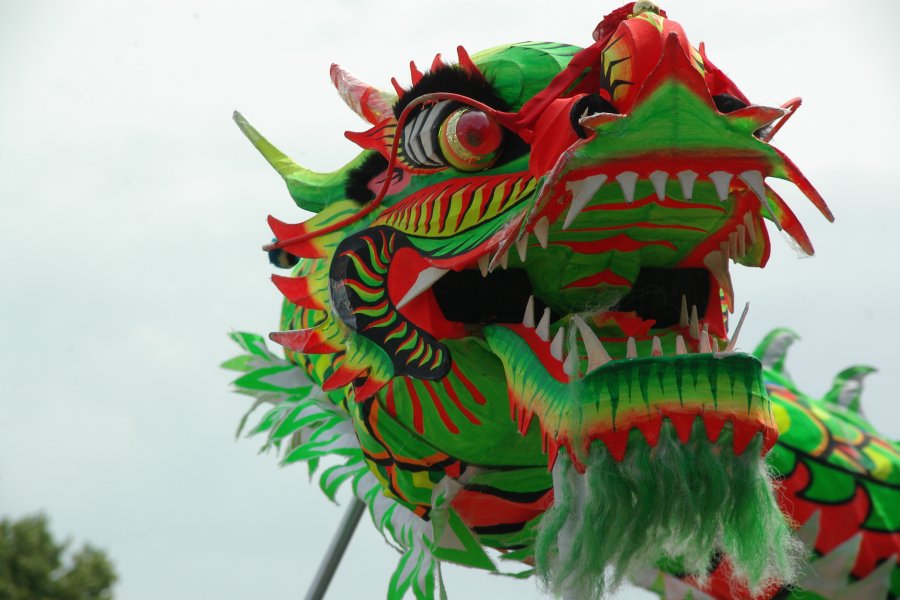 Dragon danceA long dragon puppet on poles, danced by a team at Chinese New Year and other festivals
 Mummers' playA comic folk drama of staged combat, death, and revival by an eccentric doctor
 Silent NightA Christmas carol composed in Austria in 1818, now sung worldwide as a symbol of peace.
Good reading and sources
- Venice New Year's Concert on WikipediaEncyclopedia
- More photos on Wikimedia CommonsPhotos and video
- Wikidata recordOpen data
The facts on this page come from the Wikipedia article "Venice New Year's Concert", written by its contributors and used under the CC BY-SA 4.0 licence, and from its Wikidata record (CC0). EveryParampara rewrote the text in its own words, with AI assistance, and compares every page with the article to make sure no passage is copied. It may be reused under the same CC BY-SA 4.0 licence with a link back.
It may contain mistakes. Traditions differ from one family, village and community to the next, and the people who keep them know them best. If something is wrong, tell us. Last refreshed 2026-10-09.
More from Italy
All the traditions of Italy 🇬🇧 United Kingdom and 5 moreChristmas carol
Festive songs and hymns sung during the Christmas season and door to doorPerformance
🇬🇧 United Kingdom and 5 moreChristmas carol
Festive songs and hymns sung during the Christmas season and door to doorPerformance
 🇦🇹 Vienna, Austria and 3 moreLändler
A three-quarter time partner dance from the Alpine region, known for hopping steps and yodeling.Performance
🇦🇹 Vienna, Austria and 3 moreLändler
A three-quarter time partner dance from the Alpine region, known for hopping steps and yodeling.Performance
 🇦🇹 Vienna, Austria and 4 moreLipizzanerLipicanec
A gray riding horse breed and centuries-old tradition of classical dressage kept by the Spanish Riding School.Performance
🇦🇹 Vienna, Austria and 4 moreLipizzanerLipicanec
A gray riding horse breed and centuries-old tradition of classical dressage kept by the Spanish Riding School.Performance
 🇮🇹 ItalyCantu a tenorecantu a tenòre
Four men singing in a tight circle, a vocal art of Sardinia's Barbagia hillsPerformance
🇮🇹 ItalyCantu a tenorecantu a tenòre
Four men singing in a tight circle, a vocal art of Sardinia's Barbagia hillsPerformance
The same idea elsewhere
New Year compared 🇮🇳 Ayodhya, India and 7 moreDiwaliदीपावली (Dīpāvalī)
A five-day festival of lights celebrated across India and its diaspora to mark the victory of light over darkness.Festival · Feasts and festival meals
🇮🇳 Ayodhya, India and 7 moreDiwaliदीपावली (Dīpāvalī)
A five-day festival of lights celebrated across India and its diaspora to mark the victory of light over darkness.Festival · Feasts and festival meals
 🇮🇷 Iran and 7 moreNowruzنوروز
The Iranian new year at the March equinox, kept with fire, greenery and picnicsSeasonal
🇮🇷 Iran and 7 moreNowruzنوروز
The Iranian new year at the March equinox, kept with fire, greenery and picnicsSeasonal
 🇮🇱 Jerusalem, Israel and 1 moreHanukkahחֲנֻכָּה
An eight-day Jewish festival marking the rededication of the Second Temple in Jerusalem and the miracle of a single day'Festival
🇮🇱 Jerusalem, Israel and 1 moreHanukkahחֲנֻכָּה
An eight-day Jewish festival marking the rededication of the Second Temple in Jerusalem and the miracle of a single day'Festival
 🇪🇬 Egypt and 5 moreMawlidمولد (Mawlid)
An annual festival marking the birth of the Prophet Muhammad, marked by poetry, processions and feasts.Festival · Feasts and festival meals
🇪🇬 Egypt and 5 moreMawlidمولد (Mawlid)
An annual festival marking the birth of the Prophet Muhammad, marked by poetry, processions and feasts.Festival · Feasts and festival meals