Crafts and makingOceaniaIndigenous and traditional
Waka
Traditional Māori canoes used for fishing, transport, and ceremony, built from single logs or stitched planks.

Waka are the traditional watercraft of the Māori people in New Zealand. They range from small unadorned boats for rivers to large decorated war canoes. The craft of building these vessels preserves ancestral knowledge and supports tribal identity through modern voyages and ceremonial use.
When is Waka kept?
Waka is kept on ongoing tradition of construction and voyaging.
Waka are the traditional watercraft of the Māori people of New Zealand. These canoes function as tools for fishing and transport while serving as powerful symbols of tribal lineage. Builders use ancient techniques to shape timber into vessels that honor the past. Today, communities continue to construct and sail these canoes to maintain cultural connections.
Types of canoes
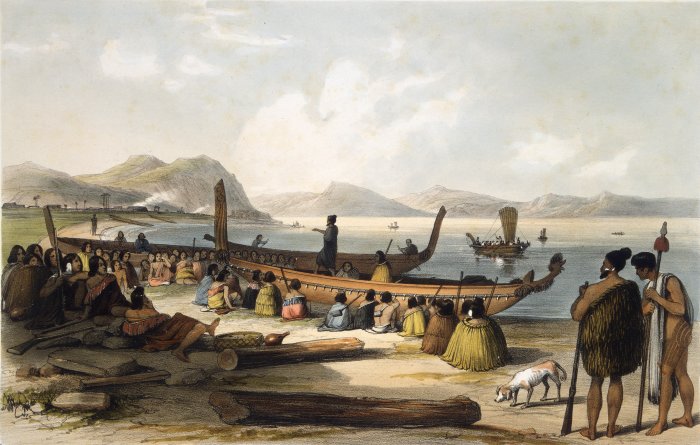
Waka cover many forms suited to different needs. Small boats called waka tīwai handle fishing and river travel without decoration. Large war canoes known as waka taua carry up to eighty paddlers and measure forty metres long. These vessels feature carved heads and tailboards made from single hollowed logs. Double-hulled ocean voyagers called waka hourua crossed the Pacific. Outrigger canoes termed waka ama appeared in early European accounts but faded by the nineteenth century.
Building methods
Builders prepare a tree years before felling it. They clear ground and plant crops for the crew. Fire and hand adzes cut the trunk, sometimes using a giant swinging axe mechanism. Workers shape the hull near the site then move the heavy log to water using ropes and rollers. Final shaping occurs closer to villages. Planks are stitched with flax rope and sealed with pegs and gum. A large canoe weighs three tonnes and requires a year to complete.
Sails and sailing
Triangular sails hoisted from flax or leaves catch the wind. The mast stands five metres high and attaches directly to the yard. Sails only work downwind because the hull lacks a keel. Crew members bail water constantly due to low freeboard. When not in use, sails wrap around spars along the center of the boat. Capsizes happen occasionally, requiring crews to tip the hull and remove water.
Sacred practices
War canoes hold tapu status meaning they are sacred. Cooked food stays out of the craft to preserve purity. People enter over the sides rather than the bow or stern. Paint uses red ochre to represent sacredness or black for death. Carvings display powerful symbols. Abandoned canoes appear if accidents or deaths occur during construction. Names given to canoes reflect pride and admiration within the tribe.
Modern revival
Since the nineteen seventies, new canoes rise again. Builders blend modern materials with traditional designs for ocean voyages. Te Aurere sailed to Hawaii and Tahiti using Polynesian navigation. Tāhere Tikitiki took eighteen months to build in the early nineteen seventies under master carvers. Tribal groups commission these vessels for ceremonies. Iron tools replaced stone adzes after contact, speeding up carving work.
How Waka is kept
Master carvers and community members select trees and prepare sites. Teams fell trunks using fire and adzes, then shape the hulls. Stitchers join planks with flax rope. Decorators add carvings and paint. Voyagers paddle or sail the finished vessels across rivers and oceans. Tribal leaders commission new canoes for cultural events.
When and where
Construction spans months or years depending on size. Voyages occur during fine weather windows. The classic building period ran from fifteen hundred to seventeen seventy.
Built throughout New Zealand. Strongest in regions with access to tōtara forests. Voyages extend across the Pacific to islands like Hawaii and Tahiti.
What Waka means
Waka embody tribal identity and ancestral links. Names connect current groups to historic migration crews. Sacred rules protect the vessel's spiritual power. Carvings tell stories of lineage. The craft keeps traditional knowledge alive through hands-on making.



Questions people ask about Waka
When is Waka kept?
Waka is kept on ongoing tradition of construction and voyaging.
What is a waka?
A waka is a traditional Māori canoe from New Zealand. It serves as a watercraft for fishing, transport, and ceremony. Sizes vary from small river boats to large war canoes carrying dozens of paddlers.
How are waka built?
Builders hollow single logs or stitch planks together. They use fire and adzes to shape the wood. Flax ropes and tree gum seal the seams. Construction takes a year or more and requires careful preparation of the timber.
Why are some waka sacred?
War canoes hold tapu status due to their ceremonial role. Rules forbid cooked food inside. Entry happens over the sides. Red paint marks sacred spaces. These practices respect the spiritual power of the vessel.
See also
 Tā mokoThe traditional permanent tattooing of the Māori people of New Zealand, marking identity and status.
 WharenuiA Māori carved communal meeting house at the centre of tribal life in New ZealandWhite SundayA Samoan holiday honoring children with church services, white clothing, and family gatherings on the second Sunday of O
 MatarikiThe Māori New Year marked by the midwinter rising of the Pleiades cluster
Good reading and sources
- Waka (canoe) on WikipediaEncyclopedia
- More photos on Wikimedia CommonsPhotos and video
- Wikidata recordOpen data
The facts on this page come from the Wikipedia article "Waka (canoe)", written by its contributors and used under the CC BY-SA 4.0 licence, and from its Wikidata record (CC0). EveryParampara rewrote the text in its own words, with AI assistance, and compares every page with the article to make sure no passage is copied. It may be reused under the same CC BY-SA 4.0 licence with a link back.
It may contain mistakes. Traditions differ from one family, village and community to the next, and the people who keep them know them best. If something is wrong, tell us. Last refreshed 2026-10-05.
More from New Zealand
All the traditions of New Zealand 🇳🇿 New ZealandKoru
A spiral from the silver fern, central to Māori carving, painting and tattooCraft
🇳🇿 New ZealandKoru
A spiral from the silver fern, central to Māori carving, painting and tattooCraft
 🇳🇿 New ZealandTivaevaetīvaevae
A traditional Polynesian art of artistic quilting made by women for gifts and ceremonies.Craft
🇳🇿 Auckland, New ZealandWharenui
A Māori carved communal meeting house at the centre of tribal life in New ZealandHome
🇼🇸 Samoa and 3 moreWhite SundayLotu Tamaiti
A Samoan holiday honoring children with church services, white clothing, and family gatherings on the second Sunday of OFestival · Dinner
🇳🇿 New ZealandTivaevaetīvaevae
A traditional Polynesian art of artistic quilting made by women for gifts and ceremonies.Craft
🇳🇿 Auckland, New ZealandWharenui
A Māori carved communal meeting house at the centre of tribal life in New ZealandHome
🇼🇸 Samoa and 3 moreWhite SundayLotu Tamaiti
A Samoan holiday honoring children with church services, white clothing, and family gatherings on the second Sunday of OFestival · Dinner
The same idea elsewhere
Remembering the ancestors compared 🇮🇪 Ireland and 5 moreHalloween
An annual observance on 31 October marking the eve of All Saints' Day, rooted in Christian tradition and Celtic heritageFestival · Sweets given and shared
🇮🇪 Ireland and 5 moreHalloween
An annual observance on 31 October marking the eve of All Saints' Day, rooted in Christian tradition and Celtic heritageFestival · Sweets given and shared
 🇮🇳 Ayodhya, India and 7 moreDiwaliदीपावली (Dīpāvalī)
A five-day festival of lights celebrated across India and its diaspora to mark the victory of light over darkness.Festival · Feasts and festival meals
🇮🇳 Ayodhya, India and 7 moreDiwaliदीपावली (Dīpāvalī)
A five-day festival of lights celebrated across India and its diaspora to mark the victory of light over darkness.Festival · Feasts and festival meals
 🇮🇷 Iran and 7 moreNowruzنوروز
The Iranian new year at the March equinox, kept with fire, greenery and picnicsSeasonal
🇮🇷 Iran and 7 moreNowruzنوروز
The Iranian new year at the March equinox, kept with fire, greenery and picnicsSeasonal
 🇮🇱 Jerusalem, Israel and 1 moreHanukkahחֲנֻכָּה
An eight-day Jewish festival marking the rededication of the Second Temple in Jerusalem and the miracle of a single day'Festival
🇮🇱 Jerusalem, Israel and 1 moreHanukkahחֲנֻכָּה
An eight-day Jewish festival marking the rededication of the Second Temple in Jerusalem and the miracle of a single day'Festival