Life-cycle ritesOceaniaIndigenous and traditional
Tā moko
The traditional permanent tattooing of the Māori people of New Zealand, marking identity and status.

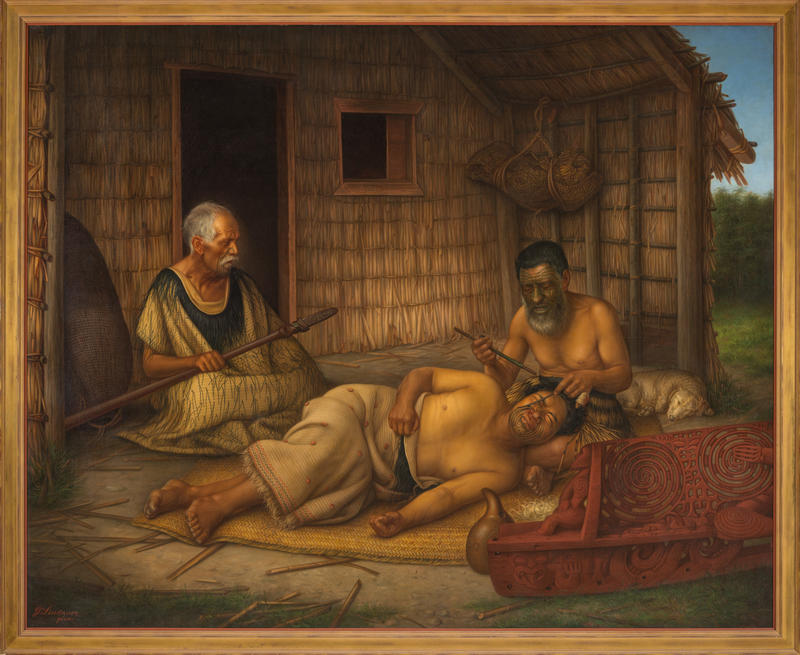
Tā moko is the sacred tattooing tradition of the Māori, the indigenous people of New Zealand. It uses carved bone tools to create grooved designs that signal social rank, ancestry, and personal milestones. The practice faced decline during colonial times but has seen a strong revival in recent decades as a vital expression of cultural pride.
When is Tā moko kept?
Tā moko is kept on throughout life for major milestones.
Tā moko is the traditional tattooing art of the Māori people in New Zealand. It serves as a permanent record of a person's lineage, social standing, and life achievements. The practice involves carving the skin with specialized tools to create distinct grooved patterns. Today, it stands as a powerful symbol of cultural identity and resilience.
What tā moko means
For the Māori, these markings are far more than body decoration. They represent mana, or spiritual power, and high social status. Receiving moko marked a key transition from childhood to adulthood. The designs were unique to each individual, recording their whakapapa, or genealogy. Historically, they also served to enhance physical attractiveness. High-ranking individuals often received them, though some very sacred persons did not.
How it is kept
Traditional artists used chisels made from albatross bone to carve the skin. This method created raised grooves rather than smooth ink lines. Pigments came from burnt timber and soot mixed with fat. Specialists would strike the chisels with a mallet to apply the design. In modern times, many artists use electric machines, though some have returned to using the ancient bone tools. Women now frequently serve as practitioners alongside men.
History and change
European colonization brought significant disruption to this practice. Early traders collected tattooed heads, which altered the tradition's dynamics. Christian missionaries often discouraged the custom, leading some men to grow facial hair to hide their marks. By the late nineteenth century, needle tattoos replaced carved ones for speed and safety. Men largely stopped receiving facial moko around the 1860s, while women continued the practice longer.
Modern revival
Since the nineteen nineties, there has been a strong resurgence in tā moko. Many Māori view it as essential for expressing cultural identity. Politicians and public figures have worn these marks proudly, challenging old stigmas. Some receive them to celebrate academic graduations or professional achievements. The tradition adapts to contemporary life while maintaining its deep roots in Māori values and community respect.
Cultural sensitivity
Wearing traditional Māori designs by non-Māori people is considered cultural appropriation. To address this respectfully, a term called kirituhi has gained acceptance. This translates to skin writing and allows anyone to wear designs with a Māori aesthetic. Unlike tā moko, kirituhi does not require specific genealogical connections or tribal consent. It provides a way to appreciate the art form without claiming ancestral ties.
How Tā moko is kept
Specialists known as tohunga-tā-moko perform the ritual. They use bone chisels to carve grooves into the skin, creating a textured surface. The process marks important life stages and honors ancestors. Modern practitioners may use machines or traditional tools. Recipients often undergo rituals before and after the work begins.
When and where
It is kept throughout a person's life for major milestones. There is no single calendar date for the practice. It occurs when an individual reaches adulthood or achieves significant personal goals.
The tradition belongs primarily to New Zealand. It is strongest among the Māori communities across the country. Cities like Auckland and Rotorua have notable centers for contemporary practitioners.
What Tā moko means
The designs map a person's ancestry and social rank. They display mana and personal history. Each pattern tells a unique story about the wearer's lineage. The markings connect the individual to their ancestors and their tribe. They serve as a visible badge of identity and belonging.



Questions people ask about Tā moko
When is Tā moko kept?
Tā moko is kept on throughout life for major milestones.
What is tā moko?
It is the traditional tattooing practice of the Māori people in New Zealand. It uses carved tools to create grooved designs that signify status and ancestry.
Where is tā moko practiced?
It originates in New Zealand and is kept by the Māori community. It is found throughout the country where Māori culture thrives.
What is kirituhi?
Kirituhi means skin writing. It allows non-Māori to wear designs inspired by Māori art without claiming ancestral ties or requiring genealogical consent.
Why do people get tā moko today?
Many receive it to express cultural pride and identity. It marks personal achievements and connects the wearer to their heritage and ancestors.
See also
 WharenuiA Māori carved communal meeting house at the centre of tribal life in New Zealand
 MatarikiThe Māori New Year marked by the midwinter rising of the Pleiades cluster
 Tartan DayAn annual celebration of Scottish culture, clan tartans, and diaspora heritage
Good reading and sources
- The rise of the Maori tribal tattooBBC, Article
- NZ website withdraws authorThe Guardian, Article
- The rise of the Maori tribal tattooBBC, Article
- NZ website withdraws authorThe Guardian, Article
- Tā moko on WikipediaEncyclopedia
- More photos on Wikimedia CommonsPhotos and video
- Wikidata recordOpen data
The facts on this page come from the Wikipedia article "Tā moko", written by its contributors and used under the CC BY-SA 4.0 licence, and from its Wikidata record (CC0). EveryParampara rewrote the text in its own words, with AI assistance, and compares every page with the article to make sure no passage is copied. It may be reused under the same CC BY-SA 4.0 licence with a link back.
It may contain mistakes. Traditions differ from one family, village and community to the next, and the people who keep them know them best. If something is wrong, tell us. Last refreshed 2026-10-04.
More from New Zealand
All the traditions of New Zealand 🇺🇸 United States and 5 moreBaby shower
A gift-giving party for a new or expected baby, kept in many countriesRite of passage
🇺🇸 United States and 5 moreBaby shower
A gift-giving party for a new or expected baby, kept in many countriesRite of passage
 🇺🇸 United States and 4 moreBridal shower
A gift-giving party for a bride before her wedding, best known in North AmericaRite of passage
🇳🇿 Auckland, New ZealandWharenui
A Māori carved communal meeting house at the centre of tribal life in New ZealandHome
🇼🇸 Samoa and 3 moreWhite SundayLotu Tamaiti
A Samoan holiday honoring children with church services, white clothing, and family gatherings on the second Sunday of OFestival · Dinner
🇺🇸 United States and 4 moreBridal shower
A gift-giving party for a bride before her wedding, best known in North AmericaRite of passage
🇳🇿 Auckland, New ZealandWharenui
A Māori carved communal meeting house at the centre of tribal life in New ZealandHome
🇼🇸 Samoa and 3 moreWhite SundayLotu Tamaiti
A Samoan holiday honoring children with church services, white clothing, and family gatherings on the second Sunday of OFestival · Dinner
The same idea elsewhere
Coming of age compared 🇳🇬 Onitsha, NigeriaAgbogho MmuoAgbọghọ Mmụọ
An Igbo masked dance celebrating maidenhood and the female spiritPerformance
🇳🇬 Onitsha, NigeriaAgbogho MmuoAgbọghọ Mmụọ
An Igbo masked dance celebrating maidenhood and the female spiritPerformance
 🇳🇬 NigeriaMmanwuMmanwụ
An Igbo masquerade tradition invoking ancestral spirits through masked performanceSpiritual
🇳🇬 NigeriaMmanwuMmanwụ
An Igbo masquerade tradition invoking ancestral spirits through masked performanceSpiritual
 🇪🇬 Egypt and 5 moreTraditional tattooing
The ancient custom of marking the skin for protection, healing, status and sacred ritesDress
🇪🇬 Egypt and 5 moreTraditional tattooing
The ancient custom of marking the skin for protection, healing, status and sacred ritesDress
 🇵🇭 Cebu, PhilippinesBatok
Indigenous Filipino tattooing, once worn as dress, rank and a rite of passageCraft
🇵🇭 Cebu, PhilippinesBatok
Indigenous Filipino tattooing, once worn as dress, rank and a rite of passageCraft