Folklore and beliefNorth AmericaIndigenous and traditional
Wampum
Shell beads woven into belts by Indigenous peoples of the Northeastern Woodlands for record-keeping and ceremony.

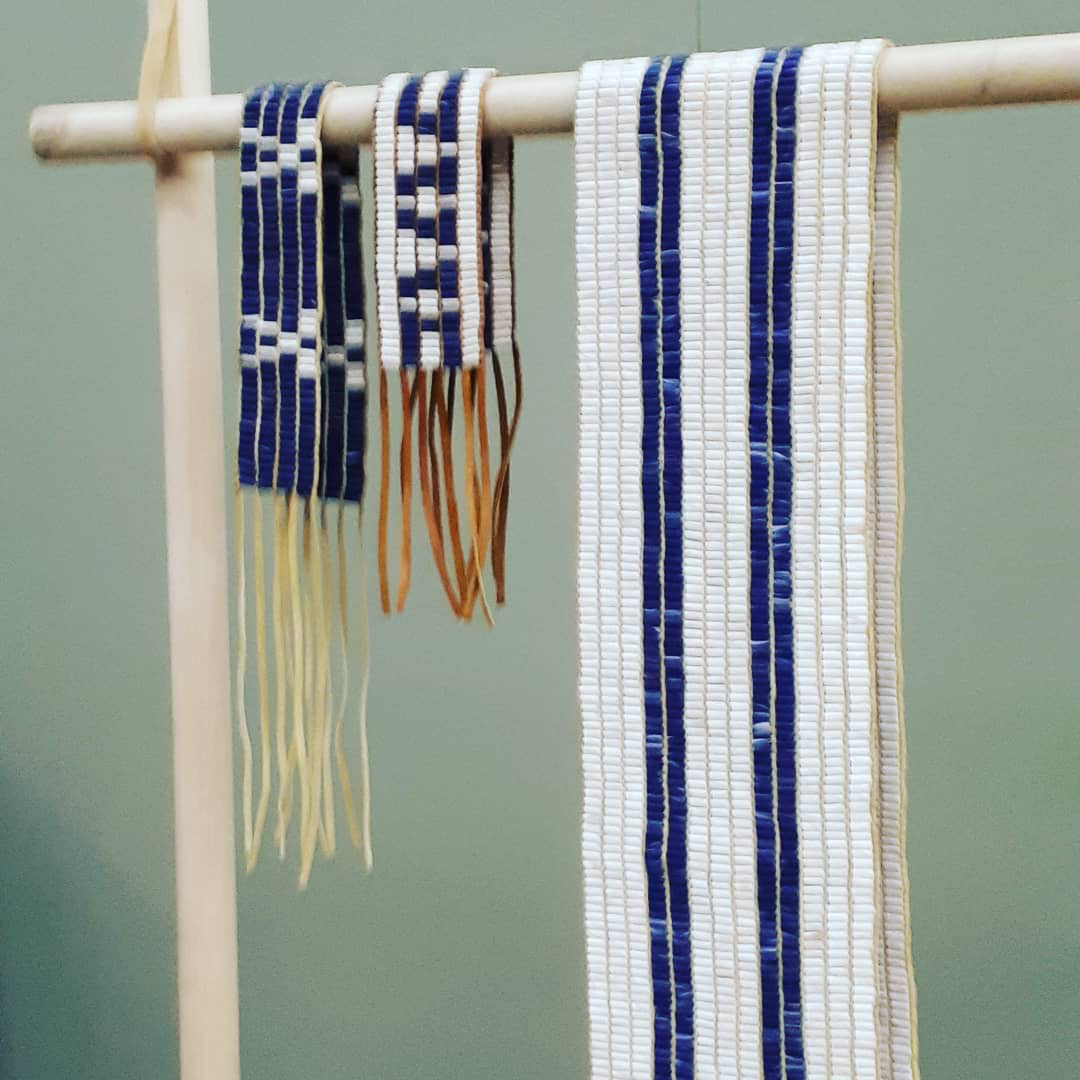
Wampum are tubular shell beads crafted by Indigenous nations in the Northeastern Woodlands. They serve as a system of writing, recording treaties, history, and names through colored patterns. The practice remains vital for cultural memory and ceremonial authority today.
When is Wampum kept?
Wampum is kept on throughout history and continuing today.
Wampum consists of shell beads woven into intricate belts by Indigenous communities in the Northeastern Woodlands. These objects function as written records, preserving treaties, historical events, and family lineages through specific color patterns. They remain central to ceremonial life and political authority within these nations.
Origins and materials
The term wampum derives from Algonquian words meaning white strings of shell beads. Traditionally, artisans used two types of shells: the channeled whelk for white beads and the quahog clam for dark purple ones. Before European contact, women crafted these beads using stone tools, drilling holes and smoothing the surfaces with sand and water. This labor-intensive process made them valuable. Later, metal tools allowed for mass production, though traditional methods persist among contemporary artists.
Writing and memory
Wampum belts act as a form of writing, where designs denote specific ideas according to an accepted system. They record treaties, such as the Two Row Wampum Treaty, and serve as memory aids during oral storytelling. Chiefs and clan mothers use specific strings as certificates of office. When a leader passes away, their wampum transfers to the successor, ensuring the continuity of names and obligations across generations.
Social and diplomatic use
These beads facilitate social bonds and diplomatic relations. Strings may be exchanged to affirm friendship or invite groups to meetings. In Haudenosaunee society, wampum binds peace between clans and families. Runners carrying messages present wampum to prove their authority. The Onondaga Nation traditionally serves as Keepers of the Central Fire, entrusted with maintaining all wampum records and interpreting their meanings for the community.
Currency and trade
European colonists adopted wampum as currency for trading with Indigenous peoples. It became legal tender in New England and New York during the seventeenth century. White beads were more common, while dark purple beads held higher value due to scarcity. Colonists established factories to produce large quantities, often diluting the value through dyeing or mixing with glass beads. This commercialization created tension, as Indigenous groups valued the beads for cultural significance rather than monetary gain.
Contemporary practice
Today, Indigenous artists continue to weave historic and new wampum belts. Communities like the Seneca Nation have commissioned replicas of ancient belts to preserve their heritage. Efforts to repatriate sacred belts from museums have returned significant items to their rightful owners. Traditional manufacturing sites are being preserved, ensuring that the craft and its deep cultural meanings survive for future generations.
How Wampum is kept
Artisans drill and smooth shell pieces into tubular beads. Women traditionally strung these on fibers like deer hide or milkweed bast. Weavers create patterns that convey specific messages or histories. Communities use these belts in ceremonies, such as raising new chiefs or Thanksgiving gatherings. The belts are also exchanged during diplomatic meetings to signify peace and cooperation. Today, artists craft both historic reproductions and new designs based on personal concepts.
When and where
Beads dating before 1510 exist in New York. The practice evolved with European contact in the sixteenth century. Mass production began in the seventeenth century. Contemporary weaving continues today.
The tradition originates in the Northeastern Woodlands of North America. It is strongest among Haudenosaunee nations and other Indigenous tribes in New York and surrounding regions. Manufacturing sites existed along the coast where shells were accessible.
What Wampum means
Wampum represents eternal names and social continuity. It binds communities together by recording shared history and obligations. The transfer of wampum ensures that the identities and duties of ancestors live on in successors. It symbolizes peace, authority, and the enduring connection between people and their lineage.

Questions people ask about Wampum
When is Wampum kept?
Wampum is kept on throughout history and continuing today.
Where is Wampum kept?
Wampum belongs to the traditions of United States, and is tied most closely to New York.
Who keeps Wampum?
As our sources describe it, Wampum is kept by Indigenous peoples of the Northeastern Woodlands. Many other communities and families now share it too.
See also
 ChristmasA festival of Jesus's birth, kept on 25 December with gifts, lights and shared meals
 HalloweenAn annual observance on 31 October marking the eve of All Saints' Day, rooted in Christian tradition and Celtic heritage
 Christmas treeA decorated evergreen or artificial tree placed indoors to mark the Christmas season.
 HanukkahAn eight-day Jewish festival marking the rededication of the Second Temple in Jerusalem and the miracle of a single day'
Good reading and sources
- Wampum on WikipediaEncyclopedia
- More photos on Wikimedia CommonsPhotos and video
- Wikidata recordOpen data
The facts on this page come from the Wikipedia article "Wampum", written by its contributors and used under the CC BY-SA 4.0 licence, and from its Wikidata record (CC0). EveryParampara rewrote the text in its own words, with AI assistance, and compares every page with the article to make sure no passage is copied. It may be reused under the same CC BY-SA 4.0 licence with a link back.
It may contain mistakes. Traditions differ from one family, village and community to the next, and the people who keep them know them best. If something is wrong, tell us. Last refreshed 2026-10-05.
More from the United States
All the traditions of the United States
🇮🇪 Ireland and 2 moreJack-o'-lantern
A carved pumpkin lantern lit with a candle to brighten and protect Halloween nightsFolklore
 🇺🇸 New York, United States and 1 moreFortune-telling
Reading cards, palms or tea leaves to tell a client what may lie aheadFolklore
🇺🇸 New York, United States and 1 moreFortune-telling
Reading cards, palms or tea leaves to tell a client what may lie aheadFolklore
 🇺🇸 United States and 4 moreFriday the 13th
A Western folk superstition regarding the unluckiness of a Friday falling on the 13th.Folklore
🇺🇸 United States and 4 moreFriday the 13th
A Western folk superstition regarding the unluckiness of a Friday falling on the 13th.Folklore
 🇬🇹 Santiago Atitlán, Guatemala and 3 moreMaximón
A folk saint of the Guatemalan highlands, asked for health, crops and protectionFolklore
🇬🇹 Santiago Atitlán, Guatemala and 3 moreMaximón
A folk saint of the Guatemalan highlands, asked for health, crops and protectionFolklore
The same idea elsewhere
Remembering the ancestors compared 🇮🇱 Jerusalem, IsraelSukkotסוכות
A seven-day autumn Jewish festival of temporary booths, harvest prayers and hospitalitySpiritual
🇮🇱 Jerusalem, IsraelSukkotסוכות
A seven-day autumn Jewish festival of temporary booths, harvest prayers and hospitalitySpiritual
 🇳🇿 New Zealand and 2 moreMarae
A cleared, sacred gathering place at the heart of Māori and Polynesian community lifeSpiritual
🇳🇿 New Zealand and 2 moreMarae
A cleared, sacred gathering place at the heart of Māori and Polynesian community lifeSpiritual
 🇳🇿 Auckland, New ZealandWharenui
A Māori carved communal meeting house at the centre of tribal life in New ZealandHome
🇦🇺 AustraliaGarma Festival of Traditional Cultures
A four-day cultural gathering in northeast Arnhem Land celebrating Yolngu traditions and fostering two-way learning.Festival
🇳🇿 Auckland, New ZealandWharenui
A Māori carved communal meeting house at the centre of tribal life in New ZealandHome
🇦🇺 AustraliaGarma Festival of Traditional Cultures
A four-day cultural gathering in northeast Arnhem Land celebrating Yolngu traditions and fostering two-way learning.Festival