Festivals and celebrationsEast Asia
White Day
In its own language: ホワイトデー
A day on 14 March when men give a return gift to the women who gave them chocolate
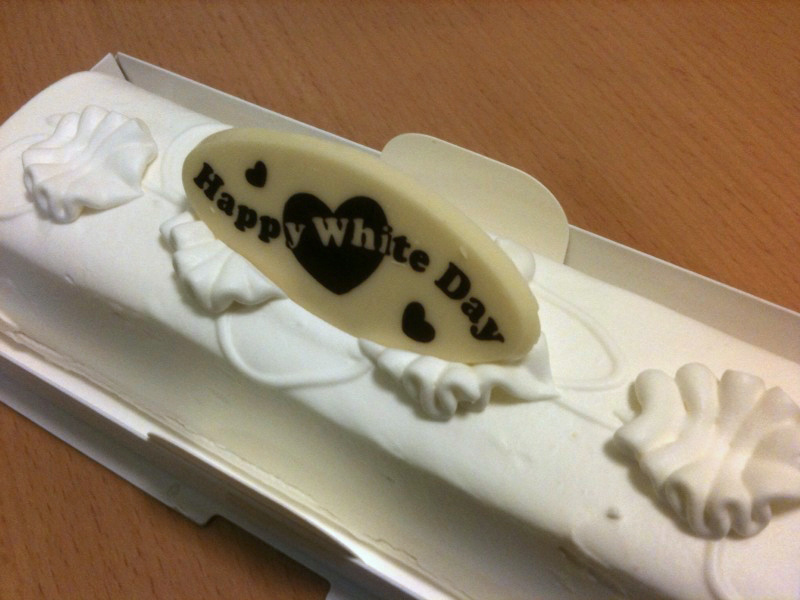
White Day falls on 14 March, one month after Valentine's Day. In Japan, where the custom began in 1978, men who received chocolate on Valentine's Day give a gift back to the women who gave it, and the practice has spread to China, Taiwan, South Korea and Vietnam.
When is White Day marked?
White Day is kept as part of Valentine's Day, which is on Sunday, 14 February 2027.
White Day is a gift-giving day kept on 14 March, exactly one month after Valentine's Day. In Japan, where it started in 1978, women give chocolate to men and boys on Valentine's Day, and men answer with a present of their own a month later. The exchange runs between partners, friends and colleagues, and the day is now kept in parts of East and Southeast Asia too.
What it is
White Day is the answer to Valentine's Day in Japan. On 14 February women and girls give chocolate to men and boys, either bought in a shop or made at home. Some of it is honmei-choco, chocolate of love, for a sweetheart. Some is giri-choco, courtesy chocolate, for friends, bosses and co-workers. On 14 March the giving reverses, and the men who received chocolate are expected to hand back a gift of their own. The exchange happens between couples, between friends and between people who work together. No fixed ceremony is attached to the day.
Origins in Japan
Valentine's Day was already marked in Japan by 1936, but it only grew popular in the 1970s, and it took on a shape of its own: a day when girls could show a boy they liked him. In 1977 a confectionery company based in Fukuoka, Ishimuramanseido, sold marshmallows to men on 14 March under the name Marshmallow Day. The following year the National Confectionery Industry Association began White Day as an answer day, arguing that men should return what women had given them. Confectionery firms soon started marketing white chocolate for the occasion, and other gifts followed.
Gifts and the colour white
The gifts given back on 14 March are often white. White chocolate became the standard once confectionery companies marketed it for the day, and marshmallows, sweets and cookies are common too. Other presents are chosen for their colour as well: jewellery, bags, lotions and lingerie. A rule often quoted in Japan, sanbai kaeshi or triple the return, says a man should give back two to three times the value of what he received. The exchange is not only romantic. Partners, friends and people who work together all take part, and the gift carries the weight of a social obligation.
Today and change
In the second half of the 2010s, sales suggested that White Day was losing ground in Japan. One reason given was that fewer obligation chocolates were bought on Valentine's Day, which left less to answer. Another reason was the shifting roles of men and women in Japanese culture. At the same time the habit of returning a valentine gift a month later has travelled. Outside Japan it is kept in much the same way in China, South Korea, Taiwan and Vietnam, and the practice has spread further afield as well.
How White Day is kept
The day runs as the mirror of Valentine's Day. On 14 February, women and girls give chocolate to men and boys, and on 14 March the men give back. Gifts go to the same person who gave one, so a couple exchanges twice, and so do friends and colleagues. Men are expected to take part whether or not the February chocolate was a declaration of love; courtesy gifts are answered too, because the day is bound up with social obligation as much as with romance.
When and where
White Day falls on 14 March every year, one month after Valentine's Day. It is fixed to that date, so it does not move with the lunar calendar or with Easter. It is kept the same day each year, and in Japan it follows the Valentine's Day giving of 14 February.
White Day began in Japan and is strongest there, where it follows the national habit of giving chocolate on Valentine's Day. It is also kept in China, Taiwan, South Korea and Vietnam, and the practice of answering a valentine gift a month later has spread to other countries as well.
What White Day means
For the people who keep it, White Day is about returning a kindness rather than starting one. The chocolate given in February carries a message, love or courtesy or duty, and the gift in March answers it. The quoted rule of returning two or three times the value shows how seriously the reply is weighed. Some couples treat the day as a second Valentine's Day, while for colleagues and friends it is a way of keeping the relationship even.
Days White Day is marked
Questions people ask about White Day
When is White Day marked?
White Day is kept as part of Valentine's Day, which is on Sunday, 14 February 2027.
What is White Day?
It is a day on 14 March, one month after Valentine's Day, when men in Japan give a return gift to the women who gave them chocolate in February. It began in 1978 and is now kept in several East Asian countries.
Where is White Day kept?
Japan is its home and the country where it is most observed. The custom of answering a valentine gift a month later has also taken root in China, Taiwan, South Korea and Vietnam, and it appears in other places worldwide.
What do people give on White Day?
White chocolate, marshmallows, sweets and cookies are the usual foods, along with white-coloured things such as jewellery, bags, lotions and lingerie. White chocolate became the standard gift after confectionery companies began marketing it for the day.
How much should the return gift be worth?
A rule often repeated in Japan, sanbai kaeshi or triple the return, says a man should give back two to three times the worth of the chocolate he received. Not everyone follows it, and the day is kept loosely among friends and colleagues.
See also
 HalloweenAn annual observance on 31 October marking the eve of All Saints' Day, rooted in Christian tradition and Celtic heritage
 Kishiwada Danjiri MatsuriA high-speed festival of wooden shrine floats pulled through Kishiwada, Japan
 Water lanternSmall lamps floated on water to honour the dead and ask for good fortune
 Aomori Nebuta MatsuriA summer festival in Aomori featuring large warrior floats and dancing participants.
Good reading and sources
- White Day: Japan’s reverse Valentine’s DayBBC, Article
- White Day: Japan’s reverse Valentine’s DayBBC, Article
- White Day on WikipediaEncyclopedia
- More photos on Wikimedia CommonsPhotos and video
- Wikidata recordOpen data
The facts on this page come from the Wikipedia article "White Day", written by its contributors and used under the CC BY-SA 4.0 licence, and from its Wikidata record (CC0). EveryParampara rewrote the text in its own words, with AI assistance, and compares every page with the article to make sure no passage is copied. It may be reused under the same CC BY-SA 4.0 licence with a link back.
It may contain mistakes. Traditions differ from one family, village and community to the next, and the people who keep them know them best. If something is wrong, tell us. Last refreshed 2026-10-05.
More from Japan
All the traditions of Japan
🇮🇪 Ireland and 5 moreHalloween
An annual observance on 31 October marking the eve of All Saints' Day, rooted in Christian tradition and Celtic heritageFestival · Sweets given and shared
 🇯🇵 Fukuoka, JapanHakata Gion Yamakasa博多祇園山笠
A July festival in Fukuoka featuring heavy float races through the streets of Hakata.Festival
🇯🇵 Kishiwada, JapanKishiwada Danjiri Matsuri岸和田だんじり祭
A high-speed festival of wooden shrine floats pulled through Kishiwada, JapanFestival
🇯🇵 Aomori, JapanAomori Nebuta Matsuri青森ねぶた祭
A summer festival in Aomori featuring large warrior floats and dancing participants.Festival
🇯🇵 Fukuoka, JapanHakata Gion Yamakasa博多祇園山笠
A July festival in Fukuoka featuring heavy float races through the streets of Hakata.Festival
🇯🇵 Kishiwada, JapanKishiwada Danjiri Matsuri岸和田だんじり祭
A high-speed festival of wooden shrine floats pulled through Kishiwada, JapanFestival
🇯🇵 Aomori, JapanAomori Nebuta Matsuri青森ねぶた祭
A summer festival in Aomori featuring large warrior floats and dancing participants.Festival
The same idea elsewhere
All of this kind 🇮🇹 Rome, Italy and 4 moreChristmas
A festival of Jesus's birth, kept on 25 December with gifts, lights and shared mealsFestival
🇮🇹 Rome, Italy and 4 moreChristmas
A festival of Jesus's birth, kept on 25 December with gifts, lights and shared mealsFestival
 🇬🇧 United Kingdom and 4 moreValentine's Day
A Christian feast day and cultural celebration of love kept on February 14 in many countries.Festival
🇬🇧 United Kingdom and 4 moreValentine's Day
A Christian feast day and cultural celebration of love kept on February 14 in many countries.Festival
 🇹🇷 Turkey and 5 moreEid al-Fitrعيد الفطر
The feast that ends Ramadan, opened with morning prayers, sweets and visits homeFestival · Feasts and festival meals
🇹🇷 Turkey and 5 moreEid al-Fitrعيد الفطر
The feast that ends Ramadan, opened with morning prayers, sweets and visits homeFestival · Feasts and festival meals
 🇩🇪 Germany and 5 moreChristmas tree
A decorated evergreen or artificial tree placed indoors to mark the Christmas season.Festival
🇩🇪 Germany and 5 moreChristmas tree
A decorated evergreen or artificial tree placed indoors to mark the Christmas season.Festival