Seasons, harvest and the calendarEuropeChristianPagan and ancient
Ziemassvētki
Latvia's midwinter festival of solstice customs, mumming and tree decoration
Ziemassvētki is the Latvian midwinter holiday celebrating both the winter solstice and Christmas. Kept in late December across Latvia and its global community, people mark the days with decorated fir trees, mumming processions, seasonal songs and gift giving.
When is Ziemassvētki kept?
Ziemassvētki is kept on annually from 24 to 26 December, or in January for Orthodox believers.
Ziemassvētki is Latvia's traditional winter celebration, blending ancient winter solstice rites with Christian Christmas observances. Held every year in late December, it brings families together around decorated spruce branches and festive fir trees. Across villages and towns, people share meals, pull logs to mark the turning sun, bake spiced gingerbread, and welcome costumed mummers who bring good fortune and vitality into each home for the coming season.
Early history and decorated trees
Records from the Blackheads Guild in Riga show that winter tree decorating dates back to at least the late fifteenth century. Early installations were structures of wooden sticks or bouquets adorned with straw figurines, dried blossoms, ribbons and fruit. These displays remained in place throughout the holiday season before being burned in the market square in early January. Sixteenth-century chronicles describe young merchants setting up firs decorated with roses, dancing around them at night with singing companions, and lighting them despite the objections of local church preachers.
Masks and mumming
A central folk practice involves masked visitors, known regionally as budēļi, ķekatas or vecīši, travelling from home to home. These troupes dress up as cranes, bears, farm animals, or even death, intending to banish evil spirits and deliver blessings. The leader carries a special whip of life, touching residents and livestock to impart health and fertility for the coming year. To create masks, people turn fur coats inside out, attach horns and beards beneath sheets, or carve turnip teeth to portray fearsome figures.
Solstice food and ritual
Traditional observances also recall the turning of the sun through the physical dragging of heavy logs, which were later set on fire. The holiday evening was known in some areas as Ķūķu Eve after a hearty boiled porridge made from crushed barley or wheat grains cooked together with half a pig head, peas, and beans. Consuming this rich grain dish was believed to encourage prosperity, strength and household welfare throughout the coldest stretch of the agricultural year.
Contemporary home celebrations
Modern celebrations center around decorated fir trees, which are adorned with straw ornaments, bentgrass, eggshells, bird feathers, berries and fruit. Families gather as gifts are distributed beneath the spruce boughs, often requiring children to recite a poem or sing a verse before claiming a package. Scented mandarins and baked gingerbread biscuits, called piparkūkas, fill homes with seasonal aromas, while gift-bringers like Ziemassvētku vecītis visit family parties where children dress as woodland beasts and dwarfs.
How Ziemassvētki is kept
Festivities begin on Christmas Eve as households trim spruce branches or fir trees with straw ornaments, feathers and dried elements. Families prepare traditional foods, bake spiced gingerbread, and place presents beneath the branches. In many communities, troupes of costumed mummers go from house to house in animal or spirit disguises, singing and offering blessings of fertility and health. During celebrations, gifts are handed out by Ziemassvētku vecītis or family members, with recipients reciting short poems or singing traditional verses before unwrapping their presents.
When and where
Most Latvians observe the holiday across three main days: Christmas Eve on 24 December, First Christmas on 25 December, and Second Christmas on 26 December. Orthodox communities follow their liturgical calendar and celebrate the festival in early January on the sixth, seventh, and eighth.
The festival is celebrated across Latvia in family homes, schools, and town squares, as well as by Latvian communities living abroad. Historical chronicles specifically link early public tree gatherings and merchant guild celebrations to the city of Riga.
What Ziemassvētki means
The festival unites the Christian observance of Christ's birth with older solar cycles. Pulling and burning logs symbolizes the return of the sun following the shortest day. Masked mumming processions act as fertility rites to repel negative forces, while the leader's life-giving whip conveys vitality, moral strength, and healthy growth to people and farm animals for the new year.
On the table
- Piparkūkas
- Ķūķis grain porridge with pig head
- Boiled peas and beans
- Mandarins
Flavours: Ginger
Questions people ask about Ziemassvētki
When is Ziemassvētki kept?
Ziemassvētki is kept on annually from 24 to 26 December, or in January for Orthodox believers.
What is Ziemassvētki?
It is Latvia's winter festival celebrating the winter solstice and the birth of Christ. It combines church observances with older folk rituals like mumming, log dragging, and fir tree decorating.
What is the tradition of ķekatas or budēļi?
These are masked mummer processions where people disguise themselves as spirits, bears, cranes, or other figures. They visit neighboring homes to chase away evil spirits and bestow blessings of health and fertility.
Why do people recite poems before opening presents?
According to Latvian custom, each person must recite a short poem or sing a song in front of the Christmas tree before receiving their gift from Ziemassvētku vecītis or family.
See also
 Advent wreathAn evergreen ring of candles lit week by week in the lead-up to Christmas
 LohriA northern Indian midwinter festival of evening bonfires, folk songs and harvest foods
 MatarikiThe Māori New Year marked by the midwinter rising of the Pleiades cluster
 JulA midwinter holiday of feast tables, doorstep gift givers, and candlelit mornings
Good reading and sources
The facts on this page come from the Wikipedia article "Ziemassvētki", written by its contributors and used under the CC BY-SA 4.0 licence, and from its Wikidata record (CC0). EveryParampara rewrote the text in its own words, with AI assistance, and compares every page with the article to make sure no passage is copied. It may be reused under the same CC BY-SA 4.0 licence with a link back.
It may contain mistakes. Traditions differ from one family, village and community to the next, and the people who keep them know them best. If something is wrong, tell us. Last refreshed 2026-10-04.
More from Latvia
All the traditions of Latvia 🇩🇪 Germany and 5 moreChristmas tree
A decorated evergreen or artificial tree placed indoors to mark the Christmas season.Festival
🇩🇪 Germany and 5 moreChristmas tree
A decorated evergreen or artificial tree placed indoors to mark the Christmas season.Festival
 🇱🇻 LatviaDaina
Short, traditional Latvian folk songs and verses sung across the human life cyclePerformance
🇱🇻 LatviaDaina
Short, traditional Latvian folk songs and verses sung across the human life cyclePerformance
 🇩🇰 Copenhagen, Denmark and 5 moreFastelavn
A pre-Lenten carnival in Northern Europe where children dress up, sing for treats, and break candy-filled barrels.Festival · Sweets given and shared
🇩🇰 Copenhagen, Denmark and 5 moreFastelavn
A pre-Lenten carnival in Northern Europe where children dress up, sing for treats, and break candy-filled barrels.Festival · Sweets given and shared
 🇱🇻 Riga, Latvia and 4 moreJāņi
An annual Latvian summer solstice celebration of bonfires, singing and woven wreathsFestival
🇱🇻 Riga, Latvia and 4 moreJāņi
An annual Latvian summer solstice celebration of bonfires, singing and woven wreathsFestival
The same idea elsewhere
Midwinter and the longest night compared 🇵🇪 Cusco, Peru and 4 moreIntiinti (Quechua)
The Inca sun deity, honoured with temples, offerings and the June festival Inti RaymiSpiritual
🇵🇪 Cusco, Peru and 4 moreIntiinti (Quechua)
The Inca sun deity, honoured with temples, offerings and the June festival Inti RaymiSpiritual
 🇮🇷 Iran and 5 moreYaldā Nightشب یلدا
A solstice night of poetry, fruit and family, kept from Iran through Central AsiaFestival · Dinner
🇮🇷 Iran and 5 moreYaldā Nightشب یلدا
A solstice night of poetry, fruit and family, kept from Iran through Central AsiaFestival · Dinner
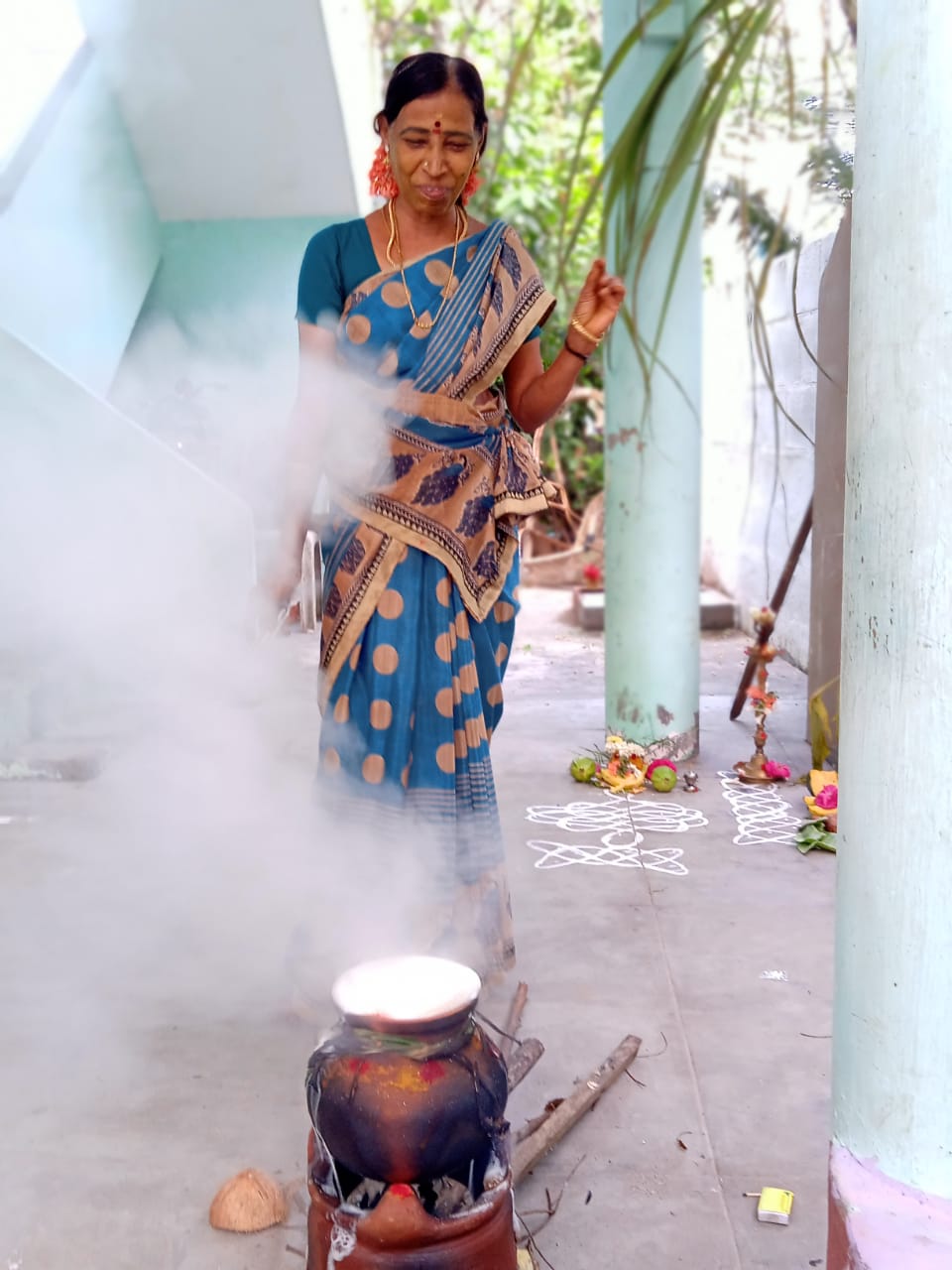 🇮🇳 India and 5 morePongal
Three or four days of boiling rice, garlanded cattle and thanks to the sunSeasonal · Sweets given and shared
🇮🇳 India and 5 morePongal
Three or four days of boiling rice, garlanded cattle and thanks to the sunSeasonal · Sweets given and shared
 🇨🇳 Shanghai, China and 1 moreJiaozi餃子
Crescent Chinese dumplings filled with meat or vegetables, eaten for fortune and feastsTable custom · Breakfast
🇨🇳 Shanghai, China and 1 moreJiaozi餃子
Crescent Chinese dumplings filled with meat or vegetables, eaten for fortune and feastsTable custom · Breakfast