Festivals and celebrations
The days a community stops, gathers and celebrates.
Festivals and celebrations are the days when a community stops its work, dresses up, eats together and makes noise. They may mark a season, a saint, a victory or just the pleasure of being together. From Carnival and Holi to Songkran and Oktoberfest, they show a place at its most generous and expressive. Many have religious roots, others are civic or seasonal, and a good number began as local fairs and grew famous. This page lists them by country, month and meaning, with notes on food, costume and music.
What makes a festival
Most festivals share a few features: a set date, a procession or gathering, special food, music and dance, a costume or colour, and an element of play. Some invert the usual order, letting servants command and the young tease the old, as at Carnival and Purim. Others are solemn, with lamps, silence or fasting. Whatever the tone, a festival gives people a shared memory, and the preparations, from cooking to costume making, are part of the pleasure.
Local and global
A festival that began in one village may now draw millions, and migrants carry festivals to new countries, where they take on new forms. Diwali is celebrated in London and Singapore, St Patrick's Day in Buenos Aires and Tokyo, Lunar New Year in Sydney and New York. At the same time, many small local festivals survive, and EveryParampara records these too, because a village fair is as much a part of the world's heritage as a great carnival.
Written by the EveryParampara desk with AI assistance. Background on Festivals and celebrations (kind of tradition). Customs differ from place to place and family to family. If this is your tradition and we have it wrong, tell us.
 🇼🇸 Samoa and 1 moreʻIe tōga
Precious woven mats exchanged in Samoan ceremonies to honor family ties and chiefly status.Dress
🇼🇸 Samoa and 1 moreʻIe tōga
Precious woven mats exchanged in Samoan ceremonies to honor family ties and chiefly status.Dress
 🇼🇸 Samoa and 3 moreSiva Samoa
A graceful Samoan dance marked by subtle, expressive arm and hand movementsPerformance
🇼🇸 Samoa and 3 moreSiva Samoa
A graceful Samoan dance marked by subtle, expressive arm and hand movementsPerformance
 🇳🇿 Auckland, New ZealandMāori Language WeekTe Wiki o te Reo Māori
An annual nationwide week promoting the learning and use of te reo across New ZealandCeremony
🇦🇺 Sydney, AustraliaCorroboreegaraabara
A gathering of Australian Aboriginal peoples featuring dance, music and storytellingFestival
🇳🇿 Auckland, New ZealandMāori Language WeekTe Wiki o te Reo Māori
An annual nationwide week promoting the learning and use of te reo across New ZealandCeremony
🇦🇺 Sydney, AustraliaCorroboreegaraabara
A gathering of Australian Aboriginal peoples featuring dance, music and storytellingFestival
 🇹🇻 TuvaluFatele
A traditional dance song of Tuvalu performed at community events and celebrations.Performance
🇦🇺 AustraliaGarma Festival of Traditional Cultures
A four-day cultural gathering in northeast Arnhem Land celebrating Yolngu traditions and fostering two-way learning.Festival
🇹🇻 TuvaluFatele
A traditional dance song of Tuvalu performed at community events and celebrations.Performance
🇦🇺 AustraliaGarma Festival of Traditional Cultures
A four-day cultural gathering in northeast Arnhem Land celebrating Yolngu traditions and fostering two-way learning.Festival
 🇳🇿 Wellington, New ZealandHaka
A ceremonial dance of the Māori people in New Zealand, performed with vigorous movement and chant for welcome, mourning,Performance
🇳🇿 Wellington, New ZealandHaka
A ceremonial dance of the Māori people in New Zealand, performed with vigorous movement and chant for welcome, mourning,Performance
 🇳🇿 Wellington, New ZealandKa Mate
A Māori haka of life and survival, composed by Te Rauparaha and performed by New Zealand teams.Performance
🇼🇸 Samoa and 3 moreWhite SundayLotu Tamaiti
A Samoan holiday honoring children with church services, white clothing, and family gatherings on the second Sunday of OFestival · Dinner
🇳🇿 Wellington, New ZealandKa Mate
A Māori haka of life and survival, composed by Te Rauparaha and performed by New Zealand teams.Performance
🇼🇸 Samoa and 3 moreWhite SundayLotu Tamaiti
A Samoan holiday honoring children with church services, white clothing, and family gatherings on the second Sunday of OFestival · Dinner
 🇹🇻 TuvaluMusic of Tuvalu
Rhythmic storytelling dances and choral singing from the Polynesian atolls of TuvaluPerformance
🇹🇻 TuvaluMusic of Tuvalu
Rhythmic storytelling dances and choral singing from the Polynesian atolls of TuvaluPerformance
 🇳🇿 New ZealandTivaevaetīvaevae
A traditional Polynesian art of artistic quilting made by women for gifts and ceremonies.Craft
🇳🇿 New ZealandTivaevaetīvaevae
A traditional Polynesian art of artistic quilting made by women for gifts and ceremonies.Craft
 🇳🇿 Waitangi, New Zealand and 2 moreWaitangi DayTe Rā o Waitangi
New Zealand's national day remembering the 1840 founding agreement.Ceremony · Breakfast
🇳🇿 Waitangi, New Zealand and 2 moreWaitangi DayTe Rā o Waitangi
New Zealand's national day remembering the 1840 founding agreement.Ceremony · Breakfast
 🇳🇿 New ZealandMatariki
The Māori New Year marked by the midwinter rising of the Pleiades clusterSeasonal
🇳🇿 New ZealandMatariki
The Māori New Year marked by the midwinter rising of the Pleiades clusterSeasonal
 🇳🇷 NauruAngam Day
A national holiday in Nauru celebrating the survival and recovery of its peopleCeremony
🇵🇬 Goroka, Papua New GuineaGoroka Show
An annual cultural gathering and sing-sing in the Eastern Highlands of Papua New GuineaFestival
🇫🇯 Suva, FijiRatu Sir Lala Sukuna Day
An annual Fijian civic observance commemorating statesman Ratu Sir Lala SukunaCeremony
🇳🇷 NauruAngam Day
A national holiday in Nauru celebrating the survival and recovery of its peopleCeremony
🇵🇬 Goroka, Papua New GuineaGoroka Show
An annual cultural gathering and sing-sing in the Eastern Highlands of Papua New GuineaFestival
🇫🇯 Suva, FijiRatu Sir Lala Sukuna Day
An annual Fijian civic observance commemorating statesman Ratu Sir Lala SukunaCeremony
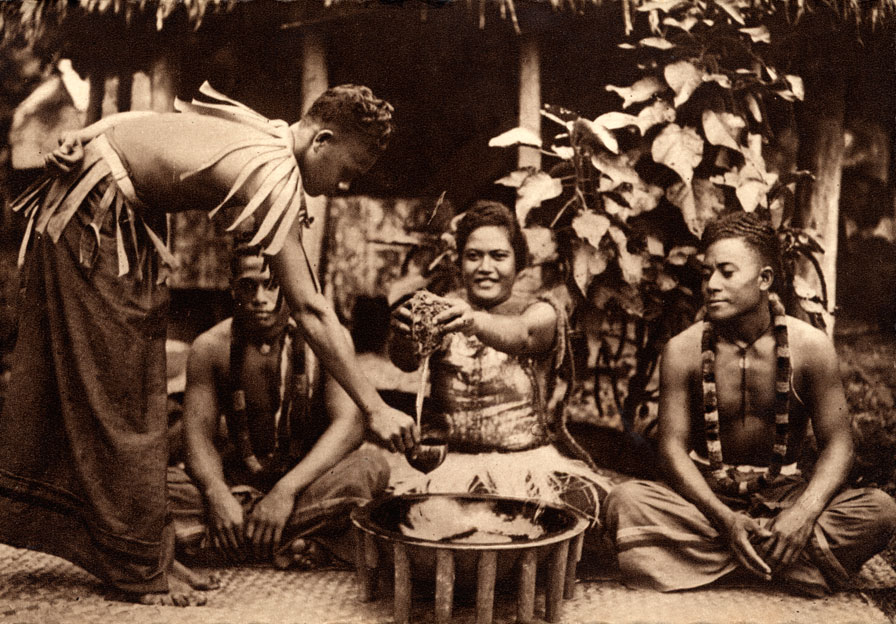 🇼🇸 Samoa and 1 moreʻAva ceremony
A solemn ritual of shared drink and oratory in Samoa and Tonga to mark chiefly titles and important gatherings.Festival
🇫🇯 FijiFiji Week
A week of national celebration in Fiji marking independence and colonial history with cultural performances.Festival
🇼🇸 Samoa and 1 moreʻAva ceremony
A solemn ritual of shared drink and oratory in Samoa and Tonga to mark chiefly titles and important gatherings.Festival
🇫🇯 FijiFiji Week
A week of national celebration in Fiji marking independence and colonial history with cultural performances.Festival
Photo credits on this page
The small pictures above come from Wikimedia Commons under free licences. Some are cropped to fit.
- ʻIe tōga: Sarah Kelemen, CC BY 2.0, source
- Waitangi Day: Ryan762 ( talk ), CC BY-SA 3.0, source
- Matariki: Robert Gendler, CC BY-SA 4.0, source
- Angam Day: Taken in 1896 by Augustin Krämer and uploaded by Rémih, Public domain, source
- Music of Tuvalu: Avenue, CC BY-SA 3.0, source
- Tivaevae: John Colles Burland, CC BY-SA 3.0, source
- Siva Samoa: Smita Biswas, CC BY 4.0, source
- Māori Language Week: Government House (New Zealand) https://gg.govt.nz/copyright-and-licens, CC BY-SA 4.0, source
- Fatele: JialiangGao, CC BY-SA 4.0, source
- Haka: Merrett, Joseph Jenner, 1816-1854., Public domain, source
- Ka Mate: Alasdair Massie, CC BY-SA 2.0, source
- ʻAva ceremony: Unknown author, Public domain, source