🇬🇭 Traditions of Ghana
26 traditions from Ghana, best known first, across 26 cities and towns.
Ghanaian life is anchored in diverse ethnic traditions, from the matrilineal Akan systems to the patrilineal Ewe structures. The year is marked by harvest festivals and ancestor veneration, while daily life centers on starchy staples like fufu and kenkey shared with communal soups.
In Ghana, tradition shapes the rhythm of daily life across thirty-three million people. Distinct ethnic groups maintain their own languages, governance systems, and spiritual practices. These customs define how communities gather, eat, and honor those who came before. The nation’s identity emerges from this mosaic of living histories rather than a single unified narrative.
The Year and Its Festivals
The calendar turns around agricultural cycles and ancestral remembrance. The Ashanti people observe Akwasidae every six weeks to celebrate their kings and history. In autumn, the Yam Festival marks the first harvest, offering thanks for the new crop after the rainy season. The Dagomba people hold the Damba festival, which features colorful displays of traditional smocks. These gatherings reinforce social bonds and connect the present generation to the land and its previous stewards.
Faith and Ritual
Spiritual life varies significantly between regions. The Akan people revere ancestors through lineage-based rituals that guide marriage and dispute resolution. The Ewe follow a complex system centered on Mawu and hundreds of other deities, with village ceremonies honoring specific spirits. Islamic influences remain strong in the north, visible in the language and trade history of the Dagomba kingdom. Death is treated with solemnity, often involving euphemisms to respect the departed.
Birth and Marriage Rites
Family structure dictates inheritance and status. The Akan operate as a matrilineal society where lineage controls land and political power. Women are seen as vital for continuing the line of ancestors. In contrast, the Ewe follow patrilineal rules where chiefs succeed through paternal relatives. Traditionally, dowries acknowledged the parents raising daughters, though modern roles have shifted. Women now hold significant positions in politics and business, reflecting evolving social dynamics.
The Table and What Is Eaten
Meals center on starchy bases paired with spicy soups or stews. Southerners rely on cassava and plantain, creating dishes like fufu and banku. The Ga people ferment corn dough to make kenkey, wrapped in leaves for boiling. Northerners prefer millet and sorghum, forming firm balls eaten with pepper sauces. Rice appears in many forms, including jollof rice adapted from Senegalese traders. These foods provide sustenance and reflect local farming capabilities and historical trade routes.
Crafts and Arts
Artisans preserve knowledge through specialized skills. Akan weavers create kente cloth outdoors using narrow strips of bright fabric. Wood carving, ceramics, and metallurgy are often male-dominated crafts. Pottery remains primarily a female activity, with artisans shaping anthropomorphic figures. The Ewe also weave geometric patterns into their textiles. These objects serve both aesthetic and functional purposes, carrying symbolic meanings passed down through generations of specialists.
The facts in this overview come from the Wikipedia article "Culture of Ghana", written by its contributors and used under the CC BY-SA 4.0 licence. EveryParampara rewrote the text in its own words, with AI assistance, and compares every page with the article to make sure no passage is copied. It may be reused under the same CC BY-SA 4.0 licence with a link back.
The table in Ghana
Foods and drinks by the moment they belong to.
| Tea, coffee and drinking ceremonies | Libation |
|---|---|
| Feasts and festival meals | Homowo, Fetu Afahye, Odwira Festival, Outdooring, Libation, Jalsa Salana |
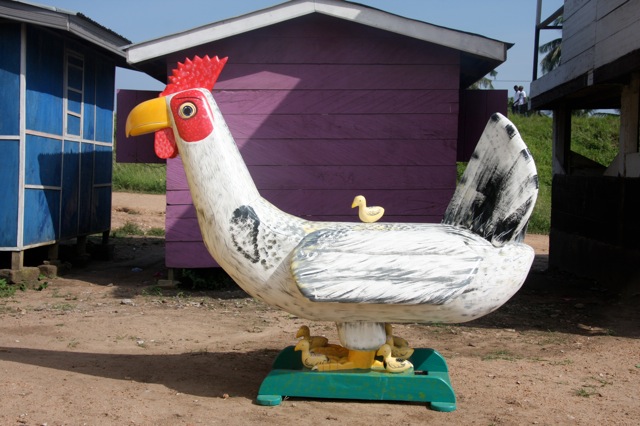 🇬🇭 Accra, GhanaFantasy coffinsAbebuu adekai
Custom hand-carved burial caskets shaped as animals, tools and symbols in southern GhanaRite of passage
🇬🇭 Accra, GhanaFantasy coffinsAbebuu adekai
Custom hand-carved burial caskets shaped as animals, tools and symbols in southern GhanaRite of passage
 🇵🇭 Manila, Philippines and 5 moreNovena
A nine-day Christian prayer tradition for petitions, feasts, or mourning.Spiritual
🇵🇭 Manila, Philippines and 5 moreNovena
A nine-day Christian prayer tradition for petitions, feasts, or mourning.Spiritual
 🇬🇭 Ghana and 2 moreEwe drumming
The drum ensembles of the Ewe people, with iron bells, rattles and talking drumsPerformance
🇬🇭 Ghana and 2 moreEwe drumming
The drum ensembles of the Ewe people, with iron bells, rattles and talking drumsPerformance
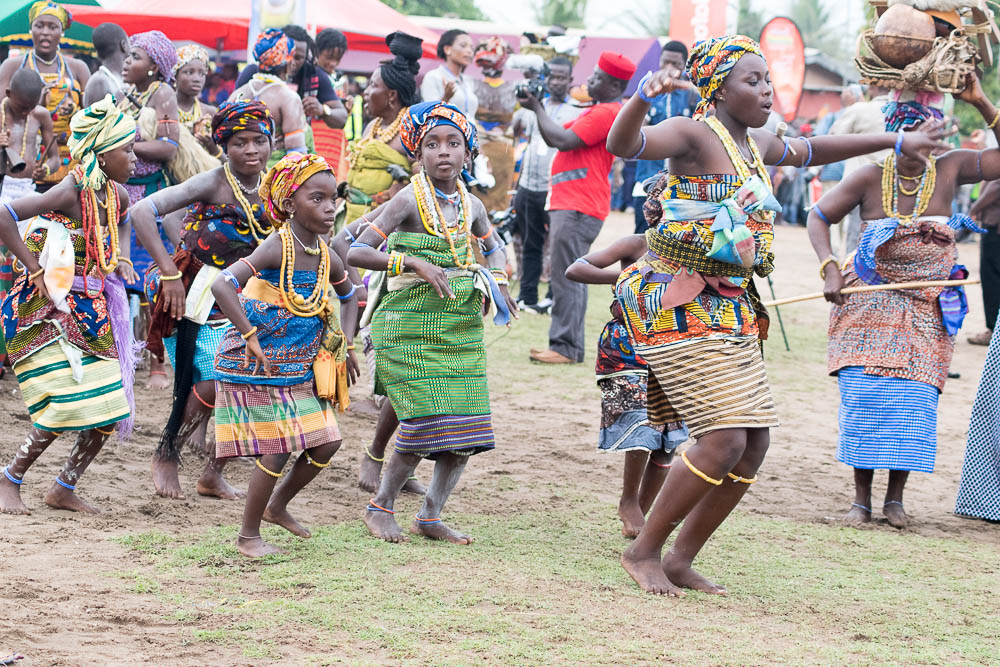 🇬🇭 Ghana and 2 moreAgbadza
An Ewe music and dance, born of war songs and kept for funerals, weddings and festivalsPerformance
🇬🇭 Ghana and 2 moreAgbadza
An Ewe music and dance, born of war songs and kept for funerals, weddings and festivalsPerformance
 🇦🇴 Luanda, Angola and 4 moreKizomba
A close, slow couple dance from Angola, named after a Kimbundu word for partyPerformance
🇦🇴 Luanda, Angola and 4 moreKizomba
A close, slow couple dance from Angola, named after a Kimbundu word for partyPerformance
 🇬🇭 Ntɔnso, Ghana and 1 moreAdinkra symbols
Symbols of the Akan people, stamped on cloth, each one carrying a proverbCraft
🇬🇭 Ntɔnso, Ghana and 1 moreAdinkra symbols
Symbols of the Akan people, stamped on cloth, each one carrying a proverbCraft
 🇵🇬 Papua New Guinea and 5 moreShell money
Traditional currency made from cowries, ground clam beads, and carved sea shellsCraft
🇵🇬 Papua New Guinea and 5 moreShell money
Traditional currency made from cowries, ground clam beads, and carved sea shellsCraft
 🇬🇭 Ghana and 3 moreDamba festivalDamba chuɣu
A Ghanaian celebration of royal authority, ancestral memory, music and danceFestival
🇬🇭 Ghana and 3 moreDamba festivalDamba chuɣu
A Ghanaian celebration of royal authority, ancestral memory, music and danceFestival
 🇬🇭 Accra, GhanaHomowo
A harvest festival of the Ga people in Ghana to remember surviving famineFestival · Feasts and festival meals
🇬🇭 Accra, GhanaHomowo
A harvest festival of the Ga people in Ghana to remember surviving famineFestival · Feasts and festival meals
 🇬🇭 Cape Coast, GhanaFetu Afahye
A harvest festival of cleansing, boat races and royal durbars in Cape Coast, GhanaFestival · Feasts and festival meals
🇬🇭 Cape Coast, GhanaFetu Afahye
A harvest festival of cleansing, boat races and royal durbars in Cape Coast, GhanaFestival · Feasts and festival meals
 🇬🇭 Odumase Krobo, GhanaDipo
An annual Ghanaian coming-of-age ceremony welcoming Krobo girls into womanhoodRite of passage
🇬🇭 Odumase Krobo, GhanaDipo
An annual Ghanaian coming-of-age ceremony welcoming Krobo girls into womanhoodRite of passage
 🇬🇭 Akropong, GhanaOdwira Festival
An annual harvest and purification festival celebrated by the Akuapem in GhanaFestival · Feasts and festival meals
🇬🇭 Akropong, GhanaOdwira Festival
An annual harvest and purification festival celebrated by the Akuapem in GhanaFestival · Feasts and festival meals
 🇬🇭 Kumasi, GhanaAkwasidae Festival
A Sunday gathering of the Ashanti people to honour ancestors and the kingSpiritual
🇬🇭 Kumasi, GhanaAkwasidae Festival
A Sunday gathering of the Ashanti people to honour ancestors and the kingSpiritual
 🇬🇭 Bonwire, Ghana and 1 moreKente clothNwentoma
Hand-woven Ghanaian cloth of silk and cotton strips, worn for ceremonies and graduationsDress
🇬🇭 Bonwire, Ghana and 1 moreKente clothNwentoma
Hand-woven Ghanaian cloth of silk and cotton strips, worn for ceremonies and graduationsDress
 🇬🇭 GhanaAdowa
A Ghanaian Akan dance where hands and feet carry the mood of the occasionPerformance
🇬🇭 GhanaAdowa
A Ghanaian Akan dance where hands and feet carry the mood of the occasionPerformance
 🇨🇮 Ivory Coast and 1 moreAbissa
A week-long New Year festival of the Nzema people in Ivory Coast and Ghana, marked by sacred drums, dance, and forgiveneFestival
🇨🇮 Ivory Coast and 1 moreAbissa
A week-long New Year festival of the Nzema people in Ivory Coast and Ghana, marked by sacred drums, dance, and forgiveneFestival
 🇬🇭 Accra, GhanaChale Wote Street Art Festival
An annual street art festival in Accra featuring murals, theater, and music.Performance
🇬🇭 GhanaAdae Festival
A sacred day of rest and ancestral rites observed across the Ashanti Region in GhanaSpiritual
🇬🇭 GhanaPanafest
A biennial Ghanaian festival uniting Africans and the diaspora through arts and healingFestival
🇬🇭 GhanaOutdooringkpojiemɔ (Ga), abadinto (Akan), vihehedego (Ewe)
A Ghanaian ceremony eight days after birth, when a baby is brought outdoors and namedRite of passage · Feasts and festival meals
🇬🇭 Accra, GhanaChale Wote Street Art Festival
An annual street art festival in Accra featuring murals, theater, and music.Performance
🇬🇭 GhanaAdae Festival
A sacred day of rest and ancestral rites observed across the Ashanti Region in GhanaSpiritual
🇬🇭 GhanaPanafest
A biennial Ghanaian festival uniting Africans and the diaspora through arts and healingFestival
🇬🇭 GhanaOutdooringkpojiemɔ (Ga), abadinto (Akan), vihehedego (Ewe)
A Ghanaian ceremony eight days after birth, when a baby is brought outdoors and namedRite of passage · Feasts and festival meals
 🇪🇬 Egypt and 5 moreLibation
The ceremonial gift of drink given to deities, ancestors, and the earthSpiritual · Tea, coffee and drinking ceremonies
🇪🇬 Egypt and 5 moreLibation
The ceremonial gift of drink given to deities, ancestors, and the earthSpiritual · Tea, coffee and drinking ceremonies
 🇨🇦 Toronto, Canada and 5 moreNo Bra Day
An annual October observance promoting breast cancer awareness and bodily autonomySeasonal
🇸🇳 Dakar, Senegal and 4 moreWorld Festival of Black ArtsFestival Mondial des Arts Nègres
A recurring month-long gathering of arts, music and writing from Africa and its diasporaFestival
🇨🇦 Toronto, Canada and 5 moreNo Bra Day
An annual October observance promoting breast cancer awareness and bodily autonomySeasonal
🇸🇳 Dakar, Senegal and 4 moreWorld Festival of Black ArtsFestival Mondial des Arts Nègres
A recurring month-long gathering of arts, music and writing from Africa and its diasporaFestival
 🇬🇭 Anloga, Ghana and 1 moreHogbetsotso festival
An Anlo Ewe festival in Anloga recalling an escape from NotsieFestival
🇬🇭 Anloga, Ghana and 1 moreHogbetsotso festival
An Anlo Ewe festival in Anloga recalling an escape from NotsieFestival
 🇬🇭 Winneba, GhanaAboakyer festival
A deer hunt kept by the people of Winneba, Ghana, on the first Saturday in MayFestival
🇬🇭 Winneba, GhanaAboakyer festival
A deer hunt kept by the people of Winneba, Ghana, on the first Saturday in MayFestival
 🇬🇧 Worldham, United Kingdom and 5 moreJalsa Salanaجلسہ سالانہ
A three-day annual assembly for the Ahmadiyya Muslim Community, featuring lectures, prayers and communal meals.Festival · Feasts and festival meals
🇬🇧 Worldham, United Kingdom and 5 moreJalsa Salanaجلسہ سالانہ
A three-day annual assembly for the Ahmadiyya Muslim Community, featuring lectures, prayers and communal meals.Festival · Feasts and festival meals
Photo credits on this page
The small pictures above come from Wikimedia Commons under free licences. Some are cropped to fit.
- Jalsa Salana: Ceddyfresse, Public domain, source
- Ewe drumming: Freddythehat at English Wikipedia, Public domain, source
- Agbadza: JY midey, CC BY-SA 4.0, source
- Damba festival: Bash222, CC BY-SA 4.0, source
- Homowo: Agbleyjill, CC BY-SA 4.0, source
- Fetu Afahye: Kofiarkohbaidoo, CC BY-SA 4.0, source
- Odwira Festival: Duncanoff, CC BY-SA 4.0, source
- Akwasidae Festival: Nkansahrexford, CC BY-SA 3.0, source
- Dipo: FatawuY1, CC BY-SA 4.0, source
- Kizomba: Obe Images, CC BY-SA 4.0, source
- Abissa: Michaelill16, CC BY-SA 4.0, source
- Adinkra symbols: Bosomba Amosah other versions=, CC BY-SA 4.0, source
- Chale Wote Street Art Festival: Fquasie, CC BY-SA 4.0, source
- Adowa: Quami43, CC BY-SA 4.0, source
- Shell money: Niccolò Gualtieri, Public domain, source
- Fantasy coffins: Regula Tschumi, CC BY-SA 3.0 de, source
- Novena: Catedrales e Iglesias/Cathedrals and Churches, CC BY 2.0, source
- Kente cloth: ZSM, CC BY-SA 3.0, source
- Aboakyer festival: Fquasie, CC BY-SA 4.0, source
- Hogbetsotso festival: JY midey, CC BY-SA 4.0, source
- No Bra Day: Ralf Roletschek, GFDL, source
- Libation: Arkady Zarubin ( Аркадий Зарубин ), CC BY-SA 3.0, source