Music, dance and storytellingEurope
Albanian iso-polyphony
In its own language: Iso-polifonia
Multi-part Albanian singing with a held drone, kept across the south
Iso-polyphony is a form of Albanian folk singing in which several melodic lines are held together by a drone, a long sustained note. It is kept in southern Albania, above all in Labëria and around Gjirokastër, and UNESCO listed it as intangible cultural heritage in 2008.
When is Albanian iso-polyphony kept?
Albanian iso-polyphony is kept at Albanian occasions of music and singing, and at the Gjirokastër folklore festival held every five years in October.
In southern Albania, singers gather in small groups and build a song out of several melodic lines at once. One of them holds a long, steady note underneath, called the iso, and the others weave above it. This is iso-polyphony, a folk music kept by Albanian communities, and UNESCO listed it as intangible cultural heritage in 2008.
What it is
Iso-polyphony is singing in more than one melodic line at the same time. A group holds one long note, the iso, while solo voices move above it. The word iso is related to the Greek ison, the drone of Byzantine church music, and polyphony means several lines of melody at once. Singers often use plainer words for the drone: they hold the voice, make voice, or sing songs with a drone. At Albanian gatherings someone may call out, Beni iso, meaning do a drone.
Parts of a song
Researchers describe the music as building in layers. The leading voice is the marrës, the taker. The second is the kthyes, also called pritës, the turner. Next comes the iso, the held drone. In four-part songs a hedhësi, the launcher, joins last. A song may have two, three or four parts. Women alone sing the two-part songs. Men and women both sing three-part songs now, though tradition once kept them to men. Songs in four parts are a speciality of Labëria and count as the most elaborate form.
Where it is sung
Polyphonic song is part of life in all four southern Albanian regions: Lalëria in Myzeqe, Toskëria, Çamëria and Labëria. Singers use two Albanian musical dialects, Tosk and Lab. Labëria is especially known for many-part singing. Two-voice polyphony is found in many places, among them Gjirokastër, Dukat, Korçë, Librazhd, Pogradec, Kolonjë, Fier, Vlorë, Berat and Mallakastër. A related form of polyphonic singing is heard around Peshkopi, in Malësia, in parts of North Macedonia such as Tetovo, Kičevo and Gostivar, and among the Arbëreshë of Calabria.
Origins and debate
Many researchers trace the singing to the vajtim, the southern Albanian lament for the dead, which is sung by several voices. Some hold that polyphony in the Balkans is very old and reaches back to the Thraco-Illyrian era. Written evidence is scarce, so these views rest on study of the music still performed, not on documents. Features often cited are a pentatonic tonal structure, recitative passages, calls and shouts, and singing without instruments. The tradition is thought to have grown beside Byzantine church music while staying largely separate from it, carried by ordinary singers who did not read music.
Pleqërishte and the festival
One genre stands out. Pleqërishte is men's singing from Labëria, tied above all to Gjirokastër and its surroundings. The name carries two senses: of old men, and of the old time. The songs are slow, low and narrow in range. A third soloist, the hedhësi, gives the leading singer a chance to breathe. The group Pleqtë e Gjirokastrës is often described as the genre's last representative. Gjirokastër also holds the National Folklore Festival every five years in October, since 1968, where many polyphonic songs are performed.
How Albanian iso-polyphony is kept
A group of singers stands together, usually without instruments. The leading voice, the marrës, begins the words. The kthyes joins, then the drone singers hold the iso beneath. In four-part songs the hedhësi enters last, and after that the drone group repeats the leading singer's lines in different ways. Listeners and other singers may call out for a drone or urge the group to fill in. Two-part singing is done by women, three-part by men and women, and four-part by Labërian groups.
When and where
It is heard at Albanian occasions of music and singing through the year, rather than on one fixed date. The Gjirokastër National Folklore Festival, held every five years in October since 1968, gathers many polyphonic songs in one place.
The tradition belongs to southern Albania, where all four regions have polyphonic song: Lalëria in Myzeqe, Toskëria, Çamëria and Labëria. Labëria is the best known for it, and Gjirokastër is the city most closely tied to the pleqërishte genre. Related forms of polyphonic singing are found around Peshkopi, in Malësia, in parts of North Macedonia, and among the Arbëreshë of Calabria.
What Albanian iso-polyphony means
Those who keep it treat it as shared music rather than a solo performance. Voices support one another, and the held drone gives the melody a floor to stand on. Because researchers link the tradition to the vajtim, the lament for the dead, it carries weight in southern Albanian life. Singers describe it as something handed down through generations by ear, not written down, and it is still performed in villages and cities today.
Questions people ask about Albanian iso-polyphony
When is Albanian iso-polyphony kept?
Albanian iso-polyphony is kept at Albanian occasions of music and singing, and at the Gjirokastër folklore festival held every five years in October.
What is iso-polyphony?
It is a form of Albanian folk singing in which several melodic lines sound at once, with one or more voices holding a long drone called the iso. A song may have two, three or four parts, and it is usually sung without instruments.
Where is it kept?
In southern Albania, across Lalëria in Myzeqe, Toskëria, Çamëria and Labëria. Labëria is particularly known for it, and Gjirokastër for the pleqërishte genre. Related polyphonic singing is also heard around Peshkopi, in Malësia, in parts of North Macedonia, and among the Arbëreshë of Calabria.
Is it officially recognised?
Yes. UNESCO added Albanian folk iso-polyphony to its list of intangible cultural heritage in 2008, at the third session, with Albania named as the state party.
How old is it?
There is no firm written record. Many scholars believe Balkan polyphony is very old and trace it to the Thraco-Illyrian era, and to the vajtim, the lament for the dead. Because it passed down orally, they base these views on features of the singing still performed today.
See also
 TurbanCloth wound around the head, worn for faith, rank, shade and identity
 SembaA traditional style of music and partner dance from Angola
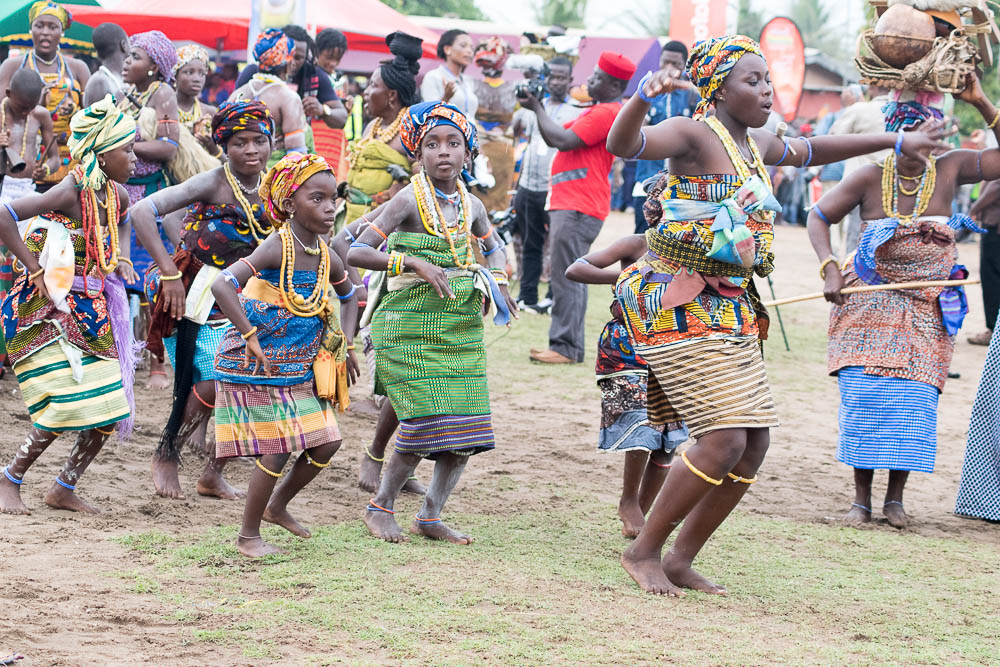 AgbadzaAn Ewe music and dance, born of war songs and kept for funerals, weddings and festivals
 Music of TuvaluRhythmic storytelling dances and choral singing from the Polynesian atolls of Tuvalu
Good reading and sources
The facts on this page come from the Wikipedia article "Albanian iso-polyphony", written by its contributors and used under the CC BY-SA 4.0 licence, and from its Wikidata record (CC0). EveryParampara rewrote the text in its own words, with AI assistance, and compares every page with the article to make sure no passage is copied. It may be reused under the same CC BY-SA 4.0 licence with a link back.
It may contain mistakes. Traditions differ from one family, village and community to the next, and the people who keep them know them best. If something is wrong, tell us. Last refreshed 2026-10-05.
More from Albania
All the traditions of Albania 🇲🇰 Galičnik, North Macedonia and 1 moreTeškotoТешкото
A Macedonian line dance that expresses the hardship and resilience of people in western Macedonia.Performance
🇬🇷 Athens, Greece and 1 moreTsamikoΤσάμικος
A slow Greek folk dance performed in a line or circle to 3/4 time music.Performance
🇲🇰 Galičnik, North Macedonia and 1 moreTeškotoТешкото
A Macedonian line dance that expresses the hardship and resilience of people in western Macedonia.Performance
🇬🇷 Athens, Greece and 1 moreTsamikoΤσάμικος
A slow Greek folk dance performed in a line or circle to 3/4 time music.Performance
 🇽🇰 Vushtrri, Kosovo and 1 moreGatherings of Poetesses in VushtrriTakimet e Poeteshave në Vushtrri
An annual literary festival celebrating female poets in Vushtrri, KosovoPerformance
🇮🇳 Pune, India and 5 moreTurbanدولبند (dolband)
Cloth wound around the head, worn for faith, rank, shade and identityDress
🇽🇰 Vushtrri, Kosovo and 1 moreGatherings of Poetesses in VushtrriTakimet e Poeteshave në Vushtrri
An annual literary festival celebrating female poets in Vushtrri, KosovoPerformance
🇮🇳 Pune, India and 5 moreTurbanدولبند (dolband)
Cloth wound around the head, worn for faith, rank, shade and identityDress
The same idea elsewhere
Death and mourning compared 🇲🇽 Mexico City, Mexico and 1 moreDay of the DeadDía de Muertos
A Mexican remembrance of deceased family and friends with altars, marigolds and feastsFestival · Sweets given and shared
🇲🇽 Mexico City, Mexico and 1 moreDay of the DeadDía de Muertos
A Mexican remembrance of deceased family and friends with altars, marigolds and feastsFestival · Sweets given and shared
 🇹🇱 Timor-LesteUma Lulik
Sacred ancestral clan houses and ritual shrines in East TimorSpiritual
🇹🇱 Timor-LesteUma Lulik
Sacred ancestral clan houses and ritual shrines in East TimorSpiritual
 🇮🇩 Indonesia and 2 moreKenduri
A communal prayer meal and gathering shared across Indonesia, Malaysia and BruneiSpiritual · Feasts and festival meals
🇮🇩 Indonesia and 2 moreKenduri
A communal prayer meal and gathering shared across Indonesia, Malaysia and BruneiSpiritual · Feasts and festival meals
 🇼🇸 Samoa and 1 moreʻIe tōga
Precious woven mats exchanged in Samoan ceremonies to honor family ties and chiefly status.Dress
🇼🇸 Samoa and 1 moreʻIe tōga
Precious woven mats exchanged in Samoan ceremonies to honor family ties and chiefly status.Dress