Festivals and celebrationsEast AsiaShinto, Taoist and folk Chinese
Jidai Matsuri
In its own language: 時代祭
An autumn costume procession celebrating Kyoto's imperial heritage and history
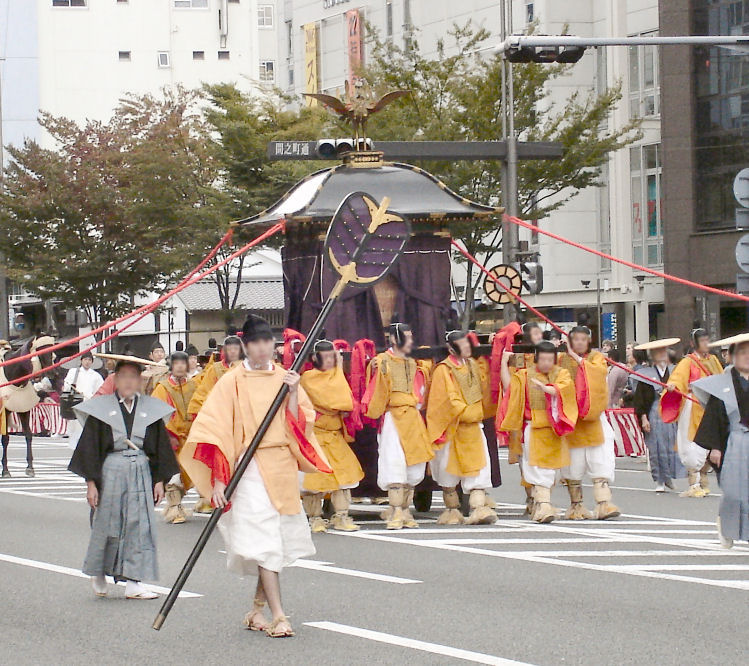
Jidai Matsuri is an annual festival celebrated on October 22 in Kyoto, Japan. Thousands of participants in historical costume accompany sacred portable shrines on a route from the Kyoto Imperial Palace to the Heian Shrine to honour two ancient emperors.
When is Jidai Matsuri kept?
Jidai Matsuri is kept on annually on 22 October.
The Jidai Matsuri, or Festival of the Ages, is a major autumn celebration held each year in Kyoto, Japan. Created in 1895, the festival commemorates the long history of the former imperial capital. Thousands of local participants walk in an elaborate procession of authentic period dress, escorting sacred portable shrines from the Kyoto Imperial Palace to the Heian Shrine to honour two of the city's defining emperors.
Origins and founding
The festival began after the 1868 Meiji Restoration, when Japan moved its imperial capital, government officials, and court from Kyoto to Tokyo. Local authorities feared Kyoto would lose its standing and public interest. To mark 1,100 years since Emperor Kanmu founded Heian-kyo in 794, the city built the Heian Shrine in 1895 to enshrine his spirit. Organisers launched the first Jidai celebration that year with a costume parade reflecting Kyoto's eras. In 1940, officials also dedicated the festival to Emperor Komei, who helped unify the realm and affirm Kyoto's importance at the end of the Edo period.
The grand procession
The celebration takes place along a two-kilometre route through the city. Events start early in the morning when two mikoshi, or portable shrines, are brought out from the Kyoto Imperial Palace so the public can pay respects. In the afternoon, a five-hour pageant winds through the streets toward Heian Shrine. Roughly two thousand participants of all ages join the walking reenactment. The parade displays figures from the earliest eras up to the Meiji period, bringing Kyoto's long history to life for spectators.
Costumes across the eras
Participants wear authentic period costumes representing characters and historical eras from Kyoto's beginnings through the Meiji era. The procession includes samurai, military figures, and everyday people from various chapters in Japanese feudal history. Women taking part in the parade wear the elaborate junihitoe, an intricate multi-layered garment. Each period is represented in detail, allowing onlookers to see how clothing, military gear, and social roles shifted over more than a thousand years of the city's past.
Sacred shrines and music
At the spiritual centre of the event are the mikoshi representing Emperor Kanmu and Emperor Komei. After the historical figures have passed, the two sacred palanquins travel from the imperial palace toward their home at Heian Shrine. Accompanying the portable shrines is a costumed military band performing gagaku, the traditional court music of Japan. The procession finishes at the shrine grounds, marking the end of the festival while maintaining a living connection between Kyoto and its imperial founders.
How Jidai Matsuri is kept
Activities begin in the early morning at the Kyoto Imperial Palace, where portable shrines representing Emperor Kanmu and Emperor Komei are presented for public veneration. In the afternoon, a two-kilometre, five-hour procession sets off. Approximately two thousand participants dressed as samurai, military figures, court women in multi-layered junihitoe robes, and everyday citizens march through the streets. A costumed military band playing traditional gagaku music accompanies the portable shrines as the entire gathering moves to Heian Shrine, where the parade concludes.
When and where
The festival is held every year on 22 October. On rare occasions, the date is adjusted for major national events, such as when the 2019 festival was moved to 26 October for the enthronement of Emperor Naruhito.
The festival takes place entirely in Kyoto, Japan. The parade travels along a two-kilometre path, starting at the Kyoto Imperial Palace and concluding at the Heian Shrine.
What Jidai Matsuri means
Created after the capital moved to Tokyo, the festival serves to protect Kyoto's civic identity and celebrate its heritage. By honouring Emperor Kanmu, who founded the ancient city, and Emperor Komei, who led it before the modern era, the celebration connects local citizens to Kyoto's imperial roots and recalls over a millennium of historical eras.


Questions people ask about Jidai Matsuri
When is Jidai Matsuri kept?
Jidai Matsuri is kept on annually on 22 October.
What is Jidai Matsuri?
It is one of Kyoto's three major annual festivals, alongside the Gion Matsuri and Aoi Matsuri. It features a large historical reenactment parade where around two thousand people dress in costumes representing different periods of Japanese history.
Why was the festival established?
The festival was created in 1895 to mark the 1,100th anniversary of Kyoto's founding and to renew civic pride after the imperial capital moved to Tokyo. It honours Emperor Kanmu and Emperor Komei.
What do participants wear in the parade?
Performers wear authentic period attire representing eras from Kyoto's founding to the Meiji period. Figures include samurai, warriors, common folk, and women dressed in elaborate multi-layered court robes known as junihitoe.
See also
 HalloweenAn annual observance on 31 October marking the eve of All Saints' Day, rooted in Christian tradition and Celtic heritage
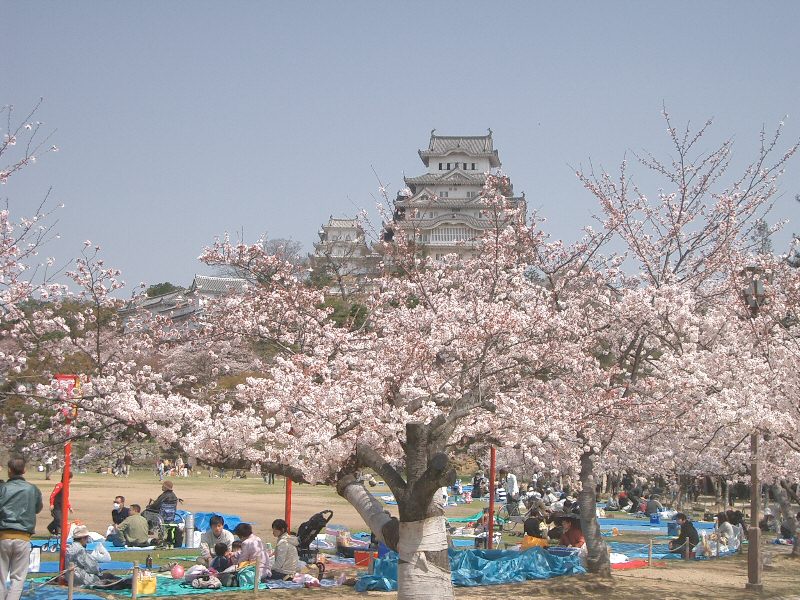 HanamiA Japanese spring custom of gathering under blooming cherry trees to eat, drink, and celebrate the fleeting beauty of th
 Buddha's BirthdayA festival marking the birth of Siddhartha Gautama, observed across Asia with temple rituals and community gatherings.
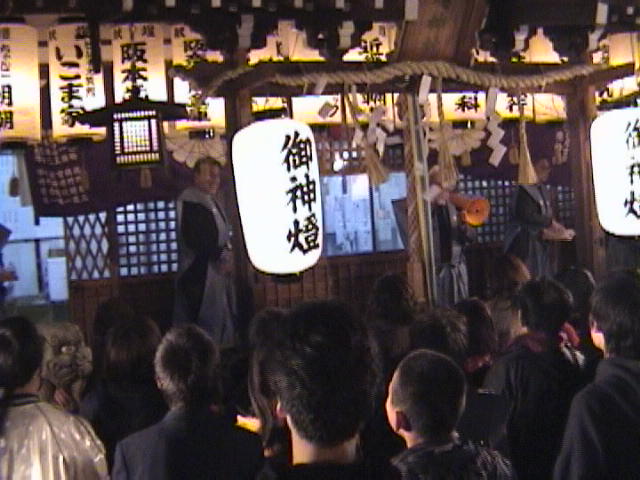 SetsubunA Japanese ritual of throwing roasted soybeans to banish evil spirits and welcome spring.
Good reading and sources
- Jidai Matsuri on WikipediaEncyclopedia
- More photos on Wikimedia CommonsPhotos and video
- Wikidata recordOpen data
The facts on this page come from the Wikipedia article "Jidai Matsuri", written by its contributors and used under the CC BY-SA 4.0 licence, and from its Wikidata record (CC0). EveryParampara rewrote the text in its own words, with AI assistance, and compares every page with the article to make sure no passage is copied. It may be reused under the same CC BY-SA 4.0 licence with a link back.
It may contain mistakes. Traditions differ from one family, village and community to the next, and the people who keep them know them best. If something is wrong, tell us. Last refreshed 2026-10-04.
More from Japan
All the traditions of Japan
🇮🇪 Ireland and 5 moreHalloween
An annual observance on 31 October marking the eve of All Saints' Day, rooted in Christian tradition and Celtic heritageFestival · Sweets given and shared
 🇮🇳 India and 4 moreWater lantern
Small lamps floated on water to honour the dead and ask for good fortuneFestival
🇯🇵 Kyoto, Japan and 4 moreHanami花見
A Japanese spring custom of gathering under blooming cherry trees to eat, drink, and celebrate the fleeting beauty of thFestival · Lunch
🇮🇳 India and 6 moreBuddha's Birthday佛诞 (Fódàn)
A festival marking the birth of Siddhartha Gautama, observed across Asia with temple rituals and community gatherings.Festival
🇮🇳 India and 4 moreWater lantern
Small lamps floated on water to honour the dead and ask for good fortuneFestival
🇯🇵 Kyoto, Japan and 4 moreHanami花見
A Japanese spring custom of gathering under blooming cherry trees to eat, drink, and celebrate the fleeting beauty of thFestival · Lunch
🇮🇳 India and 6 moreBuddha's Birthday佛诞 (Fódàn)
A festival marking the birth of Siddhartha Gautama, observed across Asia with temple rituals and community gatherings.Festival
The same idea elsewhere
Royalty and coronation compared 🇲🇱 Bamako, Mali and 5 moreGriotjeli, ߖߋ߬ߟߌ in N'Ko script
West Africa's hereditary keepers of spoken history, praise and musicPerformance
🇲🇱 Bamako, Mali and 5 moreGriotjeli, ߖߋ߬ߟߌ in N'Ko script
West Africa's hereditary keepers of spoken history, praise and musicPerformance
 🇲🇲 Bagan, MyanmarNat worshipနတ်
Veneration of guardian spirits and nature deities alongside Buddhism in MyanmarSpiritual
🇲🇲 Bagan, MyanmarNat worshipနတ်
Veneration of guardian spirits and nature deities alongside Buddhism in MyanmarSpiritual
 🇵🇪 Cusco, Peru and 4 moreIntiinti (Quechua)
The Inca sun deity, honoured with temples, offerings and the June festival Inti RaymiSpiritual
🇵🇪 Cusco, Peru and 4 moreIntiinti (Quechua)
The Inca sun deity, honoured with temples, offerings and the June festival Inti RaymiSpiritual
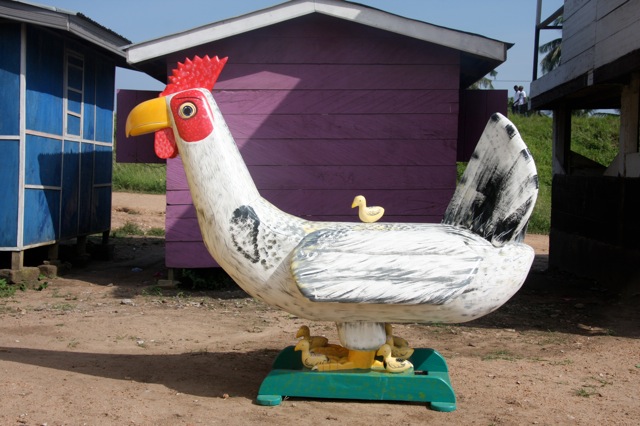 🇬🇭 Accra, GhanaFantasy coffinsAbebuu adekai
Custom hand-carved burial caskets shaped as animals, tools and symbols in southern GhanaRite of passage
🇬🇭 Accra, GhanaFantasy coffinsAbebuu adekai
Custom hand-carved burial caskets shaped as animals, tools and symbols in southern GhanaRite of passage