Spiritual and religiousEuropeChristian
Assumption of Mary
A feast on 15 August, when Christians remember Mary taken up into heaven

The Assumption is the Christian belief that Mary, the mother of Jesus, was taken body and soul into heaven at the end of her life. It is a Catholic dogma and a feast kept on 15 August by Catholics, Orthodox, Lutherans and Anglicans, with processions and the blessing of herbs.
When is Assumption of Mary in 2027?
Assumption of Mary 2027 is on Sunday, 15 August 2027. Other years: 2026, Saturday, 15 August 2026; 2028, Tuesday, 15 August 2028.
On 15 August each year, Christians in many churches remember Mary, the mother of Jesus, and the belief that she was taken up, body and soul, into heaven at the end of her earthly life. In the Catholic Church this is a defined dogma, proclaimed in 1950. For Orthodox Christians the same day marks her Dormition, or falling asleep. The feast is kept with processions and, in some places, the blessing of herbs.
What it is
The Assumption is the belief that Mary, the mother of Jesus, was taken into heaven body and soul when her earthly life ended. The Catholic Church teaches this as a dogma, a belief that must be held. Pope Pius XII defined it on 1 November 1950 in a document called Munificentissimus Deus. The definition does not settle whether Mary died before she was taken up, and that question is left open. The English word comes from the Latin assūmptiō, meaning a taking up. Orthodox Christians speak instead of the Dormition, or falling asleep, of the Mother of God.
Origins and history
Accounts of Mary's end survive in texts the Church did not put in the Bible, and scholars date them differently. Stephen J. Shoemaker places the Book of Mary's Repose and the Six Books Dormition Apocryphon in the second, third or fourth century, while Maximilian Bonnet, Jean Rivière and Jean Gribomont put such narratives in the fourth century or earlier. The New Testament says nothing about her death. Epiphanius of Salamis, writing late in the fourth century, found no settled tradition and listed three views: a peaceful death, death as a martyr, or no death. The feast was being kept by the fifth century, and the emperor Maurice fixed it at 15 August in Constantinople around 600.
How it is kept
The Assumption is kept on 15 August by the Catholic Church and by many Anglican and Lutheran churches, the latter calling it the Feast of St. Mary. Orthodox Christians keep the Dormition on the same day. In German-speaking lands and in some Slavic countries, Poland among them, people bring herbs to be blessed. Those herbs are thought to hold their essential oils most strongly at this season, and the custom is linked to images of Mary as vine, lavender, cypress and lily. The season running to 8 September, the Nativity of Mary, is known as the Frauendreißiger, roughly the thirty days of Our Lady.
What it means
Pope Pius XII wrote that he hoped belief in the Assumption would strengthen belief in resurrection and make it more effective. The Catechism of the Catholic Church describes it as a singular share in her Son's resurrection and a foretaste of the resurrection of other Christians. In 1950 the psychologist Carl Jung called the proclamation the most important religious event since the Reformation. Older stories add a scene that later painters often showed: the apostle Thomas arrives after Mary's death, the tomb is opened and found empty except for her grave clothes, and she lets her girdle fall down to him from heaven.
How Assumption of Mary is kept
Catholics keep 15 August as the Solemnity of the Assumption, and in many places the day includes a procession; Rome fixed a procession for the feast as early as the seventh century. Anglican and Lutheran churches hold their own observances under various titles on the same date. Orthodox Christians keep the Dormition. In parts of German-speaking Europe and in some Slavic countries such as Poland, people gather herbs and bring them to be blessed, then take them home. Luxembourg counts the observance as intangible cultural heritage.
When and where
The feast falls on 15 August every year, and the date is fixed, not movable. It was decreed for Constantinople by the emperor Maurice in 600 and reached Rome about fifty years later. Armenian Apostolic Christians keep it on the Sunday nearest 15 August; the Coptic, Ethiopian and Eritrean Orthodox churches keep it on 22 August.
The Assumption is kept across the Catholic world and by Orthodox, Oriental Orthodox, Lutheran and Anglican churches. Its strongest local customs are in German-speaking Europe and in Slavic countries such as Poland, where herbs are blessed, and in Luxembourg, where the observance is listed as intangible cultural heritage. Parishes elsewhere keep the day with processions and services.
What Assumption of Mary means
For those who keep it, the feast says that what happened to Mary will happen to others. The Catechism calls it a share in her Son's resurrection and a foretaste of the resurrection of Christians. Bishops at the 1950 definition pointed to Genesis, where God tells the serpent that the woman's offspring will strike its head. Since the early Church Fathers, the image in Revelation of a woman clothed with the sun, the moon beneath her feet, has been read in three ways: as Israel, as the Church and as Mary.


Assumption of Mary dates: 2026, 2027, 2028
| Year | Assumption of Mary date |
|---|---|
| 2026 | Saturday, 15 August 2026 |
| 2027 | Sunday, 15 August 2027 |
| 2028 | Tuesday, 15 August 2028 |
Questions people ask about Assumption of Mary
When is Assumption of Mary in 2027?
Assumption of Mary 2027 is on Sunday, 15 August 2027. Other years: 2026, Saturday, 15 August 2026; 2028, Tuesday, 15 August 2028.
What is the Assumption?
It is the belief that Mary, the mother of Jesus, was taken up into heaven body and soul at the end of her earthly life. The Catholic Church defined it as a dogma in 1950, and it has been celebrated on 15 August since early in Christian history.
Do all Christians keep it?
No. It is a Catholic dogma and a feast in many churches, including Orthodox, Oriental Orthodox, Lutheran and Anglican ones. Lutheran churches call 15 August the Feast of St. Mary, and Anglican churches use titles such as the Feast of Saint Mary the Virgin.
Did Mary die before she was taken into heaven?
That is left open. The definition does not say whether she died or was raised to eternal life without bodily death. Epiphanius of Salamis, writing in the fourth century, could find no settled tradition and listed three possible endings.
Where did the feast come from?
It was being kept by the fifth century, and the emperor Maurice fixed it at 15 August in Constantinople around 600. It reached Rome about fifty years later, and in 1950 Pope Pius XII defined the Assumption as a dogma.
See also
 CandlemasA Christian feast of candle blessings marking the end of the Christmas season
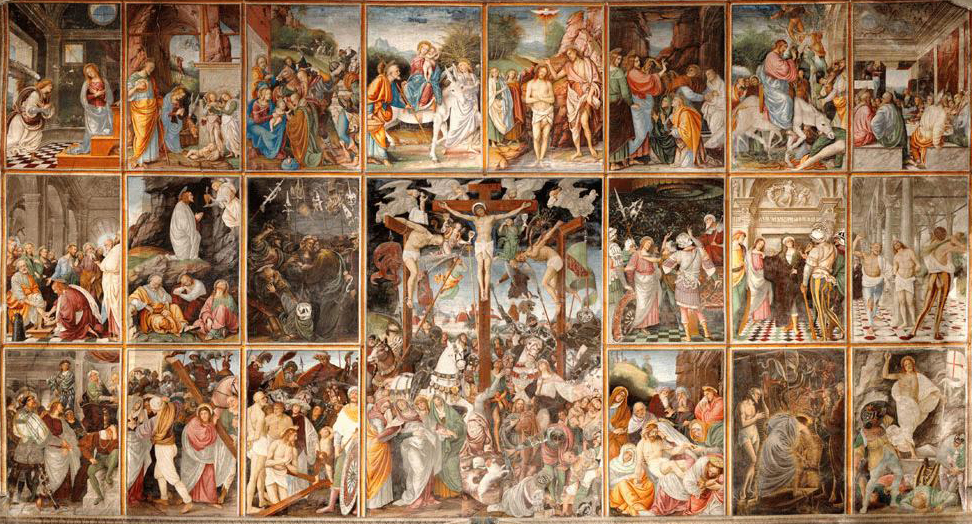 Presentation of Jesus at the TempleA February feast of candles and welcome, kept forty days after Christmas
 Dancing procession of EchternachA Roman Catholic hopping pilgrimage honouring Saint Willibrord in eastern Luxembourg
 ZaduszkiA Polish day of prayer for the dead on 2 November, kept with candles at the graves
Good reading and sources
- Assumption of Mary on WikipediaEncyclopedia
- More photos on Wikimedia CommonsPhotos and video
- Wikidata recordOpen data
The facts on this page come from the Wikipedia article "Assumption of Mary", written by its contributors and used under the CC BY-SA 4.0 licence, and from its Wikidata record (CC0). EveryParampara rewrote the text in its own words, with AI assistance, and compares every page with the article to make sure no passage is copied. It may be reused under the same CC BY-SA 4.0 licence with a link back.
It may contain mistakes. Traditions differ from one family, village and community to the next, and the people who keep them know them best. If something is wrong, tell us. Last refreshed 2026-10-05.
More from Italy
All the traditions of Italy 🇬🇷 Greece and 1 moreLustratio
An ancient Greek and Roman cleansing rite using processions and animal sacrifice.Spiritual
🇬🇷 Greece and 1 moreIncubationἐγκοίμησις
The sacred practice of sleeping in holy shrines to seek divine healing and dreamsSpiritual
🇬🇷 Greece and 1 moreLustratio
An ancient Greek and Roman cleansing rite using processions and animal sacrifice.Spiritual
🇬🇷 Greece and 1 moreIncubationἐγκοίμησις
The sacred practice of sleeping in holy shrines to seek divine healing and dreamsSpiritual
 🇮🇹 Lake Nemi, ItalyNemoralia
A three-day Roman festival of torches and garlands for the goddess DianaSpiritual
🇮🇹 Lake Nemi, ItalyNemoralia
A three-day Roman festival of torches and garlands for the goddess DianaSpiritual
 🇵🇭 Philippines and 5 moreHoly WeekἉγία καὶ Μεγάλη Ἑβδομάς
The solemn seven days leading to Easter, recalling the final week and Passion of JesusSpiritual · Fasting and breaking the fast
🇵🇭 Philippines and 5 moreHoly WeekἉγία καὶ Μεγάλη Ἑβδομάς
The solemn seven days leading to Easter, recalling the final week and Passion of JesusSpiritual · Fasting and breaking the fast
The same idea elsewhere
Healing, luck and protection compared 🇮🇳 India and 4 moreWater lantern
Small lamps floated on water to honour the dead and ask for good fortuneFestival
🇮🇳 India and 4 moreWater lantern
Small lamps floated on water to honour the dead and ask for good fortuneFestival
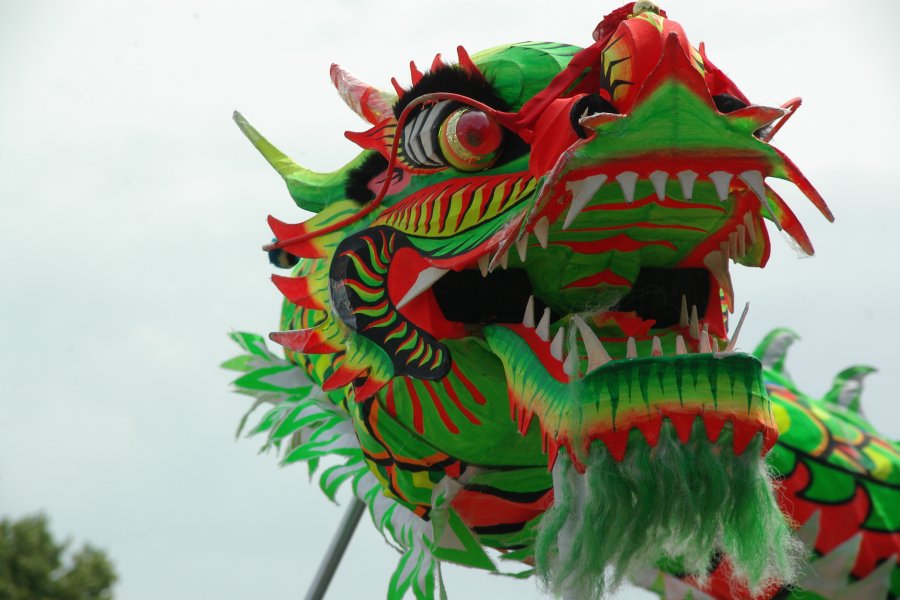 🇨🇳 China and 3 moreDragon dance舞龍 / 舞龙
A long dragon puppet on poles, danced by a team at Chinese New Year and other festivalsPerformance
🇨🇳 China and 3 moreDragon dance舞龍 / 舞龙
A long dragon puppet on poles, danced by a team at Chinese New Year and other festivalsPerformance
 🇺🇸 United States and 4 moreFriday the 13th
A Western folk superstition regarding the unluckiness of a Friday falling on the 13th.Folklore
🇵🇬 Trobriand Islands, Papua New GuineaTrobriand cricket
Cricket as played in the Trobriand Islands, with chants, dances and a feastGame
🇺🇸 United States and 4 moreFriday the 13th
A Western folk superstition regarding the unluckiness of a Friday falling on the 13th.Folklore
🇵🇬 Trobriand Islands, Papua New GuineaTrobriand cricket
Cricket as played in the Trobriand Islands, with chants, dances and a feastGame