Bunad
Norway's festive dress, tied to a home district and worn from weddings to 17 May

A bunad is a Norwegian festive costume, usually named for the district it belongs to. Some follow rural dress of the 18th and 19th centuries, others were designed in the early 20th century. Norwegians wear them at weddings, baptisms, confirmations, graduations, Christmas and, above all, on 17 May, the national day.
When is Bunad marked?
Bunad is kept as part of Christmas, which is on Friday, 25 December 2026.
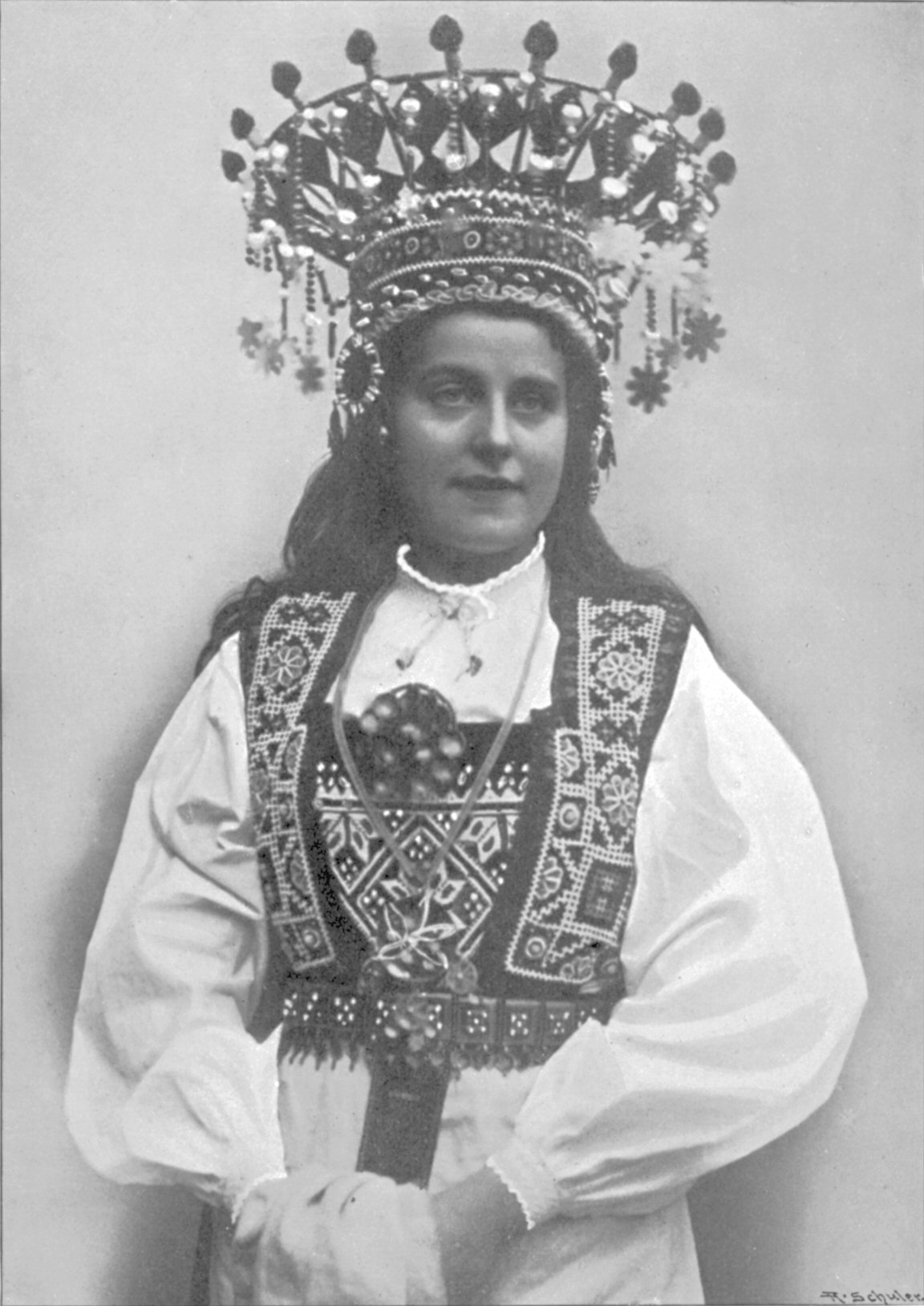
The bunad is Norway's festive dress, and in everyday talk the word covers the whole family of regional costumes that Norwegians put on for weddings, baptisms, confirmations, graduations and Christmas. Each design belongs to a district, and many carry embroidery, a shawl, and silver or gold brooches called sølje. People wear a bunad to show where they come from.
What it is
In Norwegian, bunad works as a wide umbrella word. It can take in rural clothing from the 1700s and 1800s, folk costumes made in the 1900s, and even, in older usage, household goods and livestock. In its narrow everyday sense it means the festive dress that was designed in the early 1900s and loosely follows older local clothing. Writers on the subject keep two ideas apart: the folk costume, which is the dress people really wore in a district in former times, and the bunad, which is today's festive version. A bunad usually carries the name of the district it comes from.
Origins and history
Interest in folk dress grew out of national romanticism in the 1800s, a movement that swept Norway and its neighbours, Denmark among them and Germany in particular. In Norway the fashion for local costume lasted longer than elsewhere and fed into the bunad. The folk-dance movement at the start of the 1900s gave it further energy. Hulda Garborg and Klara Semb are named as the pioneers who brought bunader into ordinary cultural life; a pamphlet Garborg published in 1903 turned attention away from one national dress and towards many regional ones. Records of folk costume in Norway reach back to the Middle Ages, and Setesdal in the south has a dress tradition going back to the 1300s.
How it is worn
Bunader appear at folk dances, weddings, baptisms, confirmations, Christmas, graduations, and above all on 17 May, the national day. Nobody has to wear one; it is a choice, and in recent decades the dress has moved well beyond folk festivals and been accepted as formal gala wear. Manners around it are fairly settled. A woman in bunad is expected to have the matching shoes and bag and to leave off sunglasses, earrings and heavy makeup. Parents often give a bunad to a child as a confirmation present. Because the work is slow, with its cutting, embroidery and hand finishing, a piece can take up to a year to complete.
Design and debate
The look is elaborate: embroidery, a scarf or shawl, and hand-made silver or gold jewellery known as sølje. Men wear bunader too, but women's are more varied and common, and the male buyers are often young city dwellers. Councils, local and national, have fixed rules about colour, cloth, embroidery, jewellery, cut and allowed headwear, and there is argument over how strict they should be: one side, sometimes mocked as a bunad police, wants exact standards, the other allows freedom. Nobody can give a firm number of bunader; most estimates settle near two hundred. For a long time the Hardanger woman's bunad stood for Norwegian rural dress in general, and the East Telemark woman's bunad is now taking its place in that role.
Today and change
Wearing a bunad has spread far past folk dance and holiday. It counts as formal dress, and a former Norwegian foreign minister, Thorvald Stoltenberg, drew comment by wearing one when he presented his credentials to Denmark's Queen Margrethe II. Bunader have appeared at the gravest public occasions as well, including a service at the start of a royal reign. An advisory committee for bunad questions was formed in 1947, and the work now belongs to a national institute for bunad and folk costume. It shares premises with Valdres Folkemuseum in Fagernes and holds an archive of photographs, cut patterns, sketches and district writings. Sellers and wearers keep debating which outfits count as official.
How Bunad is kept
A person decides on a bunad, often one from the district their family comes from, and has it made over months of cutting, embroidery and finishing. On the day, they dress at home: the garment, the shirt or blouse, the stockings, the shoes, the bag, the shawl or scarf, and the sølje. Hair is shown rather than hidden under a headdress, which most wearers no longer use. They then join the occasion, a wedding, a baptism, a confirmation, a graduation, a Christmas gathering, a folk dance or the 17 May parades, and wear the bunad through the day as formal dress.
When and where
Bunader belong to festive days rather than to one fixed date in the calendar. They are worn at weddings, baptisms, confirmations, graduations and Christmas, and most of all on 17 May, Norway's Constitution Day, when towns and villages fill with parades. Otherwise they come out whenever formal dress is called for.
The custom belongs to the whole of Norway, and each bunad is named after the district it comes from, so a wearer usually has a link through family to that place. Some districts kept their older dress traditions more closely than others; Setesdal in the south is the best known example, while Trøndelag in central Norway is now reviving versions that had gone out of use.
What Bunad means
A bunad is more than clothing. It says where a person's family belongs, and people generally expect the choice to match a district the wearer has real ties to, though no rule enforces that. The dress carries a sense of shared history and of regional difference at once. Wearing one is also a mark of standing, and the quality of cloth, embroidery and silver is noticed. The old headdresses used to signal whether a woman was married or single, a meaning that has largely gone.


Days Bunad is marked
Questions people ask about Bunad
When is Bunad marked?
Bunad is kept as part of Christmas, which is on Friday, 25 December 2026.
What is a bunad?
It is a Norwegian festive costume, worn mostly by women, with a name taken from the district it belongs to. Some are based on rural dress from the 1700s and 1800s; others were designed in the early 1900s on loose historical lines. Embroidery, a shawl and silver brooches are common parts.
Do you have to come from the district?
No. Traditionally people choose the bunad of their own or their grandparents' birthplace, and others expect that link, but nothing requires it. Anyone may pick any design, though a local seller may find it harder to supply a bunad from far away.
How long does making one take?
It can take up to a year, because the garment is cut, embroidered and finished by hand. Parents often have one made as a confirmation gift for a child, who then wears it on the confirmation day. Details of colour, cloth and jewellery are set by councils.
Is there agreement on what counts as correct?
No. Debate continues about how closely a bunad must follow official standards and how much variation is allowed. Some people, nicknamed the bunad police, want strict rules; others accept improvisation. Because of this, no one can give a firm number of bunader, though estimates hover near two hundred.
See also
 Rite of passageA ceremony that marks leaving one group and entering another, with a new status
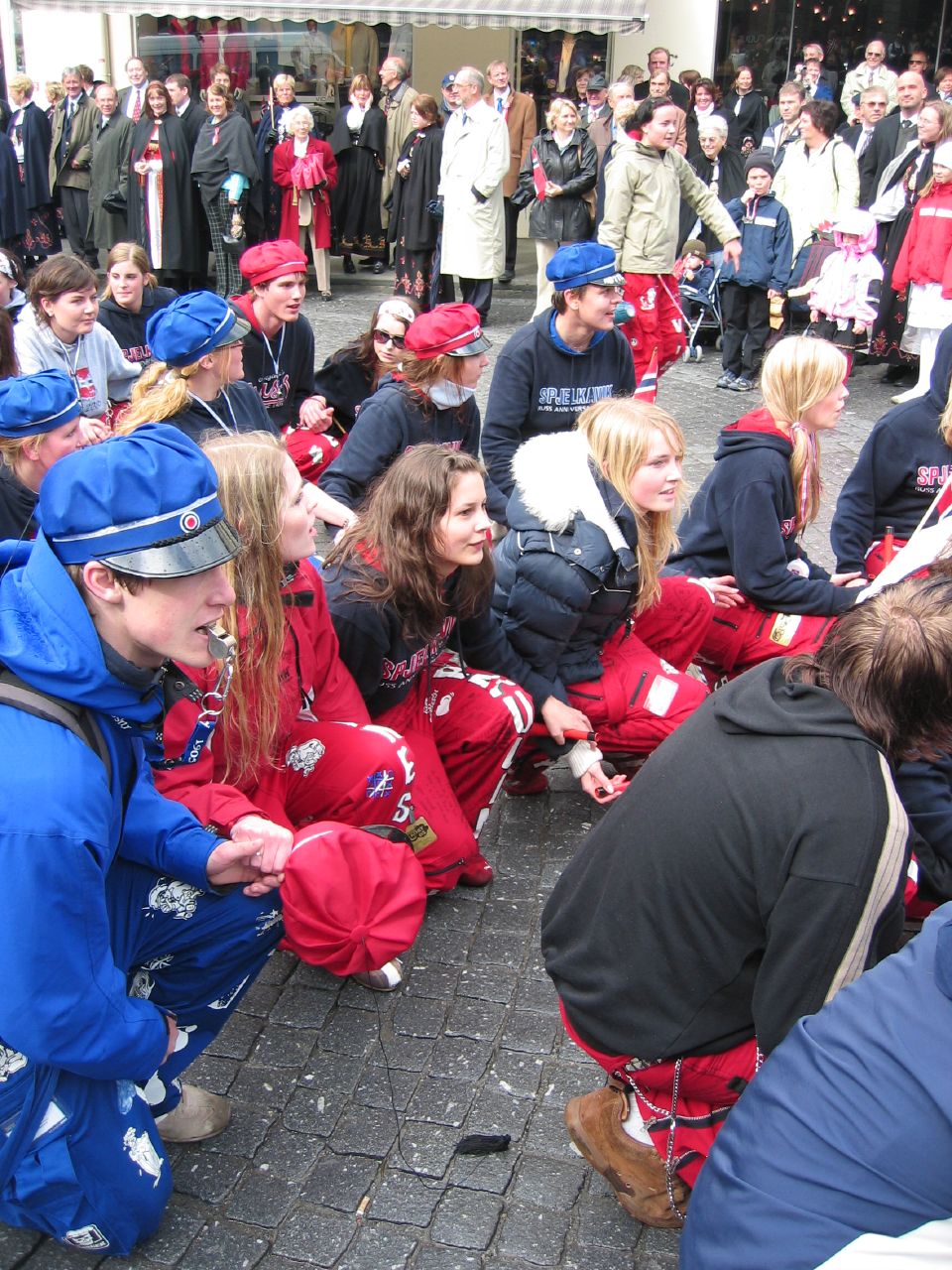 RussefeiringA spring graduation rite of passage for Norwegian secondary school students
 Traditional tattooingThe ancient custom of marking the skin for protection, healing, status and sacred rites
 GáktiA traditional coat worn by the Sámi people across northern Scandinavia and Russia, signaling origin and status through c
Good reading and sources
- Bunad on WikipediaEncyclopedia
- More photos on Wikimedia CommonsPhotos and video
- Wikidata recordOpen data
The facts on this page come from the Wikipedia article "Bunad", written by its contributors and used under the CC BY-SA 4.0 licence, and from its Wikidata record (CC0). EveryParampara rewrote the text in its own words, with AI assistance, and compares every page with the article to make sure no passage is copied. It may be reused under the same CC BY-SA 4.0 licence with a link back.
It may contain mistakes. Traditions differ from one family, village and community to the next, and the people who keep them know them best. If something is wrong, tell us. Last refreshed 2026-10-05.
More from Norway
All the traditions of Norway
🇳🇴 Norway and 3 moreGákti
A traditional coat worn by the Sámi people across northern Scandinavia and Russia, signaling origin and status through cDress
 🇷🇺 Russia and 5 moreUshankaушанка
An ear-flapped fur hat from Russia, tied up or under the chin against the coldDress
🇷🇺 Russia and 5 moreUshankaушанка
An ear-flapped fur hat from Russia, tied up or under the chin against the coldDress
 🇳🇴 Norway and 1 moreSølje
A silver brooch from Norway, worn with the bunad or on its ownDress
🇺🇸 United States and 5 moreRite of passage
A ceremony that marks leaving one group and entering another, with a new statusRite of passage
🇳🇴 Norway and 1 moreSølje
A silver brooch from Norway, worn with the bunad or on its ownDress
🇺🇸 United States and 5 moreRite of passage
A ceremony that marks leaving one group and entering another, with a new statusRite of passage
The same idea elsewhere
Coming of age compared 🇨🇳 Beijing, ChinaHanfu漢服
The dress of the Han Chinese, named for the Han dynasty and worn again todayDress
🇨🇳 Beijing, ChinaHanfu漢服
The dress of the Han Chinese, named for the Han dynasty and worn again todayDress
 🇮🇳 Srinagar, India and 3 morePashmina
Ultra-fine wool of Himalayan goats, hand-woven in Kashmir into shawls of rankDress
🇺🇬 UgandaEkisaakaate
A Buganda youth retreat teaching traditional manners, crafts and life skillsEtiquette
🇮🇳 Srinagar, India and 3 morePashmina
Ultra-fine wool of Himalayan goats, hand-woven in Kashmir into shawls of rankDress
🇺🇬 UgandaEkisaakaate
A Buganda youth retreat teaching traditional manners, crafts and life skillsEtiquette
 🇨🇲 Bafoussam, CameroonNyang Nyang FestivalNyan-Nyang
A four-month Bamileke harvest festival and initiation rite in western CameroonFestival
🇨🇲 Bafoussam, CameroonNyang Nyang FestivalNyan-Nyang
A four-month Bamileke harvest festival and initiation rite in western CameroonFestival