Music, dance and storytellingEast Asia
Bunraku
In its own language: 文楽
Osaka's puppet theatre, with chanters, shamisen players and puppeteers in plain sight

Bunraku is a Japanese puppet theatre that was founded in Osaka in the early 17th century and is still staged. Puppeteers work the dolls in the open while a chanter voices every role and a shamisen player supplies the music, a partnership of three crafts that carries plays written for the puppet stage.
When is Bunraku kept?
Bunraku is kept on throughout the year, with the main company's runs lasting two to three weeks in Osaka, then Tokyo.
Bunraku is a Japanese puppet theatre that took shape in Osaka in the early 17th century and is still performed today. Three sets of artists share the stage: puppeteers who work the dolls in the open, a chanter who speaks and sings every part, and a shamisen player. Audiences come for the stories and for the skill of moving a puppet as if it were alive.
What it is
Bunraku is a puppet theatre from Japan. Three groups of artists take the stage: puppeteers, known as ningyōtsukai; chanters, called tayū; and shamisen players. The chanter speaks and sings the words of every character and also narrates the story. The pairing of chant and shamisen is called jōruri, and ningyō is the everyday Japanese word for a doll or puppet. Other instruments join in now and then, for instance taiko drums. The whole thing is a collaboration: the dolls carry the drama while the people who move them stand in the open, dressed in black.
Origins in Osaka
Puppet drama in Japan goes back to the 16th century, but the shape it has today came together around the 1680s. Its rise is tied to a partnership between the playwright Chikamatsu Monzaemon (1653 to 1724) and the chanter Takemoto Gidayu (1651 to 1714), who set up the Takemoto theatre in Osaka in 1684. The name bunraku belonged at first to a single house: a theatre that opened in Osaka in 1805 and took the name Bunrakuza from the company of Uemura Bunrakuken (1751 to 1810), a puppeteer from Awaji whose work revived a flagging art. Chikamatsu left more than a hundred plays and is sometimes nicknamed the Shakespeare of Japan.
Puppets and their heads
Osaka puppets are on the smaller side. Awaji puppets are among the biggest of all, since Awaji shows are often held outside. Heads are cut by specialist carvers and sorted by gender, social rank and personality; a carver may make a head for one role, or a head may be repainted and redressed for several plays. Around 80 broad types are counted, and a library run by the Japan Arts Council lists 129. Some heads are built with tricks. A pull on a hidden string can turn a woman's face into a demon's, open her mouth into fangs, or slip a fox mask over a lovely face. Hair is human, given bulk with yak tail and set with water and beeswax rather than oil.
Voice and music
Usually one chanter carries the whole cast, changing pitch and delivery to mark each person; sometimes several chanters share the work. Seated beside the shamisen player, the chanter shapes each face as he sings it, which sharpens the emotion for those watching. Bunraku uses the futo-zao, the largest kind of shamisen and the lowest in register, with a rounder tone than other shamisen. Flutes, above all the shakuhachi, the koto and percussion instruments are also heard. In some older theatres a revolving platform turns a new chanter and player into position between scenes, so the music never has to wait.
Today and change
Osaka is still the heart of it. The company supported by the government plays at the National Bunraku Theatre, giving five or more productions a year, each of two to three weeks, then a Tokyo season at the National Theater. Up to the late 1800s, several hundred professional, part-time and amateur troupes worked around the country. After the Second World War fewer than 40 remained, most of them giving one or two shows a year, often beside a local festival. A handful of regional groups stay busy, among them the Awaji troupe, the Tonda troupe of Shiga Prefecture and the Imada and Kuroda troupes of Iida in Nagano. Performers, troupes and puppet makers have been named Living National Treasures under a Japanese programme to preserve them.
How Bunraku is kept
Performers come in three parts. The omozukai, the leading puppeteer, has one hand on the puppet's head and the other on its right hand. A second puppeteer works the left hand using a rod that reaches back from the puppet's elbow, and a third, the ashizukai, moves the feet and legs. Training starts at the feet, moves to the left hand, and reaches the head only much later. Everyone wears black, and most wear a hood as well, though a few companies let the leading puppeteer go uncovered, a style called dezukai. Beside them a chanter delivers every part while the shamisen player keeps time. Before the play, the chanter raises the text and bows to it.
When and where
Shows run through the year rather than on one date. The Osaka company stages five or more productions annually, each lasting two to three weeks before it moves to Tokyo. Smaller troupes often perform only once or twice a year, usually alongside a local festival.
Its home is Osaka, where it began and where the government-supported troupe appears at the National Bunraku Theatre. Regional companies keep it alive on Awaji Island, in Shiga Prefecture and in the city of Iida in Nagano Prefecture. A troupe founded at the University of Missouri in 2003 has carried it to audiences in the United States and Japan.
What Bunraku means
Those who practise bunraku treat it as an author's theatre: the written play comes first, and the performers serve it, which is why the chanter lifts the text and bows before beginning. The puppet is not a lesser actor but the means of the story, and the puppeteers stay visible rather than hidden. The training is long: ten years on the feet, ten on the left hand, ten on the head, and practitioners describe that patience as an artistic necessity. In a culture that gives weight to seniority, some also see the long ladder of training as a way of managing rivalry and keeping a troupe balanced.


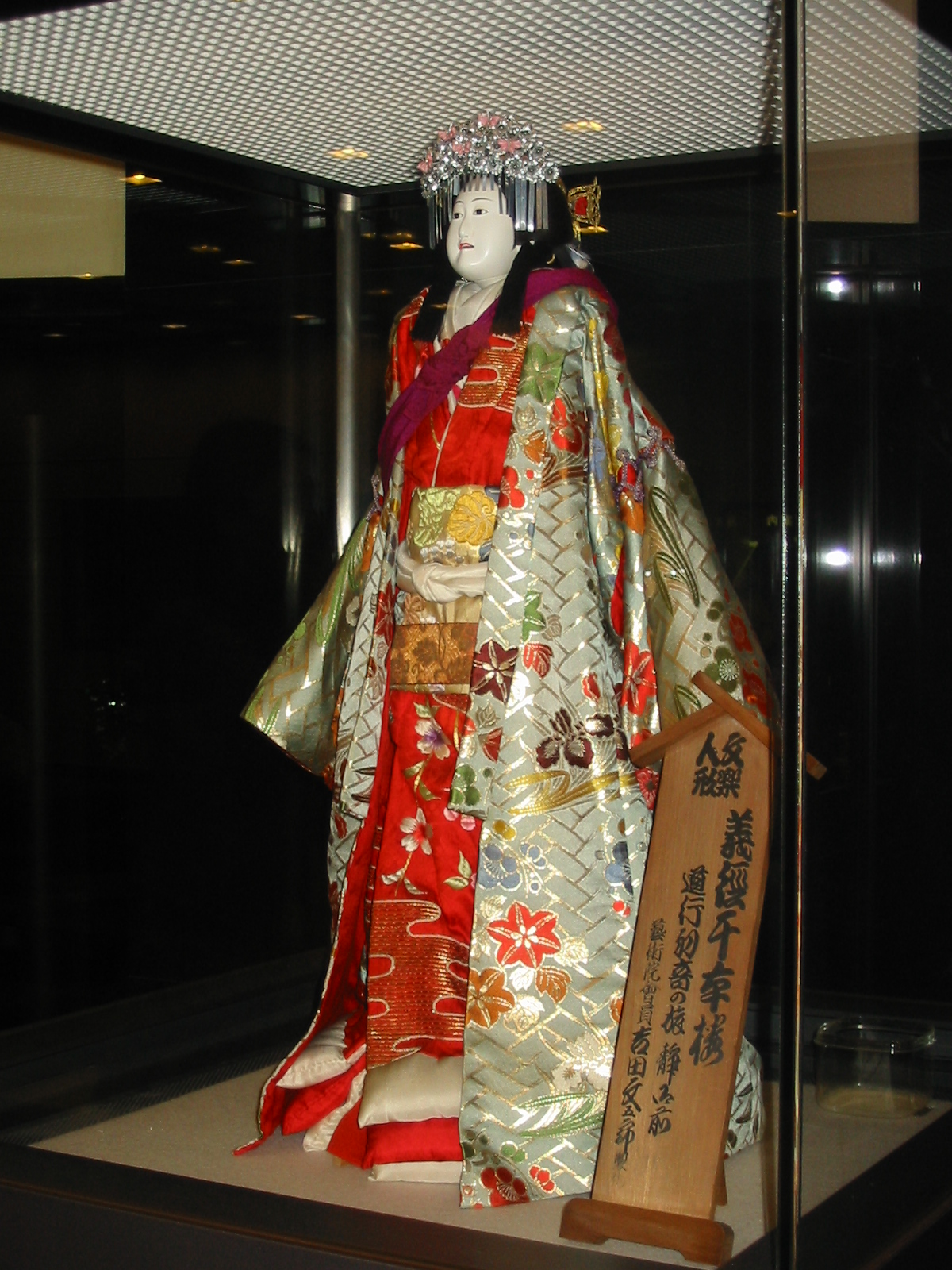
Questions people ask about Bunraku
When is Bunraku kept?
Bunraku is kept on throughout the year, with the main company's runs lasting two to three weeks in Osaka, then Tokyo.
What is bunraku, in simple terms?
It is a Japanese puppet theatre. Puppeteers move the dolls on stage with the audience able to watch them work, while a chanter speaks and sings every part and a shamisen player supplies the music. It took shape in Osaka in the early 17th century and is still performed.
Who are the people on stage?
Three kinds of artist. Puppeteers, led by the chief puppeteer who controls the head; chanters, called tayū, who voice and narrate every character; and a shamisen player. Most roles need three puppeteers, who wear black robes. Some companies keep the chief puppeteer uncovered, a style known as dezukai.
How is bunraku different from kabuki?
Bunraku belongs to the writer and kabuki to the performer. Kabuki actors add puns on their own names, improvised lines and references to current events. In bunraku the chanter honours the script. The two forms share many plays, among them the story of the forty-seven rōnin, and both are known for tales of lovers who die together.
Do the puppets have special heads?
Yes. Carvers cut heads for particular kinds of role, sorted by gender, class and character, and about 80 broad types are counted, though one arts library lists 129. A few heads hold hidden tricks, so a pull on a string can open a woman's mouth into fangs or drop a fox mask over her face.
See also
 IkebanaThe Japanese art of arranging cut branches and flowers in a vessel
 TiniklingA Philippine folk dance where dancers step between clapping bamboo poles
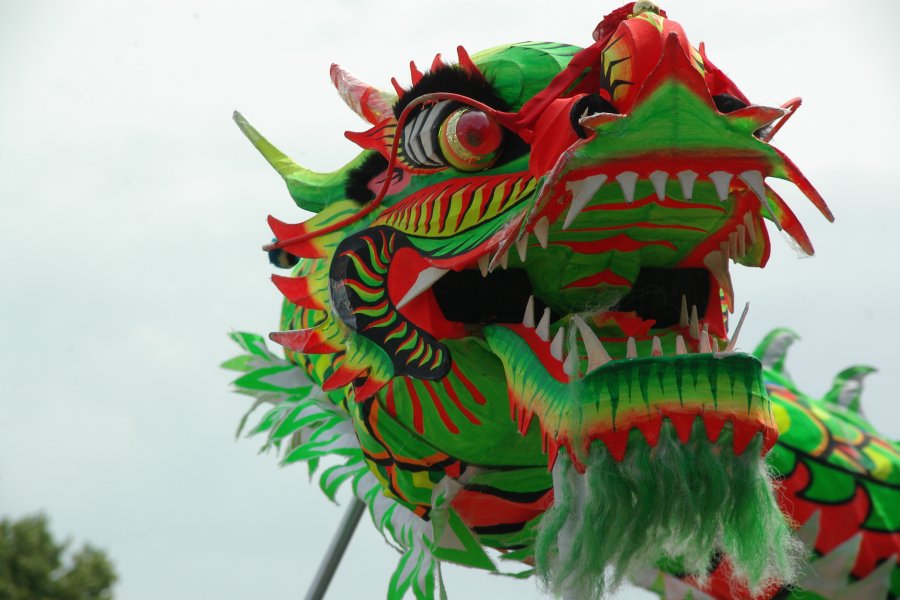 Dragon danceA long dragon puppet on poles, danced by a team at Chinese New Year and other festivalsSean-nós danceAn improvised solo Irish dance: low footwork, free arms and a loud battering beat
Good reading and sources
- Encyclopaedia BritannicaArticle
- Browse the Lists of Intangible Cultural Heritage and the Register of good safeguarding practicesUNESCO, Heritage listing
- Browse the Lists of Intangible Cultural Heritage and the Register of good safeguarding practicesUNESCO, Article
- Bunraku on WikipediaEncyclopedia
- More photos on Wikimedia CommonsPhotos and video
- Wikidata recordOpen data
The facts on this page come from the Wikipedia article "Bunraku", written by its contributors and used under the CC BY-SA 4.0 licence, and from its Wikidata record (CC0). EveryParampara rewrote the text in its own words, with AI assistance, and compares every page with the article to make sure no passage is copied. It may be reused under the same CC BY-SA 4.0 licence with a link back.
It may contain mistakes. Traditions differ from one family, village and community to the next, and the people who keep them know them best. If something is wrong, tell us. Last refreshed 2026-10-05.
More from Japan
All the traditions of Japan 🇨🇳 China and 5 moreLion dance舞獅
A dynamic ritual dance featuring costumed lions, drums and martial acrobaticsPerformance
🇨🇳 China and 5 moreLion dance舞獅
A dynamic ritual dance featuring costumed lions, drums and martial acrobaticsPerformance
 🇯🇵 Kyoto, JapanKyōgen狂言
A traditional Japanese comic theatre of short farces, spoken dialogue and satirePerformance
🇯🇵 Kyoto, JapanKyōgen狂言
A traditional Japanese comic theatre of short farces, spoken dialogue and satirePerformance
 🇯🇵 Tokyo, JapanRakugo落語
Japanese solo comic storytelling told from a cushion using a fan and a clothPerformance
🇨🇳 China and 3 moreDragon dance舞龍 / 舞龙
A long dragon puppet on poles, danced by a team at Chinese New Year and other festivalsPerformance
🇯🇵 Tokyo, JapanRakugo落語
Japanese solo comic storytelling told from a cushion using a fan and a clothPerformance
🇨🇳 China and 3 moreDragon dance舞龍 / 舞龙
A long dragon puppet on poles, danced by a team at Chinese New Year and other festivalsPerformance
The same idea elsewhere
All of this kind 🇹🇷 Kayseri, Turkey and 4 moreHalay
A traditional line and circle folk dance kept across Turkey, Azerbaijan, Armenia, Iran, and Syria.Performance
🇧🇷 BrazilBaião
A syncopated folk rhythm and partnered dance from northeastern BrazilPerformance
🇹🇷 Kayseri, Turkey and 4 moreHalay
A traditional line and circle folk dance kept across Turkey, Azerbaijan, Armenia, Iran, and Syria.Performance
🇧🇷 BrazilBaião
A syncopated folk rhythm and partnered dance from northeastern BrazilPerformance
 🇺🇦 Kyiv, UkraineBanduraБандура
A Ukrainian plucked string instrument played to accompany epic songs and folk balladsPerformance
🇺🇦 Kyiv, UkraineBanduraБандура
A Ukrainian plucked string instrument played to accompany epic songs and folk balladsPerformance
 🇳🇿 Auckland, New ZealandPoi
A Māori performing art of swinging tethered weights in rhythmical patterns.Performance
🇳🇿 Auckland, New ZealandPoi
A Māori performing art of swinging tethered weights in rhythmical patterns.Performance