Music, dance and storytellingSoutheast Asia
Ca trù
In its own language: Ca trù (歌籌)
A Vietnamese art of sung poetry, led by a woman singer with lute and praise drum

Ca trù is a Vietnamese art of sung poetry, built around a woman's voice, that grew up in the north of the country and was long heard at court and among scholars and well-off guests. It almost disappeared in the late 20th century, and since 2009 it has stood on UNESCO's list of heritage in need of urgent safeguarding.
When is Ca trù kept?
Ca trù is kept on performed at club gatherings, festivals and events through the year; one club meets on a Saturday evening.
Ca trù is a Vietnamese way of singing poetry, with a woman's voice at the centre and two companions beside her. It took shape in the north of Vietnam, where it was first heard at court and later in the rooms of scholars and wealthy guests. The songs, the singers called Đào nương and the clubs that keep them alive are all part of the story, and UNESCO regards the singing as heritage at risk.
What it is
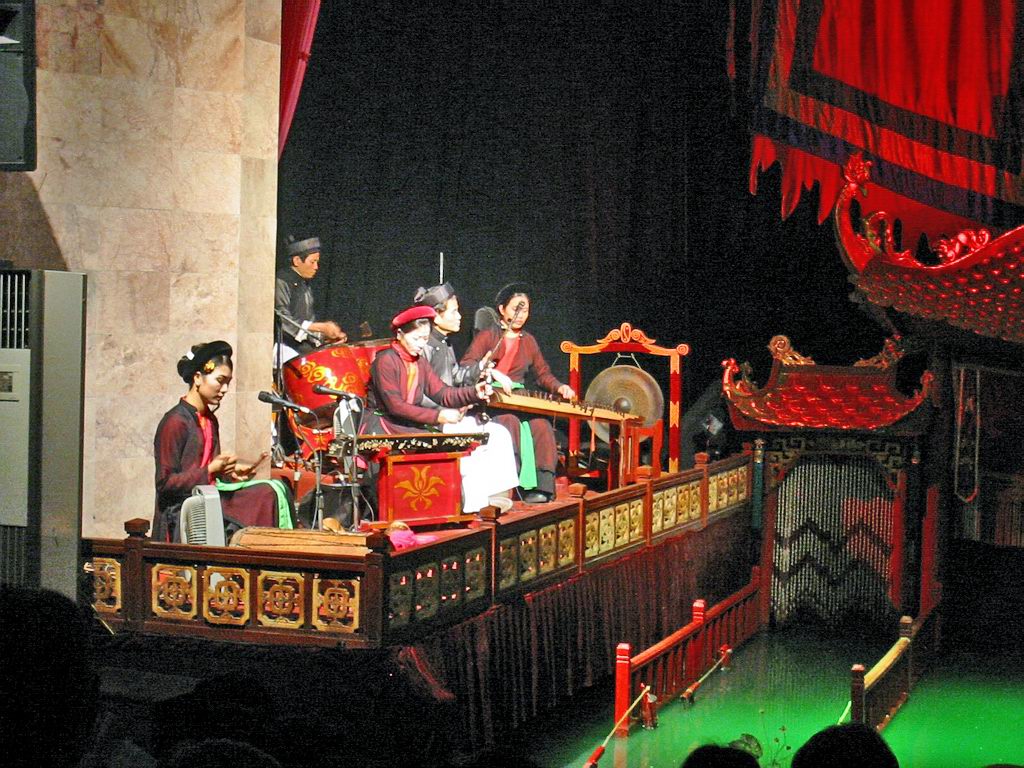
Ca trù is a Vietnamese art of musical storytelling in which poems are sung rather than spoken. A woman leads, and her voice is what defines the genre: newcomers often find the sound startling, yet the singing is the heart of it. The melodies number 56, and singers call them thể cách. The best-known form uses three people. The woman sings and beats the phách, two small wooden sticks struck against a bamboo bar. A man plays the đàn đáy, a three-stringed lute with a long neck that is used almost nowhere else. A guest strikes the trống chầu, a praise drum. Sometimes there is dancing too.
Origins and stories
The beginnings of ca trù are told in more than one way, and no single account settles the question. One story points to a woman named Đào Thị, a musician the Lý court held dear. From her, the tale says, came the name Đào nương for women who sang professionally, a term still remembered though rarely spoken today. Beyond the stories, the art began, like other Vietnamese arts, as entertainment for the royal court. Singers date their trade to the Later Lê dynasty, when musicians known as hát khuôn played only at religious ceremonies held at court. Only afterwards did the music move into small guest houses.
Tally cards and inns
Ca trù is usually translated as 'tally card songs'. In the past the music was heard most often at inns, where men bought bamboo cards. After a performance a man handed his cards to the woman he had chosen, and her pay was counted from how many she held. Guests were scholars, officials and other well-off people, and they expected more than singing: a young woman was also meant to talk wittily about poetry and the arts, and to serve food and drink. Caste rank did not apply to these singers, which meant the most powerful patrons could engage them. They were also hired for family occasions, such as a son's birth, or to mark a signed contract.
Decline and revival
The years after the 1940s were hard. Under the new government, and through the war that followed, ca trù was discouraged and at times suppressed. It was linked in official thinking to superstition, to prostitution, to colonial habits and to an old-fashioned kind of romance, and it came close to vanishing. By 1976 only two practitioners remained, Quách Thị Hồ and Nguyễn Xuân Khoát, and both later helped the art return. In 2009 UNESCO put ca trù singing on its list for urgent safeguarding. By 2011, 140 songs had been gathered from 23 clubs. Clubs still struggle: one director, Nguyễn Vân Mai, says young would-be singers are scarce and good teachers hard to find.
In song and film
Ca trù has also found a place in recent Vietnamese popular culture. It shapes award-winning films such as Mê thảo: thời vang bóng and turns up in 'Trò đời', 'Trăng tỏ thềm lan' and 'Thương nhớ ở ai'. Songwriters have borrowed its colour, among them Nguyễn Cường, Phó Đức Phương and Phú Quang; Mỹ Linh's 1997 release of 'Trên đỉnh Phù Vân' was a bold choice early in her career. Google marked the Founder Commemoration Day with a doodle on 23 February 2020. Live gatherings continue: the club Bích Câu Đạo Quán has 90 members, and 30 or 40 of them meet on a Saturday evening, the oldest artist being 88.
How Ca trù is kept
A performance usually brings three people together. The woman singer leads, keeping the beat on her phách, two wooden sticks struck on a bamboo bar. The lutenist answers her on the đàn đáy, a long-necked lute with three strings. The third person is a guest, often a scholar or a connoisseur, who strikes the trống chầu, the praise drum, at each passage of the song. His drumming carries a judgement: it can show that he likes what he hears or that he does not, though he always follows the beat the singer's sticks have set. Dance sometimes accompanies the singing, and clubs gather for group singing and teaching.
When and where
Ca trù has no single season. It is sung whenever people gather, at club meetings, festivals and events, and some clubs hold their evenings on a Saturday. The Founder Commemoration Day is marked on 23 February; in 2020 Google marked it with a doodle.
Ca trù belongs to Vietnam and grew up in the north of the country, where it was first heard at court and then in inns, communal houses and private homes. Today it is kept by clubs and performers across the country and shown at festivals and events that present several types of the music.
What Ca trù means
What the art means is bound up with listening. The praise drum makes each performance a judgement as well as a song: a guest's strokes tell the singer whether she is admired, so the music asks for attention rather than mere presence. The voice, above all, is said to be the thing that makes ca trù what it is. For those who keep it, the 56 melodies and the name Đào nương carry a memory of a courtly past, and the urgent-safeguarding listing marks them as worth passing on.
Questions people ask about Ca trù
When is Ca trù kept?
Ca trù is kept on performed at club gatherings, festivals and events through the year; one club meets on a Saturday evening.
What is ca trù?
It is a Vietnamese art of sung poetry, with a woman as the main singer. She beats a small percussion, a lutenist plays beside her and a guest strikes a praise drum. The singing, rather than the words alone, is what people recognise as ca trù.
What is the praise drum for?
The trống chầu is struck by a guest, usually a scholar or a connoisseur, during the song. His strokes show whether he likes the singing or not, yet he keeps to the beat set by the singer's wooden sticks, so praise and rhythm stay in step.
Is ca trù in danger?
It nearly died out in the late 20th century, after a period when it was discouraged and linked to prostitution and superstition. UNESCO listed ca trù singing for urgent safeguarding in 2009, and clubs have since worked to teach it, though young singers and teachers are scarce.
What does the name mean?
Ca trù is often translated as 'tally card songs'. Men who came to hear the music in inns bought bamboo cards and gave them to the singer they had chosen after she performed, and her pay was counted from the number of cards she held.
See also
 Nhã nhạcVietnam's royal court music, played for palace rites from the Trần dynasty onward
 Bon Om ToukA three-day Cambodian festival of dragon boat races, floating lanterns and moon offerings
 KaryendaA sacred drum of Burundi that symbolized the monarchy and announced royal events.
 GriotWest Africa's hereditary keepers of spoken history, praise and music
Good reading and sources
- Ca trù on WikipediaEncyclopedia
- More photos on Wikimedia CommonsPhotos and video
- Wikidata recordOpen data
The facts on this page come from the Wikipedia article "Ca trù", written by its contributors and used under the CC BY-SA 4.0 licence, and from its Wikidata record (CC0). EveryParampara rewrote the text in its own words, with AI assistance, and compares every page with the article to make sure no passage is copied. It may be reused under the same CC BY-SA 4.0 licence with a link back.
It may contain mistakes. Traditions differ from one family, village and community to the next, and the people who keep them know them best. If something is wrong, tell us. Last refreshed 2026-10-05.
More from Vietnam
All the traditions of Vietnam
🇻🇳 Huế, VietnamNhã nhạcNhã nhạc (雅樂)
Vietnam's royal court music, played for palace rites from the Trần dynasty onwardPerformance
 🇨🇳 China and 5 moreLion dance舞獅
A dynamic ritual dance featuring costumed lions, drums and martial acrobaticsPerformance
🇨🇳 China and 5 moreLion dance舞獅
A dynamic ritual dance featuring costumed lions, drums and martial acrobaticsPerformance
 🇻🇳 Hoa Lư, VietnamChèo嘲
Satirical folk musical theatre performed by village troupes across northern VietnamPerformance
🇰🇭 Phnom Penh, Cambodia and 1 moreBon Om Toukបុណ្យអុំទូក
A three-day Cambodian festival of dragon boat races, floating lanterns and moon offeringsFestival · Tea-time and snacking customs
🇻🇳 Hoa Lư, VietnamChèo嘲
Satirical folk musical theatre performed by village troupes across northern VietnamPerformance
🇰🇭 Phnom Penh, Cambodia and 1 moreBon Om Toukបុណ្យអុំទូក
A three-day Cambodian festival of dragon boat races, floating lanterns and moon offeringsFestival · Tea-time and snacking customs
The same idea elsewhere
Royalty and coronation compared 🇬🇭 Ghana and 3 moreDamba festivalDamba chuɣu
A Ghanaian celebration of royal authority, ancestral memory, music and danceFestival
🇬🇭 Ghana and 3 moreDamba festivalDamba chuɣu
A Ghanaian celebration of royal authority, ancestral memory, music and danceFestival
 🇮🇱 IsraelRosh Hashanahרֹאשׁ הַשָּׁנָה
The Jewish New Year marked by shofar horn blasts, prayer and sweet foodsSpiritual
🇳🇬 Ibadan, Nigeria and 1 moreYoruba naming ceremonyÌkòlọ́pọ̀ Orúkọ Yorùbá
A rite of passage where a newborn receives a destiny name through divination and family celebration.Rite of passage · Feasts and festival meals
🇮🇱 IsraelRosh Hashanahרֹאשׁ הַשָּׁנָה
The Jewish New Year marked by shofar horn blasts, prayer and sweet foodsSpiritual
🇳🇬 Ibadan, Nigeria and 1 moreYoruba naming ceremonyÌkòlọ́pọ̀ Orúkọ Yorùbá
A rite of passage where a newborn receives a destiny name through divination and family celebration.Rite of passage · Feasts and festival meals
 🇵🇪 Cusco, Peru and 4 moreIntiinti (Quechua)
The Inca sun deity, honoured with temples, offerings and the June festival Inti RaymiSpiritual
🇵🇪 Cusco, Peru and 4 moreIntiinti (Quechua)
The Inca sun deity, honoured with temples, offerings and the June festival Inti RaymiSpiritual