Music, dance and storytellingSoutheast Asia
Nhã nhạc
In its own language: Nhã nhạc (雅樂)
Vietnam's royal court music, played for palace rites from the Trần dynasty onward

Nhã nhạc, meaning elegant music, is the court music of Vietnam. Trained court musicians and dancers performed it at palace ceremonies from the Trần dynasty in the 13th century through the Nguyễn era, and the Huế court form is still performed today.
When is Nhã nhạc kept?
Nhã nhạc is kept at yearly and religious ceremonies of the court, and at coronations, funerals and receptions for guests.
Nhã nhạc, which means elegant music, is the music of the Vietnamese royal court. Trained musicians played it at annual ceremonies, at religious holidays and anniversaries, and at grand occasions such as a king's crowning, a funeral or the welcoming of envoys. Dancers in elaborate costumes took part too. The form survived into the twentieth century and is still heard in Huế, Vietnam's old capital.
What it is
Nhã nhạc is Vietnam's court music, and the name itself means elegant music. It is not one tune but a body of pieces kept by court musicians, played for the palace and for state occasions. The Vietnamese court kept several kinds of music; nhã nhạc is the term for the ceremonial repertoire in particular. Ceremonies came round every year and included anniversaries and religious holidays. Beyond the yearly round, the music marked the great moments of a reign: a coronation, a funeral, the reception of visiting officials. Court dances belonged with it, and the dancers moved in costumes made with care.
Instruments and costumes
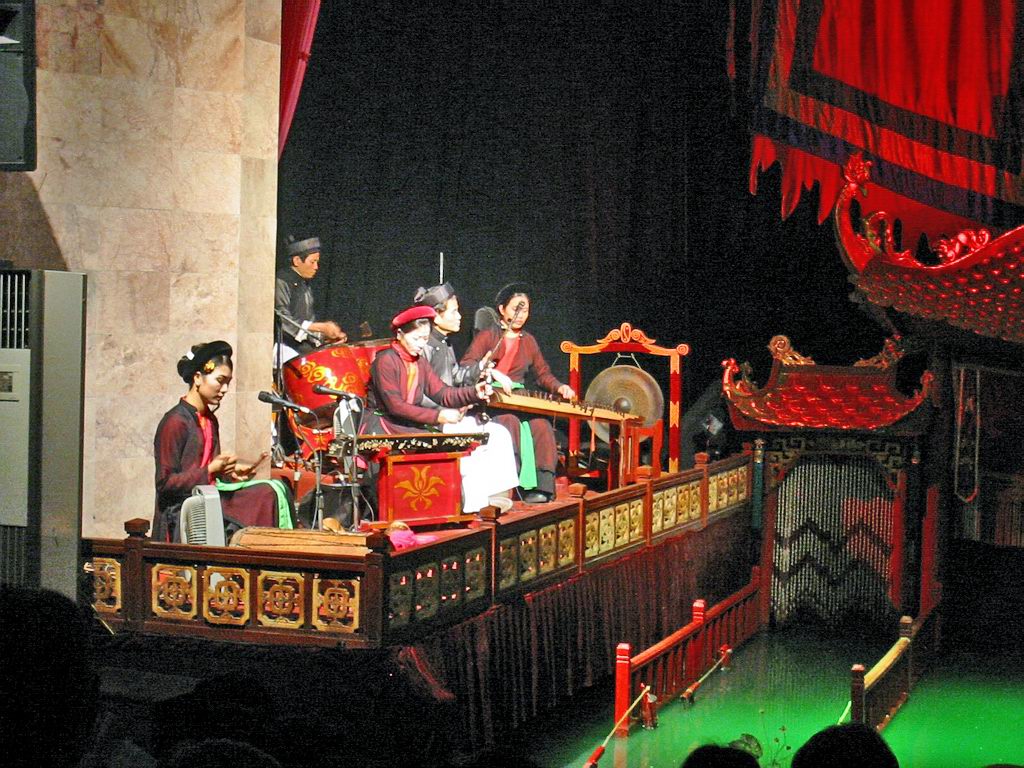
The ensemble brought together wind, string and percussion instruments. The kèn bầu is a conical oboe. Lutes of different shapes had their place: the đàn tỳ bà, pear-shaped with four strings; the đàn nguyệt, round like a moon with two strings; and the đàn tam, which has no frets, three strings and a body covered in snakeskin. The đàn nhị is a fiddle held upright with two strings. A bamboo transverse flute, the sáo or sáo trúc, carried the air, and the trống, a drum struck with sticks, kept time. Other percussion joined in. Musicians and dancers alike wore finely made costumes for a performance.
Outside influences
Neighbouring and imperial China left the deepest trace on the repertoire. The Ming court was the strongest single source, and its music shaped what Vietnamese musicians played. Later the court also borrowed from Champa's music, which it found striking. The tradition did not stay fixed. Under the Nguyễn emperors it was standardised, and most accounts hold that this was when it reached its height. The Nguyễn rulers made it the music of their court, and it wove through the many rituals of the palace.
Huế and Unesco
Huế, the old imperial capital, is where the music is still played. The Huế court form is known as Nhã nhạc cung đình Huế. In 2003 Unesco placed it on its list of Masterpieces of the Oral and Intangible Heritage of Humanity, a listing that honours a practice carried by living performers rather than written down and left on a shelf. Since then a good deal of work has gone into keeping the repertoire alive. The art is intricate and highly developed, and the listing brought wider attention to the effort to preserve it.
How Nhã nhạc is kept
The music is played by court musicians who train for years. At a ceremony the ensemble sits together and works through a set of pieces, with the drum marking the beat and the winds and strings carrying the melody. Dancers may perform alongside them, wearing costumes made for the occasion. Ceremonies fall into two groups. Some come round each year, such as anniversaries and religious holidays. Others belong to particular moments, among them a coronation, a funeral or the formal greeting of guests. In Huế today, performers keep the pieces in use rather than treating them as museum objects.
When and where
The music belongs to the court calendar rather than to a single day. It was performed at ceremonies that came round every year, including anniversaries and religious holidays, and at one-off occasions such as coronations, funerals and receptions for official guests. There is no fixed date on which nhã nhạc is kept today.
Nhã nhạc comes from Vietnam and grew out of the music of its royal court. It was played in the palaces of the Trần and later the Nguyễn rulers. Today it is most closely tied to Huế, the old imperial capital in central Vietnam, where the court form is still performed and where preservation work is centred.
What Nhã nhạc means
Court music belonged to the ceremonial life of the palace. It sounded when a ruler took the throne, when one was buried, and when foreign guests were received. It also marked the year's anniversaries and religious holidays. Because the Nguyễn emperors made it the music of their court, it stood at the centre of royal ritual. Those who keep it now treat it as a highly developed art worth preserving.


Questions people ask about Nhã nhạc
When is Nhã nhạc kept?
Nhã nhạc is kept at yearly and religious ceremonies of the court, and at coronations, funerals and receptions for guests.
What is nhã nhạc?
It is the music of the Vietnamese royal court. The words mean elegant music. It takes in a repertoire of ceremonial pieces rather than a single tune, and it was played by trained court musicians, often with dancers in costume, at palace ceremonies.
Where is it kept today?
In Huế, the old imperial capital of Vietnam, where the court form known as Nhã nhạc cung đình Huế is still performed. In 2003 Unesco listed it among the Masterpieces of the Oral and Intangible Heritage of Humanity, and efforts continue to preserve it.
What instruments are used?
Winds, strings and percussion. Among them are the kèn bầu, a conical oboe; several lutes, including the đàn tỳ bà, the đàn nguyệt and the đàn tam; the đàn nhị fiddle; the sáo bamboo flute; and the trống drum, struck with sticks.
Where did the music come from?
The Ming court in China was the strongest single outside influence on the repertoire. Later the Vietnamese court also borrowed from Champa's music.
See also
 Bon Om ToukA three-day Cambodian festival of dragon boat races, floating lanterns and moon offerings
 KaryendaA sacred drum of Burundi that symbolized the monarchy and announced royal events.
 GriotWest Africa's hereditary keepers of spoken history, praise and music
 Chinese operaA sung, danced and acrobatic theatre from China, in over a hundred regional styles
Good reading and sources
- Nhã nhạc on WikipediaEncyclopedia
- More photos on Wikimedia CommonsPhotos and video
- Wikidata recordOpen data
The facts on this page come from the Wikipedia article "Nhã nhạc", written by its contributors and used under the CC BY-SA 4.0 licence, and from its Wikidata record (CC0). EveryParampara rewrote the text in its own words, with AI assistance, and compares every page with the article to make sure no passage is copied. It may be reused under the same CC BY-SA 4.0 licence with a link back.
It may contain mistakes. Traditions differ from one family, village and community to the next, and the people who keep them know them best. If something is wrong, tell us. Last refreshed 2026-10-05.
More from Vietnam
All the traditions of Vietnam 🇻🇳 VietnamCa trùCa trù (歌籌)
A Vietnamese art of sung poetry, led by a woman singer with lute and praise drumPerformance
🇻🇳 VietnamCa trùCa trù (歌籌)
A Vietnamese art of sung poetry, led by a woman singer with lute and praise drumPerformance
 🇨🇳 China and 5 moreLion dance舞獅
A dynamic ritual dance featuring costumed lions, drums and martial acrobaticsPerformance
🇨🇳 China and 5 moreLion dance舞獅
A dynamic ritual dance featuring costumed lions, drums and martial acrobaticsPerformance
 🇻🇳 Hoa Lư, VietnamChèo嘲
Satirical folk musical theatre performed by village troupes across northern VietnamPerformance
🇰🇭 Phnom Penh, Cambodia and 1 moreBon Om Toukបុណ្យអុំទូក
A three-day Cambodian festival of dragon boat races, floating lanterns and moon offeringsFestival · Tea-time and snacking customs
🇻🇳 Hoa Lư, VietnamChèo嘲
Satirical folk musical theatre performed by village troupes across northern VietnamPerformance
🇰🇭 Phnom Penh, Cambodia and 1 moreBon Om Toukបុណ្យអុំទូក
A three-day Cambodian festival of dragon boat races, floating lanterns and moon offeringsFestival · Tea-time and snacking customs
The same idea elsewhere
Royalty and coronation compared 🇮🇱 IsraelRosh Hashanahרֹאשׁ הַשָּׁנָה
The Jewish New Year marked by shofar horn blasts, prayer and sweet foodsSpiritual
🇮🇱 IsraelRosh Hashanahרֹאשׁ הַשָּׁנָה
The Jewish New Year marked by shofar horn blasts, prayer and sweet foodsSpiritual
 🇵🇪 Cusco, Peru and 4 moreIntiinti (Quechua)
The Inca sun deity, honoured with temples, offerings and the June festival Inti RaymiSpiritual
🇵🇪 Cusco, Peru and 4 moreIntiinti (Quechua)
The Inca sun deity, honoured with temples, offerings and the June festival Inti RaymiSpiritual
 🇸🇪 Mora, SwedenVasaloppet
A 90 km cross-country ski race from Sälen to Mora, run every March since 1922Game
🇸🇪 Mora, SwedenVasaloppet
A 90 km cross-country ski race from Sälen to Mora, run every March since 1922Game
 🇺🇸 United StatesTalking stick
A carved staff that shows who may speak at a Northwest Coast gatheringCeremony
🇺🇸 United StatesTalking stick
A carved staff that shows who may speak at a Northwest Coast gatheringCeremony