Music, dance and storytellingSoutheast AsiaSecular and civicIndigenous and traditional
Chèo
In its own language: 嘲
Satirical folk musical theatre performed by village troupes across northern Vietnam
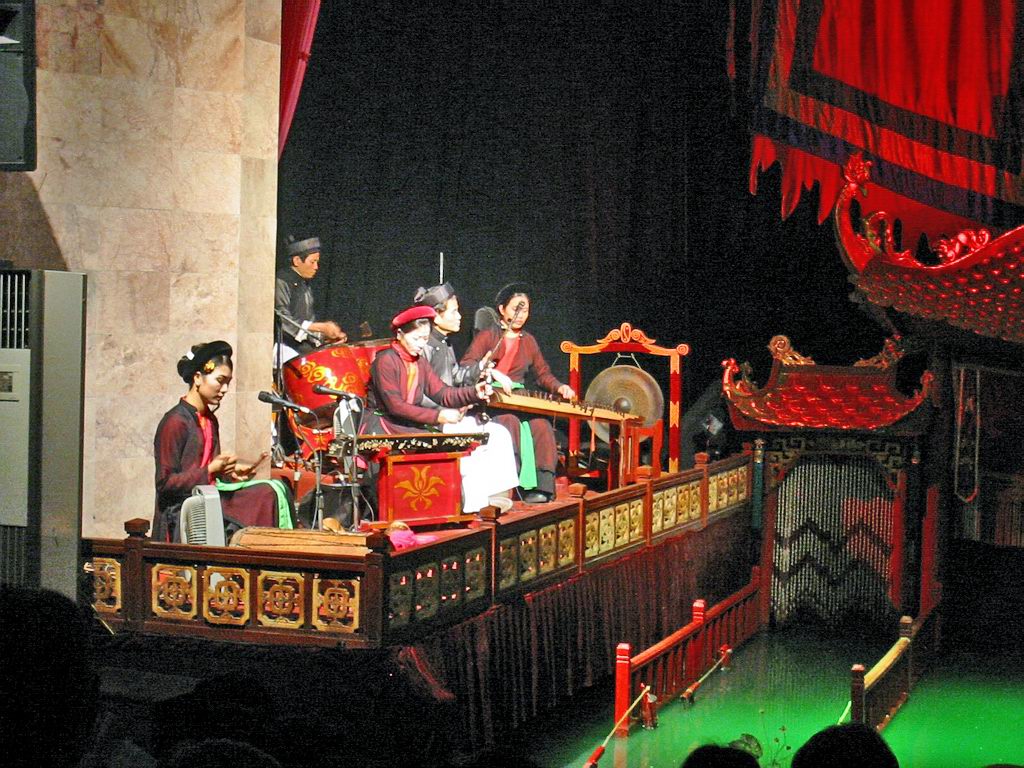
Chèo is a traditional Vietnamese folk opera that combines sung verse, dance, and satirical comedy. Rooted in the rural villages of northern Vietnam, travelling troupes perform these lively morality tales outdoors on simple mats during festivals and harvest celebrations.
When is Chèo marked?
Chèo is kept as part of Tet, which runs from 7 to 11 February 2027.
Chèo is a lively form of Vietnamese folk opera created by rural farming communities in northern Vietnam. Originating as open-air village entertainment, it blends sung folk melodies, dance, and spoken drama with sharp satire. Performances bring people together during communal festivities, allowing local troupes to praise everyday virtues, tell traditional stories, and poke gentle fun at authority figures through comedy.
Origins and development
Folk tradition traces the beginnings of chèo to the tenth-century palace performer Phạm Thị Trân in the Hoa Lư region of Ninh Bình. The theatrical style developed further under the Lý and Trần dynasties. Early performances relied mainly on spoken verse and recited folk songs, but singing became central in the fourteenth century following contact with a captured northern soldier. In the fifteenth century, Emperor Lê Thánh Tông banned the genre from the royal court. As a result, chèo survived and flourished almost entirely in farming villages, where scholars and local storytellers gradually expanded short comedic sketches into full narrative dramas.
Stories and stage figures
Unlike court dramas that focused on the deeds of aristocrats, chèo celebrates ordinary rural life, romantic fidelity, and friendship. Stories frequently draw on folklore and classic literature written in the chữ Nôm script, showing good characters overcoming adversity to find justice. The cast relies on recognisable stock figures, from gentle scholars who rise to official rank to wealthy figures and village folk. Comic characters known as hề chèo carry significant weight in each production: wearing either short shirts with canes or long robes, these village jesters openly mock authority and parody feudal rulers.
Music and dramatic form
Music forms the backbone of every chèo performance. The sound relies heavily on percussion, particularly a small drum that leads the rhythm, alongside flutes, cymbals, and string instruments like the đàn nguyệt, đàn nhị, and đàn bầu. The vocal style draws from regional folk melodies and suits the natural tones of the Vietnamese language. Performers sing solo parts or join in choruses, reciting poetry in classic eight-word couplets or traditional lục bát verse. Actors have wide freedom to improvise words and adjust the length of scenes according to audience energy and mood.
Village performance spaces
Traditionally, chèo is an open-air art staged by travelling groups called gánh hát or phường chèo. A single director oversees the entire company as it journeys between communes during community holidays, summer pauses, and post-harvest celebrations. Rather than requiring elaborate stage sets or heavy costuming, actors perform on woven mats spread across a village square or within a communal temple courtyard. Spectators gather around the open space, creating an informal environment where dialogue flows easily between the performers on the mats and the watching crowd.
How Chèo is kept
A single leader manages an ensemble known as a gánh hát or phường chèo. The troupe sets up in a village square or communal temple courtyard, laying out square mats as their stage without complex scenery or heavy makeup. Performers sing folk melodies, recite poetic verses, and improvise dialogue based on audience reactions. The show weaves together moral storytelling and dance, driven by rhythm keepers on small drums. Throughout the play, comic characters step in to offer witty parodies and banter directly with the spectators.
When and where
Troupes perform throughout the year during communal village gatherings. Shows are especially common following the rice harvest, when communities hold festivals to give thanks, as well as during the Tet holiday season and summer breaks.
Chèo developed in the Red River delta of northern Vietnam, with its traditional roots centred in Hoa Lư in Ninh Bình province. It spread across the northern delta and into the north-central coastal area, reaching provinces such as Nghệ An.
What Chèo means
Chèo reflects the worldview and moral values of Vietnamese rural life. Rather than glorifying royal nobility, plays celebrate everyday human warmth, loyalty, and justice, ensuring that virtuous people find happiness while cruelty is overcome. The comedic clown figures offer a playful outlet for peasant critique, satirising greedy landlords, corrupt officials, and feudal rulers in an atmosphere of shared laughter.

Days Chèo is marked
Questions people ask about Chèo
When is Chèo marked?
Chèo is kept as part of Tet, which runs from 7 to 11 February 2027.
What is chèo?
Chèo is a traditional Vietnamese musical theatre form that combines folk singing, dance, and satirical storytelling. It was developed by rural communities to entertain villagers and dramatise moral tales.
Where is chèo performed?
The tradition thrives across northern Vietnam, especially in the villages of the Red River delta and the north-central coast. Performances typically occur outdoors in communal courtyards and open village squares.
What role do clowns play in chèo?
The clown, known as hề chèo, uses humour to challenge social inequalities. Through funny dialogue and parodies, these characters openly ridicule mandarins, kings, and wealthy figures for the amusement of the audience.
What musical instruments are used in chèo?
Performances are driven by percussion, especially small and large drums that guide the tempo. The musical accompaniment also features bamboo flutes, cymbals, gongs, and traditional string instruments including the đàn nguyệt and đàn bầu.
See also
 Mid-Autumn FestivalAn annual harvest festival celebrating family reunions, full moons and mooncakes
 Buddha's BirthdayA festival marking the birth of Siddhartha Gautama, observed across Asia with temple rituals and community gatherings.
 Double Ninth FestivalAn autumn festival of mountain walks, chrysanthemum wine and ancestor remembrance
 Hùng Kings' Temple FestivalA Vietnamese national festival honoring the legendary founding kings with temple worship and processions.
Good reading and sources
The facts on this page come from the Wikipedia article "Chèo", written by its contributors and used under the CC BY-SA 4.0 licence, and from its Wikidata record (CC0). EveryParampara rewrote the text in its own words, with AI assistance, and compares every page with the article to make sure no passage is copied. It may be reused under the same CC BY-SA 4.0 licence with a link back.
It may contain mistakes. Traditions differ from one family, village and community to the next, and the people who keep them know them best. If something is wrong, tell us. Last refreshed 2026-10-04.
More from Vietnam
All the traditions of Vietnam 🇨🇳 China and 5 moreLion dance舞獅
A dynamic ritual dance featuring costumed lions, drums and martial acrobaticsPerformance
🇨🇳 China and 5 moreLion dance舞獅
A dynamic ritual dance featuring costumed lions, drums and martial acrobaticsPerformance
 🇻🇳 VietnamCa trùCa trù (歌籌)
A Vietnamese art of sung poetry, led by a woman singer with lute and praise drumPerformance
🇻🇳 VietnamCa trùCa trù (歌籌)
A Vietnamese art of sung poetry, led by a woman singer with lute and praise drumPerformance
 🇻🇳 Huế, VietnamNhã nhạcNhã nhạc (雅樂)
Vietnam's royal court music, played for palace rites from the Trần dynasty onwardPerformance
🇻🇳 Huế, VietnamNhã nhạcNhã nhạc (雅樂)
Vietnam's royal court music, played for palace rites from the Trần dynasty onwardPerformance
 🇹🇭 Thailand and 7 moreSpirit house
A small roofed shrine on a pillar, kept in homes and villages across Southeast Asia to honour protective spirits.Spiritual
🇹🇭 Thailand and 7 moreSpirit house
A small roofed shrine on a pillar, kept in homes and villages across Southeast Asia to honour protective spirits.Spiritual
The same idea elsewhere
Harvest and thanksgiving compared 🇮🇳 Ayodhya, India and 7 moreDiwaliदीपावली (Dīpāvalī)
A five-day festival of lights celebrated across India and its diaspora to mark the victory of light over darkness.Festival · Feasts and festival meals
🇮🇳 Ayodhya, India and 7 moreDiwaliदीपावली (Dīpāvalī)
A five-day festival of lights celebrated across India and its diaspora to mark the victory of light over darkness.Festival · Feasts and festival meals
 🇮🇱 Jerusalem, IsraelSukkotסוכות
A seven-day autumn Jewish festival of temporary booths, harvest prayers and hospitalitySpiritual
🇮🇱 Jerusalem, IsraelSukkotסוכות
A seven-day autumn Jewish festival of temporary booths, harvest prayers and hospitalitySpiritual
 🇵🇪 Cusco, Peru and 4 moreIntiinti (Quechua)
The Inca sun deity, honoured with temples, offerings and the June festival Inti RaymiSpiritual
🇵🇪 Cusco, Peru and 4 moreIntiinti (Quechua)
The Inca sun deity, honoured with temples, offerings and the June festival Inti RaymiSpiritual
 🇮🇪 Ireland and 2 moreJack-o'-lantern
A carved pumpkin lantern lit with a candle to brighten and protect Halloween nightsFolklore
🇮🇪 Ireland and 2 moreJack-o'-lantern
A carved pumpkin lantern lit with a candle to brighten and protect Halloween nightsFolklore