Spiritual and religiousEast AsiaBuddhistShinto, Taoist and folk Chinese
Qingming Festival
In its own language: 清明节
A spring custom of sweeping family graves and honouring ancestors across East Asia.

Qingming Festival is a traditional Chinese spring holiday where families gather to honour their ancestors. Relatives tidy burial plots or columbaria, burn joss paper, offer food, and spend time outdoors flying kites and sharing meals.
When is Qingming Festival in 2027?
Qingming Festival 2027 is on Monday, 5 April 2027. Other years: 2026, Sunday, 5 April 2026; 2028, Tuesday, 4 April 2028.
Known in English as Tomb Sweeping Day, Qingming Festival is a traditional Chinese observance that marks the arrival of spring. Families gather at burial grounds to tidy graves, present food offerings, and burn spirit paper for departed relatives. Rooted in deep filial respect, the day combines solemn remembrance with joyful outdoor activities like kite flying, leisurely walks, and communal meals.
Tending the graves
Family members journey to cemeteries, hillsides, or urban columbaria to maintain burial grounds. They clear weeds, sweep away dust, and wash headstones before setting out ceremonial offerings. Relatives present prepared dishes, light incense sticks, and burn paper money or miniature paper models of houses and cars for the afterlife. Family members then bow or kowtow before the grave according to seniority, showing respect for their forebears. In some places, people place fresh willow branches on door frames or wear them in their hair to protect against misfortune.
Cold food and royal decrees
The holiday developed from the ancient Hanshi or Cold Food custom, linked to the loyal nobleman Jie Zitui during the Spring and Autumn period. Following his death in a hillside forest fire, people commemorated his memory by avoiding lit cooking fires. Over time, ancestral ceremonies became increasingly lavish and competitive among wealthy households. In 732 CE, Emperor Xuanzong of the Tang dynasty sought to limit this extravagance by declaring that families could formally honour their ancestors only once each year during the Qingming season. This decree established a lasting calendar tradition.
Springtime outdoor pastimes
Beyond grave rituals, Qingming celebrates the onset of warm spring weather before farm plowing starts. Families spend the afternoon outdoors walking in nature and flying decorative kites, often designed like opera figures or animals. In earlier dynasties, the holiday included massive tug-of-war matches encouraged by the imperial court, as well as football matches. In tea-growing areas, the festival marks a key division in the agricultural calendar: green tea leaves plucked prior to this date are made into a tender and highly valued drink called pre-Qingming tea.
Traditional holiday foods
Distinct regional foods are made to observe the season. In mainland China, families eat qingtuan, which are sweet green dumplings made from glutinous rice coloured with Chinese mugwort or barley grass. In Taiwan, a herbal treat called caozaiguo is prepared with Jersey cudweed. After ritual dishes are presented to the ancestors at graves or home altars, family members gather to share the food together in a communal feast, reinforcing family unity across generations.
How Qingming Festival is kept
Families assemble early in the morning to visit ancestral graves or columbarium niches. They pull weeds, sweep away dirt, and clean the memorial markers. Members arrange food, tea, and wine before the headstone, light incense, and burn spirit paper alongside paper models of daily goods. Relatives take turns kowtowing before the tomb in order of age. Once ancestral rites are complete, the family shares the ceremonial food in a picnic or clan banquet, then spends the afternoon outdoors flying kites.
When and where
Qingming falls on the opening day of the fifth solar term in the Chinese lunisolar calendar, exactly fifteen days after the spring equinox. On the solar calendar, this corresponds to 4, 5, or 6 April.
The festival is kept throughout mainland China, Hong Kong, Macau, and Taiwan. It is also actively observed by Chinese communities across Southeast Asia, including Malaysia and Singapore, and has related expressions in the Ryukyu Islands.
What Qingming Festival means
The festival embodies filial piety, a central Confucian value emphasizing gratitude and respect for one's forebears. People believe ancestors maintain a continued existence in the afterlife and rely on living relatives for care and remembrance. Fulfilling these duties keeps families connected across generations and ensures ancestral blessings for the year ahead.
On the table
- Qingtuan
- Caozaiguo
- Pre-Qingming green tea


Days Qingming Festival is marked
Qingming Festival dates: 2026, 2027, 2028
| Year | Qingming Festival date |
|---|---|
| 2026 | Sunday, 5 April 2026 |
| 2027 | Monday, 5 April 2027 |
| 2028 | Tuesday, 4 April 2028 |
Questions people ask about Qingming Festival
When is Qingming Festival in 2027?
Qingming Festival 2027 is on Monday, 5 April 2027. Other years: 2026, Sunday, 5 April 2026; 2028, Tuesday, 4 April 2028.
What is the Qingming Festival?
It is an annual Chinese spring festival dedicated to honouring ancestors. Families travel to cemeteries and columbaria to sweep graves, clear weeds, make offerings of food and incense, and burn paper gifts to care for deceased relatives in the afterlife.
Where is the festival celebrated?
It is observed across China, Taiwan, Hong Kong, and Macau, as well as in Southeast Asian countries like Singapore and Malaysia where Chinese communities maintain clan and ancestral traditions.
Why do families burn paper objects during the festival?
Traditional belief holds that ancestors require money and everyday comforts in the afterlife. By burning spirit paper and paper replicas of items like houses, phones, and vehicles, relatives provide for their forebears' spiritual wellbeing.
See also
 Ghost FestivalA full-moon night in the seventh lunar month for feeding ghosts and guiding souls home
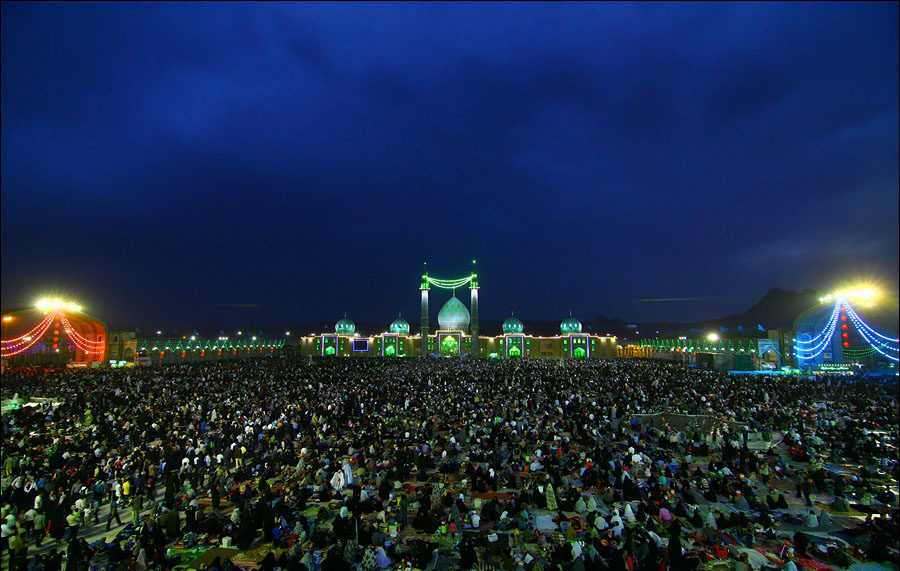 Mid-Sha'banAn Islamic night of prayer, remembrance, and seeking divine forgiveness.
 DiwaliA five-day festival of lights celebrated across India and its diaspora to mark the victory of light over darkness.
 NowruzThe Iranian new year at the March equinox, kept with fire, greenery and picnics
Good reading and sources
- Qingming Festival on WikipediaEncyclopedia
- More photos on Wikimedia CommonsPhotos and video
- Wikidata recordOpen data
The facts on this page come from the Wikipedia article "Qingming Festival", written by its contributors and used under the CC BY-SA 4.0 licence, and from its Wikidata record (CC0). EveryParampara rewrote the text in its own words, with AI assistance, and compares every page with the article to make sure no passage is copied. It may be reused under the same CC BY-SA 4.0 licence with a link back.
It may contain mistakes. Traditions differ from one family, village and community to the next, and the people who keep them know them best. If something is wrong, tell us. Last refreshed 2026-10-04.
More from China
All the traditions of China 🇮🇳 India and 5 morePretaप्रेत
Offerings and rites for spirits enduring deep hunger across Asian traditions.Spiritual
🇨🇳 China and 5 moreGhost Festival中元節 / 中元节 (Zhōngyuán jié)
A full-moon night in the seventh lunar month for feeding ghosts and guiding souls homeSpiritual
🇮🇳 India and 5 morePretaप्रेत
Offerings and rites for spirits enduring deep hunger across Asian traditions.Spiritual
🇨🇳 China and 5 moreGhost Festival中元節 / 中元节 (Zhōngyuán jié)
A full-moon night in the seventh lunar month for feeding ghosts and guiding souls homeSpiritual
 🇨🇳 China and 5 moreAncestor veneration
Honouring dead relatives with offerings, meals and prayers, kept in cultures worldwideSpiritual
🇨🇳 China and 5 moreAncestor veneration
Honouring dead relatives with offerings, meals and prayers, kept in cultures worldwideSpiritual
 🇨🇳 China and 5 moreJoss paper金紙 (jīnzhǐ)
Paper money burned for ancestors and gods, folded and offered in Chinese worshipSpiritual
🇨🇳 China and 5 moreJoss paper金紙 (jīnzhǐ)
Paper money burned for ancestors and gods, folded and offered in Chinese worshipSpiritual
The same idea elsewhere
Remembering the ancestors compared
🇮🇷 Iran and 7 moreNowruzنوروز
The Iranian new year at the March equinox, kept with fire, greenery and picnicsSeasonal
 🇮🇳 Mathura, India and 5 moreHoliहोली (Hindi)
A spring festival of colours and bonfires that marks the end of winter and the triumph of good over evil.Festival
🇮🇳 Mathura, India and 5 moreHoliहोली (Hindi)
A spring festival of colours and bonfires that marks the end of winter and the triumph of good over evil.Festival
 🇮🇳 Guwahati, IndiaBihu dance
A folk dance from Assam that celebrates spring, fertility and the new year with energetic movement and music.Performance
🇮🇳 Guwahati, IndiaBihu dance
A folk dance from Assam that celebrates spring, fertility and the new year with energetic movement and music.Performance
 🇺🇦 Ukraine and 5 moreKupala Night
A summer solstice folk festival marked by bonfires, water rituals and herbal gatherings across Eastern Europe.Festival
🇺🇦 Ukraine and 5 moreKupala Night
A summer solstice folk festival marked by bonfires, water rituals and herbal gatherings across Eastern Europe.Festival