Life-cycle ritesEuropeChristian
Confirmation
A Christian rite of laying on of hands that completes baptism and strengthens faith

Confirmation is a Christian rite in which hands are laid on a baptised person to give the Holy Spirit. Catholic and Eastern churches count it a sacrament, called chrismation in the East, where it comes straight after baptism; in the West it is normally conferred around the age of reason or in early adolescence.
When is Confirmation marked?
Confirmation is kept as part of Pentecost, which runs from 16 to 17 May 2027.
Confirmation is a Christian rite in which hands are laid on a baptised person. Churches that baptise infants treat it as sealing the covenant begun at baptism. In the East it comes straight after baptism; in the West it usually waits until a child can understand it. Many churches see it as strengthening by the Holy Spirit.
What it is
A person who is to be confirmed is called a confirmand. Hands are laid on them while prayer is said, and in the Western churches chrism is used, olive oil that a bishop has consecrated. Where babies are baptised, confirmation is understood as sealing the covenant begun at baptism. Catholic and Eastern Christian teaching calls it a sacrament; in the East the name is chrismation, and there it comes straight after baptism, as it also does in the West for adults who are baptised. Otherwise it waits until the person can understand it, often in the early teens.
Scriptural roots
Christians trace the practice to the New Testament. In John's Gospel, Jesus speaks of the Holy Spirit who will come to the apostles; after his resurrection he breathes on them and they receive the Spirit, a gift completed at Pentecost, when the Spirit came and they began to speak of God's works. From then on the apostles gave the Spirit to others by laying hands on them. Three passages are read as showing that this gesture followed the water of baptism from the earliest days: the two accounts in Acts, and the letter to the Hebrews, which names the laying on of hands beside teaching about baptisms.
The age question
In the early church a bishop carried out baptism, confirmation and the Eucharist together, helped by priests, deacons and deaconesses. Once most of the baptised were babies, his part was put off until he could reach them, and until the twelfth century priests still confirmed small children before their first communion. The age then rose, from about seven to twelve and then fifteen. In eighteenth-century France a bishop waited until after first communion so that he could teach the young people first. Pope Leo XIII asked in 1897 for the earlier order to return, and in 1910 Pius X brought first communion down to seven. Parishes have since placed confirmation in the middle or later school years.
Churches that differ
Churches that baptise only believers, among them Baptist and Anabaptist congregations, do not practise confirmation at all. When someone joins a confirming church from one of those bodies, or from a non-Christian religion, the rite is given as part of their reception. One church baptises only from the age of eight, which it calls the age of accountability, and confirms soon afterwards, since the baptism is not counted complete until then. Outside the churches, secular bodies offer coming-of-age ceremonies of their own instead, and Unitarian Universalists hold a similar ceremony.
What it means
Catholic teaching describes confirmation as a fresh outpouring of the Holy Spirit like the one given to the apostles at Pentecost. It deepens the grace of baptism, binds the person more closely to Christ, increases the gifts of the Spirit and makes the bond with the church more complete, giving strength to bear witness to the faith in word and deed and to speak of the cross without shame. Catholic and Methodist teaching alike speaks of the Spirit strengthening the baptised for the road ahead. The Catechism warns against taking adult faith and grown-up years to be the same thing.
How Confirmation is kept
A bishop, or a priest given the faculty, lays hands on the confirmands and prays that they receive the Holy Spirit. In the Latin Church chrism is used; in Eastern Catholic churches the parish priest does this at once after baptism. Candidates are usually baptised already, often as infants, and have been taught beforehand. In many Protestant churches the person professes the faith before the congregation, and this is required for full membership and for admission to the Lord's Table. Adult converts are confirmed as they are received.
When and where
The timing follows the church. In Eastern practice, and for adults baptised in the West, confirmation is given immediately after baptism, often by the bishop at the Easter Vigil. In the Latin Church it is conferred at about the age of discretion, generally taken as seven or so, or during early adolescence, and many parishes now place it in the middle or later school years.
Confirmation is kept wherever churches practise infant baptism: in Catholic and Eastern Christian communities, and among Lutherans, Anglicans, Methodists and Reformed churches. It is not part of Baptist or Anabaptist life, since those churches baptise only believers. One church that baptises from the age of eight confirms shortly afterwards. Secular and Unitarian Universalist groups hold coming-of-age ceremonies of their own.
What Confirmation means
Those who keep it understand confirmation as the strengthening of a gift already given. Catholic teaching calls it a fresh outpouring of the Holy Spirit like the one at Pentecost, deepening what baptism began and binding the person more closely to Christ and to the church. Catholic and Methodist teaching both speak of the Spirit equipping the baptised for the road ahead. In the West the sacrament also marks a link with the bishop, the servant of the church's unity. Some see it as a step into adult faith, though the Catechism warns against confusing adult faith with grown-up years.


Days Confirmation is marked
Questions people ask about Confirmation
When is Confirmation marked?
Confirmation is kept as part of Pentecost, which runs from 16 to 17 May 2027.
What is confirmation?
It is a Christian rite in which hands are laid on a baptised person and prayer is said for the gift of the Holy Spirit. Churches that baptise infants see it as sealing the covenant begun at baptism. Catholic and Eastern teaching calls it a sacrament, and Eastern Christians call it chrismation.
Who performs it?
In the Latin Church the ordinary minister is a bishop, though a diocesan bishop may allow named priests to do it, and in danger of death any priest may. In Eastern Catholic churches the parish priest confirms with chrism consecrated by a bishop, right after baptism.
Which churches leave it out?
Baptist, Anabaptist and other churches that baptise only believers do not practise it, so people joining a confirming church from those groups, or from another religion, receive it as they are received. One church baptises from the age of eight and confirms soon after.
Is it also a coming of age ceremony?
Among Christians confirmed in their teens, it is often seen secondarily as a coming of age rite. Secular organisations offer coming-of-age ceremonies of their own instead, and Unitarian Universalists hold a similar ceremony.
See also
 Tribal youth dormitoryA communal house where a tribe's unmarried young people sleep, learn and serve
 Tā mokoThe traditional permanent tattooing of the Māori people of New Zealand, marking identity and status.
 PeʻaThe traditional Samoan rite of full-body tattooing for men, tapped by master artists
 Rite of passageA ceremony that marks leaving one group and entering another, with a new status
Good reading and sources
- Confirmation on WikipediaEncyclopedia
- More photos on Wikimedia CommonsPhotos and video
- Wikidata recordOpen data
The facts on this page come from the Wikipedia article "Confirmation", written by its contributors and used under the CC BY-SA 4.0 licence, and from its Wikidata record (CC0). EveryParampara rewrote the text in its own words, with AI assistance, and compares every page with the article to make sure no passage is copied. It may be reused under the same CC BY-SA 4.0 licence with a link back.
It may contain mistakes. Traditions differ from one family, village and community to the next, and the people who keep them know them best. If something is wrong, tell us. Last refreshed 2026-10-05.
More from France
All the traditions of France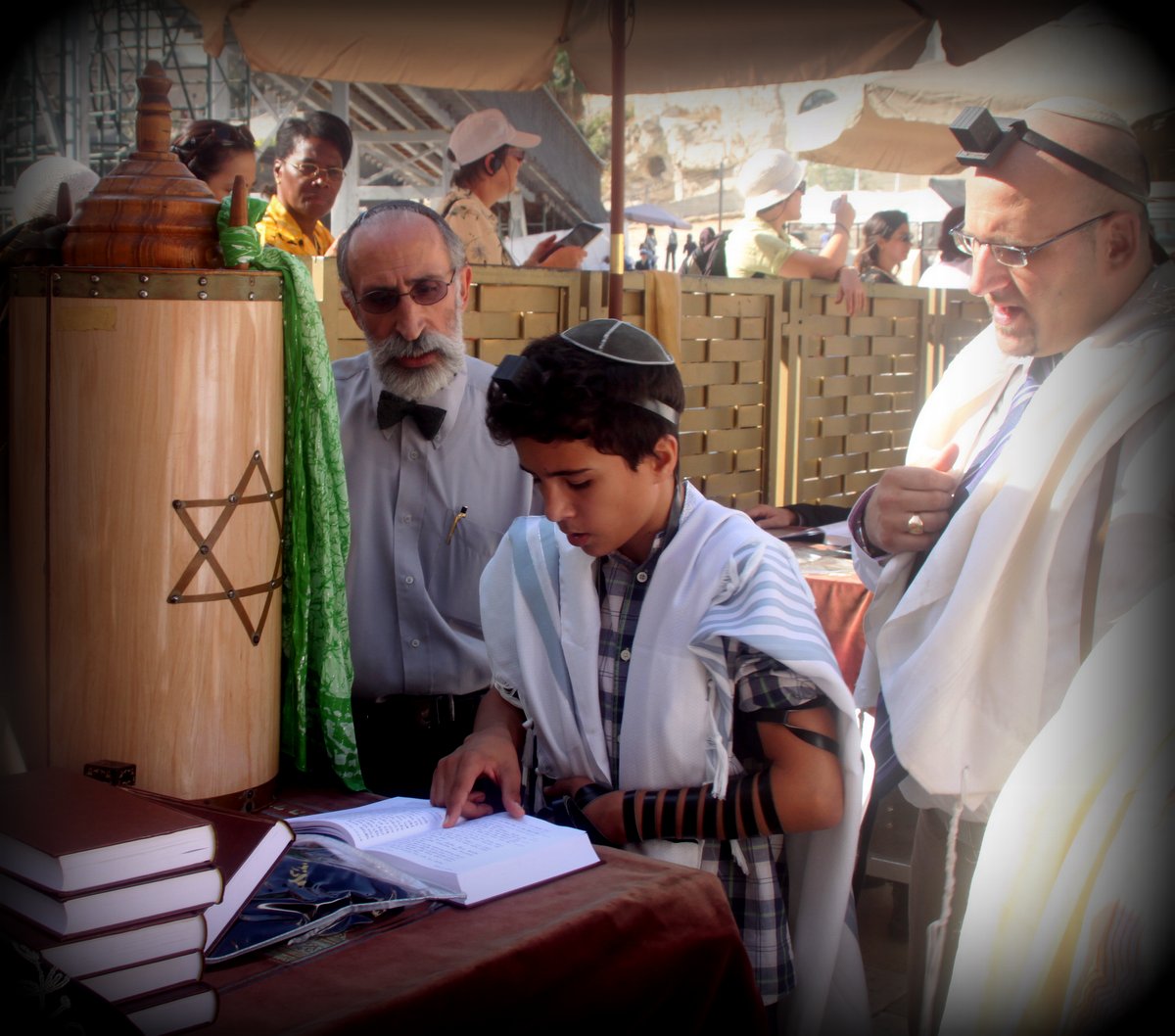 🇮🇱 Jerusalem, Israel and 5 moreBar and bat mitzvahבַּר מִצְוָה / בַּת מִצְוָה
A Jewish rite of passage marking when youth reach adulthood and take responsibility for their own actions.Rite of passage · Feasts and festival meals
🇮🇱 Jerusalem, Israel and 5 moreBar and bat mitzvahבַּר מִצְוָה / בַּת מִצְוָה
A Jewish rite of passage marking when youth reach adulthood and take responsibility for their own actions.Rite of passage · Feasts and festival meals
 🇪🇸 Spain and 2 moreLas arras
Thirteen gold coins, blessed at a wedding and given by the groom to the brideRite of passage
🇪🇸 Spain and 2 moreLas arras
Thirteen gold coins, blessed at a wedding and given by the groom to the brideRite of passage
 🇺🇸 United States and 4 moreLine-crossing ceremony
A naval initiation rite marking a sailor's first voyage across the equatorRite of passage
🇺🇸 United States and 4 moreLine-crossing ceremony
A naval initiation rite marking a sailor's first voyage across the equatorRite of passage
 🇫🇷 FranceMos Teutonicus
A medieval European funerary custom of boiling bones to return nobles home for burialRite of passage
🇫🇷 FranceMos Teutonicus
A medieval European funerary custom of boiling bones to return nobles home for burialRite of passage
The same idea elsewhere
Coming of age compared 🇵🇬 Maprik, Papua New GuineaHaus Tambaran
A sacred house of the Sepik peoples, used for ancestor worship and male initiationSpiritual
🇵🇬 Maprik, Papua New GuineaHaus Tambaran
A sacred house of the Sepik peoples, used for ancestor worship and male initiationSpiritual
 🇪🇬 Egypt and 5 moreTraditional tattooing
The ancient custom of marking the skin for protection, healing, status and sacred ritesDress
🇼🇸 Samoa and 1 morePeʻa
The traditional Samoan rite of full-body tattooing for men, tapped by master artistsRite of passage
🇪🇬 Egypt and 5 moreTraditional tattooing
The ancient custom of marking the skin for protection, healing, status and sacred ritesDress
🇼🇸 Samoa and 1 morePeʻa
The traditional Samoan rite of full-body tattooing for men, tapped by master artistsRite of passage
 🇮🇱 IsraelTallitטלית
A four-cornered Jewish prayer shawl with ritual fringes worn during worshipSpiritual
🇮🇱 IsraelTallitטלית
A four-cornered Jewish prayer shawl with ritual fringes worn during worshipSpiritual