Festivals and celebrationsEast Asia
Culture Day
In its own language: 文化の日 (Bunka no Hi)
Japan's 3 November holiday for the arts, learning and the Order of Culture

Japan marks Culture Day on 3 November each year. The holiday, first kept in 1948, grew from the day the post-war constitution was announced in 1946, and it now carries art shows, parades, school festivals and the Order of Culture, an imperial award for achievement in science, the arts or learning.
When is Culture Day kept?
Culture Day is kept every year on 3 November.
Culture Day is a public holiday in Japan that falls on 3 November. Schools, town halls and prefectures use it to put culture, learning and the arts in front of the public. The date also carries an imperial award, the Order of Culture, and a memory of the 1946 constitution. It has been kept since 1948.
What it is
Culture Day is one of Japan's national public holidays. It arrives on 3 November, and its stated aim is to give culture, scholarship and the arts a public airing. The day belongs to everyone, but much of what happens is organised by prefectural and local authorities, which choose this date for exhibitions, cultural festivals and parades. Schools follow suit: primary and secondary pupils often hold a culture festival on or close to 3 November. Because the holiday carries no religious observance, it works as a civic occasion, a moment when institutions show what they have made, studied or performed.
Origins and history
The date has a layered past. In 1868, 3 November became a national holiday called Tenchō-setsu, kept for the birthday of the reigning emperor, Meiji. When Meiji died in 1912, the day lost that status. It returned in 1927 as Meiji-setsu, again marking his birthday, and that version ended when Culture Day was announced in 1948. The new holiday also remembered the 1946 announcement of Japan's post-war constitution, made on the same date. Since then, some members of the National Diet have campaigned to rename the holiday Meiji Day, first through a promotion council and later through an all-party parliamentary group.
How it is kept
Local and prefectural governments tend to be the busiest on the day. They stage art exhibitions, culture festivals and parades, and the date suits events that show off local history and craft. In Kanagawa Prefecture, the town of Hakone holds its yearly Feudal Lord's Parade, where Edo period clothing and costumes are displayed. Schools run their own culture festivals near the same date. Museums and galleries sometimes open without charge and lay on extra events. The Japan Maritime Self-Defense Force decorates ships moored at its bases and in general ports. The All Japan Kendo Championship, staged at the Nippon Budokan, goes out live on NHK General TV.
The Order of Culture
The best known ceremony of the day is the Order of Culture. It has been presented on 3 November every year since 1936, at the Tokyo Imperial Palace. The Emperor gives it to people whose work has advanced science, culture or the arts, and it ranks among the highest honours the Imperial Family can confer. It is not limited to Japanese citizens, which is why the Apollo 11 astronauts received it after returning from the Moon, and why the literary scholar Donald Keene was among those recognised. Around the same period, the Agency for Cultural Affairs mounts arts events of its own.
A clear autumn day
Rain is rare on 3 November. Records rank the date among the clearest days of the Japanese year, and it is spoken of as a sunny day. In Tokyo, between 1965 and 1996, rain fell on it in only three years. That reputation suits what the holiday asks for, since parades, open-air exhibitions and school festivals all fare better in dry weather. It also gives the Order of Culture ceremony, held indoors at the Tokyo Imperial Palace, a bright backdrop for the photographs that follow.
How Culture Day is kept
Prefectural and local governments plan the day's public events, and schools add their own culture festivals. Art exhibitions, culture festivals and parades are the usual shape of it. Hakone's Feudal Lord's Parade brings out Edo period costume in Kanagawa Prefecture. Museums and galleries may drop their entry charge and run special events. The Japan Maritime Self-Defense Force decorates ships at bases and ports. The All Japan Kendo Championship at the Nippon Budokan is shown live by NHK. At the Tokyo Imperial Palace, the Emperor presents the Order of Culture.
When and where
Culture Day falls every year on 3 November and lasts a single day. The date does not shift from year to year. It has been kept under this name since 1948. Because 3 November also marks the 1946 announcement of Japan's post-war constitution, the timing of the holiday carries that memory with it.
Culture Day is a national holiday, kept across Japan. Its public events are strongest where local and prefectural governments invest in them. Hakone in Kanagawa Prefecture is one example, with its yearly Feudal Lord's Parade. The Order of Culture ceremony takes place at the Tokyo Imperial Palace, and Tokyo's weather records are the ones usually cited for the date. Nagoya has been pictured celebrating with dancers.
What Culture Day means
For the people who keep it, Culture Day is a pause to reflect on what a society makes and learns. It sets aside a date for the arts, for scholarship and for the culture of ordinary places, not only for famous names. The Order of Culture adds a public thank-you to people whose work has widened knowledge. The date also carries the memory of the 1946 constitution, so the holiday links national life after the war with the creative and intellectual work that followed it.
Questions people ask about Culture Day
When is Culture Day kept?
Culture Day is kept every year on 3 November.
What is Culture Day?
It is a public holiday in Japan, kept on 3 November. Its purpose is to give culture, the arts and scholarship a public place, and it is marked with art exhibitions, parades, school culture festivals and the Order of Culture ceremony.
Who takes part?
Prefectural and local governments arrange many of the public events. Schools hold culture festivals, museums and galleries may open free, the Japan Maritime Self-Defense Force decorates its ships, and the Emperor presents the Order of Culture in Tokyo.
What is the Order of Culture?
An honour given by the Emperor on 3 November since 1936 to people who have advanced science, culture or the arts. It is open to non-Japanese, and past recipients include the Apollo 11 astronauts and the scholar Donald Keene.
Is it a religious holiday?
No. The sources tie it to no faith. It is a civic and cultural occasion, built around government events, school festivals, exhibitions and awards rather than worship. Its history reaches back to an imperial birthday holiday, but that connection ended before the current holiday began.
See also
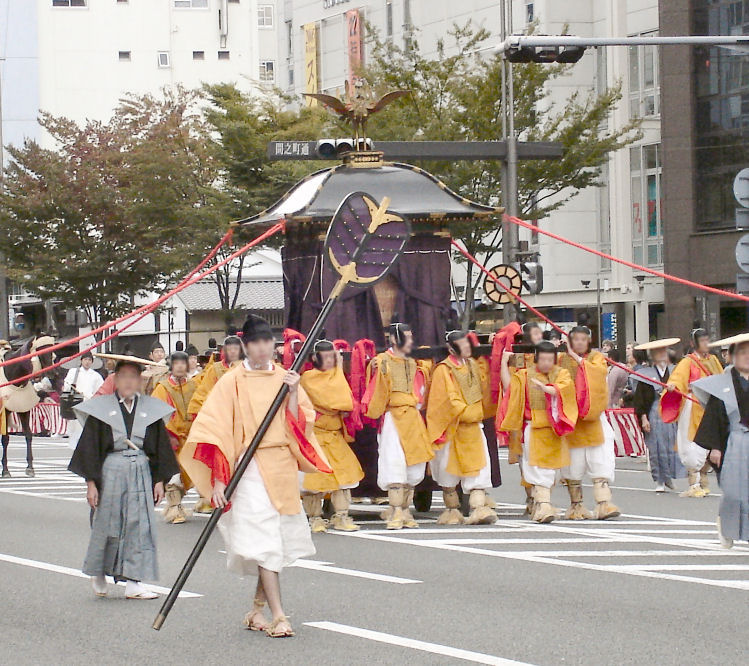 Jidai MatsuriAn autumn costume procession celebrating Kyoto's imperial heritage and history
 Aoi MatsuriA classical Kyoto festival with an imperial procession and ancient shrine rituals
 IkatA resist-dyeing craft from Southeast Asia, where yarns are tied and dyed before weaving
 CujuAn ancient Chinese kicking game played without hands using a stuffed or air-filled ball
Good reading and sources
- Culture Day on WikipediaEncyclopedia
- More photos on Wikimedia CommonsPhotos and video
- Wikidata recordOpen data
The facts on this page come from the Wikipedia article "Culture Day", written by its contributors and used under the CC BY-SA 4.0 licence, and from its Wikidata record (CC0). EveryParampara rewrote the text in its own words, with AI assistance, and compares every page with the article to make sure no passage is copied. It may be reused under the same CC BY-SA 4.0 licence with a link back.
It may contain mistakes. Traditions differ from one family, village and community to the next, and the people who keep them know them best. If something is wrong, tell us. Last refreshed 2026-10-05.
More from Japan
All the traditions of Japan
🇯🇵 Kyoto, JapanJidai Matsuri時代祭
An autumn costume procession celebrating Kyoto's imperial heritage and historyFestival
🇯🇵 Kyoto, JapanAoi Matsuri葵祭
A classical Kyoto festival with an imperial procession and ancient shrine ritualsFestival
 🇮🇪 Ireland and 5 moreHalloween
An annual observance on 31 October marking the eve of All Saints' Day, rooted in Christian tradition and Celtic heritageFestival · Sweets given and shared
🇮🇪 Ireland and 5 moreHalloween
An annual observance on 31 October marking the eve of All Saints' Day, rooted in Christian tradition and Celtic heritageFestival · Sweets given and shared
 🇯🇵 Kishiwada, JapanKishiwada Danjiri Matsuri岸和田だんじり祭
A high-speed festival of wooden shrine floats pulled through Kishiwada, JapanFestival
🇯🇵 Kishiwada, JapanKishiwada Danjiri Matsuri岸和田だんじり祭
A high-speed festival of wooden shrine floats pulled through Kishiwada, JapanFestival
The same idea elsewhere
Royalty and coronation compared 🇮🇱 IsraelRosh Hashanahרֹאשׁ הַשָּׁנָה
The Jewish New Year marked by shofar horn blasts, prayer and sweet foodsSpiritual
🇹🇭 ThailandThai solar calendarปฏิทินสุริยคติไทย
The official solar calendar of Thailand, numbered in the Buddhist EraSeasonal
🇮🇱 IsraelRosh Hashanahרֹאשׁ הַשָּׁנָה
The Jewish New Year marked by shofar horn blasts, prayer and sweet foodsSpiritual
🇹🇭 ThailandThai solar calendarปฏิทินสุริยคติไทย
The official solar calendar of Thailand, numbered in the Buddhist EraSeasonal
 🇵🇪 Cusco, Peru and 4 moreIntiinti (Quechua)
The Inca sun deity, honoured with temples, offerings and the June festival Inti RaymiSpiritual
🇵🇪 Cusco, Peru and 4 moreIntiinti (Quechua)
The Inca sun deity, honoured with temples, offerings and the June festival Inti RaymiSpiritual
 🇸🇪 Mora, SwedenVasaloppet
A 90 km cross-country ski race from Sälen to Mora, run every March since 1922Game
🇸🇪 Mora, SwedenVasaloppet
A 90 km cross-country ski race from Sälen to Mora, run every March since 1922Game