Double Happiness
In its own language: 囍 (雙喜)
Two joy characters pressed into one square, brushed in red for weddings

Double Happiness is a Chinese ornamental design made by pressing two copies of the character for joy into a single square, so it reads as joy doubled. Brushed in calligraphy and usually red or gold, it is used at Chinese and Vietnamese weddings and on the gifts given to the bride and groom.
When is Double Happiness kept?
Double Happiness is kept at marriage celebrations, on decorations and on the presents given to the bride and groom.
Two joy characters, one above the other and squeezed into a single square: this is Double Happiness, an ornament that families write and display for weddings. Calligraphed in red or gold, it covers halls, doors, gifts and tableware, and Vietnamese families keep it as song hỷ. It is a blessing shaped like a written word, asking that a couple's happiness be doubled.
A character made of two
Double Happiness is a ligature, which means two written signs joined into one. It is built from 喜, the character for joy, written twice and pressed together so that the pair takes the square outline of a single Chinese character. The result is 囍, read simply as xǐ, or spelled out as 雙喜, shuāngxǐ, in Mandarin and song hỷ in Vietnamese. Because 喜 twice over says joy twice over, the sign is understood as a wish for doubled happiness. English speakers sometimes translate the name as Double Happy.
Written and displayed
The sign is usually brushed in Chinese calligraphy, so its look depends on the hand that writes it. Red and gold are the common colours, with black appearing now and then. At a Chinese wedding it goes onto walls, doors, wrapping and tableware, and onto the presents handed to the bride and groom. Decorators spread it through the marriage celebrations rather than keeping it to one spot. Vietnamese families keep the same sign at their weddings, where it is known as song hỷ.
A mark on everyday goods
In recent decades shuāngxǐ has also served as a brand name for many kinds of goods, among them fashion, jewellery, cigarettes, matches and soy sauce. Designers in Hong Kong have put the sign on accessories, scented candles, tableware and tea sets, some of it shaped by Ming styles. Away from China, families of Chinese and Vietnamese descent keep the sign in use at weddings, including households in the United States and in parts of Europe and Asia.
Other characters of good fortune
The same habit of writing blessings includes other characters, each with its own wish. Fu (福) stands for good fortune and is another common decorative design. Lu (禄) speaks of prosperity, Shou (壽) of long life, and Xi (喜), the single character used on its own, of happiness. Double Happiness works by doubling that last one, so a pair of joys sits at the centre of a marriage. Taken together, the signs show how a written language can decorate a home or a celebration with meaning.
How Double Happiness is kept
Families and friends get ready for a wedding by writing or printing the sign and putting it where guests will see it. Calligraphers brush it on paper or cloth, while printers reproduce it on banners, invitations and wrapping. It goes up on walls and doors, onto the covers of gifts, and onto the plates and cups used at the feast. Guests bring presents marked with it for the bride and groom. Some couples keep the decorations afterwards. Vietnamese families follow the same custom under the name song hỷ.
When and where
There is no fixed day for this sign. It belongs to weddings, so it appears whenever a marriage is celebrated, through the weeks of preparation and on the day itself. Because it is a decoration rather than an event, it is not tied to a festival, a season or a date, and it is used at Chinese and Vietnamese weddings wherever those families live.
The sign began in China and is strongest in Chinese and Vietnamese marriage practice. It is kept in Hong Kong and Vietnam, and by communities settled far from China, among them families in the United States and in Europe. Makers also reproduce it on goods designed for Chinese-speaking buyers, which carries the sign well past the wedding hall.
What Double Happiness means
For those who keep it, the sign says something simple and large: may your joy be doubled. Two joys rather than one make the wish visible. Written in red or gold, it marks a marriage as a happy occasion and asks for good fortune to follow the couple. Since it appears on presents as well as on walls, it also carries the good wishes of everyone who brings a gift.


Questions people ask about Double Happiness
When is Double Happiness kept?
Double Happiness is kept at marriage celebrations, on decorations and on the presents given to the bride and groom.
What is Double Happiness?
It is a Chinese ornamental design built from 喜, the character for joy, written twice and joined into a single square, 囍. Read as shuāngxǐ in Mandarin or song hỷ in Vietnamese, it decorates marriages, appearing on walls, gifts and tableware.
Where is it kept?
It comes from China, and Chinese and Vietnamese families use it at their weddings. Communities of Chinese and Vietnamese descent keep it too, in Hong Kong and Vietnam, and further away, among them families in Europe, the United States and other parts of Asia.
Why are there two characters?
One 喜 means joy. Writing it twice and pressing the copies together gives 囍, so the sign reads as joy doubled. That doubling is the point, a wedding wish that a couple's happiness will be twice what one person alone would have.
Is it only for weddings?
Marriage decoration is its main use, but the sign has travelled further. Manufacturers have taken shuāngxǐ as a brand name on everyday goods, from fashion and jewellery to cigarettes, matches and soy sauce, and Hong Kong designers use it on homeware and accessories.
See also
 BarkclothCloth beaten from tree bark across Africa, Asia and the Pacific
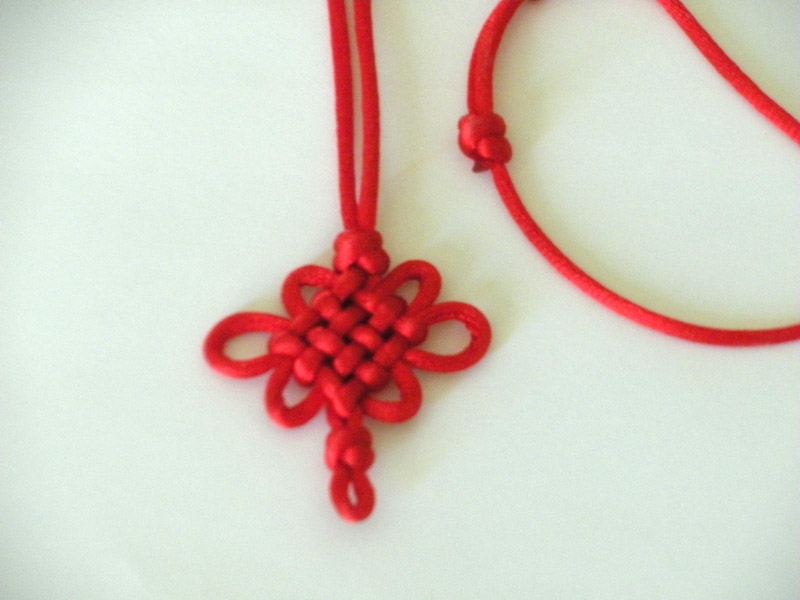 Chinese knottingA folk craft of cord tied into lucky shapes, made in China and given as charms
 Chinese paper cuttingChinese cut paper pictures, pasted on windows and doors for luck at New Year
 KizombaA close, slow couple dance from Angola, named after a Kimbundu word for party
Good reading and sources
- Double Happiness (calligraphy) on WikipediaEncyclopedia
- More photos on Wikimedia CommonsPhotos and video
- Wikidata recordOpen data
The facts on this page come from the Wikipedia article "Double Happiness (calligraphy)", written by its contributors and used under the CC BY-SA 4.0 licence, and from its Wikidata record (CC0). EveryParampara rewrote the text in its own words, with AI assistance, and compares every page with the article to make sure no passage is copied. It may be reused under the same CC BY-SA 4.0 licence with a link back.
It may contain mistakes. Traditions differ from one family, village and community to the next, and the people who keep them know them best. If something is wrong, tell us. Last refreshed 2026-10-14.
More from China
All the traditions of China
🇺🇬 Uganda and 4 moreBarkcloth
Cloth beaten from tree bark across Africa, Asia and the PacificCraft
🇨🇳 China and 2 moreChinese knotting中國結 (Zhōngguó jié)
A folk craft of cord tied into lucky shapes, made in China and given as charmsCraft
🇨🇳 ChinaChinese paper cutting剪紙 / 剪纸 (jiǎnzhǐ)
Chinese cut paper pictures, pasted on windows and doors for luck at New YearCraft
 🇵🇬 Papua New Guinea and 5 moreShell money
Traditional currency made from cowries, ground clam beads, and carved sea shellsCraft
🇵🇬 Papua New Guinea and 5 moreShell money
Traditional currency made from cowries, ground clam beads, and carved sea shellsCraft
The same idea elsewhere
Weddings compared 🇫🇯 FijiTabua
A polished sperm whale tooth traded as a sacred gift in Fijian ceremonies and negotiations.Ceremony
🇫🇯 FijiTabua
A polished sperm whale tooth traded as a sacred gift in Fijian ceremonies and negotiations.Ceremony
 🇮🇩 Indonesia and 2 moreKenduri
A communal prayer meal and gathering shared across Indonesia, Malaysia and BruneiSpiritual · Feasts and festival meals
🇮🇩 Indonesia and 2 moreKenduri
A communal prayer meal and gathering shared across Indonesia, Malaysia and BruneiSpiritual · Feasts and festival meals
 🇼🇸 Samoa and 1 moreʻIe tōga
Precious woven mats exchanged in Samoan ceremonies to honor family ties and chiefly status.Dress
🇼🇸 Samoa and 1 moreʻIe tōga
Precious woven mats exchanged in Samoan ceremonies to honor family ties and chiefly status.Dress
 🇮🇳 IndiaWarli painting
Sacred white rice paste murals made on red clay walls in western IndiaCraft
🇮🇳 IndiaWarli painting
Sacred white rice paste murals made on red clay walls in western IndiaCraft