Seasons, harvest and the calendarEuropeChristianPagan and ancient
Dozhinki
In its own language: Dożynki
A Slavic harvest festival of the last sheaf, a woven wreath and a shared meal
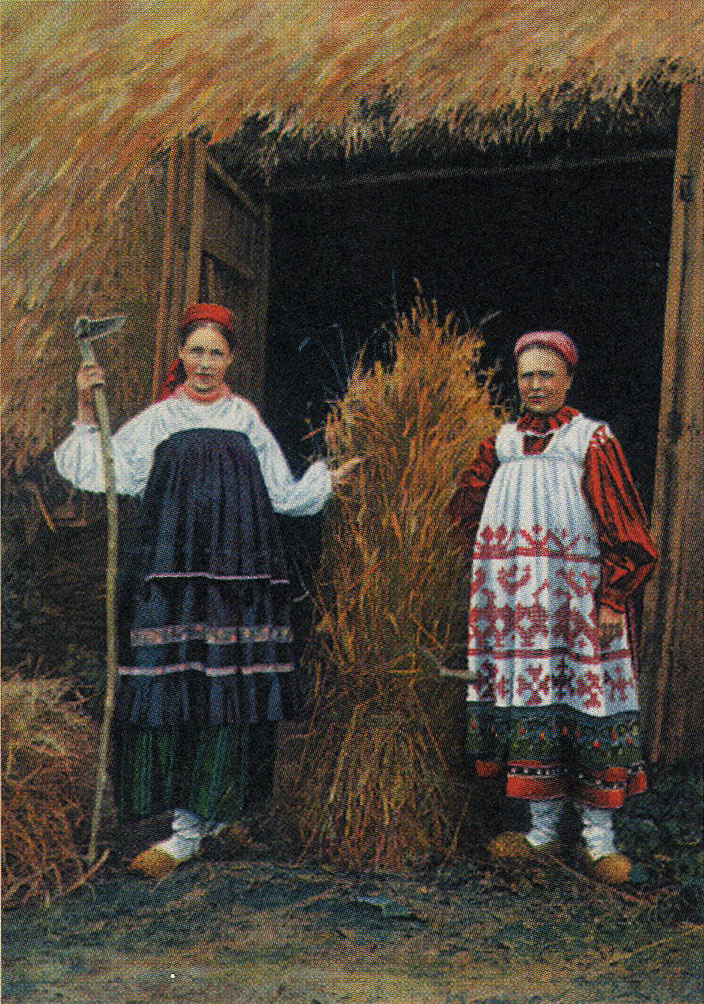
Dożynki is a Slavic harvest festival held when the grain is in. Village communities in Poland, Belarus, Russia, Ukraine, Czechia and Slovakia process with the last sheaf, weave it into a wreath, have it blessed and share a meal, giving thanks to the reapers and, in Christian areas, to God and the Mother of God.
When is Dozhinki marked?
Dozhinki is kept as part of Assumption and Ferragosto, which is on Sunday, 15 August 2027.
Dożynki is the harvest festival of Slavic peoples, kept in Poland, Belarus, Russia, Ukraine, Czechia and Slovakia. It marks the end of the grain harvest. Country people carry the last sheaf from the fields in procession, bind it into a wreath, have it blessed and then sit down to a feast. In Poland it is the largest farming holiday of the year.
What it is
Dożynki is the festival that closes the grain harvest among Slavic peoples. It has many local names: Obzhynki in Russian and Ukrainian, Dažynki and Prachystaya in Belarus, Dožínky in Czech, Òżniwinë in Kashubian. The older rite was held at the autumn equinox, around 23 September. Today most villages keep it on one of the Sundays that follow the end of reaping, so the date shifts from region to region. Poland treats it as the biggest farming holiday of the year, a day for the whole village rather than one family.
Origins and history
Nobody knows exactly how the old Slavic harvest rites began. Written records from before Christian times are scarce. What is clear is that the northern Slavs, west and east, lived by farming and honoured powers tied to the land and to the turning seasons. The West Slavic Rani, for example, came together each year at their temple on Arkona when reaping was done. They offered the god Svetovid a pancake the size of a person, baked from grain threshed that year. A pancake big enough to hide the priest behind it meant a good harvest to come. In the 16th century landowners and better-off peasants gave the feast a Christian shape.
The wreath
The wreath is the heart of the day. It stands for a good harvest, for the wealth that grain brings and for the new life held in the seed. Grain from it is sometimes threshed first and kept as seed for the next sowing; this was recorded in the Holy Cross Mountains of central Poland. Once the wreath was just the last sheaf, dressed with wild flowers, coloured ribbons and plaited straw, and that sheaf style survived in Poland into the 1930s. Round wreaths became usual later, alongside crown, oval and rectangular ones. The wreath is often blessed before the feast begins.
Food and drink
Food belongs to the day, because the day is about grain. In the Russian North the harvest meal is made from tolokno, a flour of ground oats or other grain, and goes by the name dezhen'. Accounts of the old temple rite at Arkona describe a huge pancake baked from the year's new grain and given to Svetovid. In Poland the feast that follows the procession is part of the celebration, with music, dancing and the whole village at table. In Christian areas families give thanks to God and to the Mother of God for the crops.
Today and change
Harvest festivals now look different in each country. In Poland they are sometimes religious, sometimes not, and the old customs stay in place either way. The national Presidential Harvest Festival began in 1927, started by president Ignacy Mościcki at Spała, and has been held from time to time since. Between 1945 and 1989 the Polish celebrations carried a political message about the alliance of workers and peasants, while folk customs continued inside them. After the Eastern Bloc fell, official events turned back toward the religious tone of the interwar years. A few small neo-pagan groups honour Slavic gods instead.
How Dozhinki is kept
The reapers cut the last ears. Then villagers walk out beyond the houses and return together, carrying the last sheaf. The women bind it into a wreath. The wreath is given to whoever hosts the day: a local noble, the richest farmer, or the wójt, the head of the commune. In Masovia it goes to the church so a Catholic priest can sprinkle it with holy water; elsewhere the priest, Catholic, Orthodox or Greek Catholic, comes to where the celebration is held. After the blessing there is a meal, music and traditional dancing.
When and where
Dates are set locally, so they move. The pre-Christian feast was kept at the autumn equinox, near 23 September. Since then it has followed the end of reaping, which falls at different times across Europe. In many parts of Russia it lands on 15 August, and other Russian regions keep it on 8 or 14 September. Poland's national day is 23 September.
The festival belongs to the Slavic world. Poland, Belarus, Russia, Ukraine, Czechia and Slovakia all have their own versions, and Belarusian, Polish and Russian practice is described most often. Polish villages keep it strongest, and Poland has preserved it continuously. In the Russian North a harvest meal marks the close of the season. In Russia the custom was nearly lost under Soviet rule.
What Dozhinki means
The wreath carries most of the meaning. It says that the harvest was good, that there will be wealth, and that new life sits inside the gathered grain. That is why seed grain is sometimes taken from it for next year's sowing. Very old stories credit the last straws on the field with special power. The Arkona account makes the same link from the other side: the size of the offering was read as a sign of what the coming year would bring.


Days Dozhinki is marked
Questions people ask about Dozhinki
When is Dozhinki marked?
Dozhinki is kept as part of Assumption and Ferragosto, which is on Sunday, 15 August 2027.
What is Dożynki?
It is a Slavic harvest festival that marks the end of the grain harvest. Villagers carry the last sheaf in from the fields, bind it into a wreath, have the wreath blessed, and finish with a feast. Poland, Belarus, Russia, Ukraine, Czechia and Slovakia all keep versions of it.
Where is it celebrated?
Across the Slavic countries: Poland, Belarus, Russia, Ukraine, Czechia and Slovakia. Poland keeps it most visibly, as the largest farming holiday of the year, and Belarusian and Russian villages hold their own forms of it.
What is the wreath for?
It is made from the last grain cut and stands for a good harvest, for wealth and for new life. Some villages keep grain from it as seed for next year. Elsewhere it is blessed by a priest and given to whoever hosts the celebration.
Is it religious?
It can be. In the 16th century the feast took on a Christian character, and many celebrations give thanks to God and the Mother of God, with the wreath blessed in church. Other events are secular, and a few neo-pagan groups honour old Slavic gods instead.
See also
 Christmas carolFestive songs and hymns sung during the Christmas season and door to door
 MaslenitsaA seven-day Eastern Slavic festival of pancakes and bonfires marking the end of winter before Lent.
 St. Martin's DayA November feast of lantern walks, bonfires, roast goose and new wine
 SabantuyA summer festival of folk sports and feasting celebrated by Tatar, Bashkir, Chuvash, and Kazakh communities.
Good reading and sources
- Dożynki on WikipediaEncyclopedia
- More photos on Wikimedia CommonsPhotos and video
- Wikidata recordOpen data
The facts on this page come from the Wikipedia article "Dożynki", written by its contributors and used under the CC BY-SA 4.0 licence, and from its Wikidata record (CC0). EveryParampara rewrote the text in its own words, with AI assistance, and compares every page with the article to make sure no passage is copied. It may be reused under the same CC BY-SA 4.0 licence with a link back.
It may contain mistakes. Traditions differ from one family, village and community to the next, and the people who keep them know them best. If something is wrong, tell us. Last refreshed 2026-10-05.
More from Poland
All the traditions of Poland 🇦🇹 Austria and 4 moreAlmabtrieb
An Alpine autumn custom of leading decorated cattle from high pastures to valley barnsSeasonal · Feasts and festival meals
🇦🇹 Austria and 4 moreAlmabtrieb
An Alpine autumn custom of leading decorated cattle from high pastures to valley barnsSeasonal · Feasts and festival meals
 🇺🇦 Ukraine and 7 moreVechornytsiвечорниці
Evening gatherings of Ukrainian youth, with songs, jokes, games and winter divinationSeasonal
🇬🇧 United Kingdom and 5 moreChristmas carol
Festive songs and hymns sung during the Christmas season and door to doorPerformance
🇺🇦 Ukraine and 7 moreVechornytsiвечорниці
Evening gatherings of Ukrainian youth, with songs, jokes, games and winter divinationSeasonal
🇬🇧 United Kingdom and 5 moreChristmas carol
Festive songs and hymns sung during the Christmas season and door to doorPerformance
 🇺🇦 Ukraine and 1 moreDidukhдідух
A wheat sheaf kept at Christmas to honour ancestors and pray for a bountiful harvestHome
🇺🇦 Ukraine and 1 moreDidukhдідух
A wheat sheaf kept at Christmas to honour ancestors and pray for a bountiful harvestHome
The same idea elsewhere
Harvest and thanksgiving compared 🇮🇳 Ayodhya, India and 7 moreDiwaliदीपावली (Dīpāvalī)
A five-day festival of lights celebrated across India and its diaspora to mark the victory of light over darkness.Festival · Feasts and festival meals
🇮🇳 Ayodhya, India and 7 moreDiwaliदीपावली (Dīpāvalī)
A five-day festival of lights celebrated across India and its diaspora to mark the victory of light over darkness.Festival · Feasts and festival meals
 🇮🇱 Jerusalem, IsraelPassoverפסח
A Jewish spring festival celebrating freedom from slavery with ritual mealsSpiritual · Dinner
🇮🇱 Jerusalem, IsraelPassoverפסח
A Jewish spring festival celebrating freedom from slavery with ritual mealsSpiritual · Dinner
 🇮🇱 Jerusalem, IsraelSukkotסוכות
A seven-day autumn Jewish festival of temporary booths, harvest prayers and hospitalitySpiritual
🇮🇱 Jerusalem, IsraelSukkotסוכות
A seven-day autumn Jewish festival of temporary booths, harvest prayers and hospitalitySpiritual
 🇵🇪 Cusco, Peru and 4 moreIntiinti (Quechua)
The Inca sun deity, honoured with temples, offerings and the June festival Inti RaymiSpiritual
🇵🇪 Cusco, Peru and 4 moreIntiinti (Quechua)
The Inca sun deity, honoured with temples, offerings and the June festival Inti RaymiSpiritual