Seasons, harvest and the calendarEurope
Vechornytsi
In its own language: вечорниці
Evening gatherings of Ukrainian youth, with songs, jokes, games and winter divination

Vechornytsi, also called dosvitky, is a Ukrainian custom of winter evening gatherings for village youth. Groups rented a house, pooled money for food, and passed the night with songs, jokes, games and courtship, most famously at Saint Andrew's Day.
When is Vechornytsi kept?
Vechornytsi is kept on through the winter season, from Pokrova Day to the week before Lent begins, and especially at Saint Andrew's Day.
Vechornytsi were winter evening gatherings kept by Ukrainian village youth. Young people rented a house together, shared the cost of food, brought their handwork, and spent the night singing, dancing, joking and playing games. The custom mixed courtship with ritual, and the most famous of these evenings came at Saint Andrew's Day.
What it is
Vechornytsi, also called dosvitky, were evening gatherings of young people in Ukrainian villages, held in a house the girls rented for the season. Music, songs, jokes and rituals shaped the night. The cost of food and other expenses came from a joint fund the participants set up, much like a potluck, and the household was often that of a childless widow, known as the vechornytsi mother. Girls brought the handwork they were making and kept at it through the evening, and the finished pieces went into their dowries. Boys came from the village and from further away to join them.
A season of evenings
The custom had a season. It opened at Pokrova Day and closed with the last week preceding Lent, and anyone from about fourteen years old could join. Girls handled the renting and paid the owner in food, firewood or cloth. Boys who arrived brought horilka. After the meal the group turned to dancing, joking and games that tested and paired off the young people. The most famous evening of all belonged to Saint Andrew's Day, when fortune telling, mockery and mischief took a sharper edge.
Divination and mischief
At the gathering for Saint Andrew's Day, girls tried to learn whom they would marry. Little loaves of bread were set out, a dog was brought in, and the girl whose loaf was eaten first was said to wed first. Others put slips of paper carrying boys' names inside varenyky and ate them. Rings, coins, candles, grain, wooden posts and branches served as signs too. Boys spent the same evening on tricks: gates, benches and carts were carried off and hidden or buried in the snow. A boy nursing a grudge, such as parents refusing him a wife, might pull down that family's barn with his friends.
Night and courtship
Late in the evening straw was spread on the floor of the house for a shared sleeping place, and the young people paired off. Within a couple, contact was meant to stay at kissing and touching. If feelings grew, a pair might slip away somewhere more private, a barn for instance, and in some cases there was sexual contact without intercourse, so that the girl stayed a virgin. Parents rarely stopped their children from going and often gave them money and food for the evening.
Church and state
The gatherings, and the wider family of youth games like them, were persecuted by church authorities and by the state. Reports of promiscuity, sexual abuse and children born outside marriage reached the Cossack hetman Ivan Skoropadsky, and his Universal of 1719 threatened death to anyone who took part. Ties made at the evenings also set villages against one another, and fights could break out with young men from elsewhere who were suspected of courting local girls. A girl who kept away might find her house smeared with tar or marked with obscene drawings.
How Vechornytsi is kept
Girls took the lead in renting a house, usually from a childless widow or a poor man, paying with food, firewood or cloth. Everyone paid into a shared fund for supplies, in the manner of a potluck. Young men arrived carrying bottles of horilka. Once the meal was over, the group danced, joked and played games. Handicrafts worked on during the evenings were kept for dowries. Later, straw was laid down as a common bed, couples paired off, and the evening turned into a night of courtship.
When and where
The season ran from Pokrova Day until the last week preceding Lent, so the custom belonged to the colder half of the year and closed as Lent opened. Any evening in that stretch could be used. The gatherings people remember best came at Saint Andrew's Day. Young people of about fourteen and older took part.
Vechornytsi belongs to Ukraine. The article describes it in most regions of the country and records differences between localities in the food, the games and the manner of courtship. The name itself is Ukrainian. Gatherings were held in a rented house rather than a public place, which made the widow who let the house important to the group.
What Vechornytsi means
The evenings gave village youth a world of their own, away from their parents for the night. Girls worked on the cloth and clothes they would one day marry with, and boys came to meet them. Much of what was done pointed towards marriage: loaves of bread, names hidden in dumplings, rings and grain. The kalyta, a great loaf hung above the room, turned courtship into a game that everyone tried to win.

Questions people ask about Vechornytsi
When is Vechornytsi kept?
Vechornytsi is kept on through the winter season, from Pokrova Day to the week before Lent begins, and especially at Saint Andrew's Day.
What were vechornytsi?
They were winter evenings when young people in Ukrainian villages gathered in a rented house to sing, dance, joke and play games together. Girls did the organising, boys came with drink, and the cost of the food was shared between everyone taking part. The same custom is also called dosvitky.
Where did they meet?
In a house the girls rented, most often from a widow who had no children, sometimes from a poor man. Rent could be paid in food, firewood or cloth. The widow who let the house was called the vechornytsi mother.
Why did the authorities object?
Church and secular authorities both persecuted these and similar youth games. A 1719 decree, known as a Universal, from the Cossack hetman Ivan Skoropadsky answered reports of promiscuity, sexual abuse and children born outside marriage by threatening death to anyone who joined in.
What was the kalyta?
A large loaf of bread hung from the ceiling at the Saint Andrew's gathering. Young people tried to bite a piece off it, which made the loaf the centre of a game. Girls also used smaller loaves that evening for divination.
See also
 RushnykA sacred embroidered cloth used in East Slavic rituals, weddings and daily life.
 Saint Stephen's DayA Christian feast day celebrating the first martyr with feasts, rides and folk customs.
 Galičnik Wedding FestivalAn annual village wedding festival celebrated every July in North Macedonia
 KlezmerAn Ashkenazi Jewish instrumental tradition of lively dance tunes and ritual melodies
Good reading and sources
- Vechornytsi on WikipediaEncyclopedia
- More photos on Wikimedia CommonsPhotos and video
- Wikidata recordOpen data
The facts on this page come from the Wikipedia article "Vechornytsi", written by its contributors and used under the CC BY-SA 4.0 licence, and from its Wikidata record (CC0). EveryParampara rewrote the text in its own words, with AI assistance, and compares every page with the article to make sure no passage is copied. It may be reused under the same CC BY-SA 4.0 licence with a link back.
It may contain mistakes. Traditions differ from one family, village and community to the next, and the people who keep them know them best. If something is wrong, tell us. Last refreshed 2026-10-05.
More from Ukraine
All the traditions of Ukraine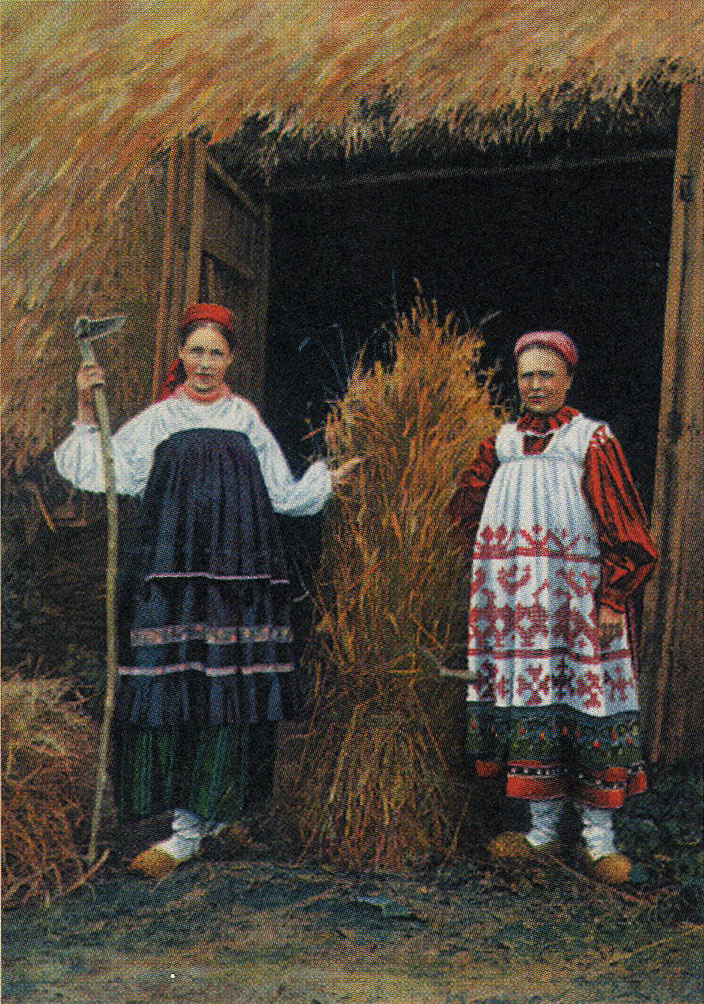 🇵🇱 Kraków, Poland and 5 moreDozhinkiDożynki
A Slavic harvest festival of the last sheaf, a woven wreath and a shared mealSeasonal
🇺🇦 Ukraine and 2 moreRushnykрушник
A sacred embroidered cloth used in East Slavic rituals, weddings and daily life.Dress
🇺🇸 New York, United States and 5 moreKlezmerקלעזמער
An Ashkenazi Jewish instrumental tradition of lively dance tunes and ritual melodiesPerformance
🇵🇱 Kraków, Poland and 5 moreDozhinkiDożynki
A Slavic harvest festival of the last sheaf, a woven wreath and a shared mealSeasonal
🇺🇦 Ukraine and 2 moreRushnykрушник
A sacred embroidered cloth used in East Slavic rituals, weddings and daily life.Dress
🇺🇸 New York, United States and 5 moreKlezmerקלעזמער
An Ashkenazi Jewish instrumental tradition of lively dance tunes and ritual melodiesPerformance
 🇺🇦 Ukraine and 4 moreKorovaiкоровай (Ukrainian), каравай (Russian)
A round wedding bread of Eastern Europe, baked with songs and shared by all the guestsTable custom · Feasts and festival meals
🇺🇦 Ukraine and 4 moreKorovaiкоровай (Ukrainian), каравай (Russian)
A round wedding bread of Eastern Europe, baked with songs and shared by all the guestsTable custom · Feasts and festival meals
The same idea elsewhere
Weddings compared 🇼🇸 Samoa and 1 moreʻIe tōga
Precious woven mats exchanged in Samoan ceremonies to honor family ties and chiefly status.Dress
🇼🇸 Samoa and 1 moreʻIe tōga
Precious woven mats exchanged in Samoan ceremonies to honor family ties and chiefly status.Dress
 🇹🇱 Timor-LesteUma Lulik
Sacred ancestral clan houses and ritual shrines in East TimorSpiritual
🇹🇱 Timor-LesteUma Lulik
Sacred ancestral clan houses and ritual shrines in East TimorSpiritual
 🇮🇩 Indonesia and 2 moreKenduri
A communal prayer meal and gathering shared across Indonesia, Malaysia and BruneiSpiritual · Feasts and festival meals
🇺🇬 UgandaKwanjula
A formal marriage introduction ritual of the Baganda people in Uganda, where families meet to exchange gifts and seek blRite of passage
🇮🇩 Indonesia and 2 moreKenduri
A communal prayer meal and gathering shared across Indonesia, Malaysia and BruneiSpiritual · Feasts and festival meals
🇺🇬 UgandaKwanjula
A formal marriage introduction ritual of the Baganda people in Uganda, where families meet to exchange gifts and seek blRite of passage