Home and family lifeEuropeChristian
Didukh
In its own language: дідух
A wheat sheaf kept at Christmas to honour ancestors and pray for a bountiful harvest

A didukh is a Ukrainian and Polish Christmas sheaf woven from the season's wheat stalks. Brought into the home on Christmas Eve and kept until Masnytsia, it represents grandfather spirits, inviting ancestors to bless the family while welcoming hopes of a bountiful harvest.
When is Didukh marked?
Didukh is kept as part of Christmas Eve, which is on Thursday, 24 December 2026.
The didukh is a harvest sheaf brought inside homes in Ukraine and Poland during Christmas. Its name translates as grandfather spirit. Crafted from stalks of the first or final wheat reaping, it serves as a symbolic offering from the fields. Families place it in a corner of honor to invite ancestral souls to gather, protect the household, and bring bountiful crops in the coming agricultural cycle.
Making the sheaf
Crafting a didukh begins during the annual harvest. People save either the earliest stalks gathered from the fields or the very last ones reaped. Before the winter holidays arrive, these wheat ears and dry stems are carefully gathered together. Makers bundle the grain using threads of varied colours, binding the separate clusters firmly with decorative ribbons. The finished arrangement stands as a tangible offering from the autumn fields, preserved to represent nature's gifts and express the household's hopes for fertile soil and full barns in the approaching year.
Christmas Eve ritual
On Sviat Vechir, the festive Christmas Eve, the master of the house carries the wheat sheaf inside. He sets the didukh in the pokutia, the traditional corner where religious icons hang. There it rests beside ritual offerings of food and drink, specifically kutia and uzvar. Holding this place of highest honour throughout the holiday season, the sheaf is understood to shelter the spirits of the household's forebears, uniting the souls of ancestors to bestow blessings, peace, and protection upon the living family gathered below.
Burning at winter's end
Rather than remaining permanently on display, the wheat sheaf stays in the home throughout the festive period until Masnytsia arrives. When this transitional celebration begins, the family takes the dried stalks outdoors to burn them. Lighting the didukh marks the official close of the harsh winter season. Consuming the old harvest bundle in flames releases the gathered spirits and clears the way for the coming farming cycle, fulfilling its role as a bridge between the previous autumn and new spring growth.
How Didukh is kept
Before Christmas, families bind autumn wheat stalks with colorful threads and ribbons. On Sviat Vechir, the head of the household carries the finished sheaf indoors. It is placed in the icon corner alongside traditional kutia and uzvar. The sheaf remains in this prominent position throughout the holiday period, serving as a dwelling place for ancestor spirits. When Masnytsia arrives, the family burns the didukh to mark the end of winter.
When and where
A didukh is assembled before Christmas and carried inside on Christmas Eve, known as Sviat Vechir. It remains in a prominent place of honour inside the home throughout the winter holidays, staying until Masnytsia, when it is burned.
The custom is kept in Ukraine and Poland, where the wheat sheaf is placed in the pokutia, the home corner reserved for sacred icons.
What Didukh means
Meaning grandfather spirit, the didukh embodies the presence of ancestral souls, who are believed to reside within the wheat and bless the family. As a symbolic sacrifice of the first or final wheat stalks, it also represents a prayer for abundant nature and rich crops in the new year. Burning it at Masnytsia signals winter's farewell.
On the table
- kutia
- uzvar
Days Didukh is marked
Questions people ask about Didukh
When is Didukh marked?
Didukh is kept as part of Christmas Eve, which is on Thursday, 24 December 2026.
What is a didukh?
A didukh is a traditional Christmas wheat sheaf found in Ukrainian and Polish homes, woven from harvest grain and tied with ribbons to represent ancestor spirits and harvest abundance.
What foods accompany the sheaf?
The sheaf is set in the icon corner beside two traditional ritual items: kutia, a festive food, and uzvar, a traditional drink.
What happens to the didukh after the holidays?
The didukh stays inside the house until Masnytsia, when it is ritually burned to signify the end of winter.
See also
 ChristmasA festival of Jesus's birth, kept on 25 December with gifts, lights and shared meals
 MaslenitsaA seven-day Eastern Slavic festival of pancakes and bonfires marking the end of winter before Lent.
 Kupala NightA summer solstice folk festival marked by bonfires, water rituals and herbal gatherings across Eastern Europe.
 PysankaA wax-resist egg decorating tradition kept by Slavic communities for Easter and spring renewal.
Good reading and sources
- Didukh on WikipediaEncyclopedia
- More photos on Wikimedia CommonsPhotos and video
- Wikidata recordOpen data
The facts on this page come from the Wikipedia article "Didukh", written by its contributors and used under the CC BY-SA 4.0 licence, and from its Wikidata record (CC0). EveryParampara rewrote the text in its own words, with AI assistance, and compares every page with the article to make sure no passage is copied. It may be reused under the same CC BY-SA 4.0 licence with a link back.
It may contain mistakes. Traditions differ from one family, village and community to the next, and the people who keep them know them best. If something is wrong, tell us. Last refreshed 2026-10-04.
More from Ukraine
All the traditions of Ukraine 🇺🇦 Ukraine and 2 moreRushnykрушник
A sacred embroidered cloth used in East Slavic rituals, weddings and daily life.Dress
🇷🇺 Russia and 2 moreMaslenitsaМасленица
A seven-day Eastern Slavic festival of pancakes and bonfires marking the end of winter before Lent.Festival · Breakfast
🇺🇦 Ukraine and 5 moreKupala Night
A summer solstice folk festival marked by bonfires, water rituals and herbal gatherings across Eastern Europe.Festival
🇺🇦 Kyiv, Ukraine and 7 morePysankaписанка
A wax-resist egg decorating tradition kept by Slavic communities for Easter and spring renewal.Festival
🇺🇦 Ukraine and 2 moreRushnykрушник
A sacred embroidered cloth used in East Slavic rituals, weddings and daily life.Dress
🇷🇺 Russia and 2 moreMaslenitsaМасленица
A seven-day Eastern Slavic festival of pancakes and bonfires marking the end of winter before Lent.Festival · Breakfast
🇺🇦 Ukraine and 5 moreKupala Night
A summer solstice folk festival marked by bonfires, water rituals and herbal gatherings across Eastern Europe.Festival
🇺🇦 Kyiv, Ukraine and 7 morePysankaписанка
A wax-resist egg decorating tradition kept by Slavic communities for Easter and spring renewal.Festival
The same idea elsewhere
Harvest and thanksgiving compared 🇵🇪 Cusco, Peru and 4 moreIntiinti (Quechua)
The Inca sun deity, honoured with temples, offerings and the June festival Inti RaymiSpiritual
🇵🇪 Cusco, Peru and 4 moreIntiinti (Quechua)
The Inca sun deity, honoured with temples, offerings and the June festival Inti RaymiSpiritual
 🇬🇪 Tbilisi, GeorgiaChichilakiჩიჩილაკი
A shaved hazelnut branch crafted as a Georgian Christmas tree and burned at EpiphanyFestival
🇬🇪 Tbilisi, GeorgiaChichilakiჩიჩილაკი
A shaved hazelnut branch crafted as a Georgian Christmas tree and burned at EpiphanyFestival
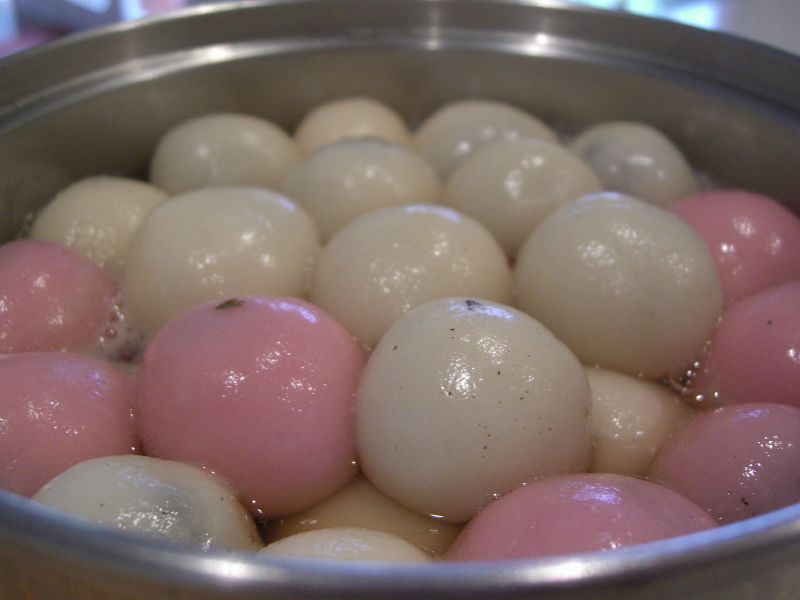 🇨🇳 Suzhou, China and 4 moreDongzhi Festival冬至
A winter solstice festival of family reunions, ancestor rites and sweet rice ballsSeasonal · Dinner
🇨🇳 Suzhou, China and 4 moreDongzhi Festival冬至
A winter solstice festival of family reunions, ancestor rites and sweet rice ballsSeasonal · Dinner
 🇮🇳 Ayodhya, India and 7 moreDiwaliदीपावली (Dīpāvalī)
A five-day festival of lights celebrated across India and its diaspora to mark the victory of light over darkness.Festival · Feasts and festival meals
🇮🇳 Ayodhya, India and 7 moreDiwaliदीपावली (Dīpāvalī)
A five-day festival of lights celebrated across India and its diaspora to mark the victory of light over darkness.Festival · Feasts and festival meals