Dragon robe
In its own language: 袞龍袍 (gǔn lóngpáo)
Robes embroidered with dragons, worn by Chinese emperors and copied by nearby courts

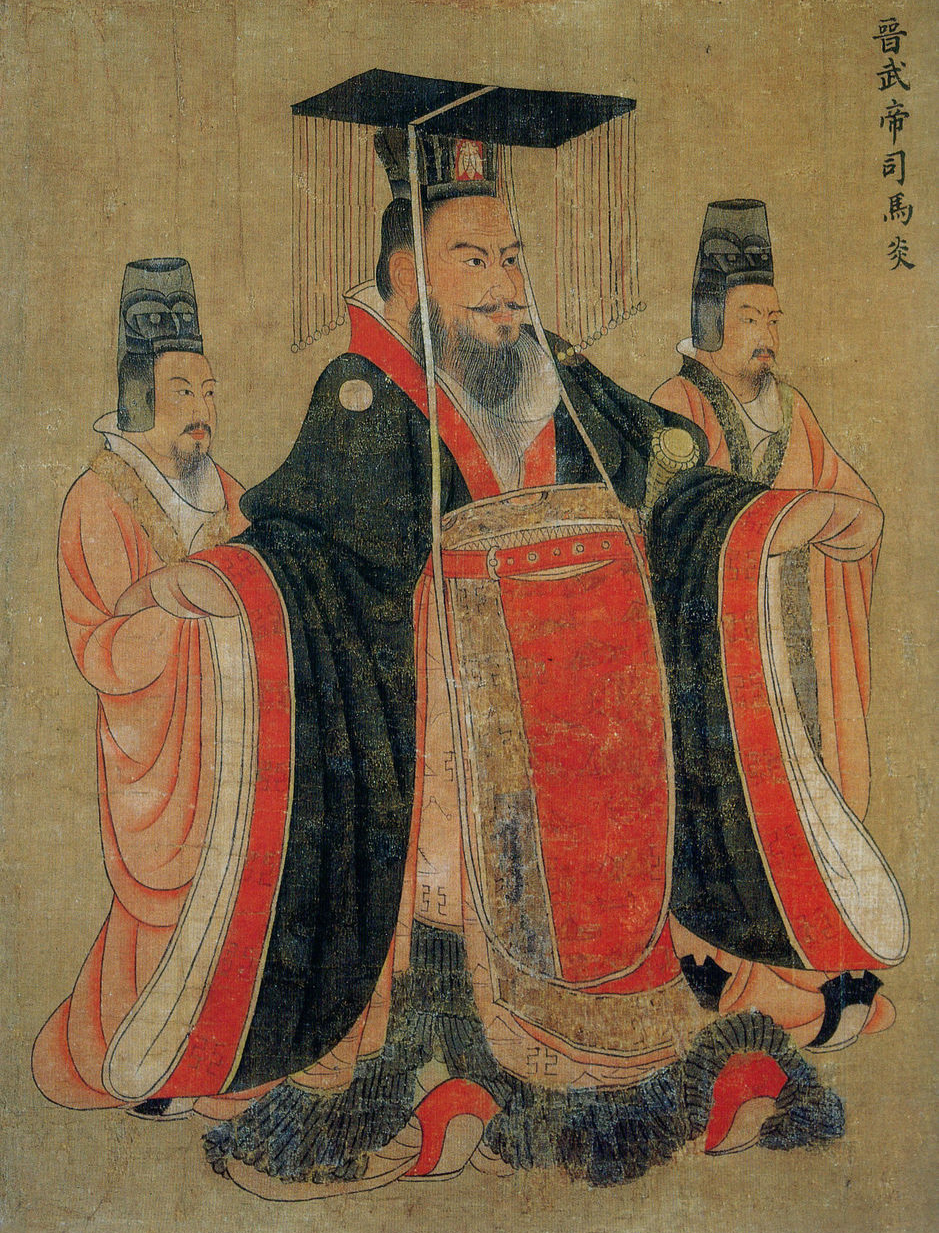
A dragon robe is a Chinese garment decorated mainly with the long, the Chinese dragon. China's emperors wore it, and the courts of Korea, Vietnam and the Ryukyu Kingdom adopted it too, with five-clawed dragons reserved for the emperor and four-clawed creatures for lesser ranks.
When is Dragon robe kept?
Dragon robe is kept at court, for audiences and ceremonies rather than on a fixed calendar day.
For a Chinese emperor, a robe was also a statement of rank. The dragon robe carried the long, the five-clawed dragon of Chinese art, and its claws, colour and cut told courtiers where the wearer stood. Emperors of China wore it; the courts of Korea, Vietnam and the Ryukyu Kingdom adopted their own versions, and officials were granted robes with four-clawed creatures instead.
What it is
A dragon robe is a Chinese garment whose main decoration is the long, the Chinese dragon. The fuller name is gunlongpao, often shortened to longpao, and it served as a form of everyday wear for the emperors of China. The same kind of robe travelled: the rulers of Korea under the Goryeo and Joseon dynasties wore it, as did the Nguyễn rulers of Vietnam and the kings of the Ryukyu Kingdom. Each court worked out its own details. What stayed common was the dragon, the five-clawed creature of Chinese art, stitched or woven across the chest, back, shoulders and skirt.
Dragons and rank
In Chinese art the dragon stands for the emperor, just as the fenghuang stands for the empress. On cloth it announced the standing of whoever wore it, or the standing he hoped for. From the Song, Liao, Jin and Yuan dynasties onwards, subjects needed the emperor's permission to put dragon patterns on their clothes. The Ming court counted a true dragon as five-clawed; a four-clawed beast of the same shape was a mang, or python. Robes with mang, with the finned feiyu, or with the douniu, a horned water-buffalo-like creature, were worn by officials and were tightly controlled. Shen Defu wrote that a mang robe came close to the emperor's dragon robe, differing by a single claw.
From Tang to Ming
The circular-collar robe decorated with dragons was taken up by the Tang dynasty, whose rulers and senior officials wore it, and Tang records note that in 694 Wu Zetian gave three-clawed dragon robes to officials above the third rank and to princes. It was a mark of favour to receive one. Under the Song the dragon became the emperor's own emblem, and in 1111 an order barred all subjects from dragon patterns. The Liao and the Jurchen Jin put dragon roundels on their robes to show status; the oldest surviving dragon robes come from the Liao. Western Xia rulers wore a round-collared gown with dragon roundels and a belt. The Yuan were the first to make dragon robes a fixed part of court dress.
The Qing court
Qing rulers inherited Ming dragon robes, and early Manchu courts, which did not weave their own cloth, got them through trade and tribute. Hong Taiji, the first Qing emperor, wanted Manchu dress to stay distinct from Han Chinese clothing, so the robes were recut: narrow sleeves and waist, slits in the skirt for riding, archery and falconry, narrow fur cuffs, and sable trimming. A 1636 dress code let the emperor and first-rank princes wear yellow with five-clawed dragons. By the early eighteenth century the standard design carried nine dragons: four around the neck, four on the skirt, and a ninth concealed inside the flap. In 1759 a decree set out the twelve ancient symbols and restricted five-clawed dragons to the imperial family.
Colour and rank
The colour of a Qing dragon robe depended on who wore it. Bright yellow belonged to the emperor and empress alone. The crown prince had apricot yellow, while golden yellow went to imperial princes and to the emperor's other wives. For the rest of the imperial kin and for lesser princes, blue or blue-black was the rule. Officials and Han Chinese and Manchu nobles were meant to wear four-clawed mang rather than true dragons, but the rules were broken often. Robes kept in the Spencer Museum of Art show Han Chinese nobles wearing five-clawed dragons. Rank also showed in the skirt: officials and Han nobles had two slits, the Manchu nobility and the imperial family four.
How Dragon robe is kept
How a robe was made and worn followed court rules. Silk was woven, then decorated with dragons, roundels or the twelve ancient symbols, and cut to the shape the wearer's rank allowed. The emperor wore bright yellow with five-clawed dragons; officials wore the four-clawed mang or another permitted creature. At court, the chaofu was the most formal robe, the jifu was semi-formal and used for special occasions, and the changfu besides. A belt went with the Western Xia gown. Under the Qing a standard robe held nine dragons, one of them hidden inside the flap.
When and where
There is no fixed date. Dragon robes belonged to the working life of a court. The Qing chaofu was put on for the most solemn ceremonies, the jifu for important but less formal occasions, and a winter court robe in bright yellow was worn for the day audience. The Tang practice of giving dragon robes as marks of favour ran from 694 until the Song.
Dragon robes belong to China, where the practice began, and to the courts that copied it: Korea under Goryeo and Joseon, Vietnam under the Nguyễn, and the Ryukyu Kingdom. The oldest surviving examples come from the Liao dynasty. Qing robes are held today in museum collections, among them six longpao at the Spencer Museum of Art that belonged to Han Chinese nobles.
What Dragon robe means
For those who wore it, the dragon on the robe carried the weight of the throne. A dragon on cloth announced the standing of whoever wore it, or the standing he hoped for. The empress had her own emblem, the fenghuang. Five claws marked a true dragon and therefore the emperor; four marked a mang, which officials and nobles might wear. Colour carried the same message: the brighter the yellow, the closer to the throne.


Questions people ask about Dragon robe
When is Dragon robe kept?
Dragon robe is kept at court, for audiences and ceremonies rather than on a fixed calendar day.
What is a dragon robe?
It is a Chinese garment whose main ornament is the long, the Chinese dragon. The full name is gunlongpao, shortened to longpao. Emperors of China wore it, and it served as a form of everyday dress rather than a single ceremonial costume. Courts in Korea, Vietnam and the Ryukyu Kingdom adopted versions of it.
Who was allowed to wear one?
In China the emperor and empress had the right to dragon patterns, and from 1111 no subject could wear them without special favour. Officials and nobles were given robes bearing four-clawed creatures such as the mang, the feiyu or the douniu. Under the Qing, five-clawed dragons were kept to the imperial family, though the rules were often broken.
Where is it worn today?
It is no longer worn. Dragon robes now live in museum collections, and the examples that survive show how rank was read from cloth. The Spencer Museum of Art holds six longpao that belonged to Han Chinese nobles of the Qing dynasty, and the oldest surviving robes date from the Liao dynasty.
What does the colour mean?
Colour set rank at the Qing court. Bright yellow was for the emperor and empress only. The crown prince wore apricot yellow, imperial princes and the emperor's other wives wore golden yellow, and the rest of the imperial family wore blue or blue-black.
See also
 DiyiA formal ceremonial robe worn by empresses and royal women in China, Korea, and Vietnam.
 Chinese clothingRobes, gowns, and suits shaped across dynasties, ranks, and daily life in China
 DahuA cross-collar jacket worn in the Ming dynasty, blending Chinese and Mongol styles.
 HuadianA forehead ornament of Chinese women, painted or fixed on, still worn with hanfu
Good reading and sources
- Dragon robe on WikipediaEncyclopedia
- More photos on Wikimedia CommonsPhotos and video
- Wikidata recordOpen data
The facts on this page come from the Wikipedia article "Dragon robe", written by its contributors and used under the CC BY-SA 4.0 licence, and from its Wikidata record (CC0). EveryParampara rewrote the text in its own words, with AI assistance, and compares every page with the article to make sure no passage is copied. It may be reused under the same CC BY-SA 4.0 licence with a link back.
It may contain mistakes. Traditions differ from one family, village and community to the next, and the people who keep them know them best. If something is wrong, tell us. Last refreshed 2026-10-12.
More from China
All the traditions of China 🇨🇳 Beijing, ChinaHanfu漢服
The dress of the Han Chinese, named for the Han dynasty and worn again todayDress
🇨🇳 China and 2 moreDiyi翟衣 (Díyī)
A formal ceremonial robe worn by empresses and royal women in China, Korea, and Vietnam.Dress
🇨🇳 Beijing, ChinaHanfu漢服
The dress of the Han Chinese, named for the Han dynasty and worn again todayDress
🇨🇳 China and 2 moreDiyi翟衣 (Díyī)
A formal ceremonial robe worn by empresses and royal women in China, Korea, and Vietnam.Dress
 🇨🇳 China and 3 moreMianfu冕服
The most formal dress of China's emperors, worn at coronations and court ritesDress
🇨🇳 China and 1 moreDahu褡护 (Dāhù)
A cross-collar jacket worn in the Ming dynasty, blending Chinese and Mongol styles.Dress
🇨🇳 China and 3 moreMianfu冕服
The most formal dress of China's emperors, worn at coronations and court ritesDress
🇨🇳 China and 1 moreDahu褡护 (Dāhù)
A cross-collar jacket worn in the Ming dynasty, blending Chinese and Mongol styles.Dress
The same idea elsewhere
Royalty and coronation compared 🇮🇱 IsraelRosh Hashanahרֹאשׁ הַשָּׁנָה
The Jewish New Year marked by shofar horn blasts, prayer and sweet foodsSpiritual
🇮🇱 IsraelRosh Hashanahרֹאשׁ הַשָּׁנָה
The Jewish New Year marked by shofar horn blasts, prayer and sweet foodsSpiritual
 🇵🇪 Cusco, Peru and 4 moreIntiinti (Quechua)
The Inca sun deity, honoured with temples, offerings and the June festival Inti RaymiSpiritual
🇹🇭 ThailandThai solar calendarปฏิทินสุริยคติไทย
The official solar calendar of Thailand, numbered in the Buddhist EraSeasonal
🇵🇪 Cusco, Peru and 4 moreIntiinti (Quechua)
The Inca sun deity, honoured with temples, offerings and the June festival Inti RaymiSpiritual
🇹🇭 ThailandThai solar calendarปฏิทินสุริยคติไทย
The official solar calendar of Thailand, numbered in the Buddhist EraSeasonal
 🇺🇸 United StatesTalking stick
A carved staff that shows who may speak at a Northwest Coast gatheringCeremony
🇺🇸 United StatesTalking stick
A carved staff that shows who may speak at a Northwest Coast gatheringCeremony