Festivals and celebrationsEuropeChristian
Easter sprinkling in Hungary
In its own language: Húsvéti locsolkodás
Hungarian boys sprinkle girls with water or perfume on Easter Monday

On Easter Monday, boys and men in Hungary sprinkle water, and in recent times perfume, over girls and women they know, and receive painted eggs in return. Hungarians in Hungary and the Carpathian Basin keep it, along with Hungarian Americans, as a springtime game of courtship that once marked the passage into adulthood.
When is Easter sprinkling in Hungary marked?
Easter sprinkling in Hungary is kept as part of Easter, which runs from 28 to 29 March 2027.
In Hungary the Monday after Easter belongs to water. Boys and young men seek out the girls and women they know and sprinkle them, once with a bucket of cold water and now more often with a splash of perfume. The girls give painted eggs in return. The custom is called locsolkodás, or locsolás, and it carries a springtime message of courtship and good wishes.
Names and meanings
The custom has several Hungarian names. Locsolkodás and locsolás come from locsolni, to sprinkle, and öntözés, watering, is used as well. The second word hints at why: the girl is pictured as a flower coming into bud and the boy as the water it needs. Easter Monday itself is called Vízbevető Hétfő, Water Plunge Monday. In the same way that the day is tied to Easter, it is tied to spring, to the first warm weeks when gardens and fields begin to grow. The sprinkling is therefore both a game and a greeting of the season.
Older forms
Old accounts describe rougher versions. Young men would tip a bucket of cold water over a young woman, often at dawn while she was still in bed. Fifty years ago a girl dressed in her best clothes might be lifted and dropped into a water trough. This was a country way of showing interest, a kind of courtship, and it is no longer common. Where it survives it is mostly in villages and small towns, and among groups that work to keep old customs alive. Since the years between the wars, perfume has taken the place of water, though jokes with flower sprayers, soda siphons and garden hoses continue.
Poems and eggs
Before he sprinkles, a boy recites a locsolóvers, a short and usually funny verse. A whole genre has grown from these poems. Some are famous and well known by heart, others are made up on the spot. The verse often asks the girl to allow the sprinkling, or bargains for a kiss, and it may carry a playful threat. The return gift is an egg, dyed red and often decorated. Boys gamble with their eggs by rolling one against another to see whose shell breaks. A sprinkler could collect eight or nine eggs at a single house.
Food and drink
The morning began with food. Boys ate szalonna, cured pork fat, and scrambled eggs before setting out. At the houses they visited, plates of ham, aspic, kalach bread and wine were set out beside the eggs, and in the evening there was a ball. The reward for sprinkling could also be a glass of palinka, a strong fruit brandy. When eggs were cooked in the juices of the consecrated Easter ham they were called kókonya. Eggshells had a part too: a boy might leave them under the window of a girl who had displeased him.
Dress, trees and willow
New clothes mattered a great deal. People said a young woman or a boy would lose a whole year's will to work if no new boots came at Easter, and girls hoped for red or yellow ones. Godparents usually gave them, and a girl wore her pair only inside the church, walking there and back barefoot so the leather stayed clean. A boy might also raise a Hajnalfa, a dawn tree, in a girl's garden, hung with ribbons like a Christmas tree or a maypole, and eggs were sometimes hung there as a safeguard. Willow switches were used too, in a custom called vesszőzés or sibálás, which was thought to keep girls healthy.
How Easter sprinkling in Hungary is kept
On Easter Monday morning, boys and young men, sometimes in groups, walk from house to house in the neighbourhood where girls they know live. At each door the boy recites his short verse, then sprinkles the girl with water or perfume. She hands him a painted egg, and often a little food and wine as well. Older village custom added the dawn tree in the garden and, in some places, a switch of willow. By evening the day ends with a dance or a ball. The sprinklers keep count of the eggs they gather. In a few villages the young men still wear costumes, and in Galgamácsa they once danced in white masks.
When and where
Easter Monday, the day after Easter Sunday, is the day of the sprinkling. Because Easter follows the lunar calendar, the date moves each year and can fall in March or April. The Tuesday after Easter reverses it in some places: the girls douse the boys, and presents are exchanged that day too.
The custom belongs to Hungary and to Hungarian communities through the Carpathian Basin, and Hungarian Americans keep it in the United States. It is strongest in villages and small towns, where old customs are still maintained, and quieter in the cities. Related sprinkling days are kept in Poland, where the name is Śmigus-dyngus, and in Slovakia, where it is called oblievačka.
What Easter sprinkling in Hungary means
Water stands for growth and for the new season. The girl is likened to a flower opening, and the boy to the rain that helps it. For the young people of a village the day was a festival of love, a chance to show whom they liked. It also belonged to growing up: neighbours celebrated together, while the legény, the young unmarried men, went about as a group. The painted egg carries the same weight, a small gift of life and luck given freely in return.

Days Easter sprinkling in Hungary is marked
Questions people ask about Easter sprinkling in Hungary
When is Easter sprinkling in Hungary marked?
Easter sprinkling in Hungary is kept as part of Easter, which runs from 28 to 29 March 2027.
What is Easter sprinkling in Hungary?
It is a folk custom of Easter Monday in which boys and men sprinkle water, or nowadays perfume, on girls and women they know. Each girl gives a painted egg in return. Hungarians call it locsolkodás or locsolás, and it is a springtime custom of courtship and good wishes.
Where is it kept?
In Hungary, across the Carpathian Basin where Hungarian communities live, and among Hungarian Americans. Villages and small towns keep it most strongly, especially groups devoted to traditional customs. Poland and Slovakia have related sprinkling days of their own, called Śmigus-dyngus and oblievačka.
Why water, and why perfume?
Water was the older gift, poured from a bucket, sometimes at dawn. The girl was compared to a flower coming into bud, and the water to what it needs. Since the years between the two world wars, perfume has largely replaced water, though a splash of cold water is still remembered.
What is the sprinkling poem?
Before sprinkling, the boy recites a locsolóvers, a short verse that is usually humorous. Some are well-known poems learned by heart, and others are improvised. The verse often asks the girl's permission or asks for a kiss, and it can carry a light, playful threat.
See also
 BusójárásA six-day winter carnival of carved wooden masks, folk music, and parades in Mohács
 MaypoleA tall wooden pole, garlanded and danced around, raised at May Day, Whitsun or Midsummer
 Easter egg treeA German springtime custom of dressing living trees and branches with blown eggs
 CandlemasA Christian feast of candle blessings marking the end of the Christmas season
Good reading and sources
The facts on this page come from the Wikipedia article "Easter sprinkling in Hungary", written by its contributors and used under the CC BY-SA 4.0 licence, and from its Wikidata record (CC0). EveryParampara rewrote the text in its own words, with AI assistance, and compares every page with the article to make sure no passage is copied. It may be reused under the same CC BY-SA 4.0 licence with a link back.
It may contain mistakes. Traditions differ from one family, village and community to the next, and the people who keep them know them best. If something is wrong, tell us. Last refreshed 2026-10-14.
More from Hungary
All the traditions of Hungary
🇭🇺 Mohács, HungaryBusójárás
A six-day winter carnival of carved wooden masks, folk music, and parades in MohácsFestival
🇩🇪 Saalfeld, Germany and 5 moreEaster egg treeOstereierbaum
A German springtime custom of dressing living trees and branches with blown eggsFestival
🇩🇪 Germany and 5 moreMaypole
A tall wooden pole, garlanded and danced around, raised at May Day, Whitsun or MidsummerFestival
 🇬🇷 Greece and 5 moreName day
A calendar tradition where people celebrate the feast day of the saint after whom they are named.Festival
🇬🇷 Greece and 5 moreName day
A calendar tradition where people celebrate the feast day of the saint after whom they are named.Festival
The same idea elsewhere
Spring and renewal compared 🇰🇷 Jeju, South KoreaGut굿
Sacred rites of song, dance, and spirit communion performed by Korean shamansSpiritual
🇰🇷 Jeju, South KoreaGut굿
Sacred rites of song, dance, and spirit communion performed by Korean shamansSpiritual
 🇯🇵 JapanChildren's Dayこどもの日
A Japanese holiday on May fifth celebrating the happiness and growth of childrenFestival
🇯🇵 JapanChildren's Dayこどもの日
A Japanese holiday on May fifth celebrating the happiness and growth of childrenFestival
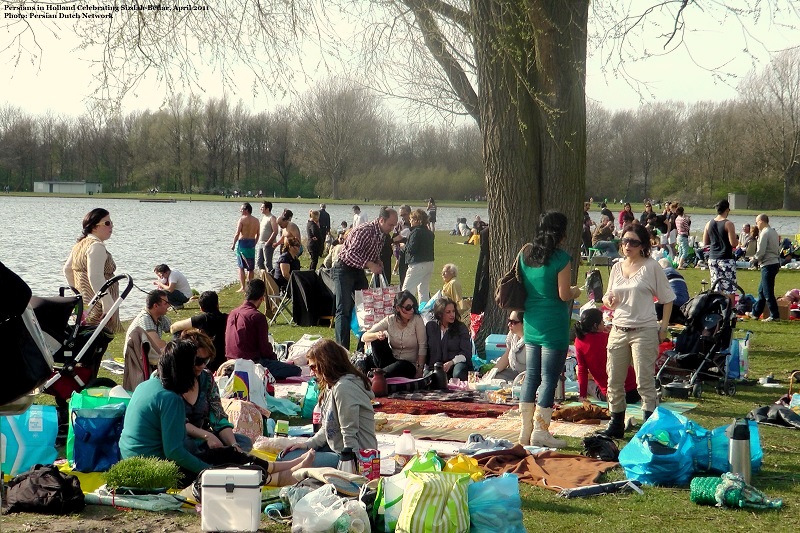 🇮🇷 Iran and 4 moreSizdah Bedarسیزدهبدر
An open-air picnic holiday concluding the Iranian New Year celebrationsFestival
🇮🇷 Iran and 4 moreSizdah Bedarسیزدهبدر
An open-air picnic holiday concluding the Iranian New Year celebrationsFestival
 🇯🇵 Tokyo, JapanKoinobori鯉のぼり
Carp-shaped windsocks flown across Japan for Children's Day in springFestival
🇯🇵 Tokyo, JapanKoinobori鯉のぼり
Carp-shaped windsocks flown across Japan for Children's Day in springFestival