Spiritual and religiousLatin America and the CaribbeanIndigenous and traditional
Ekeko
In its own language: Iqiqu
A small figurine of abundance kept in Andean homes and carried at the Alasitas fair to invite prosperity.

The Ekeko is a deity of wealth and plenty from the Aymara people of the Altiplano. Worshippers place miniature statues in their homes or carry them as amulets to attract good fortune. The figure serves as the central focus of the annual Alasitas festival in La Paz, Bolivia.
When is Ekeko marked?
Ekeko is kept as part of Alasitas, which is on Sunday, 24 January 2027.
The Ekeko represents abundance and luck for the Aymara communities of the Andes. People keep small statues of this deity in their homes to invite prosperity into their daily lives. The tradition remains active through local festivals that celebrate material and spiritual well-being.
Origins and history
Scholars trace the roots of this deity to pre-Columbian civilizations across the Bolivian highlands. Archaeological finds include stone and gold figures from regions like Oruro and Potosí. Some researchers link these artifacts to Inca practices, while others see connections to ancient solstice rituals. Historical accounts describe miniatures used to petition deities for future success. A nineteenth-century artifact held in Switzerland was returned to Bolivia after being identified as a sacred object.
How it is kept
Worshippers display small figurines in prominent spots within their homes. These statues often depict a mustached man wearing traditional ponchos and carrying numerous bags filled with goods. Owners attach banknotes to the figure as offerings. Some modern versions feature a hole in the mouth for placing cigarettes. Lighting a cigarette for the statue is a common practice to ensure a year of good fortune.
Festival celebrations
The most significant event occurs every January 24 in La Paz during the Alasitas fair. Participants gather to purchase miniature replicas of desired items, hoping to manifest those possessions in reality. Similar gatherings take place in October under the name Calvario in other areas. In Peru, celebrations occur on May 3 in Puno, where devotees honor the deity on Machallata hill.
Meaning and legend
The figure symbolizes protection against scarcity and disaster. Local legends speak of a woman who survived a siege through food left near her statue. This story reinforces the belief that the deity provides sustenance during hard times. The name derives from ancient terms for fortune and luck. Communities view the practice as a way to maintain balance and comfort in their lives.
How Ekeko is kept
Families place small statues in honored spots inside their houses. The figures show a man covered in bags containing grain, money, and household items. Owners clip paper currency to the body as a gift. Some versions allow for lit cigarettes to be placed in the mouth. Carrying the statue as a keychain or necklace is also common practice among believers.
When and where
The main celebration happens on January 24 in La Paz. Another observance takes place on May 3 in Puno, Peru. Regional events known as Calvario occur in October. The dates align with specific cultural calendars and seasonal cycles important to the community.
The tradition is strongest in the western regions of Bolivia, particularly around La Paz, Oruro, and Potosí. It extends into neighboring areas of Peru, such as Puno. The practice is rooted in the high plateau landscapes of the Andes mountains.
What Ekeko means
The Ekeko embodies the hope for material security and protection from hunger. The overflowing bags represent a life free from want. Offering money or tobacco acknowledges the deity's role in providing for the family. The tradition connects modern households to ancient beliefs about fortune and survival in harsh environments.

Days Ekeko is marked
Questions people ask about Ekeko
When is Ekeko marked?
Ekeko is kept as part of Alasitas, which is on Sunday, 24 January 2027.
Where is Ekeko kept?
Ekeko belongs to the traditions of Bolivia and Peru, and is tied most closely to La Paz.
Who keeps Ekeko?
As our sources describe it, Ekeko is kept by Aymara people. Many other communities and families now share it too.
See also
 IntiThe Inca sun deity, honoured with temples, offerings and the June festival Inti Raymi
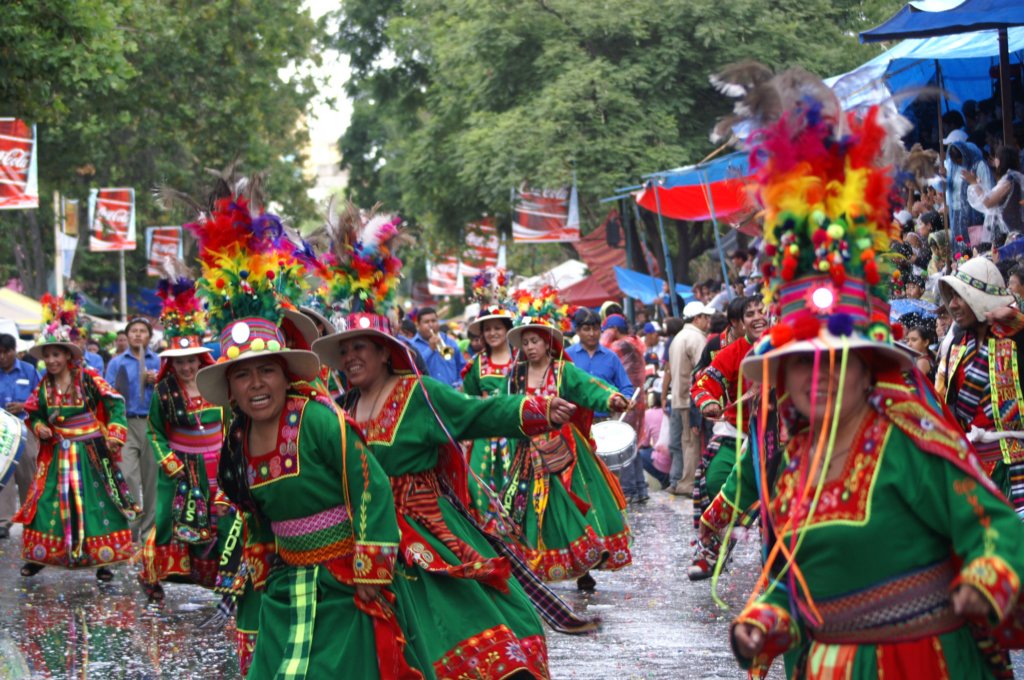 TinkuA ritual combat and dance from northern Potosí, Bolivia, honoring Pachamama through ceremonial fighting and performance.
 Inti RaymiA major Andean festival honoring the sun god Inti and marking the winter solstice in Cusco.
 Eid al-FitrThe feast that ends Ramadan, opened with morning prayers, sweets and visits home
Good reading and sources
- Ekeko on WikipediaEncyclopedia
- More photos on Wikimedia CommonsPhotos and video
- Wikidata recordOpen data
The facts on this page come from the Wikipedia article "Ekeko", written by its contributors and used under the CC BY-SA 4.0 licence, and from its Wikidata record (CC0). EveryParampara rewrote the text in its own words, with AI assistance, and compares every page with the article to make sure no passage is copied. It may be reused under the same CC BY-SA 4.0 licence with a link back.
It may contain mistakes. Traditions differ from one family, village and community to the next, and the people who keep them know them best. If something is wrong, tell us. Last refreshed 2026-10-05.
More from Bolivia
All the traditions of Bolivia
🇵🇪 Cusco, Peru and 4 moreIntiinti (Quechua)
The Inca sun deity, honoured with temples, offerings and the June festival Inti RaymiSpiritual
 🇪🇸 Spain and 5 moreMidnight MassMissa in nocte
The first service of Christmas, kept late on Christmas Eve in many Western churchesSpiritual
🇺🇸 New York, United States and 5 moreWorld Religion Day
An annual day in January dedicated to spiritual unity and harmony across all faiths.Spiritual
🇧🇴 Potosí, BoliviaTinku
A ritual combat and dance from northern Potosí, Bolivia, honoring Pachamama through ceremonial fighting and performance.Festival
🇪🇸 Spain and 5 moreMidnight MassMissa in nocte
The first service of Christmas, kept late on Christmas Eve in many Western churchesSpiritual
🇺🇸 New York, United States and 5 moreWorld Religion Day
An annual day in January dedicated to spiritual unity and harmony across all faiths.Spiritual
🇧🇴 Potosí, BoliviaTinku
A ritual combat and dance from northern Potosí, Bolivia, honoring Pachamama through ceremonial fighting and performance.Festival
The same idea elsewhere
Remembering the ancestors compared 🇮🇪 Ireland and 5 moreHalloween
An annual observance on 31 October marking the eve of All Saints' Day, rooted in Christian tradition and Celtic heritageFestival · Sweets given and shared
🇮🇪 Ireland and 5 moreHalloween
An annual observance on 31 October marking the eve of All Saints' Day, rooted in Christian tradition and Celtic heritageFestival · Sweets given and shared
 🇮🇳 Ayodhya, India and 7 moreDiwaliदीपावली (Dīpāvalī)
A five-day festival of lights celebrated across India and its diaspora to mark the victory of light over darkness.Festival · Feasts and festival meals
🇮🇳 Ayodhya, India and 7 moreDiwaliदीपावली (Dīpāvalī)
A five-day festival of lights celebrated across India and its diaspora to mark the victory of light over darkness.Festival · Feasts and festival meals
 🇮🇷 Iran and 7 moreNowruzنوروز
The Iranian new year at the March equinox, kept with fire, greenery and picnicsSeasonal
🇮🇷 Iran and 7 moreNowruzنوروز
The Iranian new year at the March equinox, kept with fire, greenery and picnicsSeasonal
 🇮🇱 Jerusalem, Israel and 1 moreHanukkahחֲנֻכָּה
An eight-day Jewish festival marking the rededication of the Second Temple in Jerusalem and the miracle of a single day'Festival
🇮🇱 Jerusalem, Israel and 1 moreHanukkahחֲנֻכָּה
An eight-day Jewish festival marking the rededication of the Second Temple in Jerusalem and the miracle of a single day'Festival