Seasons, harvest and the calendarEuropePagan and ancient
Beltane
In its own language: Bealtaine
A Gaelic first-of-summer festival of bonfires, May flowers and feasting on 1 May

Beltane is the Gaelic festival that welcomes summer, kept on 1 May, roughly halfway between the spring equinox and the summer solstice. Gaels kept it in Ireland and Scotland, and on the Isle of Man, for many centuries, and since the late 20th century neopagans and Wiccans have marked it as a religious holiday.
When is Beltane in 2027?
Beltane 2027 is on Saturday, 1 May 2027. Other years: 2026, Friday, 1 May 2026; 2028, Monday, 1 May 2028.
Beltane is the Gaelic festival that opens summer, kept on the first day of May. Irish speakers call it Bealtaine, Scottish Gaelic speakers Là Bealltainn, and Manx speakers Boaldyn. Herders once drove cattle to high pastures at this time, and fires were lit for protection. Today the old customs are remembered in local events, and neopagans and Wiccans keep Beltane as a religious holiday.
What it is
Beltane opens the summer half of the Gaelic year. It is one of four seasonal festivals; the others are Samhain on 1 November, Imbolc on 1 February and Lughnasadh on 1 August. Irish speakers call the day Lá Bealtaine, Scottish Gaelic speakers Là Bealltainn, and Manx speakers Boaltinn or Boaldyn. It has a close cousin in the Welsh Calan Mai. The heart of the old festival was the movement of cattle to the summer pastures, and the fires and protections that went with it. May Day and midsummer customs in other parts of Britain and Europe share some of the same elements.
Origins and history
Scholars think Beltane began as a festival of herders. In a practice called transhumance, families moved with cattle and sheep to higher ground for the summer; in Ireland this was known as booleying. The Roman festival of Parilia, held around 21 April before flocks went up to pasture, had striking similarities, which suggests old shared roots for May customs across Europe. The earliest written mention comes in Sanas Cormaic, a glossary from the early tenth century, which links the name to bil-tene, or lucky fire, and describes druids lighting two fires and driving cattle between them. The tale Tochmarc Emire gives a similar account. Geoffrey Keating, writing in the seventeenth century, described a gathering at the hill of Uisneach.
Today and change
The old customs were recorded by folklorists between the late eighteenth and the mid twentieth century, when many of them were fading. John Jamieson, writing in 1808, noted Beltane practices that lingered in parts of Scotland. Public celebrations lost their popularity by the twentieth century, though some customs were later revived as local cultural events. From the late twentieth century, Celtic neopagans and Wiccans have kept Beltane as a religious holiday, and many of those in the Southern Hemisphere mark it on 1 November, so that it falls at the start of their own summer.
Fire, flowers and water
Fire was believed to carry protection. Its flames, smoke and ash were thought to keep harm away from people, herds and crops, and on the Isle of Man people made sure the smoke blew over them. A need-fire, called tein' èiginn in Gaelic, could be made only by wood rubbed together, with no metal, and only by a chosen group, usually nine men. Yellow May flowers were tied to doors and windows, to byres and to the animals themselves, perhaps because the colour reminded people of fire. In some parts of Ireland a May Bush was made: a thorn branch dressed with blossoms, ribbons, shells and rushlights. Holy wells drew visitors, and Beltane dew was said to keep a person young and fair.
Names and places
The festival left its mark on the Irish landscape. Places whose names contain Bealtaine, often written as Beltany in English, are thought to be sites where celebrations once took place. County Donegal has three of them, including the Beltany stone circle, and County Tyrone has two. Tamnaghvelton, or Tamhnach Bhealtaine, the Beltane field, is in County Armagh. Lisbalting, Lios Bealtaine or the Beltane ringfort, lies in County Tipperary, and the stream called Glasheennabaultina, Glaisín na Bealtaine, joins the River Galey in County Limerick. The name itself appears in several spellings: Beltane, Beltain, Beltaine, Beltine and Beltany.
How Beltane is kept
The old accounts describe a sequence. Every hearth fire was put out. A bonfire was then lit, usually on a hill, and where a need-fire was made it had to come from wood rubbed together, by nine men, with all metal set aside. Cattle passed between two fires or across the embers, and people leapt as well. When the flames died down, people rubbed the ashes on themselves and scattered them on crops and stock. Torches taken from the fire were carried around the farm and used to light the hearth again. A feast followed, and some food and drink was left for the aos sí.
When and where
Beltane falls on 1 May, or about halfway between the spring equinox and the summer solstice. It opens the summer half of the year. Neopagans living in the Southern Hemisphere may keep it on 1 November instead, so that it still marks the start of their warm season.
It belongs to the Gaelic world: Ireland and Scotland, and the Isle of Man, where it was called Boaltinn or Boaldyn. Similar May Day and midsummer customs, with some of the same elements, are recorded elsewhere in Britain and mainland Europe, such as Walpurgis Night in Germanic areas.
What Beltane means
Fire carries the meaning. Its flames, smoke and ash were thought to shield people, cattle and crops from sickness and from harm that was not natural. The aos sí, the fairy folk, were believed to be about at Beltane, and much of what people did was meant to keep them friendly. The festival also stood for growth, for the year's turning towards warmth, and for the return of the herds to open pasture.


Days Beltane is marked
Beltane dates: 2026, 2027, 2028
| Year | Beltane date |
|---|---|
| 2026 | Friday, 1 May 2026 |
| 2027 | Saturday, 1 May 2027 |
| 2028 | Monday, 1 May 2028 |
Questions people ask about Beltane
When is Beltane in 2027?
Beltane 2027 is on Saturday, 1 May 2027. Other years: 2026, Friday, 1 May 2026; 2028, Monday, 1 May 2028.
What is Beltane?
Beltane is the Gaelic festival that begins summer, kept on 1 May. It is one of four Gaelic seasonal festivals, alongside Samhain, Imbolc and Lughnasadh. Its Irish name is Bealtaine, its Scottish Gaelic name is Là Bealltainn, and in Manx it is Boaltinn or Boaldyn.
Where is it kept?
It belongs to the Gaelic-speaking world: Ireland and Scotland, and the Isle of Man, where it was called Boaltinn or Boaldyn. Today local events in those places mark it, and neopagans and Wiccans keep it as a religious holiday in many countries.
What happens at Beltane?
Bonfires are central. Hearth fires were put out and lit again from the Beltane fire. Cattle and people passed between fires or over the embers. Homes and byres were hung with yellow May flowers, wells were visited, and a feast was held, with a share of food left for the aos sí.
Why are fires lit?
Fire was believed to protect. Smoke, flame and ash were thought to guard people, livestock and crops against disease and against harm from the aos sí. A need-fire, made without metal, was held especially strong. The fire also carried the festival's hope for growth in the coming summer.
See also
 May DayA traditional European festival welcoming summer with greenery, dances and bonfires
 Yule logA log kept burning on the hearth through the twelve days of Christmas, for luck
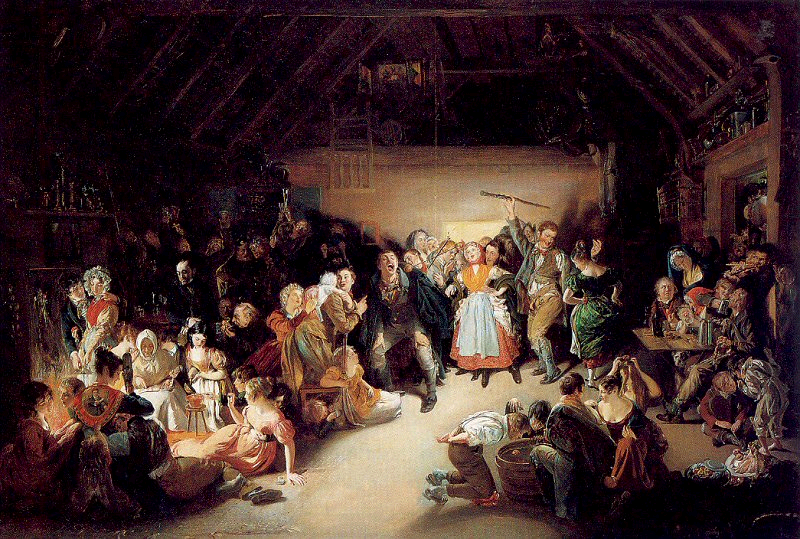 SamhainA Gaelic festival marking the start of winter with bonfires and ancestor feasts
 Mother's DayA worldwide annual celebration dedicated to mothers, maternal bonds and family care
Good reading and sources
- Bealtaine Fire in Co Westmeath signals 'unity and hope'RTE, Article
- Bealtaine Fire in Co Westmeath signals 'unity and hope'RTE, Article
- Beltane on WikipediaEncyclopedia
- More photos on Wikimedia CommonsPhotos and video
- Wikidata recordOpen data
The facts on this page come from the Wikipedia article "Beltane", written by its contributors and used under the CC BY-SA 4.0 licence, and from its Wikidata record (CC0). EveryParampara rewrote the text in its own words, with AI assistance, and compares every page with the article to make sure no passage is copied. It may be reused under the same CC BY-SA 4.0 licence with a link back.
It may contain mistakes. Traditions differ from one family, village and community to the next, and the people who keep them know them best. If something is wrong, tell us. Last refreshed 2026-10-05.
More from Ireland
All the traditions of Ireland 🇮🇪 Ireland and 1 moreImbolcLá Fhéile Bríde
A Gaelic festival heralding spring and honoring Saint Brigid with woven rush crossesSeasonal · Feasts and festival meals
🇮🇪 Dublin, Ireland and 3 moreMay Day
A traditional European festival welcoming summer with greenery, dances and bonfiresSeasonal · Feasts and festival meals
🇮🇪 Ireland and 1 moreSamhain
A Gaelic festival marking the start of winter with bonfires and ancestor feastsSeasonal · Feasts and festival meals
🇮🇪 Ireland and 1 moreImbolcLá Fhéile Bríde
A Gaelic festival heralding spring and honoring Saint Brigid with woven rush crossesSeasonal · Feasts and festival meals
🇮🇪 Dublin, Ireland and 3 moreMay Day
A traditional European festival welcoming summer with greenery, dances and bonfiresSeasonal · Feasts and festival meals
🇮🇪 Ireland and 1 moreSamhain
A Gaelic festival marking the start of winter with bonfires and ancestor feastsSeasonal · Feasts and festival meals
 🇮🇪 Ireland and 2 moreEmber daysQuatuor Tempora
A quarterly Western Christian rhythm of fasting, prayer and seasonal thanksgivingSeasonal · Fasting and breaking the fast
🇮🇪 Ireland and 2 moreEmber daysQuatuor Tempora
A quarterly Western Christian rhythm of fasting, prayer and seasonal thanksgivingSeasonal · Fasting and breaking the fast
The same idea elsewhere
Spring and renewal compared 🇰🇷 Jeju, South KoreaGut굿
Sacred rites of song, dance, and spirit communion performed by Korean shamansSpiritual
🇰🇷 Jeju, South KoreaGut굿
Sacred rites of song, dance, and spirit communion performed by Korean shamansSpiritual
 🇯🇵 JapanChildren's Dayこどもの日
A Japanese holiday on May fifth celebrating the happiness and growth of childrenFestival
🇯🇵 JapanChildren's Dayこどもの日
A Japanese holiday on May fifth celebrating the happiness and growth of childrenFestival
 🇮🇷 Iran and 4 moreSizdah Bedarسیزدهبدر
An open-air picnic holiday concluding the Iranian New Year celebrationsFestival
🇮🇷 Iran and 4 moreSizdah Bedarسیزدهبدر
An open-air picnic holiday concluding the Iranian New Year celebrationsFestival
 🇯🇵 Kyoto, JapanAoi Matsuri葵祭
A classical Kyoto festival with an imperial procession and ancient shrine ritualsFestival
🇯🇵 Kyoto, JapanAoi Matsuri葵祭
A classical Kyoto festival with an imperial procession and ancient shrine ritualsFestival