Folklore and beliefEuropeMuslimJewish
Evil eye
A belief in harm cast by envious glares, met with protective charms and spoken blessings

The evil eye is a belief that an envious glance can bring misfortune or physical harm to people, livestock, or property. Found across the Mediterranean, West Asia, and beyond, it is countered with blue glass eye charms, hand amulets, gestures, and spoken blessings.
The evil eye is a folk belief that a look motivated by jealousy or malice can bring sudden misfortune, sickness, or bad luck. Rooted in ancient traditions across the Mediterranean, West Asia, and nearby regions, people shield themselves, their children, and their belongings using physical talismans, special phrases, and hand gestures designed to deflect or return the harmful gaze.
Ancient roots
Protective charms against malevolent looks date back roughly five millennia. Archaeological excavations in ancient Mesopotamian and Syrian settlements, including Tell Brak and Ugarit, reveal early eye imagery and texts referencing the curse. In classical Greece and Rome, prominent writers such as Plato, Plutarch, and Pliny the Elder debated how the eye could transmit harm. Plutarch suggested that deadly rays darted directly from an envious person's gaze. Romans and Greeks feared that this power could strike domestic animals as well as humans. To counter it, ancient people spat into clothing folds, fashioned phallic pendants, or placed protective charms on livestock and buildings.
Talismans and protective charms
Across diverse regions, people rely on distinct objects to turn away harmful attention. The nazar, a round charm made of concentric blue and white circles, is widespread in West Asia, the Balkans, and Greece. By mirroring a staring eye, it is thought to rebound the ill will back toward the sender. Another well known safeguard is the hamsa, a palm-shaped talisman representing five fingers, known in different communities as the Hand of Mary or the Hand of Fatima. In southern Italy, protection takes the form of horn-shaped cornicello charms, the cimaruta, and the horned hand gesture. Weavers of tribal kilim rugs also work protective symbols like crosses, hooks, and stylized eyes directly into their textiles.
Words and everyday remedies
Protection often relies on speech rather than physical objects. In Arab and Islamic tradition, admirers pair compliments with the phrase Masha'Allah, meaning God has willed it, to prevent praise from drawing unwanted spiritual harm. Rabbinic Jewish literature also addresses the evil eye, associating it with malice and envy while praising a generous spirit. In parts of Palestine and Iran, households burn or display rue plants to ward off danger. Other historical defenses included disguising young boys in girls' garments in ancient Greece to hide them from notice, or scattering travelers among separate entrances to avoid drawing an admiring crowd.
How Evil eye is kept
People keep this tradition during daily interactions, especially when receiving praise or celebrating good fortune. When someone offers a compliment, the speaker or recipient often utters a protective phrase such as Masha'Allah or invokes a blessing to ward off envy. Individuals wear eye-shaped beads, hand amulets, or horn charms on jewellery. Drivers hang nazar disks inside vehicles, while homeowners mount them near doorways or weave protective eye and hook motifs into rugs. Gestures like the sign of the horns are also used when a person senses ill will.
When and where
This custom does not follow a set calendar date. It is practiced continuously in everyday life, particularly during moments of praise, encounters with strangers, or whenever someone fears jealousy might disrupt their household, health, or good fortune.
The belief is maintained across the Mediterranean, the Balkans, West Asia, Central Asia, South Asia, and parts of Europe, Africa, and Latin America. It is especially visible in Greece, Turkey, and southern Italy, appearing on home entrances, boats, textiles, and everyday jewellery.
What Evil eye means
The evil eye represents the destructive power of envy and ill will directed at another person's success, health, or beauty. Amulets shaped like open eyes or hands symbolise vigilance, deflecting or absorbing negative energy before it can land. Spoken blessings acknowledge that good fortune comes from a higher power, turning potential pride and jealousy into humility.


Questions people ask about Evil eye
What is the evil eye?
It is a traditional belief that an envious or hostile glance can bring misfortune, illness, or physical injury. Cultures around the world use protective charms, specific phrases, and physical gestures to deflect or absorb this harmful gaze.
Where is the belief in the evil eye found?
It is widely kept in the Mediterranean, the Balkans, West Asia, Eastern Europe, South Asia, Africa, and parts of the Americas. Amulets like the blue nazar bead and the hamsa hand are familiar sights throughout Greece, Turkey, the Middle East, and Italy.
How do people protect themselves against it?
People wear charms such as the blue nazar eye, the hamsa hand, or the Italian cornicello. They also say blessings like Masha'Allah when giving compliments, burn protective plants such as rue, or make gestures like the sign of the horns.
What does the blue eye amulet mean?
The nazar bead, featuring concentric blue and white circles, represents an eye staring outward. It is believed to catch malevolent looks and reflect them back to the person who cast them, safeguarding the wearer from harm.
See also
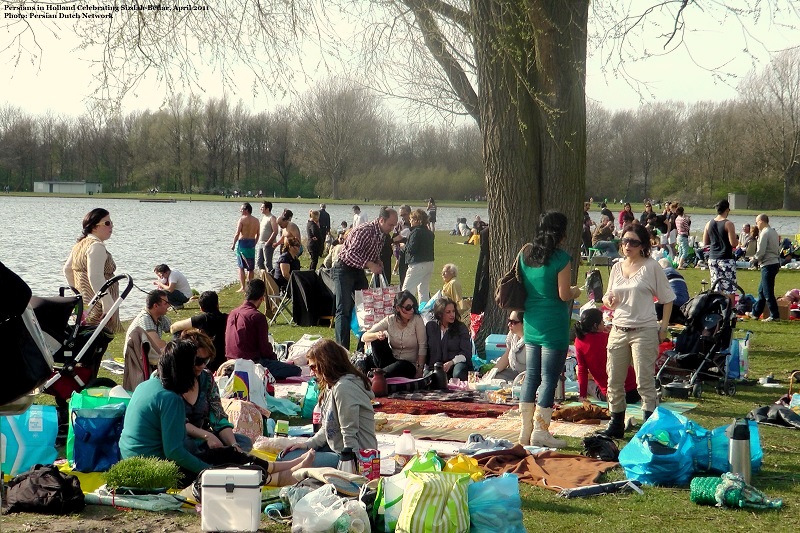 Sizdah BedarAn open-air picnic holiday concluding the Iranian New Year celebrations
 Feast of San GennaroA patronal festival of parades, street food and prayer honouring Saint Januarius
 ChristmasA festival of Jesus's birth, kept on 25 December with gifts, lights and shared meals
 Valentine's DayA Christian feast day and cultural celebration of love kept on February 14 in many countries.
Good reading and sources
- Encyclopaedia BritannicaArticle
- Turkey’s religious authority denounces ‘evil-eye’ charmsAl Jazeera, Article
- The strange power of the ‘evil eye’BBC, Article
- Turkey’s religious authority denounces ‘evil-eye’ charmsAl Jazeera, Article
- The strange power of the ‘evil eye’BBC, Article
- Evil eye on WikipediaEncyclopedia
- More photos on Wikimedia CommonsPhotos and video
- Wikidata recordOpen data
The facts on this page come from the Wikipedia article "Evil eye", written by its contributors and used under the CC BY-SA 4.0 licence, and from its Wikidata record (CC0). EveryParampara rewrote the text in its own words, with AI assistance, and compares every page with the article to make sure no passage is copied. It may be reused under the same CC BY-SA 4.0 licence with a link back.
It may contain mistakes. Traditions differ from one family, village and community to the next, and the people who keep them know them best. If something is wrong, tell us. Last refreshed 2026-10-04.
More from Greece
All the traditions of Greece
🇹🇷 Turkey and 5 moreNazarnazar boncuğu
A blue glass eye amulet worn and displayed to deflect the evil eye.Folklore
 🇬🇷 Greece and 5 moreKallikantzarosκαλικάντζαρος
A malevolent goblin of Greek and Balkan folklore, active in the Christmas season.Folklore
🇬🇷 Greece and 5 moreKallikantzarosκαλικάντζαρος
A malevolent goblin of Greek and Balkan folklore, active in the Christmas season.Folklore
 🇬🇷 Greece and 1 moreKoulourakiaΚουλουράκια
Sweet butter pastries baked for Greek Easter and shaped into rings and braidsTable custom · Sweets given and shared
🇬🇷 Greece and 1 moreKoulourakiaΚουλουράκια
Sweet butter pastries baked for Greek Easter and shaped into rings and braidsTable custom · Sweets given and shared
 🇧🇬 Bulgaria and 4 moreKukeriкукери (kukeri)
Masked and belled figures who tour Bulgarian villages at New Year to drive off harmSpiritual
🇧🇬 Bulgaria and 4 moreKukeriкукери (kukeri)
Masked and belled figures who tour Bulgarian villages at New Year to drive off harmSpiritual
The same idea elsewhere
Healing, luck and protection compared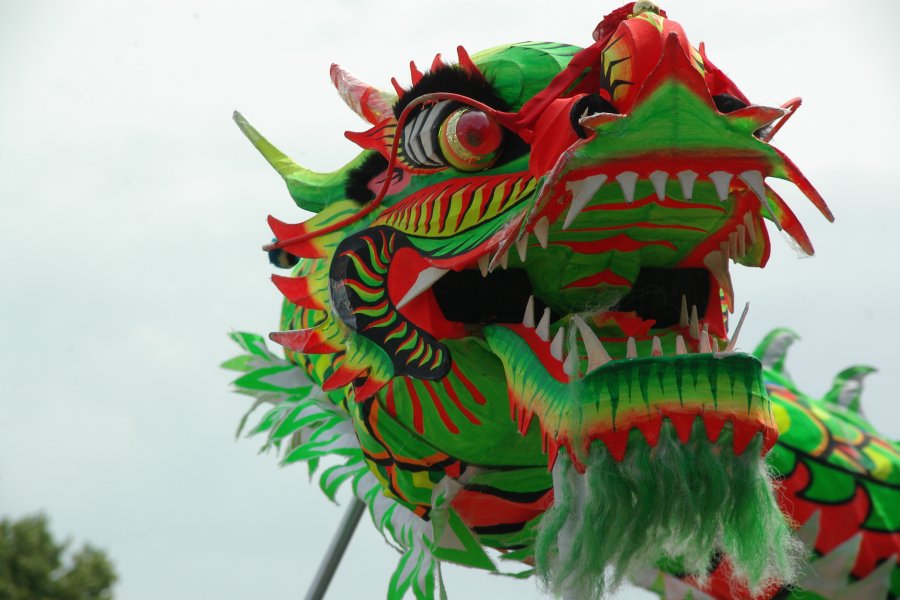 🇨🇳 China and 3 moreDragon dance舞龍 / 舞龙
A long dragon puppet on poles, danced by a team at Chinese New Year and other festivalsPerformance
🇨🇳 China and 3 moreDragon dance舞龍 / 舞龙
A long dragon puppet on poles, danced by a team at Chinese New Year and other festivalsPerformance
 🇺🇸 United States and 4 moreFriday the 13th
A Western folk superstition regarding the unluckiness of a Friday falling on the 13th.Folklore
🇺🇸 United States and 4 moreFriday the 13th
A Western folk superstition regarding the unluckiness of a Friday falling on the 13th.Folklore
 🇮🇳 India and 4 moreWater lantern
Small lamps floated on water to honour the dead and ask for good fortuneFestival
🇵🇬 Trobriand Islands, Papua New GuineaTrobriand cricket
Cricket as played in the Trobriand Islands, with chants, dances and a feastGame
🇮🇳 India and 4 moreWater lantern
Small lamps floated on water to honour the dead and ask for good fortuneFestival
🇵🇬 Trobriand Islands, Papua New GuineaTrobriand cricket
Cricket as played in the Trobriand Islands, with chants, dances and a feastGame