Life-cycle ritesSoutheast AsiaChristian
First Communion
A Christian rite of passage marking a person's initial reception of the Eucharist.

First Communion is a Christian milestone in which young believers receive the Eucharist for the first time. Practised widely across Catholic, Lutheran, and Anglican communities, the ceremony involves liturgical preparation, celebratory clothing, and family gatherings.
When is First Communion kept?
First Communion is kept on typically during childhood between ages seven and thirteen.
First Communion marks the moment a church member takes the sacrament of the Eucharist for the initial time. Observed predominantly within the Latin Catholic Church alongside Anglican and Lutheran traditions, this milestone represents a key spiritual rite of passage. Participants prepare through religious instruction and prior sacraments, taking part in a formal service before celebrating with relatives at home or in community gatherings.
Sacraments and readiness
In the Latin Catholic Church, this observance ranks as the third of seven sacraments. Children must be baptised beforehand and typically undergo their first sacrament of penance before sharing the bread and wine. The customary age ranges between seven and thirteen, reflecting what the church identifies as the age of reason. Pope Pius X officially set this threshold at seven years old in his 1910 decree Quam singulari, inspired in part by the young Irish girl Ellen Organ. Prior to that decree, local dioceses often postponed the ceremony until a youth reached ten, twelve, or fourteen years of age.
Ceremonial garments
Children wear special clothing that frequently highlights white tones to represent purity. Girls often choose ornate dresses with floral wreaths and veils, though some wear inherited gowns, simple school uniforms, or white albs. In countries like Spain, Germany, Austria, and Luxembourg, girls have traditionally worn miniature bridal dresses, while Vietnamese communicants often wear a white áo dài. Boys generally wear suits, tuxedos, or cultural garments, such as Scottish kilts or Philippine barong tagalog shirts. In several Latin American nations, boys put on military-inspired uniforms adorned with golden shoulder cords, whereas Swiss boys and girls both wear unadorned white robes with wooden crosses.
Theological views
Christian traditions approach the holy sacrament from distinct theological viewpoints. Catholics believe in transubstantiation, holding that Christ is genuinely present within the bread and wine. Lutherans view this presence through the lens of a sacramental union, while Methodists describe it as a holy mystery, and Reformed Christians teach a spiritual presence. Other Protestant churches regard the meal primarily as a symbolic commemoration of Christ's Last Supper. In contrast to Western practices that separate childhood rites, Eastern Orthodox and Byzantine Catholic churches administer communion directly to infants at the time of their baptism and chrismation.
Family celebrations and gifts
The liturgical event is followed by festive receptions hosted by parents, godparents, and extended relatives. Families gather for shared meals, take formal studio portraits, and capture casual photographs to mark the occasion. Guests present the young communicants with monetary tokens or religious keepsakes. Popular gifts include personal Bibles, rosary beads, teen devotional books, small devotional statues, holy cards, and printed prayer books. In places like Ireland, children often carry small decorative pouches to hold their new prayer books during the service.
How First Communion is kept
Candidates prepare for the rite through parish study and make their first confession before the mass. On the appointed day, children enter the church dressed in formal attire, often carrying rosaries or prayer books. During the liturgy, they approach the altar to partake of the consecrated bread and wine for the initial time. After the blessing, families hold lively receptions, take formal group portraits, and present children with religious mementos and monetary gifts.
When and where
Most youngsters participate between seven and thirteen years of age, often around the second grade in primary school. Parishes schedule group masses according to their local calendar, with some Philippine congregations holding ceremonies near the December patronal solemnity.
First Communion is observed globally within Latin Catholic, Lutheran, and Anglican parishes. It maintains strong cultural visibility across Western Europe, the Americas, and parts of Asia such as the Philippines and Vietnam.
What First Communion means
For participants, the ceremony signifies growing moral awareness and deeper integration into their faith community. The traditional white garments symbolise spiritual purity and renewal. Receiving the Eucharist represents a personal encounter with the divine, uniting individual believers with the congregation and commemorating the historic Last Supper.


Questions people ask about First Communion
When is First Communion kept?
First Communion is kept on typically during childhood between ages seven and thirteen.
What is First Communion?
It is a Christian ceremony where an individual receives the Holy Eucharist for the first time. It serves as a major rite of passage in the Catholic Church, Lutheran congregations, and the Anglican Communion.
At what age do children take part?
In the Western church tradition, young people normally take their first communion between the ages of seven and thirteen, once they have reached the age of reason and completed basic religious education.
What do children wear for the ceremony?
Most children wear formal white attire. Girls often wear white dresses with veils or wreaths, while boys wear suits, tuxedos, or traditional national outfits like kilts or barongs.
What kinds of gifts do communicants receive?
Family and friends typically present communicants with money or devotional gifts. Common items include Bibles, rosaries, personal prayer books, daily devotional guides, sacred images, and small religious figurines.
See also
 Las arrasThirteen gold coins, blessed at a wedding and given by the groom to the bride
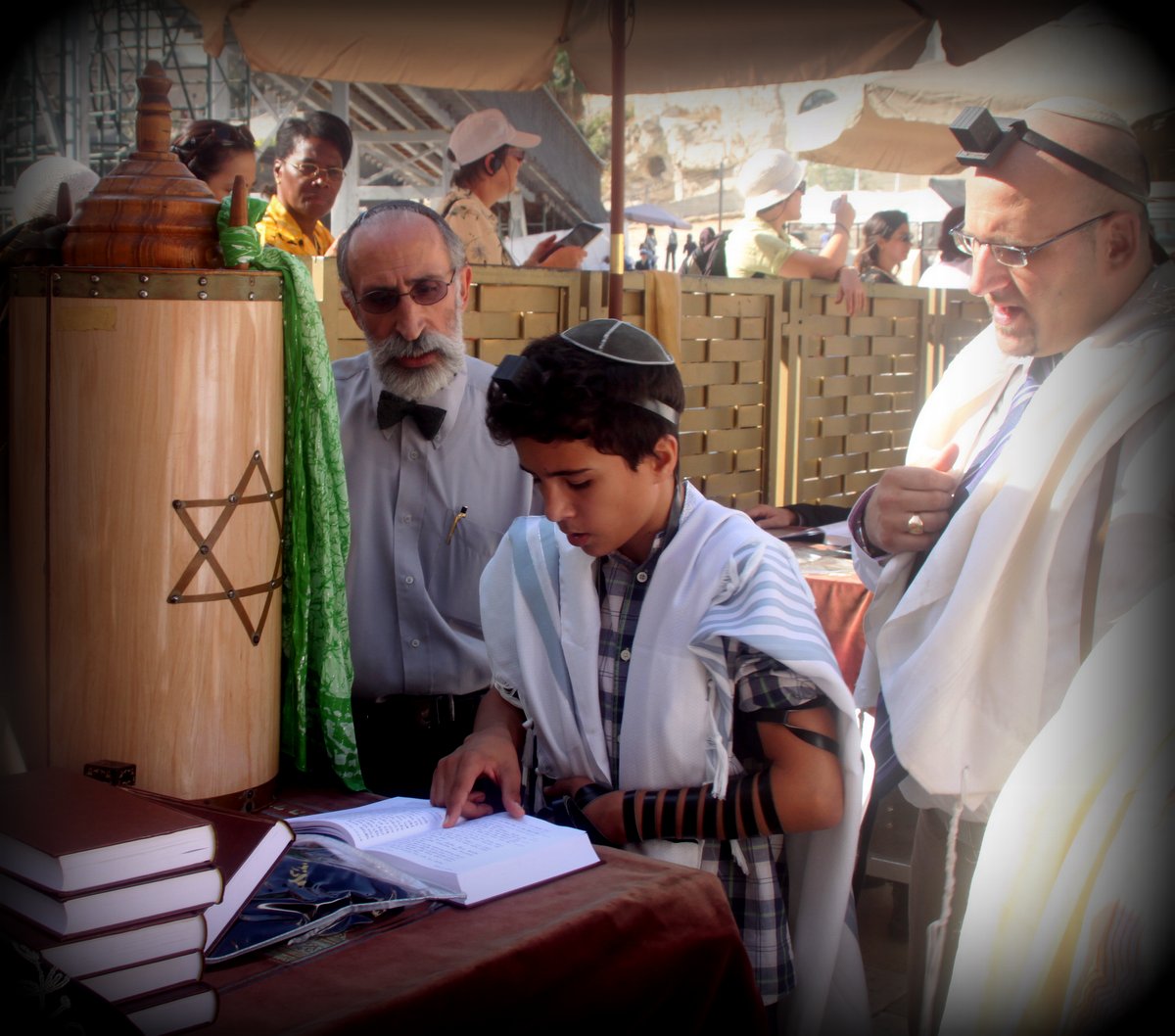 Bar and bat mitzvahA Jewish rite of passage marking when youth reach adulthood and take responsibility for their own actions.
 BatokIndigenous Filipino tattooing, once worn as dress, rank and a rite of passage
 Mischief NightAn evening of pranks and tricks, kept before Halloween or Guy Fawkes Night
Good reading and sources
- First communion on WikipediaEncyclopedia
- More photos on Wikimedia CommonsPhotos and video
- Wikidata recordOpen data
The facts on this page come from the Wikipedia article "First communion", written by its contributors and used under the CC BY-SA 4.0 licence, and from its Wikidata record (CC0). EveryParampara rewrote the text in its own words, with AI assistance, and compares every page with the article to make sure no passage is copied. It may be reused under the same CC BY-SA 4.0 licence with a link back.
It may contain mistakes. Traditions differ from one family, village and community to the next, and the people who keep them know them best. If something is wrong, tell us. Last refreshed 2026-10-06.
More from the Philippines
All the traditions of the Philippines
🇪🇸 Spain and 2 moreLas arras
Thirteen gold coins, blessed at a wedding and given by the groom to the brideRite of passage
 🇯🇵 Kyoto, Japan and 5 moreTeeth blackening
A custom of dyeing teeth black to mark adulthood and beauty in parts of Asia and Oceania.Rite of passage
🇯🇵 Kyoto, Japan and 5 moreTeeth blackening
A custom of dyeing teeth black to mark adulthood and beauty in parts of Asia and Oceania.Rite of passage
 🇲🇽 Mexico and 2 moreWedding cord
A loop of white cord laid over a kneeling bride and groom in Catholic weddingsRite of passage
🇲🇽 Mexico and 2 moreWedding cord
A loop of white cord laid over a kneeling bride and groom in Catholic weddingsRite of passage
 🇵🇭 PhilippinesFilipino wedding customsKasalan
A blend of indigenous rituals and Christian traditions marking the union of two families in the Philippines.Rite of passage
🇵🇭 PhilippinesFilipino wedding customsKasalan
A blend of indigenous rituals and Christian traditions marking the union of two families in the Philippines.Rite of passage
The same idea elsewhere
Coming of age compared 🇪🇬 Egypt and 5 moreTraditional tattooing
The ancient custom of marking the skin for protection, healing, status and sacred ritesDress
🇪🇬 Egypt and 5 moreTraditional tattooing
The ancient custom of marking the skin for protection, healing, status and sacred ritesDress
 🇼🇸 Samoa and 1 morePeʻa
The traditional Samoan rite of full-body tattooing for men, tapped by master artistsRite of passage
🇼🇸 Samoa and 1 morePeʻa
The traditional Samoan rite of full-body tattooing for men, tapped by master artistsRite of passage
 🇵🇬 Maprik, Papua New GuineaHaus Tambaran
A sacred house of the Sepik peoples, used for ancestor worship and male initiationSpiritual
🇵🇬 Maprik, Papua New GuineaHaus Tambaran
A sacred house of the Sepik peoples, used for ancestor worship and male initiationSpiritual
 🇮🇱 IsraelTallitטלית
A four-cornered Jewish prayer shawl with ritual fringes worn during worshipSpiritual
🇮🇱 IsraelTallitטלית
A four-cornered Jewish prayer shawl with ritual fringes worn during worshipSpiritual