Music, dance and storytellingOceania
Kapa haka
Māori group song and dance, from tribal and school groups to the national stage
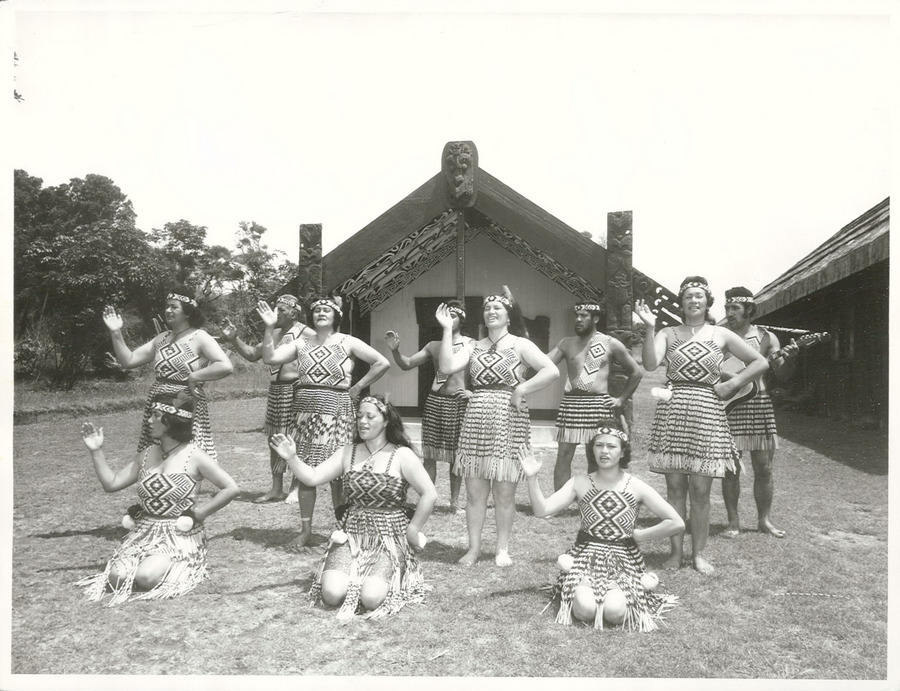
Kapa haka is the Māori name for group song and dance, and for the groups who perform it, drawing on haka, poi, mau rākau and mōteatea. Teams from iwi, schools and families all over New Zealand take part, and the national contest Te Matatini has been held since 1972.
When is Kapa haka kept?
Kapa haka is kept on performed through the year, with the national competition held every two years.
Kapa haka is the Māori term for a group that sings and dances together, and for the songs and dances it performs. Performers combine choral singing, haka, poi and songs with hand movement into one programme. Groups are built from iwi, families, schools and other ties, and the form carries Māori language, history and identity in front of an audience.
What kapa haka is
Two words make the term: kapa, a group or company, and haka. Together they name both a group of performers and the programme of song and dance that group puts on. The performers are usually a mixed company, sometimes only a handful of people and sometimes dozens. A costume is optional. Members are linked by something in common, which might be an extended family, an iwi (tribe), a school, or another association. For Māori, kapa haka is a main way to carry and show identity, language and heritage through performance.
Origins and history
The parts that make up kapa haka come from older Māori performing arts: haka, mau rākau (weapon work), poi (a ball on a cord) and mōteatea (old songs). European musical ideas met Māori ones in the form that took shape later. Concert parties of the kind we would recognise today began in the 1860s, and Rotorua, where tourists then gathered, was an early centre for them. A national competition followed much later. Held under the name Te Matatini, it has run since 1972.
How a performance runs
A full item lasts up to forty minutes and strings several kinds of song and dance into one whole. The usual order opens with waiata tira, warm-up singing that introduces the group and announces its arrival lightly. Whakaeke, an entrance piece, may speak to an issue of the day or honour a person. Waiata-ā-ringa are songs given hand and arm movement. Haka come next as challenges. Pou or mōteatea are older-style unison singing. Poi are swung and struck in time. Whakawātea closes the set and farewells the audience. Any one type may occur more than once before the group leaves the stage.
Sound and movement
Voices carry most of the music, and all the sung poetry is in Māori. Waiata and haka differ from mōteatea in following European-style harmony, often with guitar. Chanted passages in the haka manner sit inside the songs, along with movement, facial expression and other signals that belong to Māori performance. The instruments are few: a guitar, a pūtatara conch shell, the sound of poi and sticks, and the body itself, feet stamping in particular. Occasionally the group brings out tītī tōrea, pairs of thin carved sticks passed between performers in time. New songs keep being written. Pūkana, a wide glare of the eyes, and wiri, a trembling of the hands, are among the gestures that carry meaning.
Teams and contests
Performers are largely in step, though men and women sometimes do different things at the same time. A few hold named roles: kaitataki, the leaders, one male and one female, move among the group as it performs. Writers, arrangers, movement planners and costume makers also shape a set. Once every two years, groups from all over New Zealand meet at Te Matatini, the national contest for adult teams. Secondary schools have their own national event, Ngā Kapa Haka Kura Tuarua o Aotearoa, which was once part of Polyfest and draws a high standard of performance.
How Kapa haka is kept
A group prepares a set, then takes the stage and works through it in order: warm-up singing that introduces them, an entrance piece, songs with hand and arm movement, haka, older unison songs, poi, and a closing item that farewells the audience. Pieces may be repeated within the set, which can run to forty minutes. Men and women often take different parts; kaitataki lead from within the group; songs are sung in Māori with guitar and body percussion supporting. Groups meet every two years at Te Matatini to compete.
When and where
Kapa haka is performed all year round, at gatherings, school events and competitions. The main fixed point in the calendar is Te Matatini, which comes round every second year. The schools' national contest, Ngā Kapa Haka Kura Tuarua o Aotearoa, has its own regular slot too.
It belongs to New Zealand and is kept throughout the country, wherever Māori communities, schools and iwi organise groups. Rotorua was an early centre for the concert form in the 1860s, when visitors came there. The national competition brings teams together from every part of the country.
What Kapa haka means
For those who keep it, kapa haka is a way of standing as Māori in public: language, genealogy and history carried in song. Mōteatea hold stories that connect people to their past, and haka can make a point, honour someone or tell a story rather than only threaten. The hand and arm movement of waiata-ā-ringa reinforces the words. Poi, once a training exercise, now shows grace and skill, and the group's shared timing shows that many people can move as one.


Questions people ask about Kapa haka
When is Kapa haka kept?
Kapa haka is kept on performed through the year, with the national competition held every two years.
What is kapa haka?
It is the Māori term for a group of performers and for the song and dance programme they present. The name joins kapa, meaning group, with haka. A set can mix choral singing, songs with hand and arm movement, haka, poi and older unison songs.
How long does a performance last?
A full set runs for up to forty minutes. Several types of song and dance are strung together within it, and a single type may appear more than once before the group finishes and leaves the stage.
Are haka only war dances?
No. Haka are described as challenges today, used to make a point, honour a person or tell a story. In precolonial Māori society they had many uses besides warfare, and they serve peaceful purposes now. Men and women both perform them, with men usually in front.
What is poi?
Poi is a women's dance in which balls on cords are swung and struck in time with a song. The balls are about the size of tennis balls; long poi have cords up to a metre, and a performer may manage four at once. The sound of poi hitting the hands accompanies the singing.
See also
 HakaA ceremonial dance of the Māori people in New Zealand, performed with vigorous movement and chant for welcome, mourning,
 MaraeA cleared, sacred gathering place at the heart of Māori and Polynesian community life
 WhakapapaMāori genealogy, recited to place a person among ancestors, land and tribeWhite SundayA Samoan holiday honoring children with church services, white clothing, and family gatherings on the second Sunday of O
Good reading and sources
- Kapa haka on WikipediaEncyclopedia
- More photos on Wikimedia CommonsPhotos and video
- Wikidata recordOpen data
The facts on this page come from the Wikipedia article "Kapa haka", written by its contributors and used under the CC BY-SA 4.0 licence, and from its Wikidata record (CC0). EveryParampara rewrote the text in its own words, with AI assistance, and compares every page with the article to make sure no passage is copied. It may be reused under the same CC BY-SA 4.0 licence with a link back.
It may contain mistakes. Traditions differ from one family, village and community to the next, and the people who keep them know them best. If something is wrong, tell us. Last refreshed 2026-10-05.
More from New Zealand
All the traditions of New Zealand
🇳🇿 Wellington, New ZealandHaka
A ceremonial dance of the Māori people in New Zealand, performed with vigorous movement and chant for welcome, mourning,Performance
 🇬🇧 United Kingdom and 5 moreLast Post
A bugle call sounded at military funerals and remembrance services across the Commonwealth to honour those who died in sPerformance
🇼🇸 Samoa and 1 moreFa'ataupati
A traditional Samoan dance performed by men who clap and slap their bodies to create rhythm.Performance
🇬🇧 United Kingdom and 5 moreLast Post
A bugle call sounded at military funerals and remembrance services across the Commonwealth to honour those who died in sPerformance
🇼🇸 Samoa and 1 moreFa'ataupati
A traditional Samoan dance performed by men who clap and slap their bodies to create rhythm.Performance
 🇬🇧 United Kingdom and 5 moreMorris dance
A rhythmic English folk dance performed in costume with bells, sticks and handkerchiefsPerformance
🇬🇧 United Kingdom and 5 moreMorris dance
A rhythmic English folk dance performed in costume with bells, sticks and handkerchiefsPerformance
The same idea elsewhere
Remembering the ancestors compared 🇮🇪 Ireland and 5 moreHalloween
An annual observance on 31 October marking the eve of All Saints' Day, rooted in Christian tradition and Celtic heritageFestival · Sweets given and shared
🇮🇪 Ireland and 5 moreHalloween
An annual observance on 31 October marking the eve of All Saints' Day, rooted in Christian tradition and Celtic heritageFestival · Sweets given and shared
 🇮🇳 Ayodhya, India and 7 moreDiwaliदीपावली (Dīpāvalī)
A five-day festival of lights celebrated across India and its diaspora to mark the victory of light over darkness.Festival · Feasts and festival meals
🇮🇳 Ayodhya, India and 7 moreDiwaliदीपावली (Dīpāvalī)
A five-day festival of lights celebrated across India and its diaspora to mark the victory of light over darkness.Festival · Feasts and festival meals
 🇮🇷 Iran and 7 moreNowruzنوروز
The Iranian new year at the March equinox, kept with fire, greenery and picnicsSeasonal
🇮🇷 Iran and 7 moreNowruzنوروز
The Iranian new year at the March equinox, kept with fire, greenery and picnicsSeasonal
 🇮🇱 Jerusalem, Israel and 1 moreHanukkahחֲנֻכָּה
An eight-day Jewish festival marking the rededication of the Second Temple in Jerusalem and the miracle of a single day'Festival
🇮🇱 Jerusalem, Israel and 1 moreHanukkahחֲנֻכָּה
An eight-day Jewish festival marking the rededication of the Second Temple in Jerusalem and the miracle of a single day'Festival