Kappōgi
In its own language: 割烹着
A Japanese smock worn over a kimono to keep it clean while cooking and cleaning

A kappōgi is a smock from Japan, worn over a kimono or ordinary clothes while cooking and cleaning. It was introduced in 1902 at the Akahori Kappō School, described as Japan's first culinary academy, at a time when most people wore a kimono every day and needed something to keep it free of stains.
When is Kappōgi kept?
Kappōgi is kept on worn over a kimono or everyday clothes when cooking and cleaning.
A kappōgi is a Japanese cooking smock. It was first made to keep a kimono free of stains, at a time when most people in Japan wore one every day. It goes on over ordinary clothes, ties behind the neck and the waist, and falls to the knees. Its Japanese name means cooking wear. It is still used for cooking and cleaning.
What it is
The kappōgi is a smock, a loose garment pulled on over other clothes. In Japanese its name is written 割烹着 and glossed as cooking wear. The sleeves are wide and baggy, and each one is gathered into a cuff that ends a little past the elbow. The body of the smock comes down to the wearer's knees. There are no buttons or fastenings of that kind. Instead, two strips of cloth hold it shut, one knotted behind the neck and one knotted at the waist, at the back. It is classed as an apron as well as a piece of Japanese clothing.
Where it came from
The kappōgi was introduced in 1902 at the Akahori Kappō School, which the article describes as Japan's first culinary academy. At that time most people wore a kimono every day, so a cover for the kitchen had an obvious purpose. The garment was first designed to keep the kimono free of stains while cooking. Its name and the school's name share the word kappō, given here as cooking. The sources place its beginning in Japan and name no other country where it started.
In the kitchen
A kappōgi is worn on top of a kimono, and the article shows photographs of it from the front and from the back with a kimono underneath. Someone about to work pulls it on and knots the ties behind the neck and at the waist. The sleeves are wide but gathered into cuffs just past the elbow, and the body of the smock hangs to the knees. It is used particularly when cooking and cleaning, so it belongs to the ordinary round of household work rather than to festivals or ceremony.
How Kappōgi is kept
A person slips the kappōgi on over whatever they are wearing, often a kimono. The neck ties are brought around and knotted at the back, and then the waist ties are knotted behind as well. The sleeves are loose and gathered at the cuff just after the elbow, and the body of the smock comes down to the knees. Dressed this way, the wearer cooks or cleans, keeping the kimono underneath free of stains, and the smock is taken off afterwards.
When and where
There is no fixed season or day for it. The kappōgi is worn whenever someone is cooking or cleaning at home. It was introduced in 1902, a period when most people in Japan wore a kimono as everyday dress, and that timing is the only date the sources give for it.
The kappōgi belongs to Japan, where it began and where it is still worn, particularly for cooking and cleaning. The sources name no other country for it. It was introduced at a culinary school, the Akahori Kappō School, and the article shows it worn over a kimono in photographs taken from the front and from the back.
What Kappōgi means
The sources describe no symbolic meaning for the kappōgi. What they give is a protective purpose: it was first designed to keep a kimono free of stains during cooking, at a time when a kimono was worn daily and was not easily replaced. Its everyday role is the same today, since it is used particularly when cooking and cleaning.

Questions people ask about Kappōgi
When is Kappōgi kept?
Kappōgi is kept on worn over a kimono or everyday clothes when cooking and cleaning.
What is a kappōgi?
It is a Japanese smock, a loose garment worn over other clothes. Its name means cooking wear. The sleeves are baggy and gathered into cuffs just past the elbow, the body reaches the knees, and it closes with cloth strips tied behind the neck and at the waist.
Where is it from?
Japan is its home. It began there in 1902, and the sources name no other country where it is kept. It is still worn there, particularly during cooking and cleaning, over a kimono or other clothing.
Is it a kind of kimono?
No. It is a separate garment worn on top of one. The kappōgi began as something made to protect a kimono from stains, and the article shows it worn over a kimono in images from the front and the back.
See also
 Traditional tattooingThe ancient custom of marking the skin for protection, healing, status and sacred rites
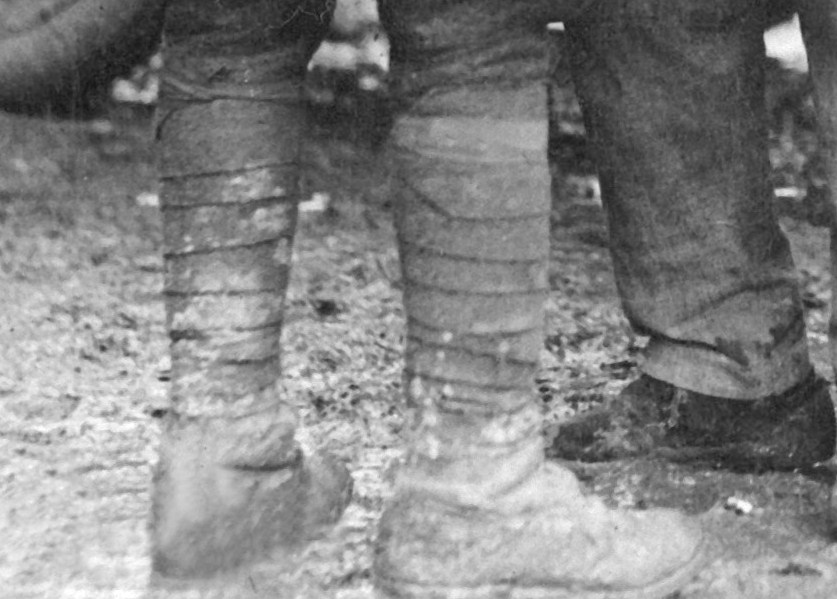 PutteeA cloth leg wrap worn by soldiers, from the Himalayas to the armies of two world wars
 MianfuThe most formal dress of China's emperors, worn at coronations and court rites
 Auxiliary armour (Japan)Extra guards that filled the gaps left by the six main pieces of a Japanese armour set
Good reading and sources
- Kappōgi on WikipediaEncyclopedia
- More photos on Wikimedia CommonsPhotos and video
- Wikidata recordOpen data
The facts on this page come from the Wikipedia article "Kappōgi", written by its contributors and used under the CC BY-SA 4.0 licence, and from its Wikidata record (CC0). EveryParampara rewrote the text in its own words, with AI assistance, and compares every page with the article to make sure no passage is copied. It may be reused under the same CC BY-SA 4.0 licence with a link back.
It may contain mistakes. Traditions differ from one family, village and community to the next, and the people who keep them know them best. If something is wrong, tell us. Last refreshed 2026-10-11.
More from Japan
All the traditions of Japan
🇪🇬 Egypt and 5 moreTraditional tattooing
The ancient custom of marking the skin for protection, healing, status and sacred ritesDress
 🇯🇵 Kyoto, JapanKimono着物
Japan's national dress: a wrapped robe with square sleeves, tied with a wide sashDress
🇨🇳 China and 3 moreMianfu冕服
The most formal dress of China's emperors, worn at coronations and court ritesDress
🇯🇵 Kyoto, JapanKimono着物
Japan's national dress: a wrapped robe with square sleeves, tied with a wide sashDress
🇨🇳 China and 3 moreMianfu冕服
The most formal dress of China's emperors, worn at coronations and court ritesDress
 🇨🇳 Dunhuang, China and 2 moreYingluo璎珞
A ring-shaped Buddhist neck ornament that became a Chinese necklace, worn again todayDress
🇨🇳 Dunhuang, China and 2 moreYingluo璎珞
A ring-shaped Buddhist neck ornament that became a Chinese necklace, worn again todayDress
The same idea elsewhere
All of this kind 🇮🇳 Paithan, IndiaPaithani
A handwoven silk sari from Maharashtra, with a squared border and a peacock palluDress
🇮🇳 Paithan, IndiaPaithani
A handwoven silk sari from Maharashtra, with a squared border and a peacock palluDress
 🇳🇴 Norway and 3 moreGákti
A traditional coat worn by the Sámi people across northern Scandinavia and Russia, signaling origin and status through cDress
🇳🇴 Norway and 3 moreGákti
A traditional coat worn by the Sámi people across northern Scandinavia and Russia, signaling origin and status through cDress
 🇼🇸 Samoa and 1 moreʻIe tōga
Precious woven mats exchanged in Samoan ceremonies to honor family ties and chiefly status.Dress
🇼🇸 Samoa and 1 moreʻIe tōga
Precious woven mats exchanged in Samoan ceremonies to honor family ties and chiefly status.Dress
 🇮🇱 Israel and 1 moreTzitzitצִיצִית
Knotted ritual fringes worn on a four-cornered garment, a reminder of the commandmentsDress
🇮🇱 Israel and 1 moreTzitzitצִיצִית
Knotted ritual fringes worn on a four-cornered garment, a reminder of the commandmentsDress