Keening
In its own language: Caoineadh
A sung mourning cry at Gaelic funerals, once led by hired women singers

Keening is a sung mourning cry from the Gaelic-speaking parts of Ireland and Scotland, once central to the funeral and now almost gone. A woman led it, sometimes for payment, and mourners answered her; the words were improvised rather than fixed, mixing praise for the person who died with the sorrow of those left behind.
When is Keening kept?
Keening is kept at funerals, after a wake of one or more nights, as the coffin is carried out and at the grave.
Keening is a way of singing the dead out of a house, kept for centuries by Gaelic speakers in Ireland and Scotland. A woman, sometimes paid for the work, led the cry while mourners answered her. The words were improvised rather than fixed, and praise for the person who had died sat beside the sorrow of the family left behind.
What it is
The word comes from caoineadh, an Irish and Scottish Gaelic verb meaning to cry or to weep. Singers used both languages, and the style is usually grouped with sean-nós, the older unaccompanied singing of those regions. In Scotland the same practice carried a different name, coronach. A keen has no set script. The woman leading it drew on a common store of phrases, stretching or trimming them as the moment asked, so no two performances came out alike. Praising the dead, reciting their forebears and voicing the hardship of those left behind all belonged to it, and so did meaningless sounds held between the lines.
Shape of the music
The melody and the words rest on a small group of motifs that the singer could draw out or cut short. Nothing was written down beforehand for anyone to follow, and each keen came out differently, yet all the singers worked inside one shared body of motifs and diction. The rhythm stayed free, with no metre governing it. A keen could fall into three parts: a salutation that opens it, a dirge, and the gol, which means a cry. Around the words came vocables, sounds carrying no dictionary sense at all.
At the funeral
From the sixteenth century onward, writers set down what they saw and heard. A chief's own bard, helped by the household, once sang the funeral song; in later times women were hired for it. Mourners followed the bean chaointe, the keening woman, rocking and kneeling as she sang. An antiquarian named William Beauford watched a funeral around 1791 and wrote it out. Flowers decorated the corpse, which lay on a raised bier. The mourners split into two groups, one at each end. The leading bard sang first in a low tone, a harp sounding softly with him, and the second group answered until all sang together. Genealogy, rank, property and character were recited, and questions were put to the dead.
Banshees and belief
Irish mythology gives keening a supernatural sister. The banshee sings a keen of her own, and a family was said to hear it when one of their own had passed away or was close to death, even when that death had happened far away and no news of it had arrived. In that case the wailing was the household's first warning. Writers have called the keening women the human counterpart of the banshee, and in County Kerry people judged the local keening the nearest thing to a banshee's cry. Mourning aloud is older than any one tradition, reaching back to Homeric, Etruscan and biblical times.
Recordings and today
By the early twentieth century the practice had all but gone. At the Hebrides funeral of Father Allan MacDonald in 1905, held at a Roman Catholic church on Eriskay, someone present remembered it as the last time keening was heard on those islands. A few singers were recorded before the custom faded. Cití Ní Ghallchóir of Gaoth Dobhair in County Donegal sang a keen she had learned from an old woman for Alan Lomax in the early 1950s. Joe Heaney of Carna in Connemara had one from his grandmother. Two keening songs were collected on the Aran Islands for an album in 1957, and a Scottish archive holds recordings from Barra and South Uist. Singers' reluctance to share something so private may explain how few were ever captured.
How Keening is kept
A death in the household set the sequence going. The wake came first, a night or more of watching beside the corpse. Keening belonged to the funeral itself, not to the wake. As the coffin was carried out and again at the grave, the leading woman, the bean chaointe, raised the keen. Other mourners answered her in turn, rocking on their knees, sometimes clasping their hands. Where two groups were arranged at either end of the corpse, they sang alternately and then joined. Friends and relatives repeated the phrases, and the singing could take up the family's own words about the person who had gone.
When and where
Keening is not fixed to a date on any calendar. It happened when someone died, and it belonged to the funeral rather than to the night-long wake that came before the burial. Where the custom was strongest, a keen could be raised as the coffin left the house and again when it was laid in the ground.
The practice belonged to the Gaelic-speaking parts of Ireland and Scotland, and Scotland had its own name for it, coronach. It was widespread across Ireland, kept by every social class until roughly the middle of the eighteenth century. Particular strength was remembered in County Kerry, in Donegal, in Connemara, on the Aran Islands, and in the Scottish Hebrides.
What Keening means
A keen said aloud what the family had lost. Naming the dead person's forebears and their good qualities placed them properly among their people one last time, while the questions put to the corpse gave grief a form to speak in. Neighbours answered the leading singer, so the mourning became shared work rather than a private collapse. In mythology the same cry is a sign that a death is known before any messenger arrives, a way of saying that loss travels faster than news.
Questions people ask about Keening
When is Keening kept?
Keening is kept at funerals, after a wake of one or more nights, as the coffin is carried out and at the grave.
What is keening?
It is a sung cry of mourning kept by Gaelic speakers in Ireland and Scotland, performed at funerals rather than at the wake. A woman led it and mourners answered her. The words were improvised from a shared set of phrases and sounds, with no fixed text.
Who sang the keen?
Long ago a chief's bard sang the funeral song with help from the household. In later centuries women were hired as mourners, and one of them, the bean chaointe, led while the rest followed. They rocked and knelt as they answered her.
Does anyone keen today?
Rarely. The custom declined from the eighteenth century and had almost died out by the early twentieth. A few singers were recorded in the 1950s, and performers now work from those recordings, among them the Irish musician Róis on her 2024 album Mo Léan.
Why are so few recordings left?
Singers were unwilling to share something so private, so only a handful of genuine keening songs were ever caught on tape. Most surviving examples were gathered in Ireland and Scotland during the twentieth century, and several had been passed down by ear from older women rather than taken from any written source.
See also
 WakeA gathering before a funeral, where family and friends keep watch over the dead
 AntyestiThe traditional Hindu funeral ceremony and final rite of passage
 Sean-nós singingAn unaccompanied, highly ornamented style of traditional Irish folk singing
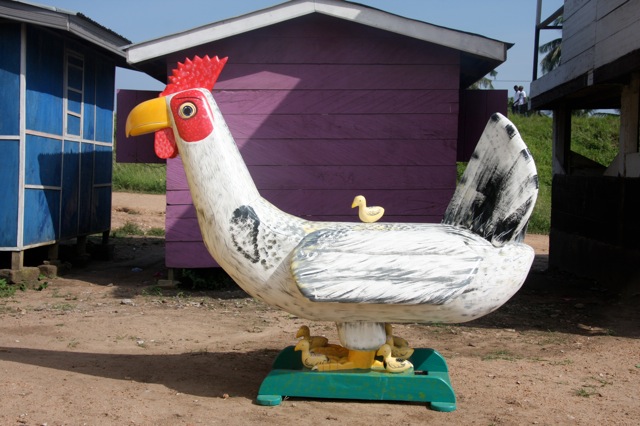 Fantasy coffinsCustom hand-carved burial caskets shaped as animals, tools and symbols in southern Ghana
Good reading and sources
- Keening on WikipediaEncyclopedia
- More photos on Wikimedia CommonsPhotos and video
- Wikidata recordOpen data
The facts on this page come from the Wikipedia article "Keening", written by its contributors and used under the CC BY-SA 4.0 licence, and from its Wikidata record (CC0). EveryParampara rewrote the text in its own words, with AI assistance, and compares every page with the article to make sure no passage is copied. It may be reused under the same CC BY-SA 4.0 licence with a link back.
It may contain mistakes. Traditions differ from one family, village and community to the next, and the people who keep them know them best. If something is wrong, tell us. Last refreshed 2026-10-05.
More from Ireland
All the traditions of Ireland
🇮🇪 Ireland and 2 moreWake
A gathering before a funeral, where family and friends keep watch over the deadRite of passage
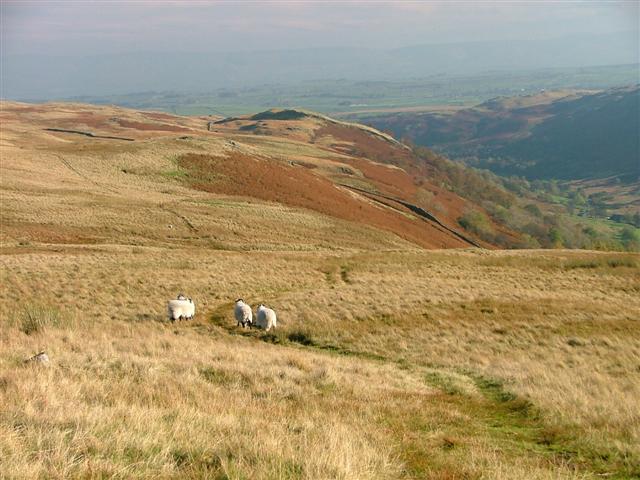 🇬🇧 United Kingdom and 1 moreCorpse road
Historical paths used to carry the dead to parish burial grounds across Britain and Ireland.Rite of passage
🇬🇧 United Kingdom and 1 moreCorpse road
Historical paths used to carry the dead to parish burial grounds across Britain and Ireland.Rite of passage
 🇮🇪 Ireland and 1 moreHandfastingceangal na lámh (Irish); pòsadh-bliadhna (Scottish Gaelic)
A couple's promise made with joined or bound hands, kept from betrothal to weddingRite of passage
🇮🇪 Ireland and 1 moreHandfastingceangal na lámh (Irish); pòsadh-bliadhna (Scottish Gaelic)
A couple's promise made with joined or bound hands, kept from betrothal to weddingRite of passage
 🇺🇸 United States and 3 moreJumping the broom
A wedding ritual where newlyweds leap over a broom to mark their unionRite of passage
🇺🇸 United States and 3 moreJumping the broom
A wedding ritual where newlyweds leap over a broom to mark their unionRite of passage
The same idea elsewhere
Death and mourning compared 🇲🇽 Mexico City, Mexico and 1 moreDay of the DeadDía de Muertos
A Mexican remembrance of deceased family and friends with altars, marigolds and feastsFestival · Sweets given and shared
🇲🇽 Mexico City, Mexico and 1 moreDay of the DeadDía de Muertos
A Mexican remembrance of deceased family and friends with altars, marigolds and feastsFestival · Sweets given and shared
 🇹🇱 Timor-LesteUma Lulik
Sacred ancestral clan houses and ritual shrines in East TimorSpiritual
🇹🇱 Timor-LesteUma Lulik
Sacred ancestral clan houses and ritual shrines in East TimorSpiritual
 🇮🇩 Indonesia and 2 moreKenduri
A communal prayer meal and gathering shared across Indonesia, Malaysia and BruneiSpiritual · Feasts and festival meals
🇮🇩 Indonesia and 2 moreKenduri
A communal prayer meal and gathering shared across Indonesia, Malaysia and BruneiSpiritual · Feasts and festival meals
 🇼🇸 Samoa and 1 moreʻIe tōga
Precious woven mats exchanged in Samoan ceremonies to honor family ties and chiefly status.Dress
🇼🇸 Samoa and 1 moreʻIe tōga
Precious woven mats exchanged in Samoan ceremonies to honor family ties and chiefly status.Dress