Customs of food and drinkSouth AsiaBuddhist
Kiribath
In its own language: කිරිබත්
Rice cooked in coconut milk, the dish of Sinhalese New Year and family beginnings

Kiribath is rice cooked with coconut milk and pressed into blocks, the dish Sinhalese families in Sri Lanka serve at the moments when life turns. They eat it on the first morning of each month, at Sinhalese New Year, at weddings, and as a baby's first solid food.
When is Kiribath marked?
Kiribath is kept as part of Sinhala and Tamil New Year, which runs from 13 to 14 April 2027.
Kiribath is a Sri Lankan dish of rice cooked in coconut milk, pressed flat and cut into squares or diamonds. Sinhalese families treat it as food for the points where life changes: the first day of a month, the start of a new year, a wedding, a baby's first solid meal. The name is simply Sinhala for milk and rice.
Origins and history
The beginnings of this dish are not documented, and it appears to be found only in Sri Lanka. One story ties it to Sujata, who according to Buddhist tradition brought an offering of milk rice to Gautama Buddha while he sat meditating under the bodhi tree, shortly before his enlightenment. Whether that offering was kiribath, or something like it, rests on tradition rather than record. The name is plain Sinhala: kiri means milk and bath means rice, which describes the dish exactly. In time it became the food Sinhalese households put out when something is about to begin.
At the new year
Sinhalese New Year is when kiribath matters most. The woman of the house lights the hearth and sets the pot of milk rice to boil; sometimes rice kept aside for the day is used, since the family wants the best tasting grain. Offerings go to the Buddha and the gods first. Kiribath then holds the centre of the table, with sweets such as bananas, kokis and kevum around it, and the dish is understood to stand for life itself.
Turning points in life
Beyond the calendar, kiribath marks the passages of a single life. It is the first solid food an infant is given, a small taste that brings the child into the family's ordinary meals. At a wedding the groom feeds it to his bride. Households also cook it on the first day of each month, when it is simply the morning meal, and on any holiday or ceremony where Sinhalese families gather. In each case the same idea applies: something is beginning, and the food that belongs to beginnings is on the table.
Serving and variations
The rice used is white and short grained, the starchy kind, traditionally a variety called rathu haal or rathu kakulu haal because it cooks well and tastes neutral. It goes into thick coconut milk with water and a little salt, and sesame seeds or cashews are sometimes added. Once set, it is pressed and cut into squares or diamonds, then eaten by hand with lunumiris, a relish of red onion, lime, chilli flakes, Maldives fish and salt. Bananas, jaggery, hoppers, seeni sambol, bread or roti may appear beside it. Mung kiribath adds boiled green gram and is often made at Buddhist temples; imbul kiribath is sweet, filled with coconut and jaggery and rolled in a banana leaf.
How Kiribath is kept
At Sinhalese New Year the woman of the house lights the hearth and boils rice in coconut milk, sometimes using grain kept back for the day. Offerings are made to the Buddha and the gods. The family then shares the kiribath, cut into blocks, with sweets around it, and the household lamp is lit before anyone eats. On the first of the month it is simply breakfast. At a wedding the groom feeds the bride, and a baby's first solid food is kiribath.
When and where
It appears on the first morning of every month, at Sinhalese New Year, and at the turning points of a life: a wedding, a baby's first solid food, any ceremony a Sinhalese family marks.
Kiribath belongs to Sri Lanka, and it is strongest in Sinhalese homes on the island, at family tables, weddings and holiday meals, and in Buddhist temples where the green gram version is often made. Sources describe the dish as unique to Sri Lanka.
What Kiribath means
Kiribath carries the idea of life and of starting something. Sinhalese families bring it out at auspicious moments, the points where one stage ends and another opens: a new year, a marriage, the day a baby first eats solid food, the first morning of a month. Because everyone eats from one rice, the meal is shared with the Buddha and the gods too. Setting it on the table is a way of marking a change and asking for good fortune.
On the table


Days Kiribath is marked
Questions people ask about Kiribath
When is Kiribath marked?
Kiribath is kept as part of Sinhala and Tamil New Year, which runs from 13 to 14 April 2027.
What is kiribath?
Rice cooked in coconut milk until it is soft and sticky, then pressed and cut into squares or diamonds. The Sinhala name says what it is: kiri for milk, bath for rice. In Sri Lanka it is the dish that belongs to beginnings.
Where is it kept?
Sri Lanka, and mainly in Sinhalese homes there. Sources describe the dish as unique to the island. It also appears at Buddhist temples, where a green gram version is often made.
How is it served?
Cut into blocks and eaten by hand with lunumiris, a relish of red onion, lime, chilli flakes, Maldives fish and salt. Bananas, jaggery, hoppers, bread or roti may sit alongside, and sweets such as kokis and kevum at the New Year.
Why does it matter so much?
Sinhalese families treat it as food for the points where life changes: a new year, a marriage, a first solid meal, the start of a month. It is understood to stand for life itself.
See also
 DiwaliA five-day festival of lights celebrated across India and its diaspora to mark the victory of light over darkness.
 VesakA day to honor the birth, awakening, and passing of the Buddha, kept by Buddhists across Asia.
 Ganesh ChaturthiA Hindu festival celebrating the arrival of Ganesha, marked by clay idols, sweets, and public processions.
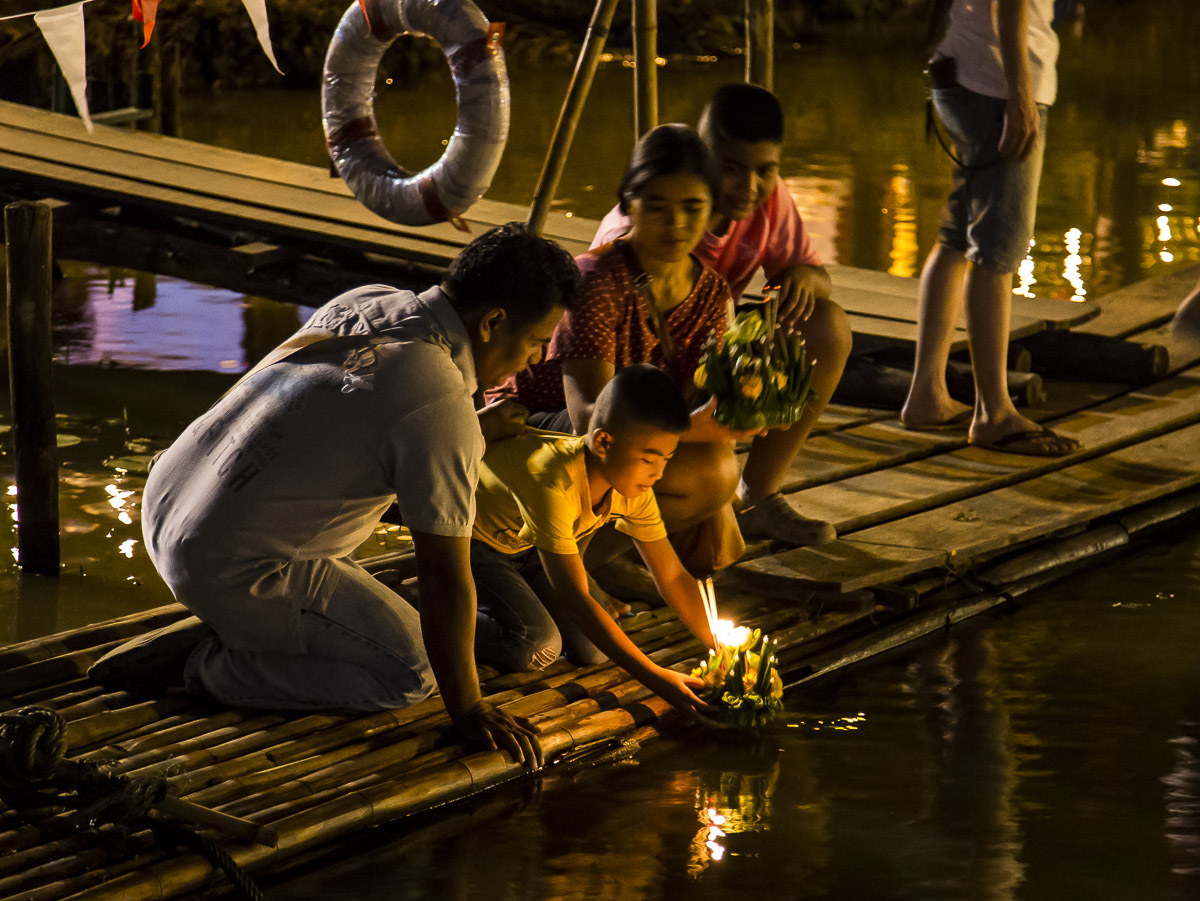 Loy KrathongA Thai festival of floating leaf baskets on rivers to honor water and release negativity.
Good reading and sources
- Kiribath on WikipediaEncyclopedia
- More photos on Wikimedia CommonsPhotos and video
- Wikidata recordOpen data
The facts on this page come from the Wikipedia article "Kiribath", written by its contributors and used under the CC BY-SA 4.0 licence, and from its Wikidata record (CC0). EveryParampara rewrote the text in its own words, with AI assistance, and compares every page with the article to make sure no passage is copied. It may be reused under the same CC BY-SA 4.0 licence with a link back.
It may contain mistakes. Traditions differ from one family, village and community to the next, and the people who keep them know them best. If something is wrong, tell us. Last refreshed 2026-10-05.
More from Sri Lanka
All the traditions of Sri Lanka
🇮🇳 Ayodhya, India and 7 moreDiwaliदीपावली (Dīpāvalī)
A five-day festival of lights celebrated across India and its diaspora to mark the victory of light over darkness.Festival · Feasts and festival meals
🇱🇰 Colombo, Sri Lanka and 5 moreVesakVisakha Bucha (Thailand), Visakha Bouxa (Laos), Full Moon Day of Kason (Myanmar)
A day to honor the birth, awakening, and passing of the Buddha, kept by Buddhists across Asia.Festival
🇮🇳 Pune, India and 5 moreGanesh Chaturthiगणेश चतुर्थी
A Hindu festival celebrating the arrival of Ganesha, marked by clay idols, sweets, and public processions.Festival
🇹🇭 Chiang Mai, Thailand and 5 moreLoy Krathongลอยกระทง
A Thai festival of floating leaf baskets on rivers to honor water and release negativity.Festival
The same idea elsewhere
New Year compared 🇱🇦 Laos and 1 moreBaciບາສີ (Lao)
A Lao rite that calls the soul home and ties a thread on the wrist for good luckSpiritual
🇱🇦 Laos and 1 moreBaciບາສີ (Lao)
A Lao rite that calls the soul home and ties a thread on the wrist for good luckSpiritual
 🇮🇩 IndonesiaSlametan
A short communal meal on Java where neighbours share food, prayer and a wish for peaceSpiritual · Feasts and festival meals
🇮🇩 IndonesiaSlametan
A short communal meal on Java where neighbours share food, prayer and a wish for peaceSpiritual · Feasts and festival meals
 🇨🇳 ChinaChinese paper cutting剪紙 / 剪纸 (jiǎnzhǐ)
Chinese cut paper pictures, pasted on windows and doors for luck at New YearCraft
🇨🇳 ChinaChinese paper cutting剪紙 / 剪纸 (jiǎnzhǐ)
Chinese cut paper pictures, pasted on windows and doors for luck at New YearCraft
 🇹🇱 Timor-LesteUma Lulik
Sacred ancestral clan houses and ritual shrines in East TimorSpiritual
🇹🇱 Timor-LesteUma Lulik
Sacred ancestral clan houses and ritual shrines in East TimorSpiritual