Festivals and celebrationsEuropeChristianPagan and ancient
Lajkonik
In its own language: Lajkoniki
An annual hobby-horse pageant through the streets of Kraków each June

Lajkonik is an annual folk festival celebrated in Kraków, Poland, on the first Thursday after Corpus Christi. A man dressed in eastern warrior garb rides a hobby horse from Zwierzyniec Convent to the Main Market Square, tapping onlookers with a mace for good fortune.
When is Lajkonik kept?
Lajkonik is kept on annually on the first Thursday after Corpus Christi.
Lajkonik is an annual street pageant held in Kraków, Poland, every June. A rider dressed as an eastern warrior mounts a wooden hobby horse and journeys across the city, tapping spectators with a golden mace to bestow good luck. The procession commemorates legendary encounters with thirteenth-century Tatar invaders, uniting local folklore, music, and civic pride in a festive public ritual.
Legendary origins
The true beginning of the custom is debated. Some scholars trace the practice to pre-Christian spring rituals, when horses were thought to bring luck and plentiful harvests. Popular legends connect the pageant to thirteenth-century Mongol raids on southern Poland. One tale claims that Kraków defenders defeated a Tatar khan, took his garments, and rode home in victory. Another account tells of local woodworkers on the Vistula river in 1287 who spotted sleeping invaders. The boatmen donned Tatar robes to stage a mock attack on the town. When the prank was uncovered, city officials turned the lively masquerade into an official annual celebration.
The procession route
The festival starts at the Norbertine Convent in the district of Zwierzyniec. The rider, sporting a pointed hat, eastern robes, and a wooden hobby horse, leads a colorful retinue through historic city streets. Musicians, children, and marchers in regional folk costumes or eastern dress join the parade. Some attendants carry traditional horsetail standards. As the party moves toward the center, the rider taps bystanders with his golden mace, which is said to bring good fortune, while gathering small coins as a mock ransom.
Arrival at the square
The parade reaches its climax at the Main Market Square. There, the mayor of Kraków greets the rider with a purse of ransom money. The mayor and the horseman share a toast from a ceremonial chalice, drinking to the health and prosperity of the city and its residents. Festivities then spill out across the plaza. Performers, musicians, and spectators gather near the Old Town Hall Tower for continued folk dancing and live music, carrying the celebration well into the afternoon.
Costume and local symbols
The rider’s distinct appearance combines elements of Mongol warrior dress with local artistic traditions. Beyond the annual festival, the figure serves as an informal emblem of Kraków. Local dance troupes, including groups formed by Polish communities in Tucson, Chicago, and Western Sydney, adopt the character's name. In Kraków itself, the rider appears across folk art, regional souvenirs, and even fabric patterns on public transit seats, maintaining a visible presence in everyday urban life.
How Lajkonik is kept
On festival day, a performer dressed as a Tatar warrior fastens a wooden horse frame around his waist. The procession departs from the Norbertine Convent in Zwierzyniec and advances toward Kraków's historic core. Attendants play music, carry horsetail banners, and wear traditional folk attire. Along the route, the rider collects symbolic ransom money and taps onlookers with his mace for luck. The march concludes at the Main Market Square, where the mayor offers ransom and shares a toast with the rider before public dancing begins.
When and where
The event takes place every year in June on the first Thursday after the Roman Catholic feast of Corpus Christi. The date shifts each year depending on the ecclesiastical calendar.
The festival is held entirely in Kraków, Poland. The procession travels through the historic urban streets, starting at the Zwierzyniec convent and finishing at the Main Market Square.
What Lajkonik means
The figure represents Kraków's historical survival during centuries of foreign invasion, transforming a former adversary into a protector and bringer of fortune. Being touched by the rider's golden mace is thought to confer good luck. The shared toast at the square affirms the safety, unity, and prosperity of the city.


Questions people ask about Lajkonik
When is Lajkonik kept?
Lajkonik is kept on annually on the first Thursday after Corpus Christi.
What is Lajkonik?
Lajkonik is a traditional pageant in Kraków, Poland. A man dressed in Mongol warrior garb rides a hobby horse through the city, collecting ransom and tapping onlookers for luck.
Why does the rider carry a mace?
The rider carries a golden mace to playfully strike spectators along the parade route. According to local belief, a tap from the mace brings good fortune for the coming year.
What happens when the procession reaches the Main Market Square?
The mayor of Kraków welcomes the rider with a symbolic ransom payment. Both share a toast to the city's health and prosperity, followed by music and dancing near the Old Town Hall Tower.
See also
 Kupala NightA summer solstice folk festival marked by bonfires, water rituals and herbal gatherings across Eastern Europe.
 KoliadaA traditional winter caroling and solstice festival kept across Slavic Europe
 Easter egg treeA German springtime custom of dressing living trees and branches with blown eggs
 Saint Casimir's FairA spring craft market and folk celebration across the historic streets of Vilnius
Good reading and sources
- Lajkonik on WikipediaEncyclopedia
- More photos on Wikimedia CommonsPhotos and video
- Wikidata recordOpen data
The facts on this page come from the Wikipedia article "Lajkonik", written by its contributors and used under the CC BY-SA 4.0 licence, and from its Wikidata record (CC0). EveryParampara rewrote the text in its own words, with AI assistance, and compares every page with the article to make sure no passage is copied. It may be reused under the same CC BY-SA 4.0 licence with a link back.
It may contain mistakes. Traditions differ from one family, village and community to the next, and the people who keep them know them best. If something is wrong, tell us. Last refreshed 2026-10-04.
More from Poland
All the traditions of Poland 🇩🇪 Germany and 5 moreChristmas tree
A decorated evergreen or artificial tree placed indoors to mark the Christmas season.Festival
🇩🇪 Germany and 5 moreChristmas tree
A decorated evergreen or artificial tree placed indoors to mark the Christmas season.Festival
 🇬🇧 United Kingdom and 5 moreApril Fools' Day
An annual day of lighthearted pranks, hoaxes and teasing kept on the first of AprilFestival
🇺🇦 Ukraine and 5 moreKupala Night
A summer solstice folk festival marked by bonfires, water rituals and herbal gatherings across Eastern Europe.Festival
🇺🇦 Ukraine and 7 moreKoliadaКоляда
A traditional winter caroling and solstice festival kept across Slavic EuropeFestival
🇬🇧 United Kingdom and 5 moreApril Fools' Day
An annual day of lighthearted pranks, hoaxes and teasing kept on the first of AprilFestival
🇺🇦 Ukraine and 5 moreKupala Night
A summer solstice folk festival marked by bonfires, water rituals and herbal gatherings across Eastern Europe.Festival
🇺🇦 Ukraine and 7 moreKoliadaКоляда
A traditional winter caroling and solstice festival kept across Slavic EuropeFestival
The same idea elsewhere
Spring and renewal compared 🇰🇷 Jeju, South KoreaGut굿
Sacred rites of song, dance, and spirit communion performed by Korean shamansSpiritual
🇰🇷 Jeju, South KoreaGut굿
Sacred rites of song, dance, and spirit communion performed by Korean shamansSpiritual
 🇯🇵 JapanChildren's Dayこどもの日
A Japanese holiday on May fifth celebrating the happiness and growth of childrenFestival
🇯🇵 JapanChildren's Dayこどもの日
A Japanese holiday on May fifth celebrating the happiness and growth of childrenFestival
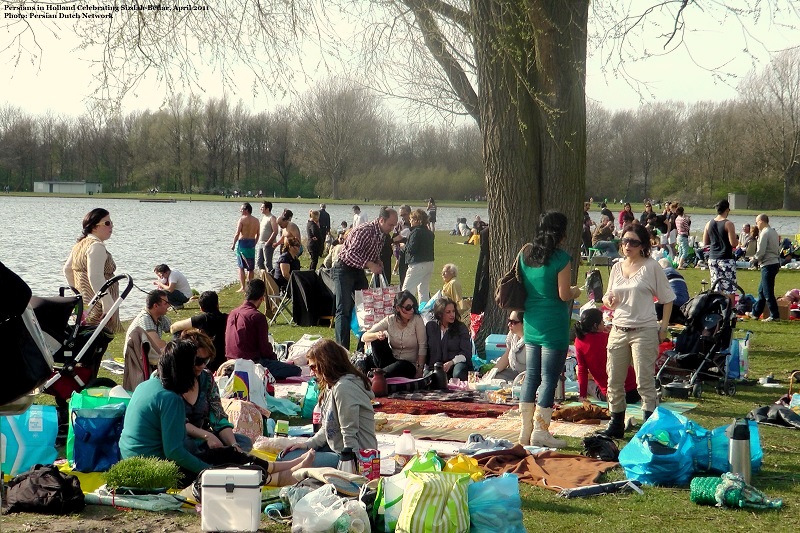 🇮🇷 Iran and 4 moreSizdah Bedarسیزدهبدر
An open-air picnic holiday concluding the Iranian New Year celebrationsFestival
🇮🇷 Iran and 4 moreSizdah Bedarسیزدهبدر
An open-air picnic holiday concluding the Iranian New Year celebrationsFestival
 🇯🇵 Kyoto, JapanAoi Matsuri葵祭
A classical Kyoto festival with an imperial procession and ancient shrine ritualsFestival
🇯🇵 Kyoto, JapanAoi Matsuri葵祭
A classical Kyoto festival with an imperial procession and ancient shrine ritualsFestival