Seasons, harvest and the calendarNorth AmericaIndigenous and traditional
Makahiki
A four-month Hawaiian new year season of peace, harvest gifts, feasts and games

Makahiki is the traditional Hawaiian new year season, observed over four lunar months from late autumn to early spring. Dedicated to the deity Lono, the period brings a complete ban on warfare and farm work, replaced by tribute offerings, feast gatherings, sacred dances and community games.
When is Makahiki kept?
Makahiki is kept on four lunar months from approximately October or November to February or March.
Makahiki is the Hawaiian new year observance honoring Lono, the god of fertility, peace and rainfall. Spanning four consecutive lunar months across the winter, the season halts everyday labor and warfare. Instead, communities gather to present harvest gifts to island leaders, share ceremonial meals, perform sacred chants and test their skill through athletic competitions and mental puzzles.
The three seasonal stages
Makahiki unfolds in three successive periods. The opening stage, hoʻokupu, centers on spiritual purification and the gathering of taxes. Land managers called konohiki collect produce, woven mats, dried seafood and rare feathers from each community. A wooden staff representing Lono circles the island clockwise, carried by priests to receive these goods at boundary stone altars. The middle stage opens wide public merrymaking, athletic matches and family celebrations. Finally, the tax canoe, waʻa ʻauhau, is sent into the ocean filled with tribute. To conclude the season, the high chief returns from sea and deflects incoming spears to demonstrate his strength and right to command.
Games and tests of skill
During the festive weeks, people devote themselves to traditional pastimes known as paʻani kahiko. Community members compete in running contests, swimming trials, canoe regattas and strength matches on land. Athletes also speed down stone tracks on wooden sleds, such as the preserved course at Keauhou. Alongside physical challenges, native Hawaiians value intellectual contests that challenge memory and wit. Families gather to solve riddles, recite unbroken genealogies, decipher layered proverbs and explore hidden meanings in words. Spectators wager on their champions, and these historic challenges remain an essential tool for passing ancestral heritage to newer generations.
Meaning and celestial timing
The arrival of Makahiki marks the shift from crop gathering to a fresh planting cycle. Priests watch the night sky to determine the opening date. On the island of Hawaiʻi, the festival starts on the crescent moon following the sunset rise of the Pleiades star cluster, called Makaliʻi, in mid-November. On Oʻahu, observers track Makaliʻi above specific temple sites or watch for the bright star Sirius near coastal cliffs. Because warfare is strictly forbidden, crops grow undisturbed and the land experiences rest. Today, the legacy of this peaceful winter renewal continues across the islands through the annual Aloha Festivals.
How Makahiki is kept
The observance starts when sky watchers sight the Pleiades star cluster. Priests carry a decorated sacred staff around each district, receiving tribute at stone boundary markers. Ordinary tasks and fighting cease entirely. People prepare large commemorative feasts, perform hula dances and compete in outdoor races, water sports and memory games. At the conclusion, an offering boat is released into the sea, and the ruling chief must successfully parry spears cast by local warriors before regular daily work and political life resume.
When and where
Makahiki lasts four lunar months, extending from late autumn around October or November to early spring in February or March. The start is determined by stargazers who watch for the Pleiades constellation to appear on the horizon after sundown, usually around mid-November, followed by the next crescent moon.
The festival developed across the Hawaiian Islands. Tribute was gathered at stone boundary altars separating each mountain-to-ocean land division, while modern celebrations like the Aloha Festivals take place across the island chain.
What Makahiki means
Makahiki celebrates Lono, who brings agricultural abundance, rain, vitality and peace. By outlawing combat and farm work, the season guarantees undisturbed rest for fields and families. Tributary gifts and tests of physical or mental skill strengthen social bonds, honor ancestral heritage, and demonstrate the vitality and legitimate leadership of the chiefs.
On the table
- taro
- sweet potatoes
- pigs
- dry fish

Questions people ask about Makahiki
When is Makahiki kept?
Makahiki is kept on four lunar months from approximately October or November to February or March.
What is Makahiki?
Makahiki is the ancient Hawaiian new year festival honoring Lono, the deity of agriculture and peace. It marks a four-month period of rest, harvest offerings, feasts, sacred dances and community sporting matches.
Why was warfare banned during the season?
Battles were strictly outlawed so that newly planted crops could mature without disruption and priests could carry the sacred emblem of Lono safely across all island districts.
How did the festival conclude?
A tribute canoe filled with gifts was set adrift at sea for Lono. The returning chief then stepped ashore to deflect spears cast by warriors, demonstrating his fitness to rule.
See also
 LosarThe Tibetan Buddhist New Year festival of renewal, offerings, and family feasts
 ChristmasA festival of Jesus's birth, kept on 25 December with gifts, lights and shared meals
 HalloweenAn annual observance on 31 October marking the eve of All Saints' Day, rooted in Christian tradition and Celtic heritage
 Christmas treeA decorated evergreen or artificial tree placed indoors to mark the Christmas season.
Good reading and sources
- Makahiki on WikipediaEncyclopedia
- More photos on Wikimedia CommonsPhotos and video
- Wikidata recordOpen data
The facts on this page come from the Wikipedia article "Makahiki", written by its contributors and used under the CC BY-SA 4.0 licence, and from its Wikidata record (CC0). EveryParampara rewrote the text in its own words, with AI assistance, and compares every page with the article to make sure no passage is copied. It may be reused under the same CC BY-SA 4.0 licence with a link back.
It may contain mistakes. Traditions differ from one family, village and community to the next, and the people who keep them know them best. If something is wrong, tell us. Last refreshed 2026-10-04.
More from the United States
All the traditions of the United States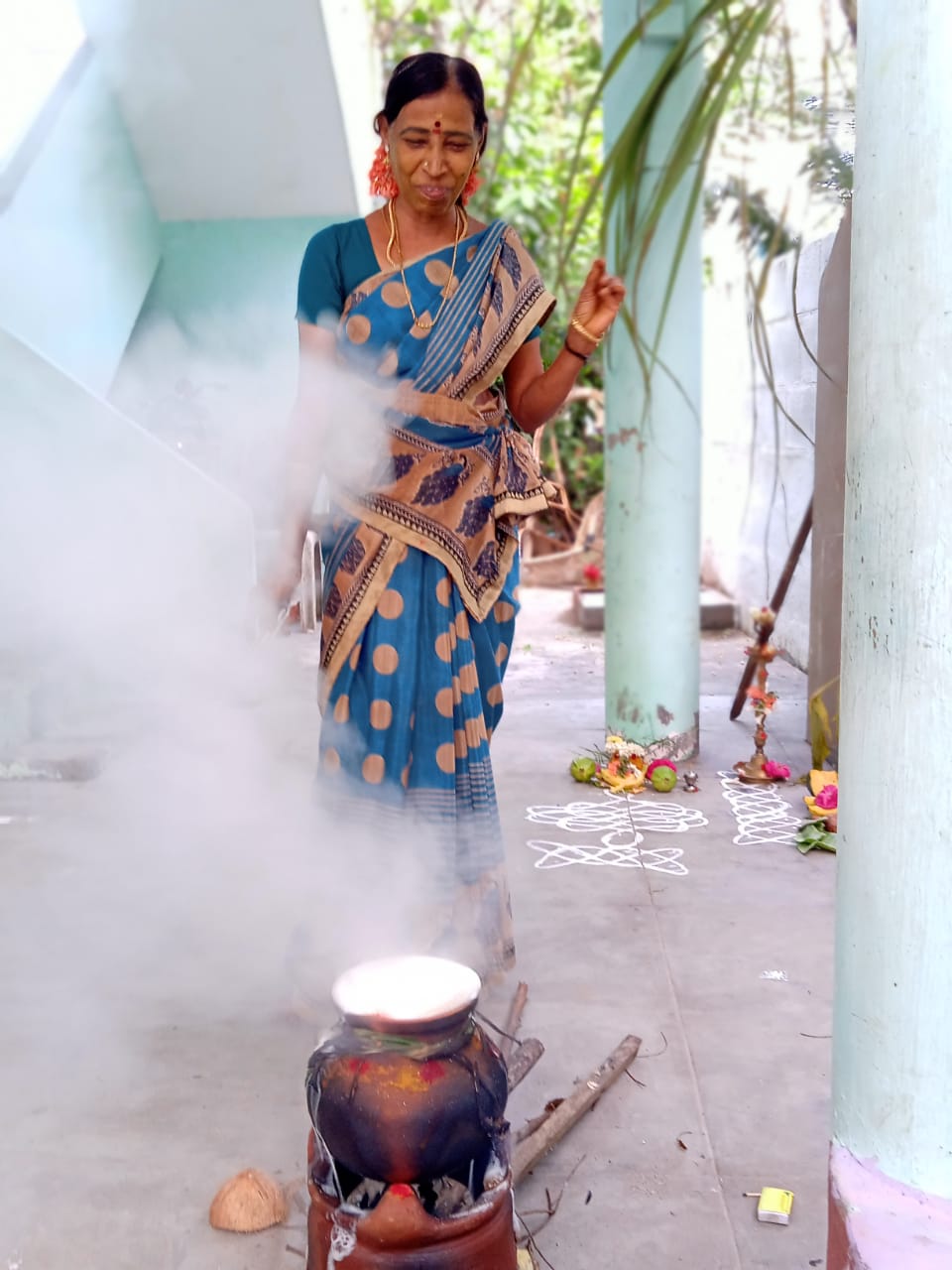 🇮🇳 India and 5 morePongal
Three or four days of boiling rice, garlanded cattle and thanks to the sunSeasonal · Sweets given and shared
🇧🇹 Bhutan and 4 moreLosarལོ་གསར་
The Tibetan Buddhist New Year festival of renewal, offerings, and family feastsSeasonal · Feasts and festival meals
🇮🇳 India and 5 morePongal
Three or four days of boiling rice, garlanded cattle and thanks to the sunSeasonal · Sweets given and shared
🇧🇹 Bhutan and 4 moreLosarལོ་གསར་
The Tibetan Buddhist New Year festival of renewal, offerings, and family feastsSeasonal · Feasts and festival meals
 🇬🇧 United Kingdom and 5 moreYule log
A log kept burning on the hearth through the twelve days of Christmas, for luckSeasonal
🇬🇧 United Kingdom and 5 moreYule log
A log kept burning on the hearth through the twelve days of Christmas, for luckSeasonal
 🇺🇸 United StatesGreen Corn CeremonyPuskita
A Southeastern harvest and new year ceremony of fasting, dancing and renewalSeasonal
🇺🇸 United StatesGreen Corn CeremonyPuskita
A Southeastern harvest and new year ceremony of fasting, dancing and renewalSeasonal
The same idea elsewhere
New Year compared 🇮🇳 Ayodhya, India and 7 moreDiwaliदीपावली (Dīpāvalī)
A five-day festival of lights celebrated across India and its diaspora to mark the victory of light over darkness.Festival · Feasts and festival meals
🇮🇳 Ayodhya, India and 7 moreDiwaliदीपावली (Dīpāvalī)
A five-day festival of lights celebrated across India and its diaspora to mark the victory of light over darkness.Festival · Feasts and festival meals
 🇵🇪 Cusco, Peru and 4 moreIntiinti (Quechua)
The Inca sun deity, honoured with temples, offerings and the June festival Inti RaymiSpiritual
🇵🇪 Cusco, Peru and 4 moreIntiinti (Quechua)
The Inca sun deity, honoured with temples, offerings and the June festival Inti RaymiSpiritual
 🇯🇵 JapanKadomatsu門松
A Japanese New Year gateway decoration of pine and bamboo where a visiting deity can restSeasonal
🇯🇵 JapanKadomatsu門松
A Japanese New Year gateway decoration of pine and bamboo where a visiting deity can restSeasonal